
Olej Nasya

(6)

Herbal Nasal Oil for Daily Wellness, Mental Clarity & Sense Organ Care

Od €10,00

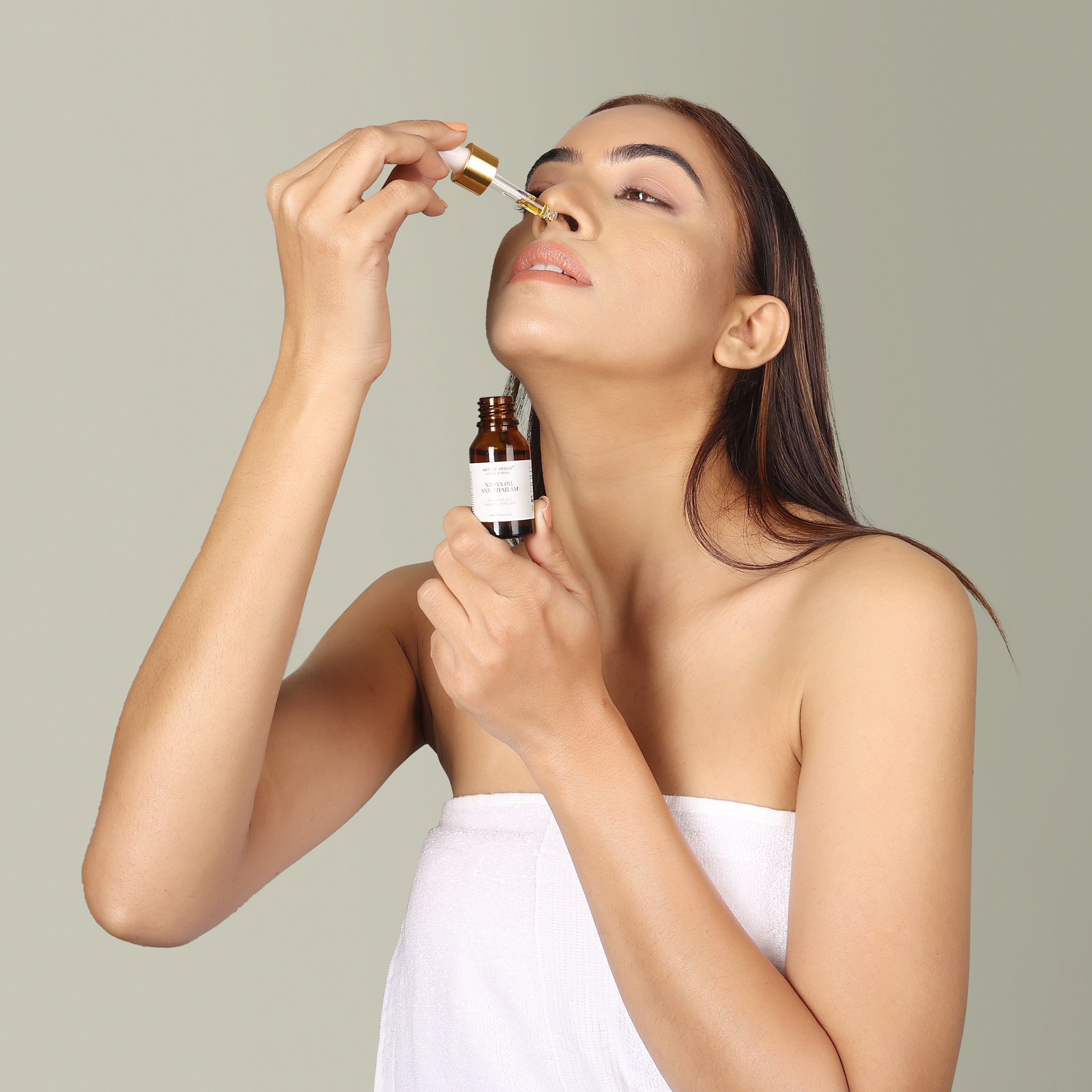
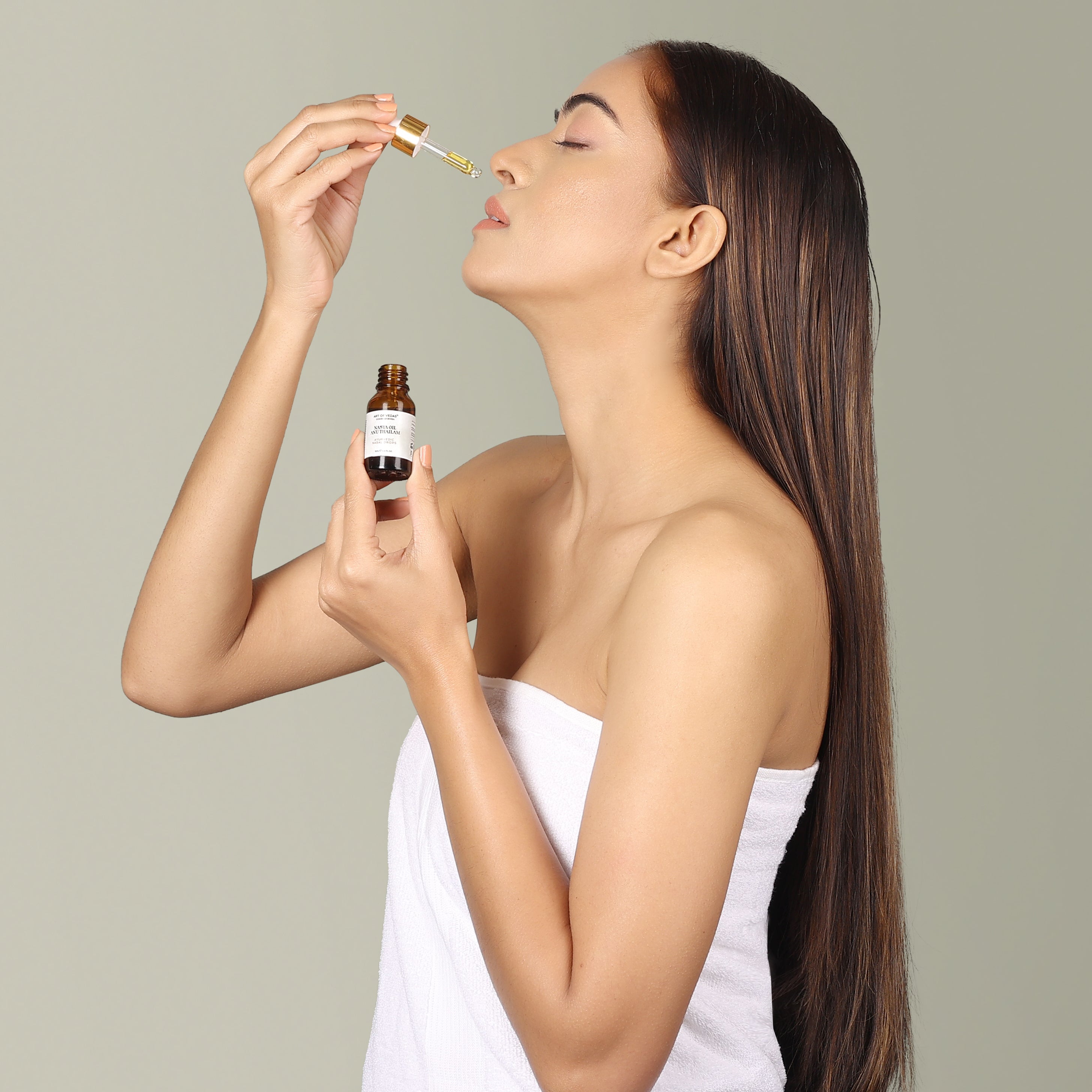
Art of Vedas Nasya Oil to autentyczny Anu Thailam, najważniejszy olejek do nosa w klasycznej ajurwedzie, udokumentowany w Ashtanga Hridaya ponad 1500 lat temu. Ta tradycyjna formuła łączy 24 starannie wyselekcjonowane zioła w czystym oleju sezamowym, przygotowanym według starożytnych metod, aby wspierać zdrowie nosa, promować jasność umysłu i odżywiać wszystkie pięć narządów zmysłów.

W ajurwedzie nos nazywany jest "Nasa hi Shiraso Dwaram", drzwiami do głowy. Codzienna praktyka Nasya z Anu Thailam uważana jest za jeden z najważniejszych rytuałów utrzymania zdrowia głowy, oczu, uszu i umysłu. Zaledwie 2 krople na każdą dziurkę nosa każdego ranka mogą stać się przełomową częścią Twojej Dinacharya (codziennej rutyny).

Niezależnie od tego, czy jesteś nowicjuszem w Nasya, czy doświadczonym praktykiem, ta klasyczna formuła oferuje autentyczne wsparcie dla swobodnego oddychania, koncentracji umysłu i ogólnego zdrowia obszaru głowy przez wszystkie pory roku.
Zawartość netto

SKŁADNIKI

Sesamum Indicum Seed Oil, Aegle Marmelos Root Extract, Asparagus Racemosus Root Extract, Cedrus Deodara Heart Wood Extract, Cinnamomum Tamala Leaf Extract, Cinnamomum Verum Stem Bark Extract, Coleus Aromaticus Rhizome Extract, Cyperus Esculentus Root Extract, Cyperus Rotundus Rhizome Extract, Desmodium Gangeticum Root Extract, Elettaria Cardamomum Fruit Extract, Glycyrrhiza Glabra Stem Extract, Hemidesmus Indicus Root Extract, Holostemma Ada-Kodien Rhizome Extract, Solanum Surattense Root Extract, Vetiveria Zizanioides Root Extract, Saccharum Officinarum Root Extract, Nymphaea Stellata Flower Extract, Alpinia Galanga Rhizome Extract, Prunus Mahaleb Seed Extract

Olej Nasya

Od €10,00

Od €10,00

KORZYŚCI

Jasność umysłu

Odżywia ścieżki łączące nos z mózgiem. Wspiera Prana Vata, życiową energię rządzącą twoim umysłem.

Dobre samopoczucie narządów zmysłów

Jedna formuła, pięć zmysłów. Oczy, uszy, nos, język i głos są odżywiane poprzez ścieżkę Shringataka Marma.

Swobodne oddychanie

Nawilża i chroni drogi nosowe. Wspiera komfort podczas zmian sezonowych, suchego powietrza i podróży.

Równowaga Dosha

Harmonizuje Tridoshę. Szczególnie skuteczna przy nierównowadze Vata i Kapha w obrębie głowy.

Klasyczne autorytety

Nie jest nowoczesnym wynalazkiem. Udokumentowana w Ashtanga Hridaya, rozdział 20, wersety 37-38 — ta sama formuła stosowana od 1500 lat.

Jak używać Olej Nasya

Understanding Pratimarsha and Marsha Nasya

Classical Ayurveda describes two primary methods of nasal oil application:

Pratimarsha Nasya (Daily Practice):

  • Dosage: 2 drops per nostril
  • Suitable for: Everyone, from children to elderly
  • Frequency: Daily, can be performed twice (morning and evening)
  • No special preparation required
  • Safe for long-term, regular use

Ashtanga Hridaya 20/32 specifically states that Pratimarsha Nasya with Anu Thailam is safe "from birth to death" when performed correctly—making it the most accessible form of this ancient practice.

Marsha Nasya (Therapeutic Practice):

  • Dosage: 6-10 drops per nostril
  • Recommended under: Guidance of an Ayurvedic practitioner
  • Used for: Specific therapeutic purposes
  • Requires: Preparatory procedures and dietary considerations

For home use, Art of Vedas recommends the Pratimarsha method described below.

Daily Nasya Ritual: Step-by-Step

Preparation (Purva Karma):

  1. Choose the right time: Morning is ideal, at least 30 minutes before breakfast. The stomach should be empty. Ashtanga Hridaya lists 14 appropriate times, with morning after waking being most practical for daily practice.
  2. Gentle facial massage (optional but beneficial): Apply a small amount of plain sesame oil or the Nasya Oil itself to your face, forehead, and around the nose. Massage gently for 1-2 minutes.
  3. Warm the oil: Place the bottle in a cup of warm (not hot) water for 2-3 minutes. The oil should reach body temperature—test by placing a drop on your inner wrist. It should feel neither warm nor cool.
  4. Optional steam: For enhanced benefits, hold your face over a bowl of warm water (with a towel over your head) for 1-2 minutes. This opens the nasal passages. Avoid if you have active inflammation.

Application (Pradhana Karma):

  1. Position yourself: Lie on your back on a bed or floor. Place a small pillow or rolled towel under your neck so your head tilts slightly backward. Your nostrils should point upward.
  2. Administer the drops: Using the dropper, place 2 drops into your right nostril. Inhale gently—not forcefully—to draw the oil inward. The inhalation should be soft and natural.
  3. Massage the nostril: With your ring finger, gently massage the inside of the right nostril in circular motions. This helps the oil spread and penetrate.
  4. Repeat on the left side: Place 2 drops into your left nostril and repeat the gentle inhalation and massage.
  5. Rest in position: Remain lying with your head tilted back for 1-3 minutes. This allows the oil to reach deeper passages.

Post-Application (Paschat Karma):

  1. Sit up slowly: After resting, rise gradually to a seated position.
  2. Spit, don't swallow: If oil drains to your throat, spit it out gently. Do not swallow.
  3. Gargle with warm water: Swish warm water in your mouth for 30 seconds and spit. This clears any residual oil from the throat. In Ayurveda, this is called Kavala.
  4. Gentle facial massage: Massage your face, forehead, and temples again briefly to complete the ritual.
  5. Wait before eating or drinking: Allow at least 30 minutes before consuming food or beverages.

Best Times for Nasya Practice

Ideal Daily Timing:

  • Early morning after waking and completing bathroom routines
  • Evening before dinner (if practising twice daily)

Especially Beneficial During:

  • Seasonal transitions: Spring and autumn are classical times for enhanced Nasya practice
  • Dry seasons: Winter months when indoor heating dries nasal passages
  • Travel: Before and during air travel
  • High-pollen seasons: For maintaining nasal comfort

When to Avoid Nasya

Do not perform Nasya:

  • During pregnancy
  • During the first 45 days after childbirth
  • During active cold, fever, or acute sinus congestion
  • Immediately after eating (wait 2-3 hours)
  • Immediately after head bath or swimming (wait 3 hours)
  • During menstruation (first 3 days)
  • When experiencing acute headache with fever
  • After consuming alcohol

Timing Considerations:

  • Avoid on cloudy, rainy, or extremely windy days (for therapeutic Marsha Nasya)
  • Very hot or very cold weather may require modified practice

Signs of Proper Nasya Practice

Classical texts describe these indicators of correctly performed Nasya:

  • Sukha Uchvasa: Easy, comfortable breathing
  • Sukha Swapna: Restful, quality sleep
  • Sukha Bodha: Refreshed awakening
  • Laghuta Shirasi: Lightness in the head
  • Aksha Patava: Clarity and keenness of the sense organs

Integrating Nasya into Your Dinacharya

Nasya fits naturally into the traditional Ayurvedic morning routine:

  1. Wake early (ideally before sunrise)
  2. Eliminate (use bathroom)
  3. Jihwa Prakshalana (tongue scraping)
  4. Danta Dhavana (tooth brushing)
  5. Gandusha/Kavala (oil pulling with sesame oil)
  6. Nasya (nasal oil application) ← This product
  7. Abhyanga (self-massage with body oil)
  8. Snana (bathing)
  9. Pranayama/Meditation

Klasyczne odniesienie do Ajurwedy

Composed by Acharya Vagbhata in the 6th-7th century CE, the Ashtanga Hridaya remains one of the most authoritative texts in Ayurvedic medicine. Chapter 20 is dedicated entirely to Nasya therapy, with verses 37-38 presenting the complete Anu Thailam formulation.

The original Sanskrit declares: "नस्यं महागुणमुशन्त्यणुतैलमेतत्"
Translation: "This oil known as Anu taila, used as nasal drops, bestows great benefits."

Supporting Classical References

Charaka Samhita, Sutrasthana Chapter 5, Verses 56-63:
Establishes the foundational principle "Nasa hi Shiraso Dwaram" (the nose is the doorway to the head) and recommends Nasya with Anu Taila for seasonal wellness during spring, autumn, and pre-monsoon seasons.

Sushruta Samhita, Chikitsa Sthana Chapter 40:
Details Nasya procedures, timing, and indications, establishing the position of Nasya among the Panchakarma therapies.

Sharangadhara Samhita, Madhyama Khanda:
Provides detailed pharmaceutical standards for oil preparation (Taila Paka Vidhi), ensuring consistency in traditional formulations.

Sahasrayoga, Taila Prakarana:
The Kerala classical text includes Anu Taila among essential Ayurvedic oils, reflecting its importance in the Kerala Ayurvedic tradition.

Sanskrit Name and Etymology

ComponentSanskritMeaningAṇuअणुSubtle, minute, atomicTailaतैलOil (from Tila/sesame)Full NameअणुतैलSubtle Oil / Fine Oil

The retroflex "ṇ" in Aṇu (अणु) distinguishes it from "anu" (अनु) meaning "after/following"—an important distinction for accurate understanding.

Classification in Nasya Therapy

AspectClassificationNasya TypeSneha Nasya (Oleation)Primary ActionBrimhana (Nourishing)Secondary ActionShamana (Pacifying)Dosha AffinityTridosha Shamaka (balances all three)Primary Dosha FocusVata-Kapha

Ayurvedic Pharmacology (Dravyaguna)

Rasa (Taste):

  • Predominant: Tikta (Bitter), Kashaya (Astringent)
  • Secondary: Madhura (Sweet)

Guna (Qualities):

  • Sukshma (Subtle/Penetrating)
  • Snigdha (Unctuous)
  • Laghu (Light)
  • Sara (Spreading)

Virya (Potency):

  • Predominantly Ushna (Warming) from sesame oil base
  • Balanced by Sheeta (Cooling) herbs like Yashtimadhu and Usheera

Vipaka (Post-Digestive Effect):

  • Madhura (Sweet)

Prabhava (Special Action):

  • Indriyaprasadana (Clarification of sense organs)
  • Shirovirechana (Purification of head region)

Karma (Therapeutic Actions)

ActionSanskritEffectShirovirechanaशिरोविरेचनPurifies head regionIndriyaprasadanaइन्द्रियप्रसादनClarifies sense organsVatashamanaवातशमनPacifies VataBrimhanaबृंहणNourishes tissuesMedhyaमेध्यSupports mental clarityKeshyaकेश्यSupports hair healthSvaryaस्वर्यSupports voice quality

Srotas (Channel) Affinity

  • Pranavaha Srotas: Respiratory channels
  • Manovaha Srotas: Mental/consciousness channels
  • Rasavaha Srotas: Plasma/lymph channels

Dhatu (Tissue) Affinity

  • Primary: Majja Dhatu (Nervous tissue)
  • Secondary: Rasa Dhatu (Plasma)
  • Supports: Ojas (Vital essence)