
DESBLOQUEAR 10% DE DESCONTO

Nasa hi Shiraso Dwaram
O nariz é a porta de entrada para a cabeça.
Isto não é filosofia. É uma observação refinada ao longo de milhares de anos.
As suas passagens nasais são o único local onde o seu sistema nervoso encontra diretamente o mundo exterior. O que aplicar aqui chega ao seu cérebro mais rapidamente do que qualquer coisa que engula. Evita completamente a digestão.
Os antigos médicos compreendiam isto. Desenvolveram o Nasya, a prática de aplicar óleo medicado nas passagens nasais — como terapia principal para tudo o que está acima dos ombros.
WHY THE NOSE MATTERS
The Science of the Doorway
Every breath enters through your nose. But breathing is only the beginning.
Your nasal passages perform five critical functions:
- Filtration — Traps particles from the air
- Warming — Heats cold air before it reaches your lungs
- Humidification — Adds moisture to dry air
- Protection — Traps pathogens in mucus
- Neural Connection — Nerve endings connect directly to your brain
That last point is crucial.
The olfactory nerve provides a direct pathway from nose to brain. This is why a scent triggers memory instantly. Why aromatherapy affects mood immediately. Why you know something is burning before you see smoke.
The Shringataka Marma
Where Everything Connects
In Ayurvedic anatomy, marmas are vital junction points where physical structures, energy channels, and consciousness meet.
There are 107 marmas in the body. The Shringataka Marma is located at the root of the nose—where vessels and nerves supplying the brain, eyes, ears, and tongue converge.
Ashtanga Samgraha states:
"Ayurveda formula administered through the nostrils reaches Shringataka Marma. From here, it spreads to nourish the brain, eyes, ears, throat, and all vessel openings of the head."
This explains why a single practice of Nasya, benefits so many different functions.
You are not treating individual organs. You are nourishing the junction that connects them all.
What Happens When the Doorway Is Neglected
Modern life challenges your nasal passages constantly:
Indoor environments:
- Central heating strips moisture from winter air
- Air conditioning dries and recirculates dust
- Office buildings rarely have adequate humidity
Travel:
- Cabin humidity drops to 10-20% drier than most deserts
- Cross-continental flights leave passages parched
Seasonal shifts:
- Spring brings pollen overload
- Autumn brings sudden dryness
- Winter means low humidity plus pathogens
When nasal passages are dry, irritated, or congested:
- Breathing requires more effort
- Sleep quality suffers
- Mental clarity decreases
- Sense organs receive less nourishment
- Head region tension increases
The 24 Herbs Formulation
The Dashamoola Foundation
5 herbs for deep grounding
- Bilva (Aegle marmelos) — Nerve tranquiliser, Vata pacifier
- Shalaparni (Desmodium gangeticum) — Nervous system strengthener
- Prishnaparni (Pseudarthria viscida) — Deep Vata balancer
- Brihati (Solanum anguivi) — Kapha clearer
- Kantakari (Solanum surattense) — Respiratory passage support
The Cooling Protectors
6 herbs for membrane protection
- Shatavari (Asparagus racemosus) — Premier rejuvenative, tissue nourisher
- Yashtimadhu (Glycyrrhiza glabra) — Soothes and coats irritated tissues
- Usheera (Vetiveria zizanioides) — Powerful coolant, stress reducer
- Kamala (Nelumbo nucifera) — Mental clarity, sattvic nature
- Utpala (Nymphaea stellata) — Blue lotus for subtle mind support
- Padmaka (Prunus cerasoides) — Reduces excess heat in head region
Why include cooling herbs when the sesame base is warming?
Because nasal membranes are delicate. Too much heat would irritate them.
These cooling herbs protect while the formula works.
The Channel Openers
5 aromatic herbs for penetration
- Devadaru (Cedrus deodara) — Channel-clearing (Srotosodhana)
- Tejpatta (Cinnamomum tamala) — Penetrating, antimicrobial
- Tvak (Cinnamomum verum) — Deep channel access
- Ela (Elettaria cardamomum) — Rare Tridosha-balancer
- Musta (Cyperus rotundus) — Aromatic, anti-inflammatory
Devadaru—"Wood of the Gods"—is specifically called Srotosodhana.
Its role is critical: ensuring the oil moves through channels to reach deeper tissues, not simply sitting in nostrils.
The Specialised Agents
7 herbs for specific functions
- Vidanga (Embelia ribes) — Shirovirechana—head purification
- Jivanti (Holostemma ada-kodien) — Vitalises sense organs specifically
- Sariva (Hemidesmus indicus) — Blood purification for head region
- Rasna (Alpinia galanga) — Supreme for head/neck Vata disorders
- Parnayavani — Aromatic support
- Nagarmotha (Cyperus esculentus) — Channel clearing variety
- Ikshu (Saccharum officinarum) — Nourishment and binding
Vidanga does Shirovirechana—"expelling Doshas from the head."
This is not gentle. It actively clears accumulated waste.
The Sesame Base
Not Just a Carrier
Sesame oil (Tila Taila) is itself medicinal.
Charaka Chikitsa Sthana 28:
"There is no medication which excels oil in curing Vatika diseases because of its Vyavayi, hot, heavy and unctuous properties."
Sesame has three properties critical for Nasya:
- Sukshma (Subtle) — Penetrates deep tissues
- Vyavayi (Pervasive) — Spreads before being metabolised
- Yogavahi (Synergistic) — Enhances herb potency
This is why Anu Thailam uses sesame—not coconut, almond, or any other base.
No other oil has this combination.
The Most Documented Nasal Oil in Ayurveda
Art of Vedas Nasya Oil (Anu Thailam) is not a modern creation. It is the most authoritative nasal oil formula in classical Ayurvedic literature.
The formula appears in Ashtanga Hridaya, Chapter 20, Verses 37-38, composed by Acharya Vagbhata in the 6th-7th century CE. For over 1,500 years, this precise 24-herb formulation has remained the standard for daily Nasya practice.
EXPERIENCE THE CLASSICAL NASYA FORMULA


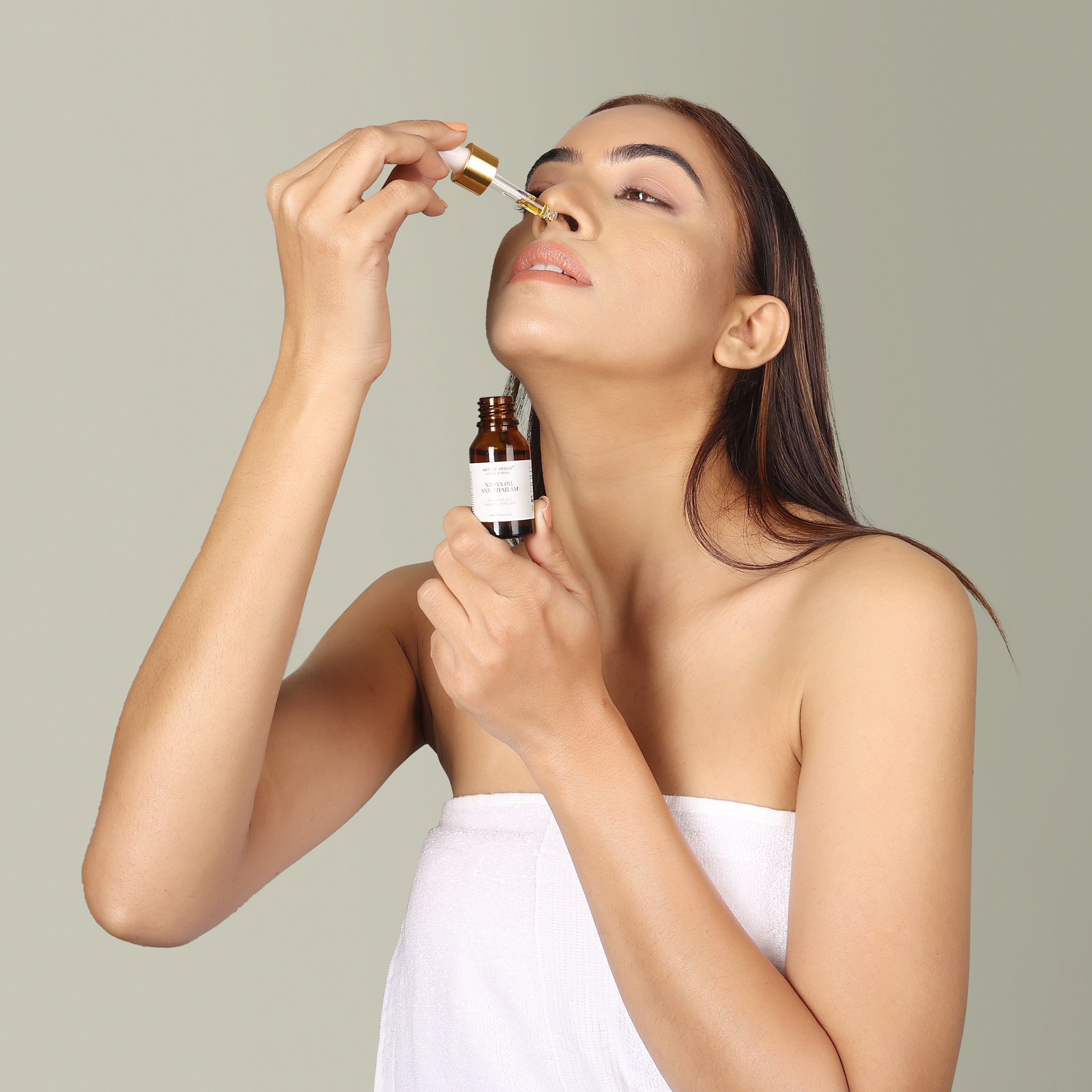
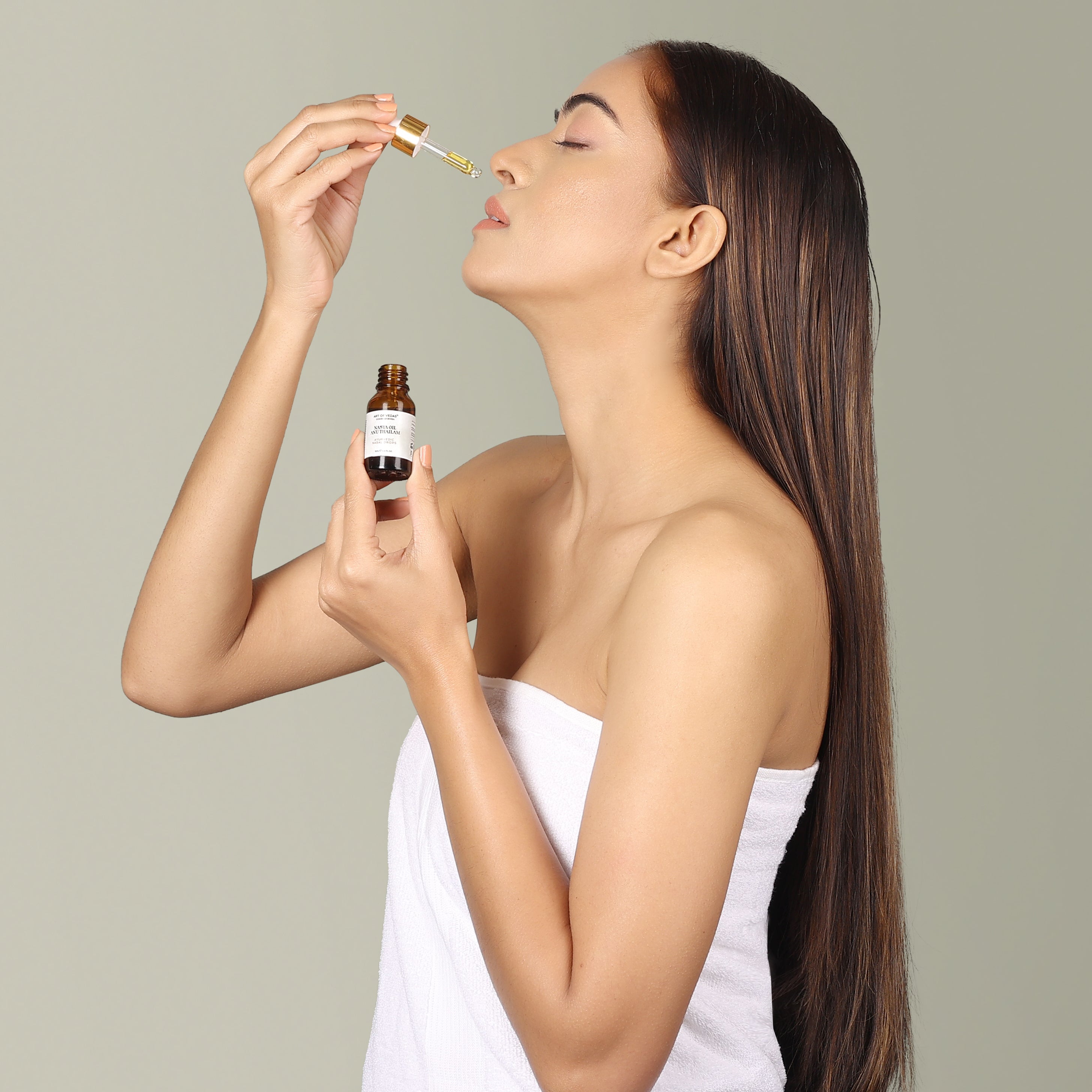
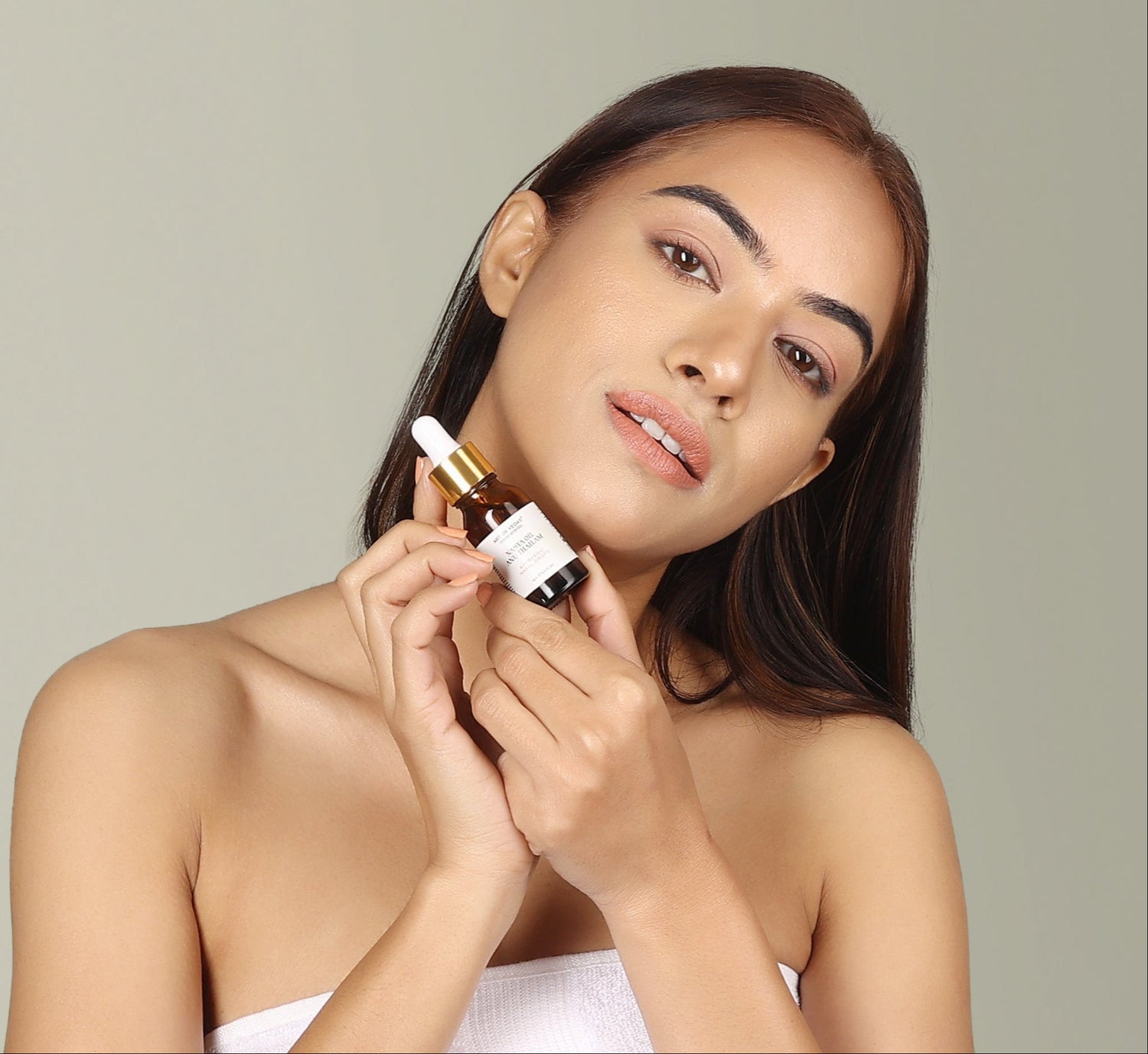
Óleo Nasya
Art of Vedas prepares Anu Thailam according to the classical formulation from Ashtanga Hridaya, 24 herbs processed in pure sesame oil using traditional methods.
Every batch follows the preparation methodology documented in the 6th century:
- Herbs boiled in 100 parts water, reduced to one-tenth
- Sesame oil added and cooked repeatedly
- Traditional processing captures both water-soluble and fat-soluble principles
A partir de €10,00
Preço unitário porAnu Thailam vs. Shadbindu Thailam
Which One Is Right for You?
Both are authentic classical formulas. Both are documented in classical texts. But they serve different purposes.
Anu Thailam:
- General-purpose, daily wellness
- Tridosha-balancing
- Safe for long-term daily practice
- Best for building the habit and prevention
- Classical recommendation for Pratimarsha Nasya
- Targeted, specific concerns
- More warming, penetrating action
- Best used in short courses, as needed
- For specific head region concerns
- Use when directed by practitioner
For someone beginning Nasya practice: Start with Anu Thailam.
For specific conditions or practitioner recommendation: Shadbindu Thailam may be more appropriate.

THE NASYA PRACTICE
Classical texts describe two primary approaches:
Pratimarsha Nasya (Daily Practice)
- Dosage: 2 drops per nostril
- Frequency: Daily, once or twice
- Requirements: No special preparation
- Suitable For: Everyone—children to elderly
- Duration: Can practice indefinitely
Marsha Nasya (Therapeutic Practice)
- Dosage: 6-10 drops per nostril
- Frequency: Specific courses, not indefinite
- Requirements: Preparatory procedures, dietary considerations
- Suitable For: Specific conditions, under guidance
- Duration: Defined treatment periods
The Complete Daily Ritual
-
Step 1: Choose Your Time
Morning is ideal.
After waking and using the bathroom. At least 30 minutes before breakfast. Stomach should be empty.
Evening before dinner also suitable—particularly if practising twice daily.
Classical texts list 14 appropriate times. Morning after waking is most practical for modern life.
-
Step 2: Warm the Oil
Place the bottle in a cup of warm (not hot) water for 2-3 minutes.
Test on inner wrist. Should feel neither warm nor cool—matching body temperature exactly.
- Oil too hot = irritation
- Oil too cold = poor penetration
-
Step 3: Prepare Your Face (Optional)
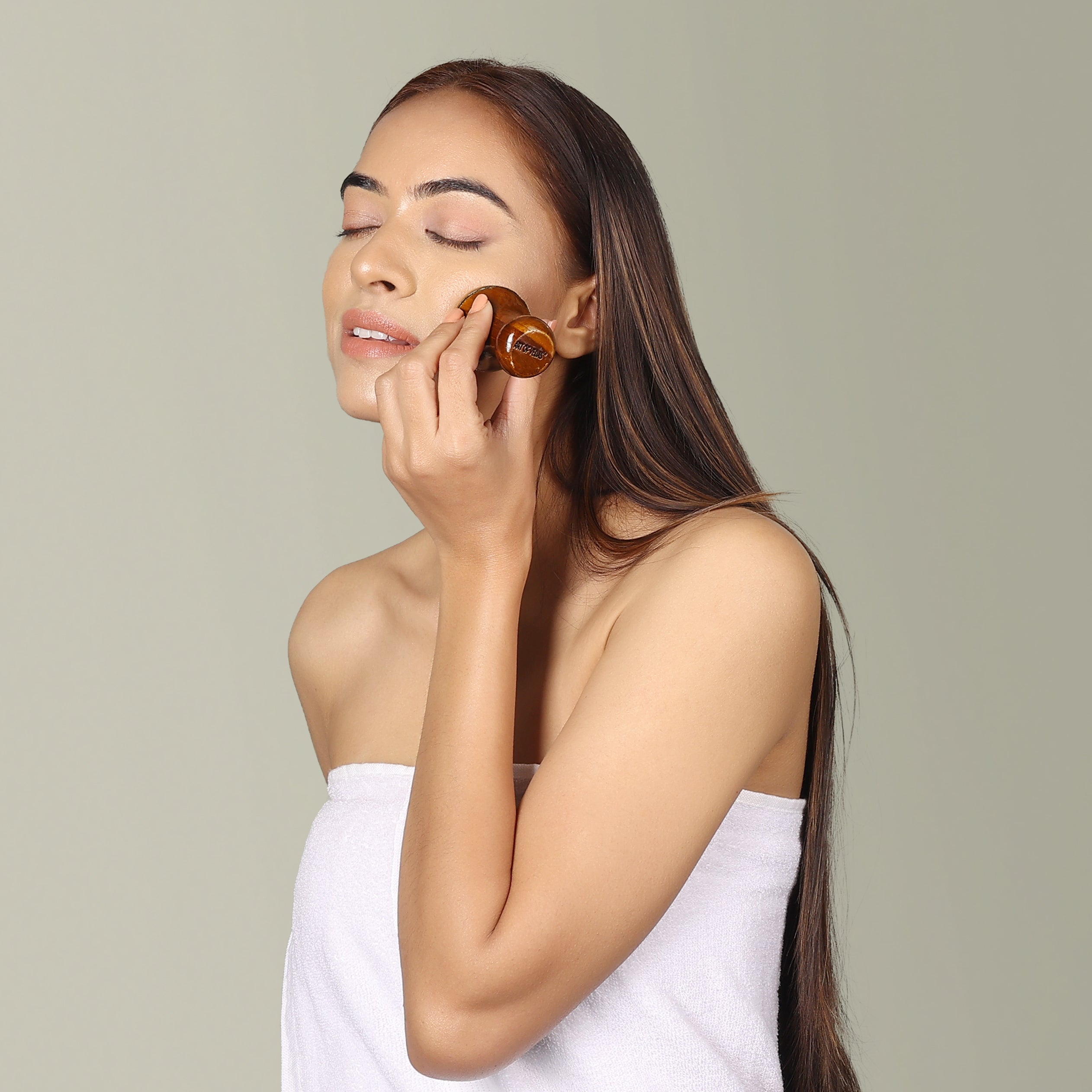
Apply small amount of plain sesame oil or Nasya oil to face, forehead, and around nose.
Massage gently for one minute using circular motions. Move from centre outward.
This relaxes tissues and prepares passages.
-
Step 4: Apply
Position:
Lie on your back. Place small pillow or rolled towel under neck so head tilts slightly backward. Nostrils should point toward ceiling.Right nostril first:
Using dropper, place 2 drops into right nostril.
Inhale gently—not sharply. Just soft, natural breath to draw oil inward.Massage:
With ring finger (gentlest finger), massage inside of right nostril in small circles.
Also massage outside of nose, cheeks, forehead. -
Step 5: Rest
Remain lying with head tilted back for 1-3 minutes.
This is not passive time.
The oil is moving through passages. Reaching Shringataka Marma. Spreading its benefits to brain and sense organs.
You may feel:
- Pleasant warmth in head region
- Sensations behind eyes or in ears
- Subtle shift in mental clarity
- Or nothing obvious
All are normal.
-
Step 6: Complete
Rise slowly. No rush. Sudden movement drains oil before absorption.
Clear throat. If oil drains to throat, spit into tissue. Do not swallow. Herbal, slightly bitter taste is normal.
Gargle (Kavala). Mouthful of warm water, swish 30 seconds, spit.
Wait 30 minutes before eating.

When NOT to Practice
Absolute Contraindications
- Pregnancy (all trimesters)
- First 45 days after childbirth
- Active fever
- Acute sinus infection with pus or severe congestion
Wait or Modify
- Within 2-3 hours after eating
- Within 3 hours after washing hair
- First 3 days of menstruation
- After consuming alcohol
- During acute headache with fever
- Immediately after exercise
Signs of Correct Practice
Classical texts describe specific indicators that Nasya is working:
- Sukha Uchvasa (Easy breathing) — Breathing feels comfortable, not forced
- Sukha Swapna (Restful sleep) — Fall asleep easily, wake rested
- Sukha Bodha (Refreshed waking) — No morning grogginess
- Laghuta Shirasi (Light head) — No pressure or congestion
- Aksha Patava (Clear senses) — Vision clear, hearing crisp, smells distinct
These develop progressively. Some within days. Others over weeks or months.
What to Expect
First week:
Easier breathing, clearer nasal passages. Some notice improved sleep. Others notice nothing obvious, also normal.
First month:
Mental clarity often improves. Head feels lighter. Seasonal challenges easier to manage.
Ongoing:
Benefits accumulate. Nasya becomes like brushing teeth—you notice more when you skip it than when you do it. Senses feel clearer. Mind feels sharper.
Some feel benefits immediately. Others take weeks. Both patterns are normal.

Where Nasya Fits in Dinacharya
Dinacharya means "daily routine"—the sequence Ayurveda recommends for maintaining health throughout life.
Nasya fits into the morning sequence after oral care:
- Wake early — Brahma Muhurta
- Eliminate — Use bathroom
- Tongue scraping — Removes overnight coating
- Tooth brushing — Cleans teeth
- Oil pulling — Cleanses oral cavity
- Nasya — ← This practice
- Self-massage (Abhyanga) — Nourishes skin and nerves
- Bathing — Cleanses body
- Pranayama/meditation — With clear passages, breath flows freely
- Breakfast — Nourish with food
You do not need to adopt the entire routine.
Each practice stands alone. But they build on each other.