


Art of Vedas
Nasya ulje
Od €10,00
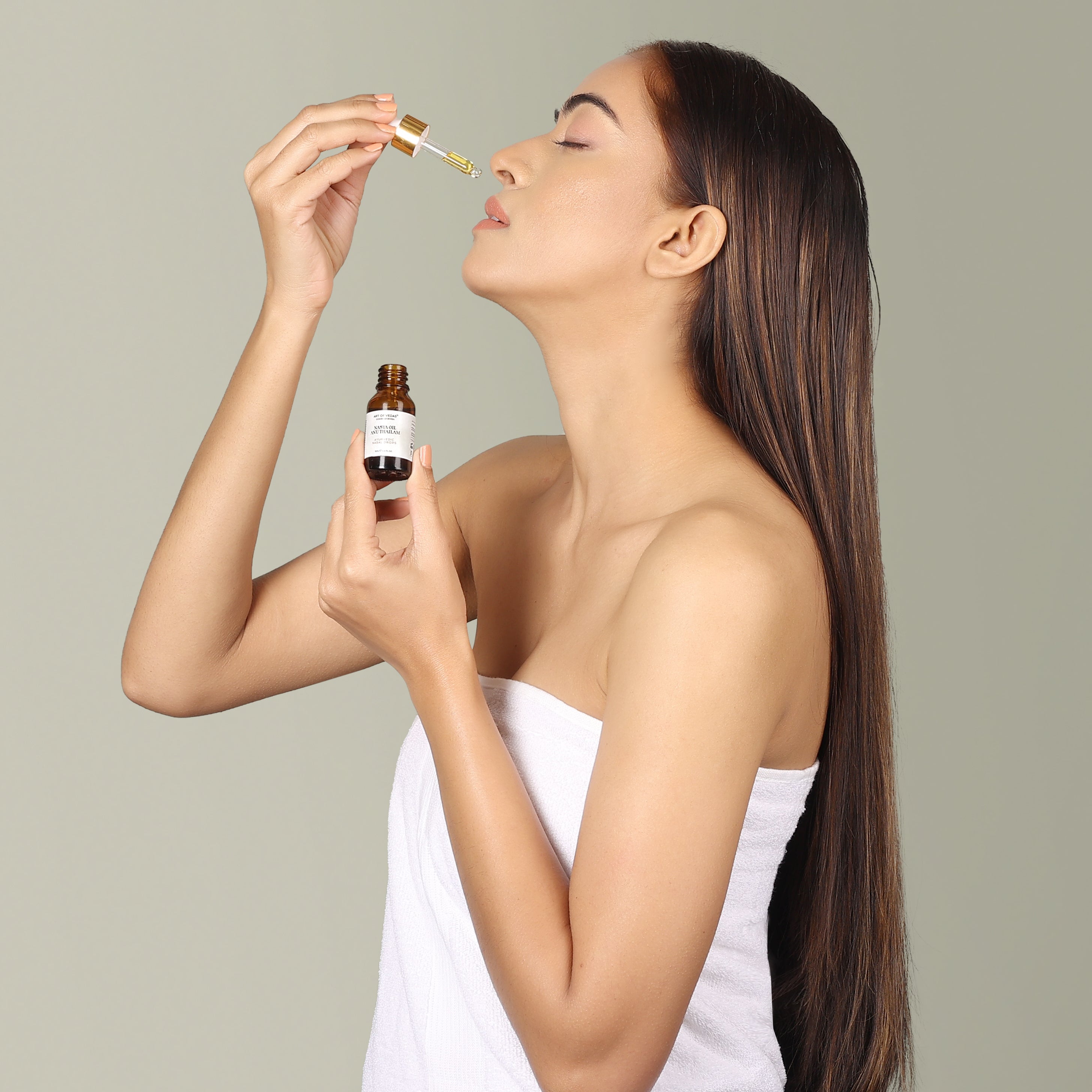
Jedinična cijena poArt of Vedas Nasya Oil je autentični Anu Thailam, najvažnije ulje za nos u klasičnoj Ayurvedi, dokumentirano u Ashtanga Hridaya prije više od 1.500 godina. Ova tradicionalna formula kombinira 24 pažljivo odabrana bilja u čistom sezamovom ulju, pripremljena prema drevnim metodama za podršku zdravlju nosa, poticanje mentalne jasnoće i njegu svih pet osjetila.
U Ayurvedi, nos se naziva "Nasa hi Shiraso Dwaram", vrata u glavu. Dnevna praksa Nasye s Anu Thailam smatra se jednim od najvažnijih rituala za održavanje zdravlja glave, očiju, ušiju i uma. Samo 2 kapi u svaku nosnicu svako jutro mogu postati transformativni dio vaše Dinacharye (dnevne rutine).
Bilo da ste novi u Nasyi ili iskusni praktičar, ova klasična formula nudi autentičnu podršku za jasno disanje, mentalnu koncentraciju i opće zdravlje područja glave tijekom svih godišnjih doba.
OTKRIJTE 10% POPUSTA


Nasya ulje
Od €10,00
Jedinična cijena poArt of Vedas Nasya Oil je autentični Anu Thailam, najvažnije ulje za nos u klasičnoj Ayurvedi, dokumentirano u Ashtanga Hridaya prije više od 1.500 godina. Ova tradicionalna formula kombinira 24 pažljivo odabrana bilja u čistom sezamovom ulju, pripremljena prema drevnim metodama za podršku zdravlju nosa, poticanje mentalne jasnoće i njegu svih pet osjetila.
U Ayurvedi, nos se naziva "Nasa hi Shiraso Dwaram", vrata u glavu. Dnevna praksa Nasye s Anu Thailam smatra se jednim od najvažnijih rituala za održavanje zdravlja glave, očiju, ušiju i uma. Samo 2 kapi u svaku nosnicu svako jutro mogu postati transformativni dio vaše Dinacharye (dnevne rutine).
Bilo da ste novi u Nasyi ili iskusni praktičar, ova klasična formula nudi autentičnu podršku za jasno disanje, mentalnu koncentraciju i opće zdravlje područja glave tijekom svih godišnjih doba.
SASTOJCI

THE FIVE TRADITIONAL BENEFITS OF NASYA OIL
-
Mental Clarity
In Ayurveda, mental clarity depends on the free flow of Prana Vata, the aspect of Vata dosha that governs your mind, your thoughts, and your attention. Prana Vata is seated in your head, and its primary pathway is through your breath.
When your nasal passages are dry, congested, or irritated, Prana cannot flow freely. Your thinking becomes foggy. Concentration wavers. The head feels heavy instead of light.
Anu Thailam works by reaching the brain through the Shringataka pathway and supporting the smooth flow of Prana. Several herbs in the formula specifically support mental function: Yashtimadhu (Licorice) soothes the channels, Kamala (Sacred Lotus) promotes sattvic clarity, and Usheera (Vetiver) cools excess heat that can disturb the mind.
What you may notice:
Clearer thinking, especially in the morning. Reduced mental fog. Better ability to focus during work or study. A feeling of lightness in the head rather than heaviness.
-
Sense Organ Wellness
Your five sense organs, eyes, ears, nose, tongue, and skin are not isolated units. In Ayurvedic anatomy, they share blood supply, nerve pathways, and the Doshas that govern their function. Critically, they can all be reached through the nasal passages via the Shringataka Marma.
Ashtanga Hridaya specifically describes that Anu Thailam performs Indriyaprasadana—clarification and nourishment of the sense organs. This happens because the oil travels to the junction point where all sensory channels meet, then spreads its benefits outward.
The formula includes Jivanti, one of the ten Jivaniya (life-giving) herbs in Ayurveda, specifically known for vitalising the sense organs. Shatavari and the two Lotus varieties (Kamala and Utpala) support Alochaka Pitta, which governs vision.
What you may notice:
Eyes that feel less strained after screen work. Ears that feel more comfortable. A clearer sense of smell. A voice that feels stronger and more resonant.
-
Clear Breathing
Your nasal passages are the first line of your respiratory system. They must filter, warm, humidify, and deliver every breath you take. When they are dry or congested, breathing becomes work instead of ease.
Anu Thailam addresses this through two mechanisms:
Lubrication: The sesame oil base has Snigdha (unctuous) quality—it coats and moisturises dry nasal membranes, protecting them from environmental irritation.
Channel opening: Several herbs in the formula are classified as Srotosodhana, meaning they clear obstructed channels. Devadaru (Himalayan Cedar), Ela (Cardamom), and Kantakari help accumulated congestion move out while preventing new buildup.
The formula also clears excess Kapha from the respiratory passages. Kantakari is specifically called "the best herb for respiratory passages" by Vagbhata in Ashtanga Hridaya.
What you may notice:
Easier breathing, particularly in the morning. Less dryness in the nose. Better comfort during seasonal changes and travel. Reduced stuffiness.
-
Dosha Balance
The head region is governed by all three Doshas, each playing a specific role:
Vata controls the nervous system, the movement of thoughts, and the flow of Prana.
Pitta governs the eyes, the processing of sensory information, and the heat of metabolism.
Kapha provides the protective lubrication of membranes and the stability of structures.Most nasal problems involve imbalances in these Doshas. Dryness and anxiety indicate excess Vata. Inflammation and irritation indicate excess Pitta. Congestion and heaviness indicate excess Kapha.
Anu Thailam is Tridosha Shamaka—it balances all three. The warming sesame base pacifies Vata. The cooling herbs (Shatavari, Yashtimadhu, Usheera, Lotus) balance Pitta. The channel-opening aromatic herbs (Devadaru, Ela, Musta) clear accumulated Kapha.
This is why the same formula works for different people with different constitutions. It brings balance, not just stimulation or sedation.
What you may notice:
A general sense of equilibrium in the head region. Fewer extreme reactions to environmental changes. Greater resilience to seasonal transitions.
-
Ancient Ayurvedic Authority
Anu Thailam is not a modern invention. It is not a proprietary blend created in a marketing laboratory. It is the most documented nasal oil formula in Ayurvedic literature, recorded in the Ashtanga Hridaya over 1,500 years ago.
Chapter 20 of the Ashtanga Hridaya is dedicated entirely to Nasya therapy. Verses 37-38 present the complete Anu Thailam formulation—the exact 24 herbs, the exact preparation method.
This formula has been used by sixty generations of Ayurvedic practitioners. It remains unchanged because it did not need to change. The formula was already complete.
When you use Art of Vedas Nasya Oil (Anu Thailam), you are practicing the same ritual, with the same formula, that has supported human wellness for over a millennium.

The Doorway to Your Brain
In Ayurveda, the nose is called "Nasa hi Shiraso Dwaram", the gateway to the brain, sense organs, and mind. Discover how this ancient practice can transform your daily wellness routine.
HOW TO USE NASYA OIL
-
Step 1: Warm the Oil
Place the bottle in a cup of warm water for 1-2 minutes. The oil should reach body temperature, test by placing a drop on your inner wrist. It should feel neither warm nor cool.
Why this matters: Cold oil does not penetrate effectively and can startle the sensitive nasal membranes. Body-temperature oil is absorbed smoothly and feels comfortable in the nasal passages.
-
Step 2: Position Yourself Correctly
Lie on your back on a bed or floor. Place a small pillow or rolled towel under your neck so that your head tilts slightly backward. Your nostrils should point toward the ceiling.
Why this matters: This angle allows gravity to help the oil flow inward rather than dripping back out. The neck support keeps you comfortable during the few minutes of rest that follow.
-
Step 3: Apply Oil to the Right Nostril First
Using the dropper, place 2 drops into your right nostril. Inhale gently—not sharply or forcefully—just a soft, natural breath to draw the oil inward.
Why this matters: The right nostril is associated with Pingala Nadi (the solar, heating energy channel) and is traditionally done first. Gentle inhalation moves the oil into the passages without irritating the membranes. Forceful sniffing can cause the oil to go where it should not.
-
Step 4: Massage the Nostril
With your ring finger (the gentlest finger, carrying the least force), massage the inside of your right nostril in small circular motions. Also massage the outside of your nose, your cheeks, and your forehead.
Why this matters: Massage helps distribute the oil across the entire membrane surface and stimulates absorption into the deeper tissues. The ring finger is used in Ayurveda for delicate work because it naturally applies less pressure.
-
Step 5: Repeat on the Left Nostril
Place 2 drops into your left nostril. Inhale gently. Massage as before.
Why this matters: The left nostril is associated with Ida Nadi (the lunar, cooling energy channel). Treating both nostrils ensures balanced effect on both energy channels.
-
Step 6: Rest in Position
Remain lying with your head tilted back for 1-3 minutes. Breathe naturally and allow yourself to relax.
Why this matters: This resting period is not passive time. The oil is actively traveling through the passages, reaching the Shringataka Marma, spreading its benefits to the brain and sense organs. Staying in position allows gravity to assist this process.

Klasični ayurvedski priručnik
Često postavljana pitanja o Nasya ulje
If you have chronic sinus conditions, nasal polyps, or severe allergies, consult your healthcare provider before beginning Nasya practice.
For general seasonal sensitivities and mild nasal discomfort, many people find daily Nasya supportive. The oil lubricates and protects the nasal membranes, which can be helpful during high-pollen seasons or in dry environments.
However, do not practice Nasya during acute symptoms if you have active congestion, infection, or inflammation, wait until the acute phase has passed before resuming practice.
If you have known allergies to sesame or any of the herbs listed in the ingredients, do not use this product.