






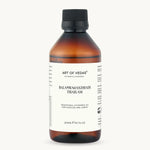
Balaswagandhadhi Thailam

(1)

Classical Ayurvedic Strengthening Oil

€22,00

€110,00 l

Balaswagandhadhi Thailam je klasična ayurvedska formulacija dokumentirana u Sahasrayogamu, koja kombinira približno 20 biljaka u čistoj bazi sezamovog ulja. Formulacija se temelji na dvije od najpoznatijih ayurvedskih jačajućih biljaka Bala (Sida cordifolia), što znači "snaga", i Ashwagandha (Withania somnifera), poznata kao indijski ginseng zbog svojih svojstava podrške vitalnosti.

Pripremljen tradicionalnom Sneha Paka Vidhi metodom (kuhanje u ulju), ovaj thailam se tradicionalno cijeni zbog svojih Balya (jačajućih) i Rasayana (pomlađujućih) svojstava. U ayurvedskoj praksi posebno je povezan s oporavkom, hranjenjem i podrškom tijelu u vremenima umora ili slabosti.

Također poznat kao Ashwagandha Bala Lakshadi Thailam, ova formulacija uravnotežuje Vata i Pitta doshe. Koristi se u svakodnevnoj Abhyangi (samomasaži) kao i u profesionalnim Panchakarma terapijama uključujući Pizhichil, Kizhi i Shirodhara.

SASTOJCI
Sezams indicum (sezam) ulje, korijen sida cordifolia (bala), witnia somnifera (ashwagandha), korijen, laccifer lacca (lac), alpinia galanga (galangal), rubia cordifolia (manjistha) korijen, cinodon, glinars (durly tragva), glislog (durvalvva), cinodon (manjistha), g. Hemidesmus indicus (indijski sarsaparilla) korijen, vetiveria zizanioides (vetiver) korijen, cyperus rotundus (orašasti) rizome, Cedrus deodara (deodar) Hearthowood, curcuma longa (kurkur) Rhizome, nimfea semhale (plava lotos) (plava lotosa), aNHALEA (marame), aNHALEA NIMMPHEA NIMHAMEA NIMPHEA NOCHALEA (MAHALEA) (Kopar), Nelumbo nucifera (sveti lotos), sirutka.

€22,00

€110,00 l

Zašto koristiti Balaswagandhadi Thailam?

Balaswagandhadhi Thailam holds a distinguished place among classical Ayurvedic oils as the primary formulation for building and restoring strength. Its name directly references its purpose Bala meaning "strength" and Ashwagandha known for imparting vitality and resilience.

The formulation is documented in Sahasrayogam, the classical Kerala text containing over 1,000 Ayurvedic preparations. It is also referenced in Yogaratnakaram and Bhaishajya Ratnavali. In the Kerala Ashtavaidya tradition, this oil was traditionally prescribed for warriors and laborers to support physical resilience.

What distinguishes Balaswagandhadhi from other Thailams is its focus on nourishment and rebuilding rather than treating specific conditions. While Mahanarayana Thailam addresses existing joint discomfort, Balaswagandhadhi works to strengthen and support the body's inherent vitality.

The Three Principal Herbs:

Bala (Sida cordifolia)
Known as "Country Mallow," Bala literally means "strength" in Sanskrit. This herb is traditionally valued for its Balya (strength-promoting) and Brimhana (nourishing) properties. In classical texts, Bala is described as supporting muscle tissue, nerves, and blood vessels.

Ashwagandha (Withania somnifera)
Called "Indian Ginseng" for its adaptogenic qualities, Ashwagandha is one of Ayurveda's most important Rasayana (rejuvenating) herbs. The name means "smell of horse" — referencing both its distinctive aroma and its traditional reputation for imparting horse-like strength and vitality.

Laksha (Laccifer lacca)
This resinous secretion is traditionally valued in Ayurveda for supporting bone and ligament health. It is processed with whey water (Mastu) during preparation to enhance its properties.

Traditionally suited for:
- Recovery periods after illness or fatigue
- Supporting muscle strength and development
- Times of physical or mental exhaustion
- Seasonal transitions when the body needs extra support
- Daily Abhyanga practice for maintaining vitality
- Professional Panchakarma therapies (Pizhichil, Kizhi, Shirodhara)

Kako koristiti Balaswagandhadhi Thailam

Zagrijte malu količinu Balaswagandhadi Thailam i nanesite je na tijelo ili ciljana područja poput nogu, ruku i leđa. Masirajte lagano koristeći poteze prema gore i ostavite da ulje ostane na tijelu 20–30 minuta prije tuširanja toplom vodom. Za najbolje rezultate koristite svakodnevno ili prema režiji vašeg ayurvedskog praktičara.

Klasični ayurvedski priručnik

Balaswagandhadhi Thailam is documented in multiple foundational Ayurvedic texts, reflecting its importance in classical practice.

Primary Reference:
Sahasrayogam — Taila Yoga Prakarana, Verse 13

Additional References:
Yogaratnakaram
Bhaishajya Ratnavali (16th century CE, Bala Chikitsa chapter)
Kerala Ashtavaidya tradition

Sanskrit: बलाश्वगन्धादि तैलम् (Balāśvagandhādi Tailam)

The name derives from: Bala (बल) meaning "strength," Ashwagandha (अश्वगन्ध) meaning "smell of horse" (referring to both the herb's aroma and its strength-imparting reputation), Adi (आदि) meaning "and others," and Tailam (तैलम्) meaning "oil."

Ayurvedic Pharmacology:

Rasa (Taste): Madhura (sweet), Tikta (bitter), Kashaya (astringent)
Guna (Quality): Snigdha (unctuous), Guru (heavy), Mridu (soft)
Virya (Potency): Ushna (slightly warming)
Vipaka (Post-digestive): Madhura (sweet)
Dosha: Primarily pacifies Vata; also balances Pitta
Karma (Actions): Balya (strength-promoting), Brimhana (nourishing), Rasayana (rejuvenating), Vatahara (Vata-pacifying), Nadibalya (nerve-strengthening)
Dhatu Affinity: Mamsa (muscle), Asthi (bone), Majja (nerve/marrow)

Classical Indications:
In traditional texts, Balaswagandhadhi Thailam is specifically referenced for conditions characterized by weakness, debility, and Vata aggravation. It is traditionally indicated for supporting recovery from illness, addressing muscle wasting, and nourishing the nervous system. It is also used in Anuvasana Basti (oil enema) for neurological support.

Preparation Method (Sneha Paka Vidhi):
Classical preparation begins with creating a decoction (Kashaya) from the primary herbs — Bala, Ashwagandha, and Laksha. The Laksha is specially processed with whey water (Mastu) to enhance its properties. This decoction is then cooked with sesame oil and the fine powders of supporting herbs until all water evaporates and the oil reaches the appropriate stage. The filtered oil is then ready for therapeutic use.

This information is from classical Ayurvedic texts for educational purposes. Consult a qualified Ayurvedic practitioner or healthcare provider for personalized guidance.

Često postavljana pitanja o Balaswagandhadhi Thailam

Balaswagandhadhi Thailam is a classical strengthening and nourishing oil used in Ayurveda. The name combines Bala (strength) and Ashwagandha (Indian Ginseng), directly indicating its traditional purpose. Documented in Sahasrayogam, this formulation is traditionally valued during recovery periods, times of fatigue, and for maintaining vitality. It is used in daily Abhyanga (self-massage) for wellness, as well as in professional Panchakarma therapies including Pizhichil (oil bath), Kizhi (herbal bolus), and Shirodhara (forehead oil flow). Unlike oils focused on specific conditions, Balaswagandhadhi is primarily oriented toward building and restoring strength.

In Ayurvedic tradition, Balaswagandhadhi Thailam is classified as Balya (strength-promoting), Brimhana (nourishing), and Rasayana (rejuvenating). The formulation contains approximately 20 herbs, with three principal ingredients: Bala supports muscle and nerve tissue, Ashwagandha provides adaptogenic and rejuvenating qualities, and Laksha traditionally supports bone and ligament health. Supporting herbs like Licorice, Vetiver, and Sandalwood contribute calming and nourishing properties. Regular use as part of Abhyanga practice is traditionally considered supportive of physical vitality, particularly during Vata season (autumn/winter) or recovery periods.

Yes, daily oil application (Abhyanga) is described in classical Ayurvedic texts as an essential component of Dinacharya (daily routine). Balaswagandhadhi Thailam is particularly suited for regular use as its strengthening and nourishing properties support ongoing vitality. For daily practice, apply to the whole body before bathing. During recovery periods or times of extra fatigue, daily application is especially beneficial. For maintenance, 2-3 times per week is typical practice. The best time is morning before bathing, though evening application is also traditional. Avoid use during fever or acute illness.

Store in a cool, dry place away from direct sunlight. The oil may become thicker in cooler temperatures, this is completely normal for a pure, traditionally prepared oil without synthetic additives. Simply warm the bottle in a water bath before use to restore flowing consistency. Shelf life is approximately 3 years when stored correctly. Keep the bottle tightly closed after each use. If you notice any unusual odor or appearance, discontinue use.

Balaswagandhadhi Thailam primarily pacifies Vata dosha due to its warming, nourishing, and grounding qualities. The presence of Ashwagandha also helps balance Pitta through its adaptogenic properties. This makes it suitable for Vata-predominant constitutions and those experiencing Vata imbalance (characterized by dryness, coldness, anxiety, or weakness). It is particularly indicated during Vata season (autumn and early winter) when the environment naturally increases Vata. Those with primarily Kapha constitutions may find it too heavy, especially during spring.

While Balaswagandhadhi Thailam is generally considered nourishing, we recommend consulting your healthcare provider or a qualified Ayurvedic practitioner before using any new product during pregnancy. The oil is for external use only. In classical Ayurvedic practice, Dhanwantharam Thailam is more specifically indicated for pregnancy care due to its traditional association with prenatal support. For postnatal recovery and regaining strength after childbirth, Balaswagandhadhi Thailam may be considered as part of a comprehensive care plan under professional guidance.