Amalaki is a fruit tree, and in the classical formulas the name means the fruit. Bark, leaf and seed are different materials, and they are not what a formula means when it names Amalaki.
Fresh and dried
The fresh fruit is firm and juicy, and some preparations use it fresh. For a powder it is dried and ground.
Flesh, not stone
At the centre of the fruit is a hard stone. Powders are made from the dried flesh around it, the pericarp, rather than from the stone.
In the formulas
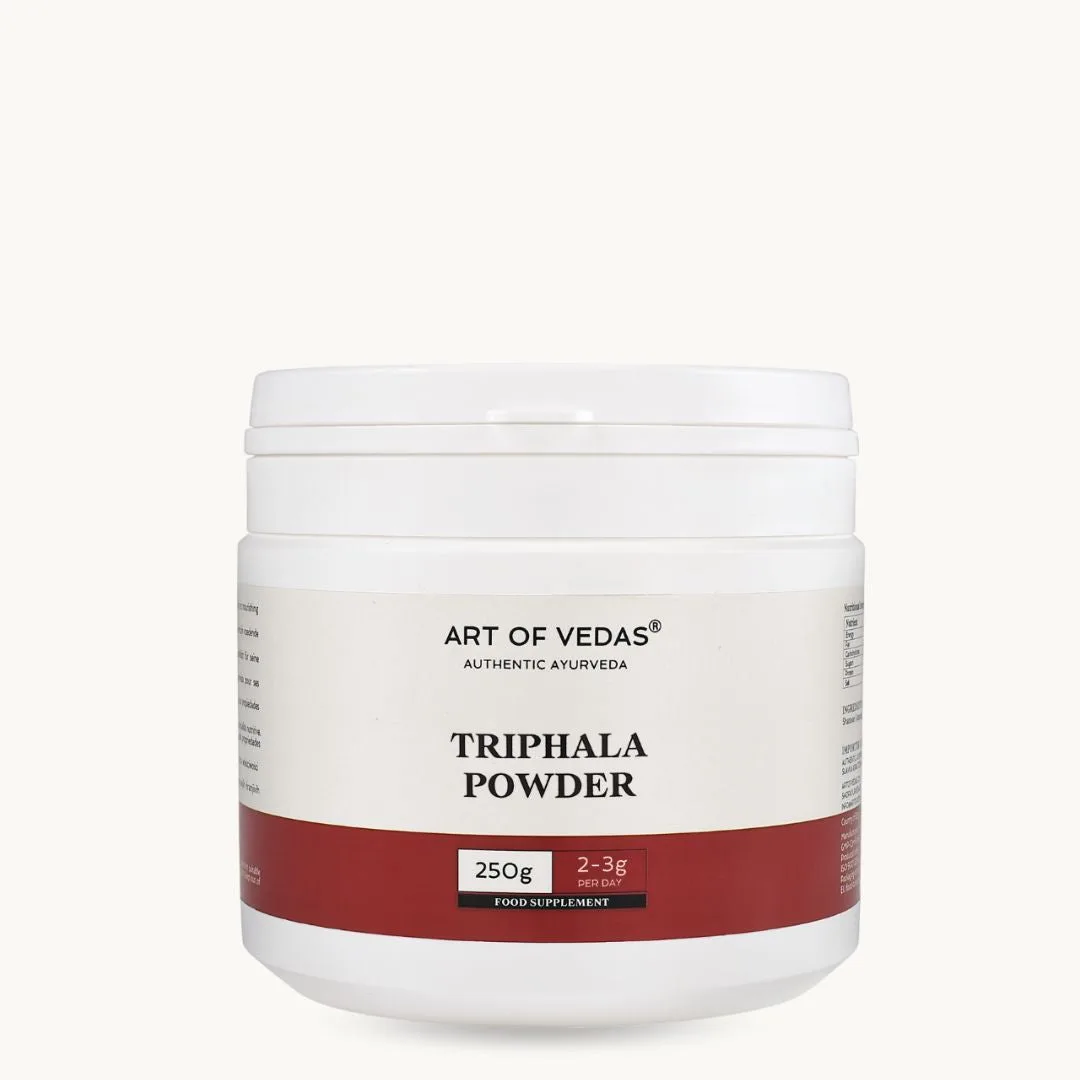
The fruit is one of the three fruits of Triphala, beside Haritaki and Bibhitaki, as the Triphala guide explains. There too, it is the fruit that is counted.
On the label
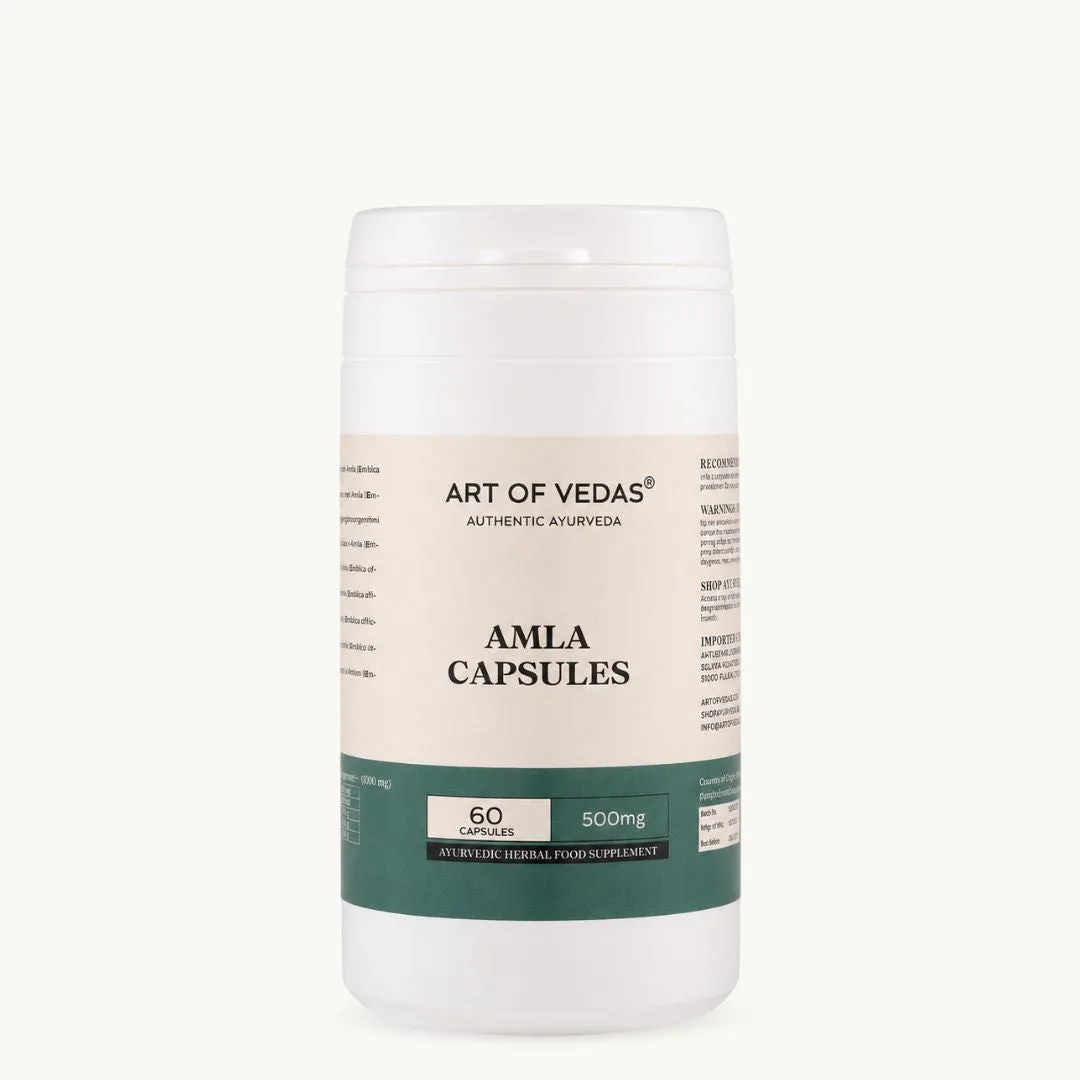
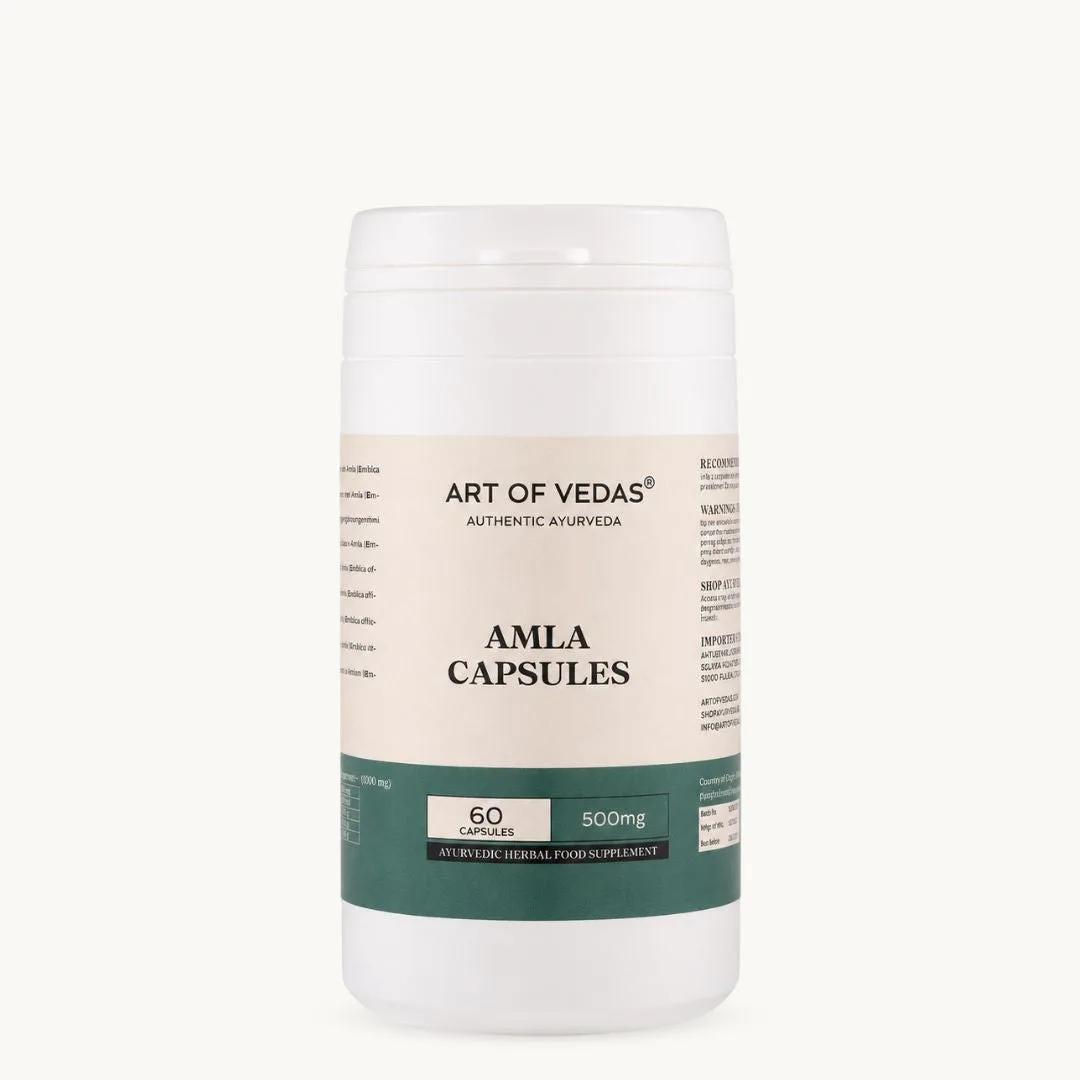
Amla Capsules contain Amalaki as a single herb, identified by its botanical name.
Frequently Asked Questions
Which part of Amla is used?
The fruit.
Is the stone used?
Powders are made from the dried flesh of the fruit rather than the stone.
Is fresh Amla the same material as the powder?
It is the same fruit, fresh in one case and dried and ground in the other.
This article is for educational purposes and describes the classical Ayurvedic record. The products mentioned are food supplements, not a substitute for a varied, balanced diet, and are not intended to diagnose, treat, cure or prevent any disease. Take them under the guidance of a qualified Ayurvedic practitioner.