This article is part of our Ashwagandha: The Classical Ayurvedic Rasayana for Strength and Vitality guide series.
This product is a food supplement and not intended to diagnose, treat, cure or prevent any disease. For persistent health concerns, please consult a qualified healthcare professional.
Why Ashwagandha Capsules Specifically?
You have probably read about Ashwagandha (Withania somnifera) already. It is everywhere - in wellness blogs, supplement stores and fitness forums. But most of what you find online is marketing dressed as science, and it rarely tells you the things that actually matter: what does this herb do in the body according to the tradition that has used it for three thousand years? How much should you take? When? For how long? And what should you realistically expect?
This guide answers those questions directly, drawing from the Charaka Samhita, Ashtanga Hridayam and the clinical experience of classically trained Ayurvedic practitioners. At Art of Vedas, Ashwagandha is one of our core supplement offerings - and we want you to use it correctly, not just buy it.
What Ashwagandha Actually Is
In the classical Ayurvedic framework, Ashwagandha is classified as a Balya, Vrishya and Rasayana herb. The Charaka Samhita (Chikitsasthana, Rasayana Adhyaya) places it among the elite category of Medhya Rasayana herbs that specifically support the mind and nervous system alongside general tissue nourishment.
Its pharmacological profile explains why it does what it does:
- Rasa (Taste): Tikta (Bitter), Kashaya (Astringent), Madhura (Sweet)
- Virya (Potency): Ushna (Warming)
- Vipaka (Post-digestive): Madhura (Sweet)
- Prabhava (Special action): Balya, Nidrajanana (sleep-promoting)
The warming potency combined with the sweet post-digestive effect makes Ashwagandha predominantly Vata-pacifying and Kapha-pacifying. This is the herb for depletion, exhaustion, nervous tension and weakness - all Vata conditions that are extraordinarily common in modern European life. For the full classical context, see our complete Ashwagandha guide.
The Five Key Benefits
1. Stress Resilience and Nervous System Support
The Charaka Samhita describes Ashwagandha as Medhya and Nidrajanana (sleep-promoting) - two qualities that point directly at nervous system regulation. In Ayurvedic terms, chronic stress is a Vata disturbance: the mobile, erratic quality of Vata becomes dominant in the mind, producing anxiety, restlessness, racing thoughts and difficulty sleeping. Ashwagandha's grounding, warming, nourishing properties directly oppose this Vata pattern. Classical practitioners describe the effect as "giving the nervous system weight" - the scattered quality settles, the mind becomes steadier, and sleep deepens naturally.
2. Physical Strength and Recovery
The name Ashwagandha literally means "smell of the horse" - a reference to the strength and vitality the herb is traditionally believed to confer. The Charaka Samhita classifies it as Balya and describes it in the context of Dhatu Poshana - nourishment of all seven tissue layers, with particular emphasis on Mamsa Dhatu (muscle tissue) and Asthi Dhatu (bone tissue). For anyone recovering from illness, surgery, overtraining or prolonged stress, Ashwagandha supports the body's rebuilding capacity at the tissue level.
3. Sleep Quality
Ashwagandha's classical designation as Nidrajanana (sleep-inducing) is not a sedative effect. Rather, it calms the Vata-driven agitation that prevents natural sleep onset. When the nervous system settles, sleep follows naturally. This is fundamentally different from pharmaceutical sleep aids that force sedation. Ashwagandha taken in the evening with warm water supports the natural transition to sleep. See our Ayurvedic sleep guide for the full classical evening protocol.
4. Male Reproductive Health
The Charaka Samhita explicitly classifies Ashwagandha as Vrishya - a reproductive tonic - with specific application to male vitality. Classical preparations like Ashwagandha Churna with milk and ghee are described in the Rasayana chapters as supporting Shukra Dhatu (reproductive tissue) quality and quantity. This is the male equivalent of what Shatavari does for women.
5. Immune System Support (Ojas)
In Ayurveda, immunity is understood through the concept of Ojas - the subtle vital essence produced from the complete digestion and assimilation of food across all seven Dhatu layers. Ashwagandha, as a Rasayana, supports Ojas production by nourishing the tissues that produce it. This is a fundamentally different model from "immune boosting" - it is about building the body's foundational vitality from which immunity naturally arises.
How to Take Ashwagandha Capsules
Dosage
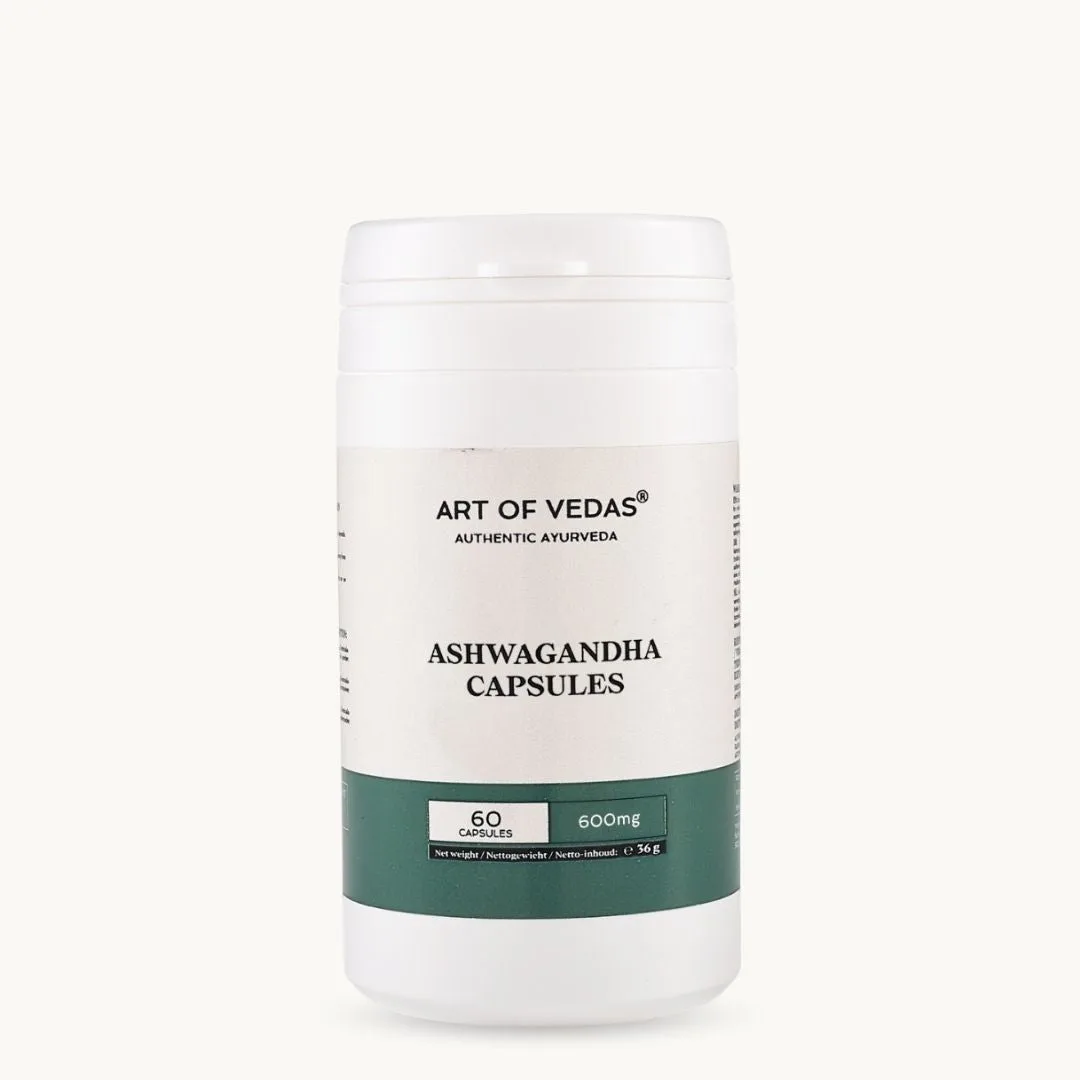
The standard recommendation for Art of Vedas Ashwagandha capsules is 1-2 capsules twice daily. This corresponds to approximately 500-1000mg per dose, which falls within the classical dosage range described in the Bhaishajya Ratnavali for Ashwagandha Churna (3-6 grams daily). Start with the lower dose (1 capsule twice daily) for the first week to assess your body's response, then increase if needed.
Timing
For general strength and vitality: take with breakfast and dinner. For sleep support: take the evening dose 30-60 minutes before bed with warm water. For stress resilience: take morning and afternoon doses. The classical texts emphasise consistency over timing - daily use matters more than the exact hour.
Best Vehicle (Anupana)
The classical Anupana for Ashwagandha is warm water with a small amount of ghee and honey. This combination enhances absorption and adds its own nourishing qualities. If you are lactose intolerant, warm water is acceptable. Avoid taking Ashwagandha with cold beverages or on a completely empty stomach if you have sensitive digestion.
Duration
Ashwagandha is a Rasayana - its effects build over time through tissue-level nourishment. Expect initial changes in sleep quality and stress response within 2-3 weeks. Deeper effects on strength, endurance and vitality develop over 6-12 weeks of consistent use. The Charaka Samhita describes Rasayana therapy as a sustained practice, not a quick fix. Plan for a minimum of 3 months to properly evaluate the herb's effect on your body.
What to Realistically Expect
Week 1-2: Subtle changes. Slightly easier time falling asleep. Marginally less reactive to stressful situations. These are gentle shifts, not dramatic transformations.
Week 3-4: More noticeable changes in sleep quality and stress tolerance. Some people report better morning energy and less afternoon fatigue.
Month 2-3: Cumulative effects become clear. Improved physical endurance, more stable energy through the day, better recovery from physical exertion. The nervous system feels steadier.
Month 3+: The full Rasayana effect. Deeper tissue nourishment, stronger immunity through the season changes, sustained vitality. This is the level the classical texts describe.
If you notice no effects after 6 weeks of consistent use at the full dose, your primary imbalance may not be Vata-driven, and an Ayurvedic consultation can help identify a more targeted approach. A Dosha assessment is always a good starting point.
Who Should Not Take Ashwagandha
Ashwagandha is warming (Ushna Virya). Individuals with strong Pitta aggravation - characterised by heat, inflammation, acid digestion, skin eruptions and irritability - may find it aggravating. In these cases, cooling Rasayanas like Shatavari or Brahmi are more appropriate starting points.
Pregnant women should not take Ashwagandha without practitioner guidance, and those on thyroid medication should consult their doctor, as Ashwagandha may influence thyroid function.
Ashwagandha Quality: What Art of Vedas Delivers
The market is flooded with Ashwagandha products of wildly variable quality. Art of Vedas sources Ashwagandha from established suppliers in India who follow traditional cultivation and processing standards. The capsules contain whole-root extract prepared according to classical methodology, not isolated withanolide fractions that bear little resemblance to the herb as the classical texts describe it.
For guidance on distinguishing genuine Ayurvedic products from inferior alternatives, see our article on how to identify authentic Ayurvedic products.
Combining Ashwagandha with Other Herbs
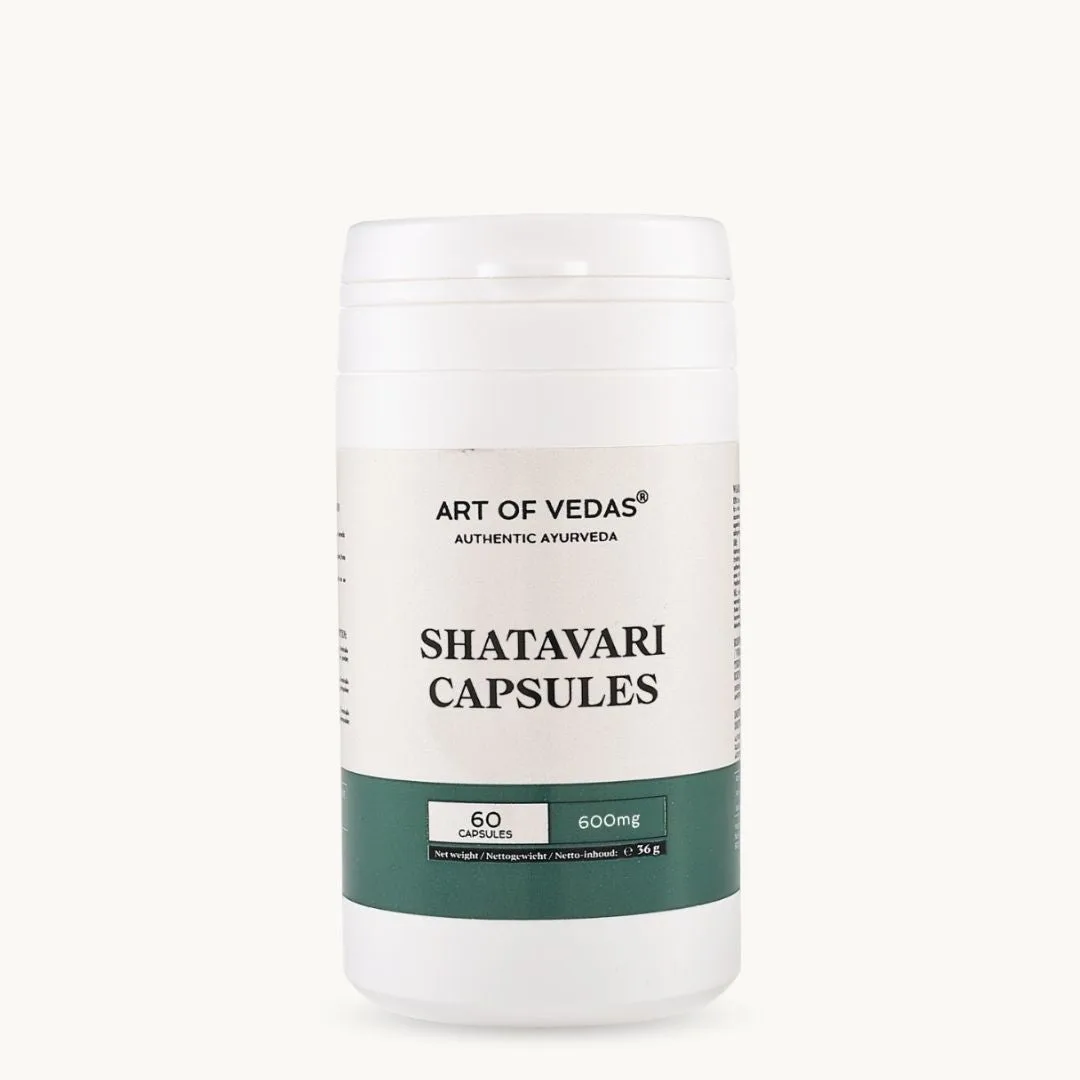
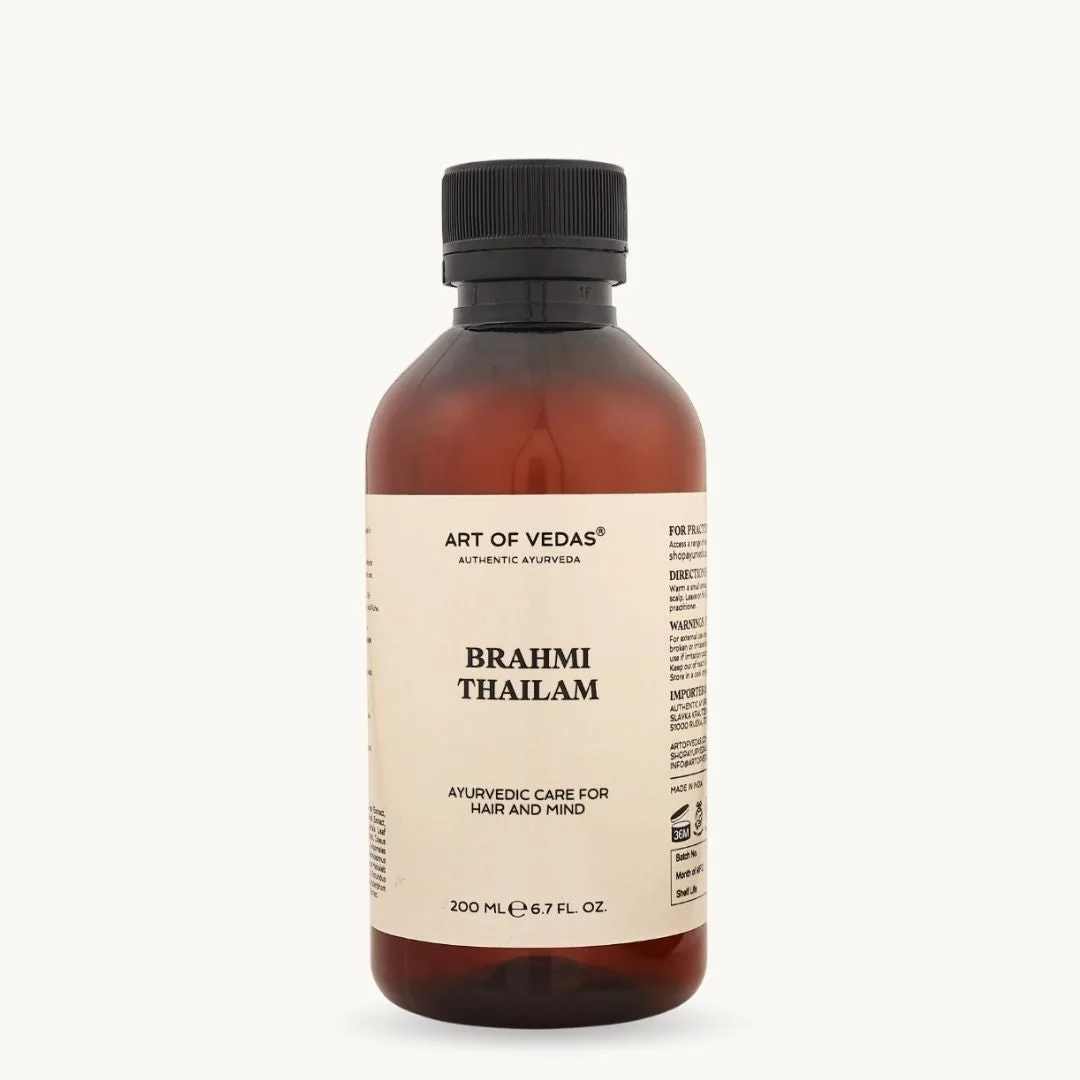
Classical practitioners rarely prescribe Ashwagandha in isolation. Common combinations include Ashwagandha with Shatavari (balancing warming and cooling energies for comprehensive Rasayana), Ashwagandha with Brahmi (nervous system and cognitive support), and Ashwagandha within Chyavanprash (the classical multi-herb Rasayana jam that contains both Ashwagandha and 40+ other ingredients). These combinations reflect the classical principle of Samyoga - synergistic combination that amplifies and balances individual herb actions.
Frequently Asked Questions
Can I take Ashwagandha long-term?
Yes. The Charaka Samhita describes Ashwagandha as a Rasayana suitable for sustained use. Many practitioners recommend cycles of 3 months on, 2-4 weeks off, then resume - though continuous use is also classically supported. Listen to your body and ideally work with a practitioner for long-term supplementation.
Should I take Ashwagandha in the morning or at night?
Both. The classical recommendation is twice daily - morning for daytime vitality and evening for sleep support. If you can only take one dose, choose evening if sleep is your primary concern, or morning if energy and stress resilience are the priority.
Is Ashwagandha safe with coffee?
There is no classical contraindication, but from a Dosha perspective, coffee aggravates Vata while Ashwagandha pacifies it. Taking both creates a push-pull dynamic. If you drink coffee, take your Ashwagandha separately - with meals rather than alongside your morning coffee.
What is the difference between Ashwagandha root powder and extract?
Root powder is the whole herb ground into Churna form - this is the classical preparation. Standardised extracts concentrate specific compounds (usually withanolides) to higher levels than found in the whole root. Classical Ayurveda favours the whole herb because it contains the full spectrum of compounds in their natural ratios. Art of Vedas uses traditional preparation methods that honour this classical principle.
Can women take Ashwagandha?
Absolutely. While Shatavari is the primary female Rasayana, Ashwagandha is classified as a universal Rasayana in the Charaka Samhita. Women experiencing Vata-type stress, fatigue, sleep difficulties or general depletion benefit from Ashwagandha. Many practitioners combine it with Shatavari for comprehensive support.