In brief: Haridra, the golden rhizome Europe knows as turmeric, is classified in Ayurveda as bitter and pungent, light and dry, warming in effect, and is traditionally used to support Agni (the digestive fire) and to keep Kapha in balance.
Turmeric carries a long list of names in Sanskrit, and the names record what the tradition made of it. Haridra is the common one. Nisha and Rajani both mean night. Kanchani means golden, and Varavarnini means the one that gives excellent colour. Five names for a single rhizome describe a plant that belonged to ordinary household life, in the kitchen and on the skin, rather than one kept for the dispensary.
One point of confusion is worth settling first. Haridra is Curcuma longa, a rhizome of the ginger family. Daruharidra, despite the similar name, is Berberis aristata, a woody shrub with an equally yellow inner bark and quite different classical properties. The two are easy to confuse by name alone. Ayurveda never confused them.
How Ayurveda classifies Haridra
Classical pharmacology describes every substance by a small set of attributes, and those attributes tell a practitioner where a herb belongs. The Rasa (taste) of Haridra is tikta, bitter, and katu, pungent. Its Guna (quality) is laghu, light, and ruksha, dry. Its Virya (potency) is ushna, heating, and its Vipaka, the taste remaining after digestion, is katu.
Read together, that profile points in one direction. Bitter and pungent tastes, dryness and heat oppose Kapha (the Dosha of structure, moisture and heaviness), so Haridra is first of all a Kapha herb. The warmth also suits Vata (the Dosha of movement, dryness and cold), though the dryness means Vata types do better taking it with a little ghee than on its own. Pitta (the Dosha of heat and transformation) is the one to watch: the bitter taste is cooling, the potency is not, and someone already running warm will want less.
This is why Ayurveda sets no universal amount of turmeric. The herb is read differently depending on the Prakriti (individual constitution) in front of you, and on the season. For a herb with the opposite qualities, cool and nourishing where Haridra is warm and drying, see our Shatavari guide.
Where Haridra sits in the classical texts
The Charaka Samhita groups herbs into lists of ten by the action they share, and Haridra appears among the lekhaniya group, the herbs described as scraping, meaning those that reduce accumulation rather than build tissue. That single classification explains most of its traditional use. The tradition directs it towards excess and dampness, not towards depletion. A Rasayana it is not.
Haridra also appears as a component of larger formulas. Nalpamaradi Kera Thailam, for instance, is classically prepared with turmeric alongside the four barks the formula is named for. It is a customary ingredient in ubtan powders and lepa pastes, the old cosmetic formats of Ayurveda.
Haridra Khanda
Among internal preparations, Haridra Khanda is a well known format: turmeric processed with a sugar base and aromatic spices into a granular preparation taken by the spoon. It shows the tradition's instinct to soften a hot, dry herb before it is taken daily.
Haridra in Dinacharya
Dinacharya (the daily routine) is where the herb is most often put to use, and only a few rules matter.
- Warm water carries it well. A small amount of the powder stirred into hot water first thing is the plainest traditional format, and the warmth suits the herb's own nature.
- Fat carries it further. Turmeric's colour and aroma disperse into oil and ghee rather than water, which is why classical cooking adds it early to hot fat, not at the end over the food.
- Honey is used as an Anupana (carrier) only when it is not heated. Ayurveda is firm on this, so let the water cool to drinkable warmth first.
- Pungent company is traditional. Haridra is classically combined with Maricha and Pippali, the pepper pair of the texts.
Ritucharya (seasonal routine) puts Haridra at its most useful in the damp, heavy end of winter and in early spring, the Kapha season across most of Europe. In high summer, the same daily amount may feel like too much. Our guide to yoga and Ayurveda sets out how routine, season and constitution fit together.
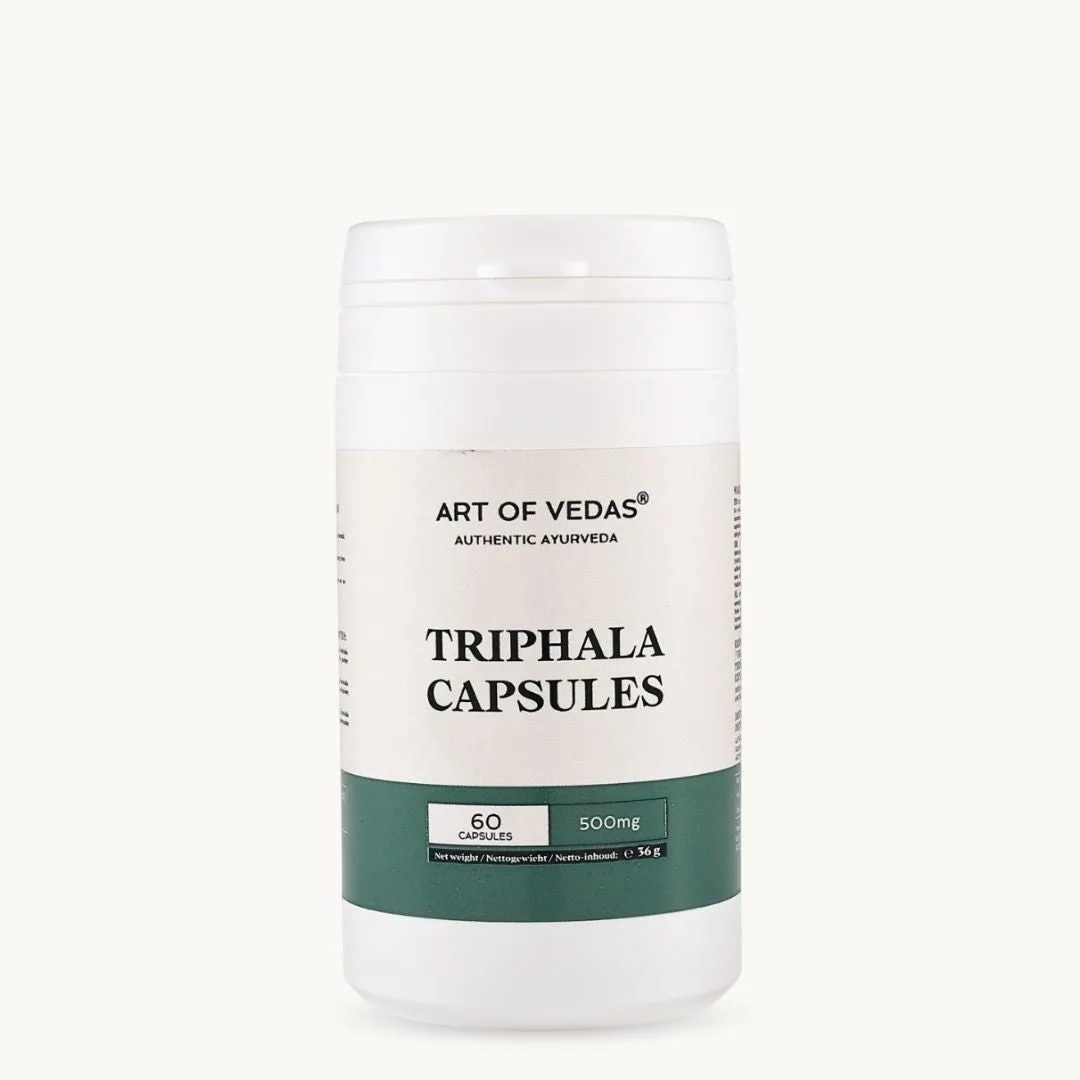
A simple routine puts Haridra in the morning and Triphala Capsules in the evening: the warming herb with the working day, the gently balancing one before rest. If Triphala is new to you, our guide to the three fruits sets out how the formula is put together.
External use: lepa and ubtan
Haridra's cosmetic reputation is older than its supplement shelf. Applied as a lepa, a paste mixed fresh with water or rose water, or blended into an ubtan powder with chickpea flour, it is described as varnya in the classical nighantus, a herb associated with clarity and evenness of complexion. Bridal ubtan is its ceremonial form.
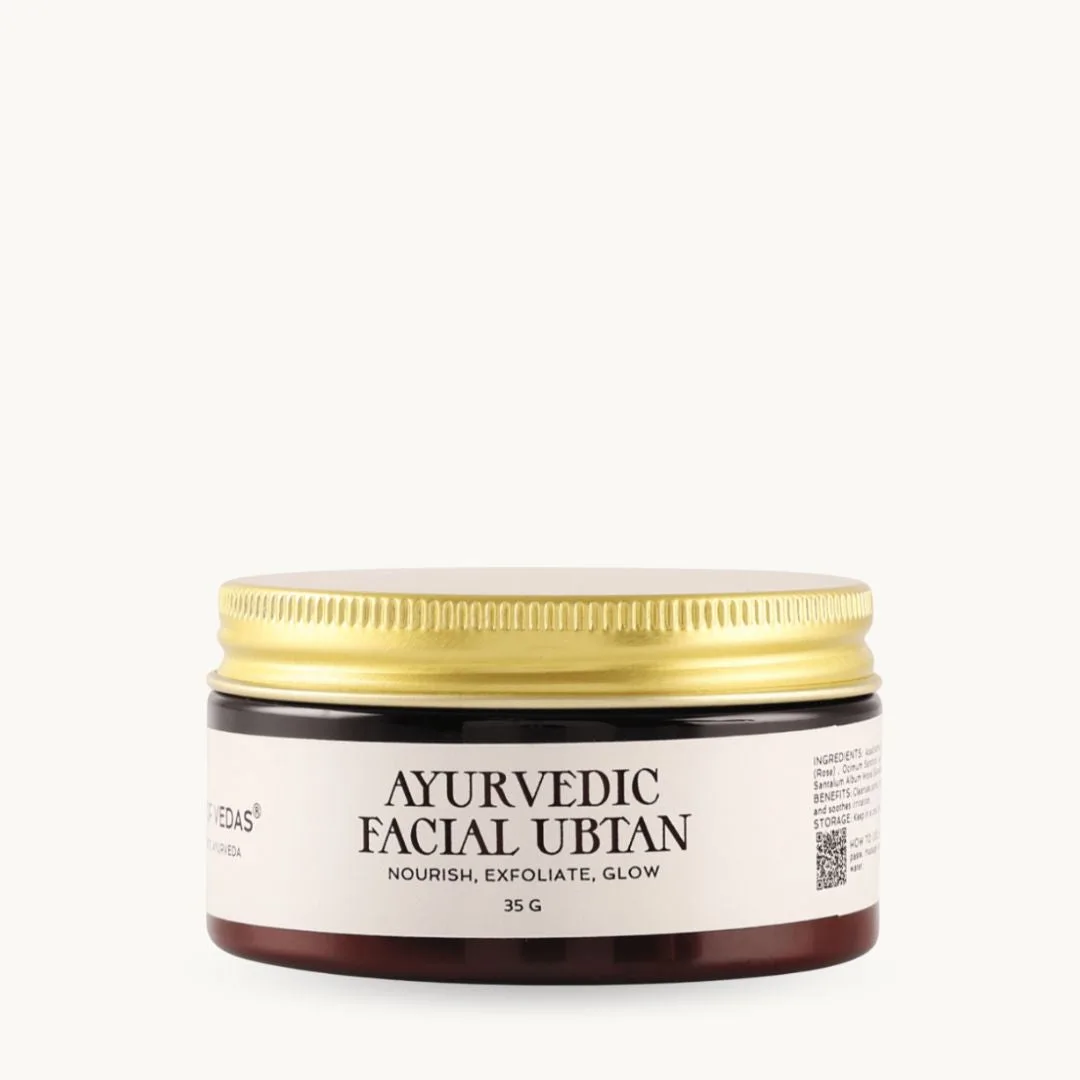
Two practical warnings. Turmeric stains, on skin, on cloth and on light stone. And any new plant paste deserves a patch test on the inner forearm before it goes near the face. A ready-blended Ayurvedic Facial Ubtan removes most of the guesswork, since the proportions are already set. For an oil rather than a powder, Nalpamaradi Kera Thailam is the classical choice.
Churnam or capsules
Churnam (a fine herbal powder) is the traditional format, and it adapts to whatever you need: vary the amount by the day, mix it into food, or make a paste with it. The drawbacks are honest ones. It tastes strongly bitter, it travels badly, and it loses colour and aroma in light and warmth, so it wants a dark, airtight jar and a cool cupboard rather than the shelf above the cooker.
Capsules answer the taste and the travelling. Haridra Capsules give the herb in a fixed daily amount with nothing to prepare, which suits anyone who would rather take it steadily than enthusiastically for a fortnight. The serving on the label is the one to follow.
When to take advice first
Turmeric as a kitchen spice is ordinary. Concentrated preparations are a different question. If you are pregnant or breastfeeding, if you take prescribed medication, or if you have a procedure scheduled, speak with your doctor or a qualified Ayurvedic practitioner before starting a daily supplement.
Questions we are asked
Is Haridra the same as the turmeric in my kitchen?
Botanically, yes: both are Curcuma longa. The difference is intent and quantity. In cooking, turmeric is one seasoning among several and the amount moves with the dish. Taken as a daily supplement it is a fixed amount in its own right, which is the form the classical daily routine describes.
Is Haridra the same as a turmeric extract?
Not in Ayurvedic terms. The tradition works with the whole dried rhizome ground to a powder, and every classical attribute set out above, the taste, the qualities, the potency, describes that whole herb. A concentrated extract is a different preparation, and the classical texts do not describe it.
Why does Ayurveda combine turmeric with black pepper?
Because the tradition combines bitter herbs with pungent ones as a matter of course. Maricha and Pippali were classically added to support Agni and to keep a cold, heavy digestion from being burdened by the herb itself.
Can turmeric be used on the face?
It has been for a very long time, in lepa pastes and ubtan powders rather than neat from the spice jar. Use a prepared blend, keep the contact time short at first, and patch test. Be realistic about the staining, and rinse with lukewarm water rather than scrubbing.
Is Haridra suitable for a Pitta constitution?
The classical adjustment is a matter of quantity, company and season rather than a yes or a no. Less in high summer than at the damp end of winter, carried by ghee or a cooked dish rather than by hot water and pepper, and eased off in a heatwave as you would ease off any warming spice.