This article is part of our Kansa Vatki: The Classical Bowl Massage Tool Guide guide series.
Kansa Gua Sha: The Ayurvedic Approach to Facial Massage
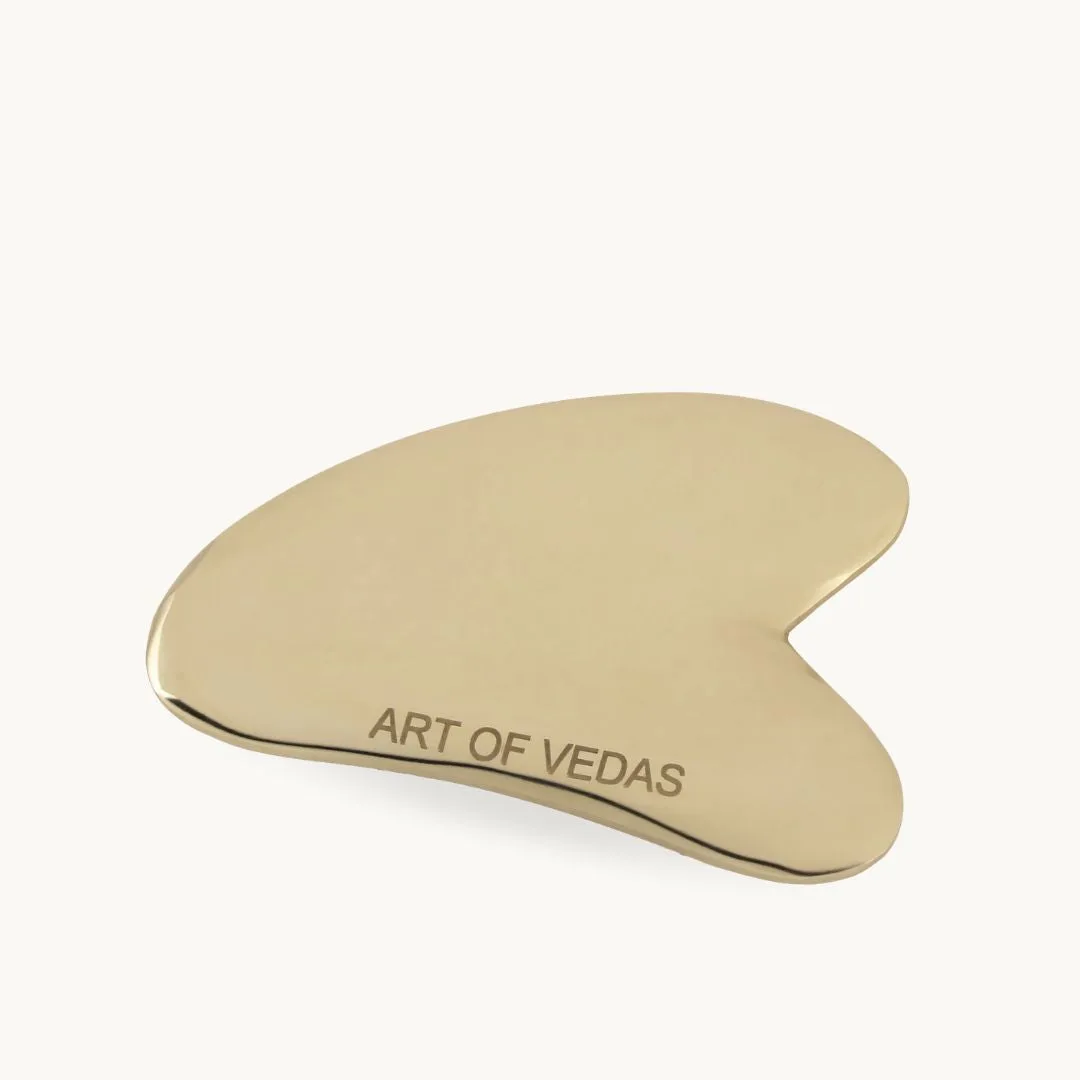
The Kansa Gua Sha represents a compelling convergence of two ancient healing traditions: the Indian Ayurvedic use of Kansa (bell metal) and the technique of Gua Sha - a scraping and gliding motion across the skin associated with Traditional Chinese Medicine but with deep parallels in the classical Indian understanding of facial and body massage.
In the context of Ayurvedic facial care, the Kansa Gua Sha functions as a tool for classical facial Marma massage - the stimulation of the vital points of the face through gentle, directional strokes with a smooth metal tool and a small amount of facial oil. The result is a practice that supports lymphatic drainage, addresses surface Pitta heat, and brings the focused attention of classical face massage to a modern self-care routine.
Kansa Metal: Properties and Classical Significance
Kansa - the copper-tin alloy sometimes called bell metal - occupies a unique position in the Ayurvedic materia medica. The classical Ayurvedic texts describe copper-containing preparations as Pitta-shamana (Pitta-pacifying), Dahaprashamana (cooling burning sensations), and Raktashodhana (supporting the clarity of the blood and skin tissues). These properties underlie the traditional use of Kansa tools in Ayurvedic massage practice.
In practical use, practitioners consistently observe that the Kansa metal warms slightly during massage and may cause a mild yellowing of oil on the skin - attributed in traditional explanation to the drawing-out of excess Pitta heat from the superficial tissues. Whether understood in traditional or modern terms, the consistent observation across thousands of practitioners worldwide validates the distinctive quality of Kansa as a massage tool material.
Gua Sha in the Ayurvedic Context
Gua Sha as a technique - using a smooth tool in directional strokes across the skin - has its primary cultural origin in Chinese medicine, where it is used on the body to address Qi stagnation and release muscular tension. However, the underlying principle - using smooth pressure and gliding strokes to release surface tension, stimulate circulation, and support lymphatic movement - has direct parallels in the Ayurvedic tradition of Marma massage and classical Abhyanga techniques.
The Kansa Gua Sha is best understood, in the Ayurvedic context, as a Marma-stimulating facial tool - the flat, curved edges designed to glide smoothly along the facial contours while maintaining consistent contact with the superficial tissues and the Marma points of the face.
Marma Points of the Face and the Kansa Gua Sha
Classical Ayurvedic anatomy identifies several significant Marma points on and around the face. Understanding these points enriches the practice of Kansa Gua Sha from a tool technique to a classical Marma massage:
-
Sthapani: Between the eyebrows - associated with Manas (mind) and the Ajna chakra area; gentle circular pressure here at the beginning of the practice supports mental settling
-
Apanga: At the outer corners of the eyes - associated with vision and the Alochaka Pitta of the eyes; gentle strokes outward and upward from this point support lymphatic drainage from the eye area
-
Shankha: At the temples - one of the most significant Marma points of the head, associated with the sense organs and the mental faculties; circular Gua Sha movement at the temples is particularly grounding
-
Phana: At the sides of the nostrils - associated with Prana Vata and the nasal passages; gentle strokes along the cheekbones outward from the nose pass through this area
-
Hanu: At the jaw and chin area - associated with the digestive system in classical Marma theory; upward strokes along the jawline work across this region
How to Use the Kansa Gua Sha: Step-by-Step Guide
Preparation
-
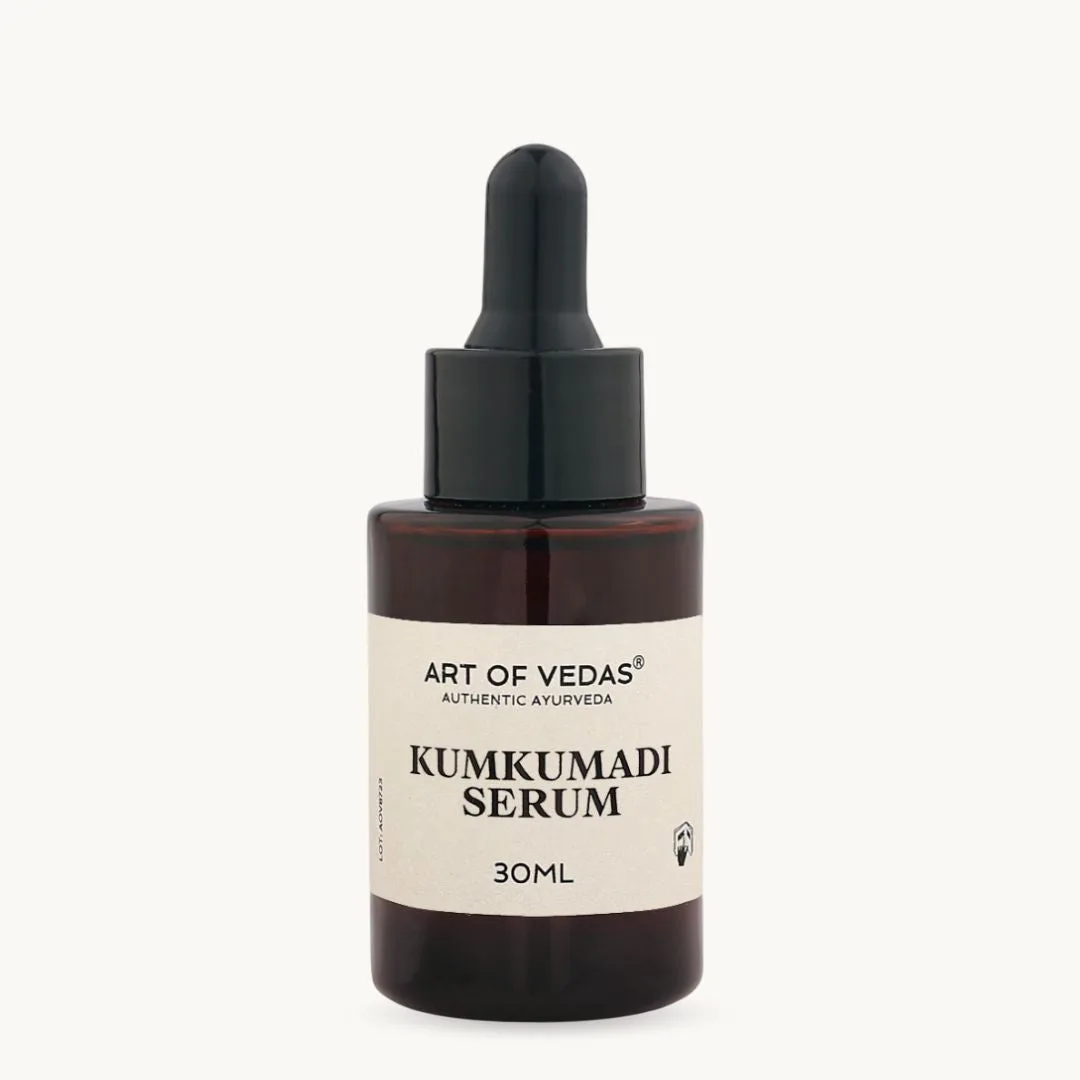
Choose your oil: Apply two to four drops of a classical facial oil to clean, slightly damp skin. Kumkumadi Thailam, Eladi Keram, or Chandanadi Thailam are the classical choices - see our face oil selection guide. The oil is essential - it acts as a carrier and allows the Gua Sha to glide without dragging on the skin.
-
Warm the tool: Hold the Kansa Gua Sha in your palm for a moment to bring it to skin temperature. Avoid using a cold tool directly on the face.
-
Clean face: Begin with a gently cleansed face. Pat dry but leave a little moisture in the skin to facilitate gliding.
The Technique
Hold the Gua Sha tool between the thumb and forefinger, using the flat curved edge for broad gliding strokes and the narrower edge for more precise work around the nose and eye area.
-
Start at the neck: Begin with three to five gentle downward strokes along the sides of the neck - facilitating lymphatic drainage from the head downward.
-
Jawline: Place the tool at the chin and glide outward along the jawline toward the ear, using light to moderate pressure. Repeat three to five times per side.
-
Cheeks: Glide from the nose outward across the cheeks toward the ears. This covers the Phana and Shankha marma areas. Three to five strokes per side.
-
Under-eye area: Use the narrower edge, with the very lightest possible pressure, in outward strokes from inner to outer corner. This area is delicate - use minimal pressure only.
-
Forehead: Glide upward from the eyebrows toward the hairline, working from the centre outward. Three to five strokes per section.
-
Temples: Use circular movements at the Shankha marma points. This is one of the most immediately noticeable and relaxing elements of the practice.
-
Decolletage and upper chest: Complete the sequence with outward strokes across the upper chest and collarbone - supporting complete lymphatic drainage of the neck and facial region.
Completion
After completing the sequence, allow any remaining oil to absorb into the skin. Clean the Kansa Gua Sha with warm water and a soft cloth. The full sequence takes approximately five to ten minutes.
Kansa Gua Sha versus Kansa Wand: Understanding the Difference
Both the Kansa Gua Sha and the Kansa Wand are Kansa facial tools, but they work differently:
-
Kansa Wand: The wand uses circular, pressing movements on the facial Marma points - a more focused, point-specific technique. The wand's rounded dome head maintains continuous contact in small circles. See our Kansa wand guide.
-
Kansa Gua Sha: The Gua Sha uses broader, directional gliding strokes - more effective for lymphatic drainage, contouring, and releasing surface tension across the facial muscles. Better suited to those who prefer the gliding Gua Sha technique.
Many practitioners who begin with one tool find the other a natural complement - using the Gua Sha for broader drainage strokes and the Kansa Wand for focused Marma point work.
Frequency and Seasonal Use
Daily Kansa Gua Sha practice - five to ten minutes as part of a morning or evening facial ritual - is ideal. At minimum, three to four times per week delivers meaningful cumulative benefit. Evening practice is well-suited to the cooling, Pitta-addressing quality of Kansa - allowing the skin to absorb the oil overnight while the Pitta-calming effect of the Kansa metal supports the settling of heat accumulated during the day.
In summer months, the Pitta-cooling quality of Kansa makes the practice particularly timely. In winter, the warming of the tool by the hands and the use of a warming facial oil (sesame-based Kumkumadi Thailam) adapts the practice appropriately for the Vata season.
Frequently Asked Questions
What is the Kansa Gua Sha used for?
The Kansa Gua Sha is used for classical Ayurvedic facial Marma massage and lymphatic drainage. It is used with a small amount of facial oil to glide across the skin in directional strokes, stimulating the facial Marma points, supporting lymphatic circulation, and addressing Pitta heat in the facial tissues through the properties of the Kansa metal.
What oil should I use with the Kansa Gua Sha?
Two to four drops of a classical Ayurvedic facial oil is all that is needed. Kumkumadi Thailam is the classical choice for most skin types. Eladi Keram is more appropriate for Pitta or sensitive skin in summer. Chandanadi Thailam is the most cooling option for reactive or heat-affected skin. See our full face oil selection guide.
How is Kansa Gua Sha different from regular Gua Sha?
Regular Gua Sha tools are typically made from jade, rose quartz, or other stones. Kansa Gua Sha uses the traditional Indian bell metal alloy, bringing the specific Pitta-cooling and heat-drawing properties of Kansa metal to the Gua Sha technique. The practice is also grounded in the Ayurvedic Marma point system rather than the Chinese meridian framework.
Can I use the Kansa Gua Sha under my eyes?
Yes, but with the lightest possible pressure. The under-eye area is delicate and requires a very gentle touch. Use the narrower edge of the Gua Sha and ensure there is adequate oil on the skin to allow smooth gliding without any dragging or pulling.
How often should I use the Kansa Gua Sha?
Daily use is ideal. Even five minutes of daily Kansa Gua Sha facial massage, with two to four drops of classical oil, delivers cumulative benefit over time. The practice builds - effects on lymphatic drainage, skin tone, and the sense of calm and coolness in the facial tissues are more noticeable with regular, consistent use.
Explore the Kansa Ritual Collection
Discover the Kansa Gua Sha from Art of Vedas, made from authentic Kansa bell metal. Pair with our classical face oils - Kumkumadi Thailam or Eladi Keram - for the complete Ayurvedic facial practice. Browse our full range of Kansa ritual tools.
This article is for informational and educational purposes only. The Kansa Gua Sha is a traditional Ayurvedic wellness tool for self-care use. It is not a medical device and is not intended to diagnose, treat, cure, or prevent any medical condition. Consult a qualified Ayurvedic practitioner for personalised guidance.