The difference between Thailam and Kuzhambu is one of the most frequent questions we receive at Art of Vedas, and it deserves a precise answer. A Thailam is a liquid preparation built on a single oil, most often sesame. A Kuzhambu is a semi-solid preparation built on three fats. From that single distinction, everything else follows: texture, behaviour on the skin, and the work each format is asked to do.
The Short Answer
Thailam: liquid, single-oil base, spreads readily, suits long strokes and larger areas, the classical format for full-body Abhyanga. Kuzhambu: semi-solid, three-fat base of sesame, coconut and castor, stays where it is placed, absorbs slowly, the classical format for targeted local application. A Kuzhambu is not an oil and should not be imagined as merely a thicker one; it is a different preparation with a different purpose.
Base and Texture
A classical Thailam begins with one oil, usually cold-pressed sesame, which is processed for hours with Kashayam, the herbal decoction, and Kalka, the herb paste, until the liquid carries the character of its botanicals. A Kuzhambu is prepared by the same patient method but on a threefold base: warming sesame, cooling coconut and dense, penetrating castor. Reduced slowly, this three-fat composition settles into a soft, semi-solid body, with no thickening agents of any kind. The texture is the signature: a Thailam pours, a Kuzhambu holds.
How Each Behaves on the Skin
Poured into a warm palm, a Thailam spreads at once and asks to be moved: long, flowing strokes over the limbs and back, the whole-body rhythm Europeans usually meet first. A Kuzhambu behaves differently. Softened between warm hands and applied to a chosen area, it stays on that area, releasing itself gradually as it absorbs. That slow release is the point: the working time of a focused application is extended, and nothing runs or drips away from the region being attended to.
When Tradition Prefers Each
The rule of thumb is coverage versus concentration. For daily Abhyanga over the whole body, the tradition reaches for a Thailam. For sustained, local work on a specific region, the shoulders after a long week, the lower back, the knees, the feet, it reaches for a Kuzhambu. Many routines combine both in a single session.
- Thailam for coverage: full-body Abhyanga and long strokes
- Kuzhambu for concentration: targeted areas and sustained attention
- Thailam absorbs and finishes sooner; Kuzhambu stays and works slowly
- Both are made by the same classical decoction-and-paste method
- Both reward gentle warming before use
The Dhanwantharam Example
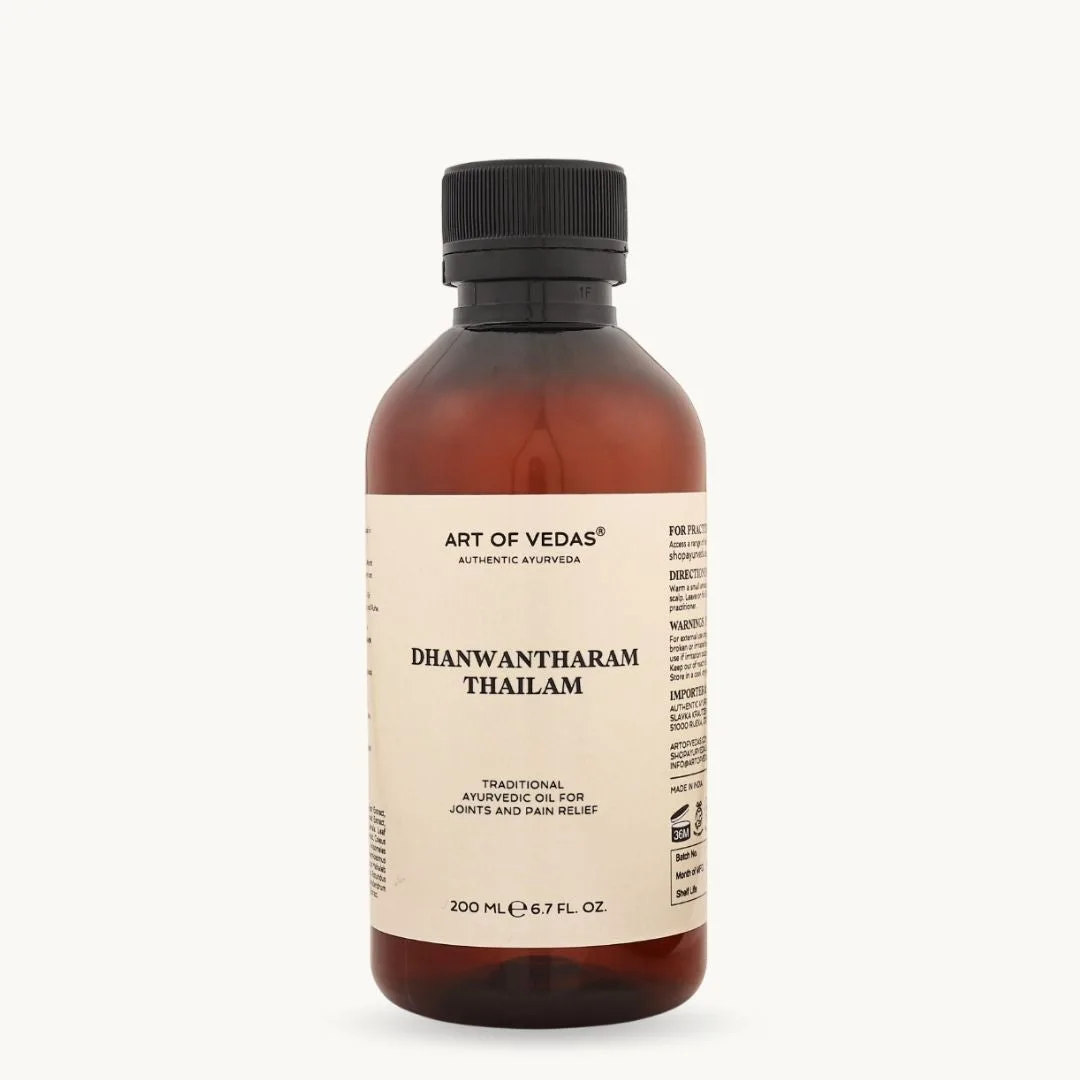
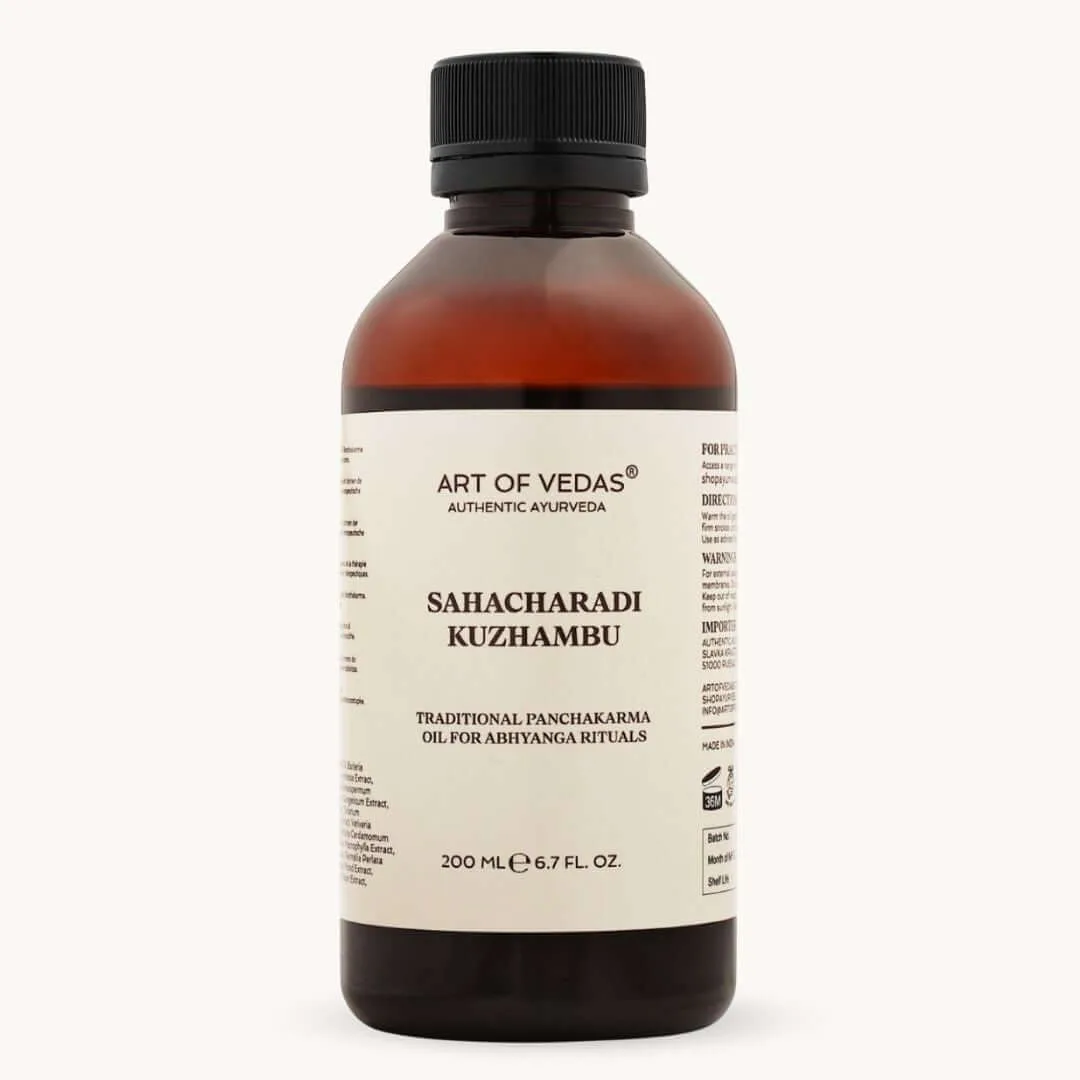
The clearest illustration is the one formula that exists in both formats. Dhanwantharam Thailam is the liquid form of the great Bala-based Vata composition; Dhanwantharam Kuzhambu is the same classical recipe carried onto the three-fat base and finished semi-solid. Same lineage, different bodies, different tasks. The lower-body classic Sahacharadi Kuzhambu shows the format at its most typical. For the full picture of the category, begin with our complete guide to Kuzhambu; for the liquid side, our guide to what Thailam means; and for the third consistency of the family, the comparison continues in Thailam, Kuzhambu or Mezhukupakam.
Frequently Asked Questions
Is a Kuzhambu simply a thicker oil?
No. It is a semi-solid preparation on a three-fat base. The consistency is intrinsic to the recipe and the reduction, not an added thickness.
Can the same formula exist as both Thailam and Kuzhambu?
Yes. Dhanwantharam is the best-known example, prepared classically in both liquid and semi-solid form.
Which absorbs faster?
The Thailam. A Kuzhambu is deliberately slower: it stays on the applied area and releases itself over a longer time.
Which should I use for full-body Abhyanga?
A Thailam. Tradition keeps the Kuzhambu for targeted local application rather than whole-body massage.
Do the two formats use the same herbs?
When they share a formula name, yes; the recipe travels between formats. The difference lies in the base fats and the finished consistency.
This article describes traditional Ayurvedic practices for external use and is intended for general information only. It does not constitute medical advice. Please consult a qualified Ayurvedic practitioner or your medical professional before beginning a new routine, and perform a patch test before first use.