In brief: Lakshadi Thailam (also written Lakshadi oil, Lakshadi Taila, Lakshadi Thailam or, in its coconut form, Lakshadi Keram and Lakshadi Keratailam) is a classical Ayurvedic massage oil named after Laksha, the lac resin that leads its recipe, cooked with Ashwagandha, Bala, Manjishtha, turmeric and other plants into sesame or coconut oil. The classical texts place it among the gentler Abhyanga oils. This guide explains what it is, how the Chandana Bala and Ashwagandha Bala Lakshadi variants differ, how it is used, and which Art of Vedas oils come closest.
What Lakshadi Thailam is and what the name means
Lakshadi is a compound of two words. Laksha is the resin produced by the lac insect on the branches of certain trees, long used in Ayurveda as an ingredient of medicated oils. The ending adi means "and the others", so Lakshadi Thailam is "the oil of Laksha and the plants that follow it".
Lakshadi Thailam, Lakshadi Thailam, Lakshadi Taila, Lakshadi oil and Lakshadi Tel all mean the same preparation. Lakshadi Keram, Lakshadi Keratailam, Lakshadi coconut oil and Lakshadi Velichenna (velichenna is the Malayalam word for coconut oil) name the version cooked into coconut oil rather than sesame oil. Lakshadi Guggulu and Lakshadi Kashayam are a tablet and a decoction: different preparations that share the lead ingredient but are not massage oils.
The classical description
The Sahasrayogam is the source most often cited for Lakshadi Thailam and its Keram form. The classical recipe names, among others, Laksha itself, Ashwagandha root, Bala root, Manjishtha root, turmeric and deodar wood. Decoction, paste and base oil are cooked slowly together by the Sneha Paka method until the water has gone. No single herb count is given here, because the lists differ between texts and between makers.
The base oil is the main practical difference between the two forms: cooked into sesame oil the result is a Thailam, fuller and warmer on the skin; cooked into coconut oil it is a Keram, lighter and cooler, and the form most people in warm climates know. Our complete guide to traditional Thailams explains the two base oils.
Chandana Bala Lakshadi and Ashwagandha Bala Lakshadi
Two named variants are searched for almost as often as the plain oil; the names tell you what has been added at the front of the recipe.
Chandana Bala Lakshadi Thailam (also Chandanbala Lakshadi Tel, Chandan Bala Lakshadi Taila) opens with Chandana, sandalwood, followed by Bala and Laksha. Sandalwood is the cooling plant of the pharmacopoeia, so the texts describe this variant as the cooler member of the family, placed with Pitta as well as Vata.
Ashwagandha Bala Lakshadi Thailam (also Balashwagandha Lakshadi Taila, Balashvagandhalakshadi Taila, Bala Lakshadi Thailam) opens with Ashwagandha and Bala, the two strengthening roots that lead many Vata oils, followed by Laksha. The classical texts place it with Vata and describe it as nourishing and mildly warming.
Character in Ayurvedic terms
The classical texts describe Laksha as cooling and light, and Lakshadi oil as one of the softer Abhyanga oils rather than one of the hot ones. The sesame Thailam is described as balancing Vata without heating Pitta; the coconut Keram is cooler still, the form the tradition reaches for in hot weather and for delicate skin.
How Lakshadi Thailam is used in practice
Lakshadi oil is used externally, as an Abhyanga oil for the body. Warm the closed bottle in a bowl of warm water for a few minutes until a drop feels pleasantly warm on the inner wrist; never use a microwave. Apply a generous amount with long strokes along the limbs and circular strokes around the joints, or a small amount to one area until it is absorbed. Leave it on the skin for 15 to 20 minutes, then take a warm shower or bath. Daily use follows the classical routine; two to three times a week is a common rhythm in Europe. Our Abhyanga guide walks through the full sequence.
Who should ask first
Lakshadi Thailam is for external use only. Do a small skin test on the inner forearm before the first full application, and keep the oil away from the eyes and broken skin. An oil that declares Laksha is not vegan; check the base if you react to sesame or coconut. If you are pregnant or wish to use any oil on a child, ask your doctor or a qualified Ayurvedic practitioner first.
Lakshadi Thailam and the Art of Vedas range
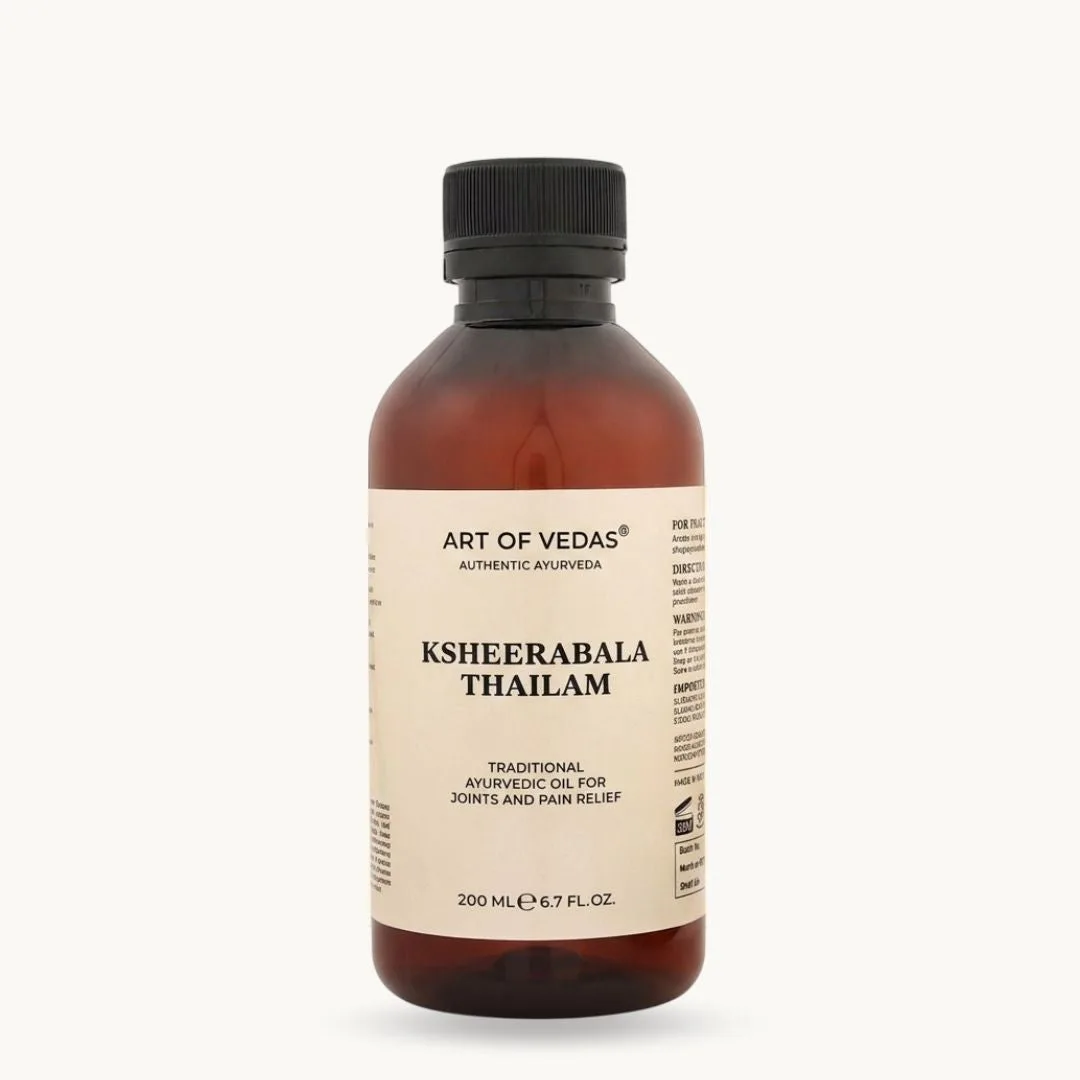
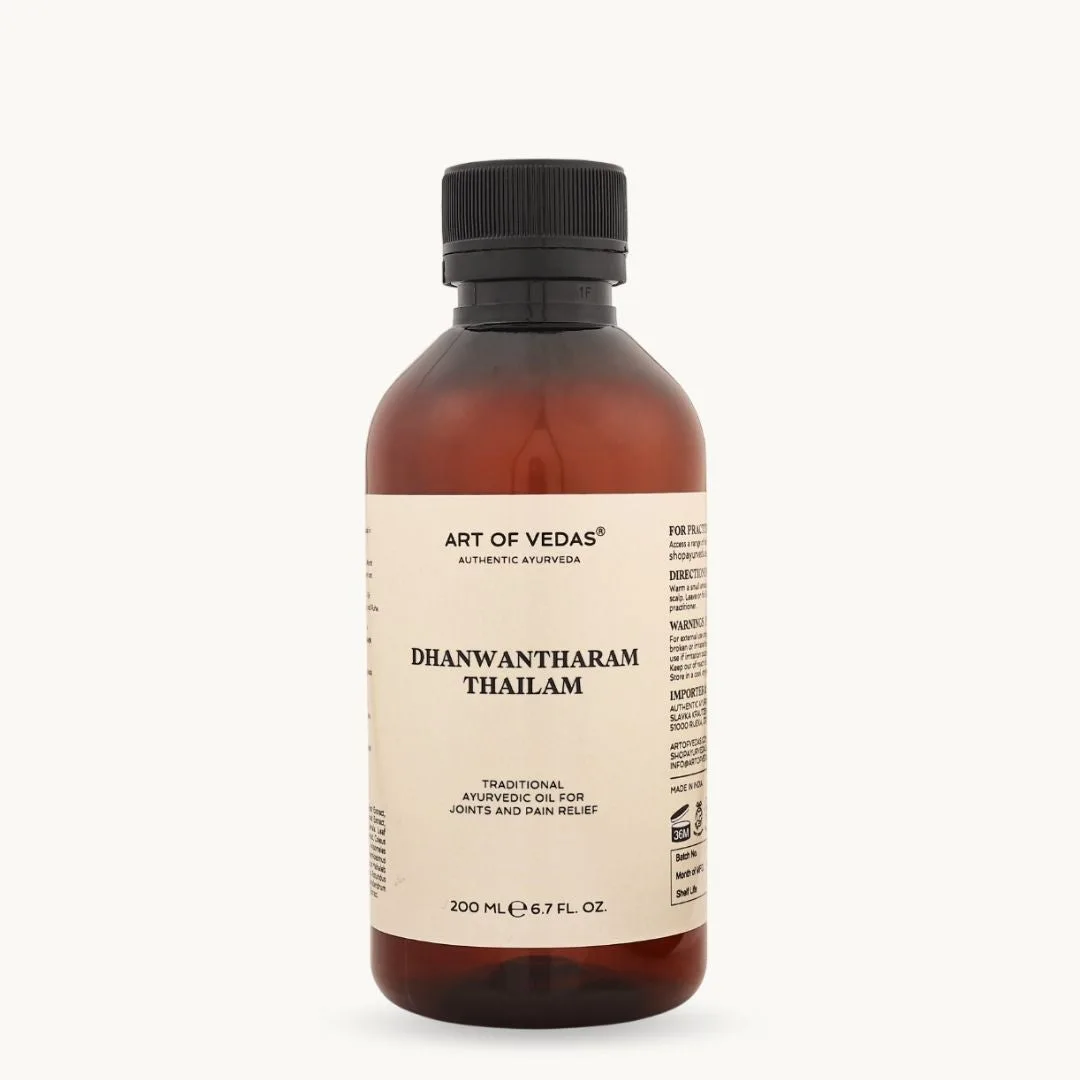
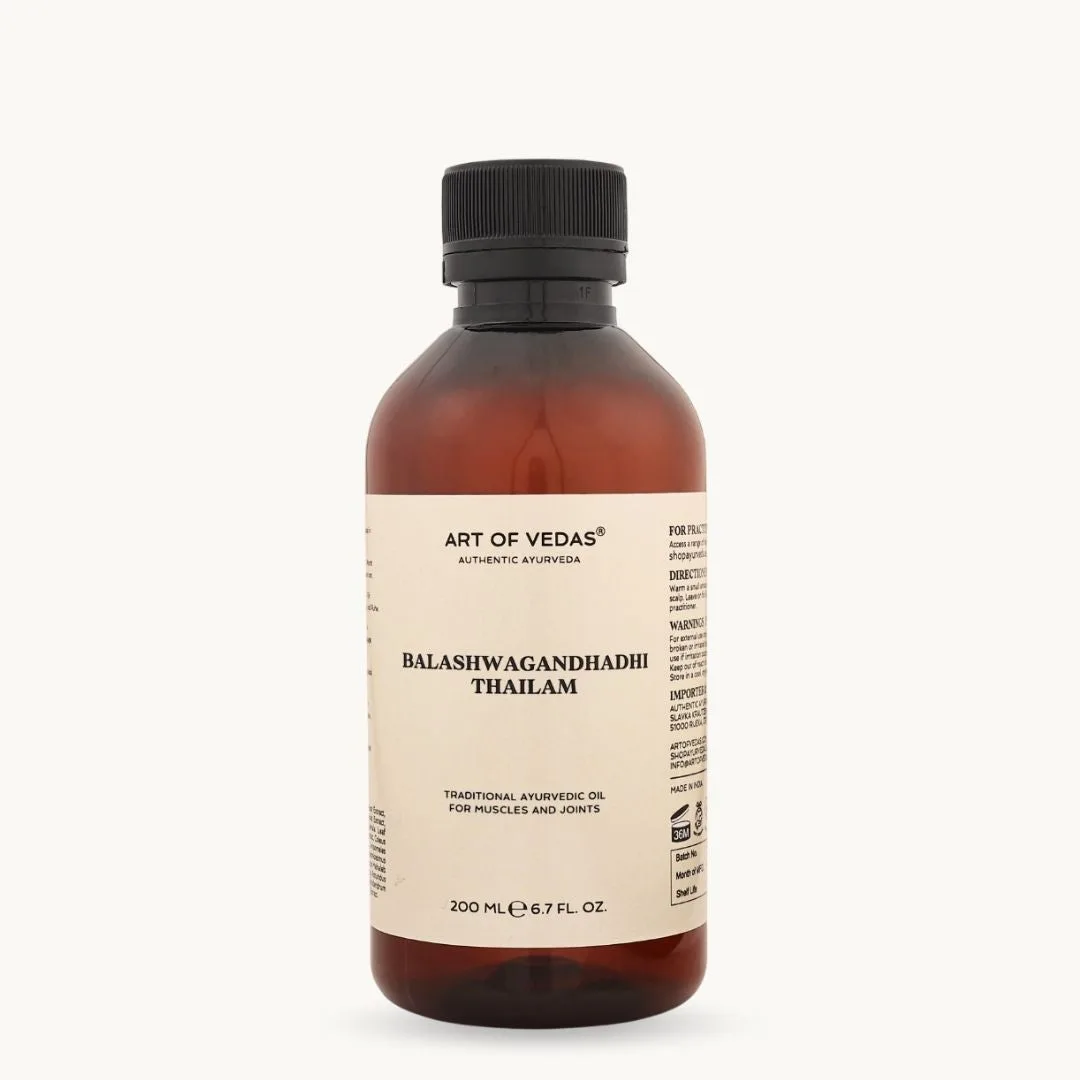
Art of Vedas does not currently offer Lakshadi Thailam, Lakshadi Keram or their variants. The closest oils in our range are Ksheerabala Thailam, a mild, Bala-led sesame oil among the gentler Abhyanga oils, Dhanwantharam Thailam, a Bala-led oil with the Dashamoola roots for a mildly warming daily routine, and Balaswagandhadi Thailam, which shares Bala, Ashwagandha and Laksha with the Ashwagandha Bala Lakshadi recipe. Our comparison of Ayurvedic massage oils sets these three side by side.