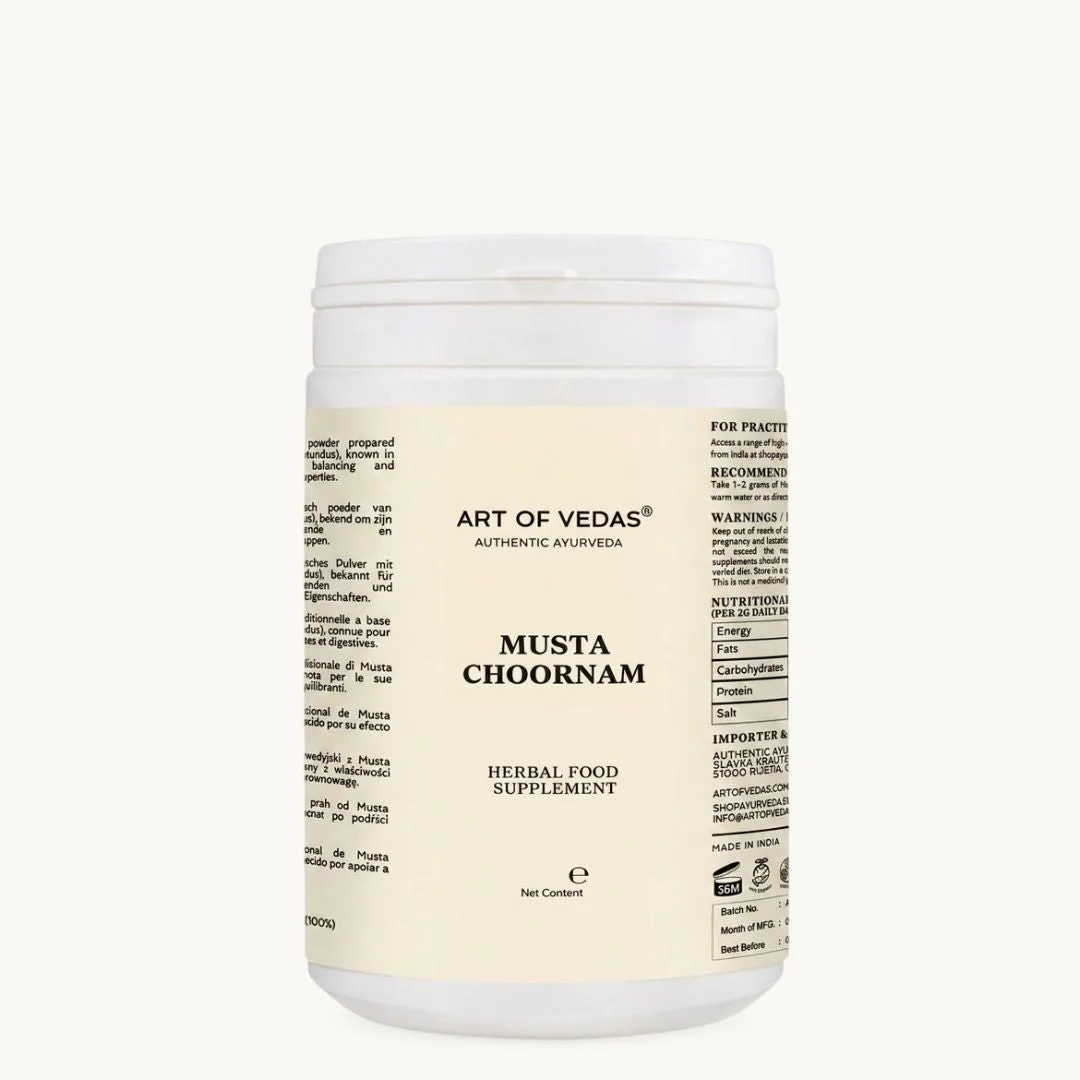
Musta Churna is one of the quiet workhorses of the classical Ayurvedic kitchen shelf. It is the fine powder of Musta, the small aromatic tuber that grows on a common sedge, and it has been used for generations in the traditions built around comfortable digestion. This guide from Art of Vedas explains where Musta comes from, how the powder is traditionally taken, and where it sits in the wider family of classical Churnam.
The classical origin of Musta
Musta is the classical Ayurvedic name for the tuber of Cyperus rotundus, a hardy sedge known in India as Nagarmotha and in English as nut grass. It is the knotty underground part of the plant, dried and ground, that becomes Musta Churna. The classical texts have long counted Musta among the herbs of the digestive tradition, and it appears in a number of celebrated formulations where a warming, aromatic, bitter note is wanted.
Musta in tradition
In the classical framework Musta is described as bitter, pungent and astringent in taste, light and dry in quality, and cooling in its overall nature. It is traditionally grouped among the Deepana and Pachana herbs, the classical terms for botanicals that kindle the digestive fire and support the comfortable processing of food. This is the reason Musta so often features where the aim is easy, settled digestion.
Traditionally, Musta Churna has been valued for the following:
- Supporting comfortable digestion as part of a daily routine
- A classical Deepana and Pachana role in kindling the digestive fire
- Its aromatic, bitter character valued after meals in tradition
- A place in classical blends where a warming digestive note is wanted
How the Churna is taken
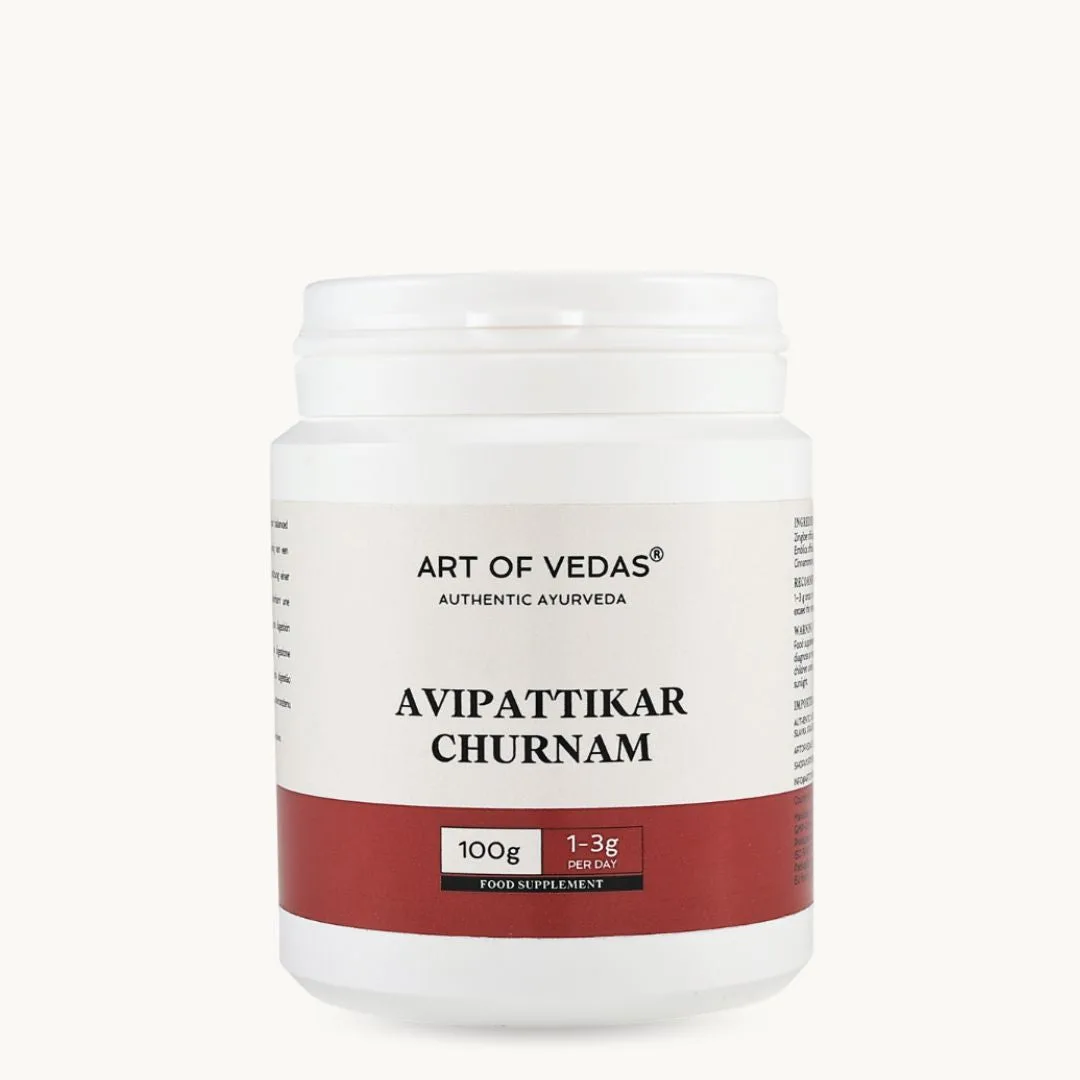
Like most classical powders, Musta Churna is traditionally taken in a small measure, often stirred into warm water, and frequently after food. The exact amount is a matter for the product label and for individual guidance, and this is where a qualified Ayurvedic practitioner adds real value, matching the powder to the person and the season. Our own Musta Churna follows the classical single-herb preparation, and readers building a digestive-comfort shelf often keep it alongside Avipattikar Choornam, a cooling classical blend from the same tradition.
To understand the powder format itself, its definition, types and preparation, see our guide to classical Churnam. If you are choosing between formats, our comparison of Churna, Vati and capsule lays out the trade-offs. And for the botany of the plant behind the powder, read the Musta herb monograph.
Who reaches for Musta Churna
Musta Churna appeals to those who like the classical single-herb powder tradition and who enjoy a bitter, aromatic botanical in their routine. It is chosen by preference and long custom rather than by diagnosis. Individual constitution, or Prakriti, shapes how any powder suits a person, and a qualified practitioner is the right guide for personal use.
Frequently Asked Questions
What is Musta Churna?
Musta Churna is the powdered tuber of Cyperus rotundus, a classical Ayurvedic single-herb powder used in the digestive-comfort tradition.
What is Musta called in English?
Musta is known in English as nut grass, and in Hindi as Nagarmotha. Its botanical name is Cyperus rotundus.
How is Musta Churna traditionally taken?
It is usually taken in a small measure with warm water, often after meals. The product label is the reference for the amount used.
What is the classical profile of Musta?
The texts describe Musta as bitter, pungent and astringent in taste, light and dry in quality, and grouped among the Deepana and Pachana digestive herbs.
Can Musta Churna be combined with other powders?
In tradition it often appears within blends. A qualified Ayurvedic practitioner is the right person to advise on combining single herbs for an individual routine.
"This product is a food supplement and not intended to diagnose, treat, cure or prevent any disease."