Characteristics of the Pitta type
People with a dominant Pitta constitution (Pitta Prakriti) typically display a recognisable set of physical and psychological traits, described in classical texts including the Ashtanga Hridayam:
Physical traits
- Medium, well-proportioned build - neither as slender as Vata nor as solid as Kapha
- Warm skin - Pitta types tend to feel warm and may perspire readily
- Sensitive, reactive skin that may flush or redden easily
- Fine hair that may be prone to early greying or thinning
- Strong, reliable hunger - Pitta types have the most consistent and powerful digestion of the three constitutions
- Sharp, penetrating eyes - often light-coloured or piercing in their expression
- Medium body temperature, often warm to the touch
Psychological traits
- Sharp, analytical, and focused intellect - Pitta types are often highly intelligent and goal-oriented
- Natural leadership qualities and decisiveness
- Strong motivation and drive - tends towards perfectionism
- When in balance: confident, warm, and articulate
- When out of balance: tendency towards irritability, criticism, or impatience
- Competitive nature - Pitta types often have a strong desire to succeed
Signs of Pitta imbalance
When Pitta accumulates beyond its balanced state, classical Ayurvedic texts describe the following characteristic expressions:
- Excess heat - feeling hot, flushing, burning sensations in the stomach or skin
- Skin sensitivity - redness, irritation, or reactive skin
- Digestive excess - heartburn, acid reflux, or overly sharp hunger
- Irritability, impatience, or anger more easily triggered than usual
- Inflammatory tendencies - the classical texts associate excess Pitta with heat-related imbalances
- Eye sensitivity or redness
- Increased sweating or body odour
Pitta aggravates through excess heat, spicy or very sour foods, alcohol, overwork, intense sun exposure, and competitive pressure. Summer is classically considered the primary Pitta season.
What balances Pitta: the classical approach
The foundational principle for balancing Pitta is cooling, calming, and moderating - using the qualities that are opposite to Pitta's hot, sharp, and intense nature. Classical Ayurvedic Pitta management (Pitta Shamana) includes:
Oil massage (Abhyanga) for Pitta
Regular oil massage is beneficial for all constitutions in classical Ayurveda, but the choice of oil is particularly important for Pitta. Pitta benefits from lighter, cooling oils rather than warming, heavy preparations. Coconut oil is classically considered cooling and is therefore favoured for Pitta types in warm seasons.
Classical oils used in Pitta-appropriate practice include:
-
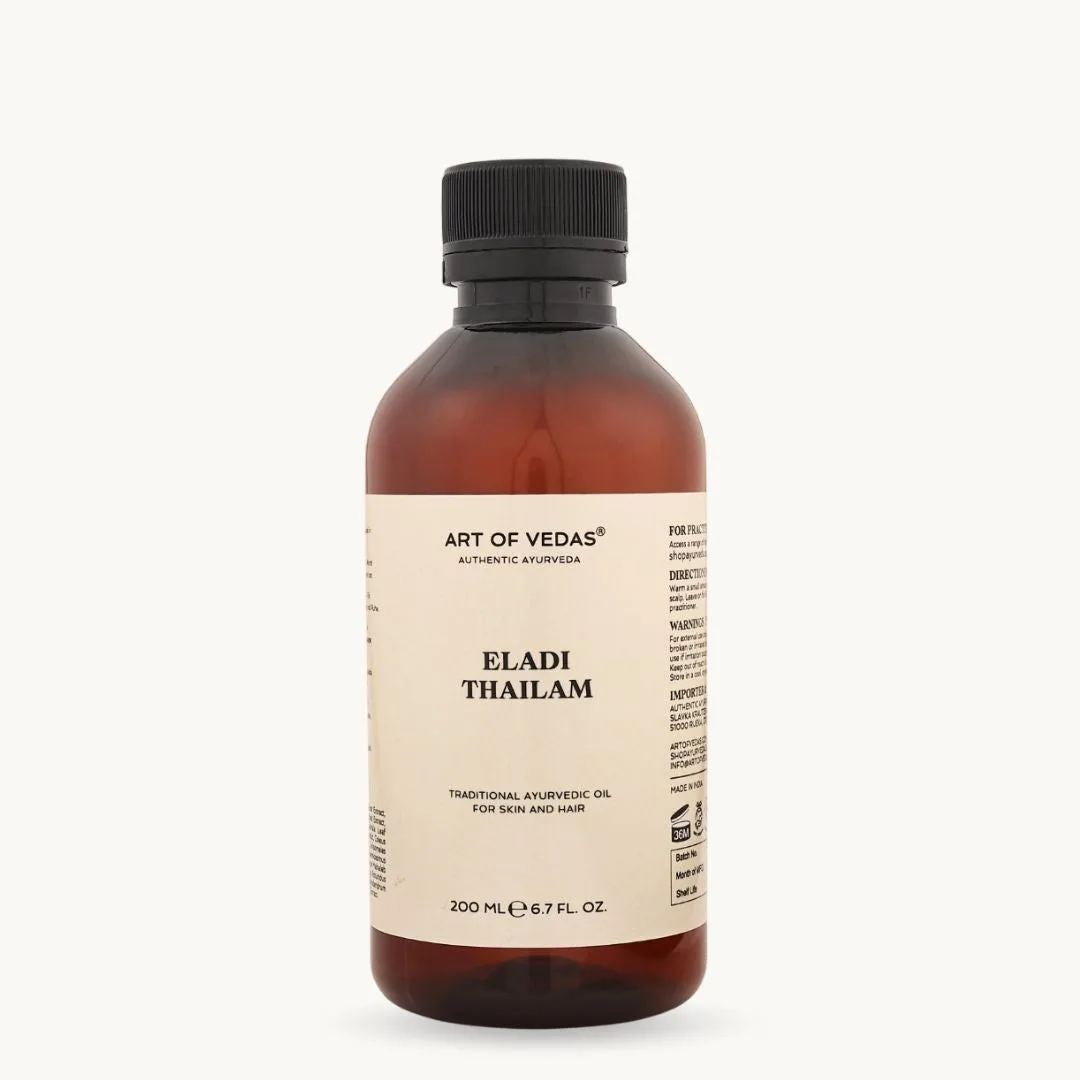
Eladi Thailam - described in the Ashtanga Hridayam as a classical oil with soothing and cooling qualities, traditionally used for facial and body care in sensitive and Pitta-type skin conditions.
-
Nalpamaradi Keram - a classical South Indian preparation featuring four varieties of Ficus bark, traditionally associated with brightening and soothing skin care.
-
Kumkumadi Serum - the classical Ayurvedic facial oil with Kumkuma (saffron) as the primary ingredient, described in classical texts as a Varnya preparation supporting skin luminosity.
The full facial and skin care range is available in our Face Care collection.
Facial care and Mukha Abhyanga for Pitta
The face is particularly relevant for Pitta types, as the skin of the face is often the first area where Pitta imbalance expresses itself. For Pitta skin, the classical approach focuses on light, cooling facial oils applied with gentle circular movements. The Kansa Wand is also valued in this practice - bronze (Kansa) is described in Ayurveda as a harmonising metal that helps balance heat in the tissues. See our Ayurvedic facial care guide for a complete routine.
Diet and lifestyle for Pitta
Classical Ayurveda recommends the following general principles for Pitta through diet and daily habits:
-
Cooling foods: Sweet fruits, dairy (in traditional Ayurveda), coconut, cucumber, and coriander are classically described as Pitta-calming.
-
Avoid excess heat: Very spicy, very sour, and very salty foods increase Pitta.
-
Tastes: Sweet (Madhura), bitter (Tikta), and astringent (Kashaya) tastes are calming for Pitta. Pungent, sour, and salty tastes aggravate Pitta.
-
Moderation: Pitta's tendency towards intensity and overwork is itself a Pitta-aggravating habit. Regular breaks, time in nature, and moderation in competitive activity are classically recommended.
-
Cool environments: Pitta types are especially sensitive to heat - moderate temperatures, avoiding excess sun, and spending time near water are all traditionally described as Pitta-calming.
Classical Pitta-supporting herbs
-
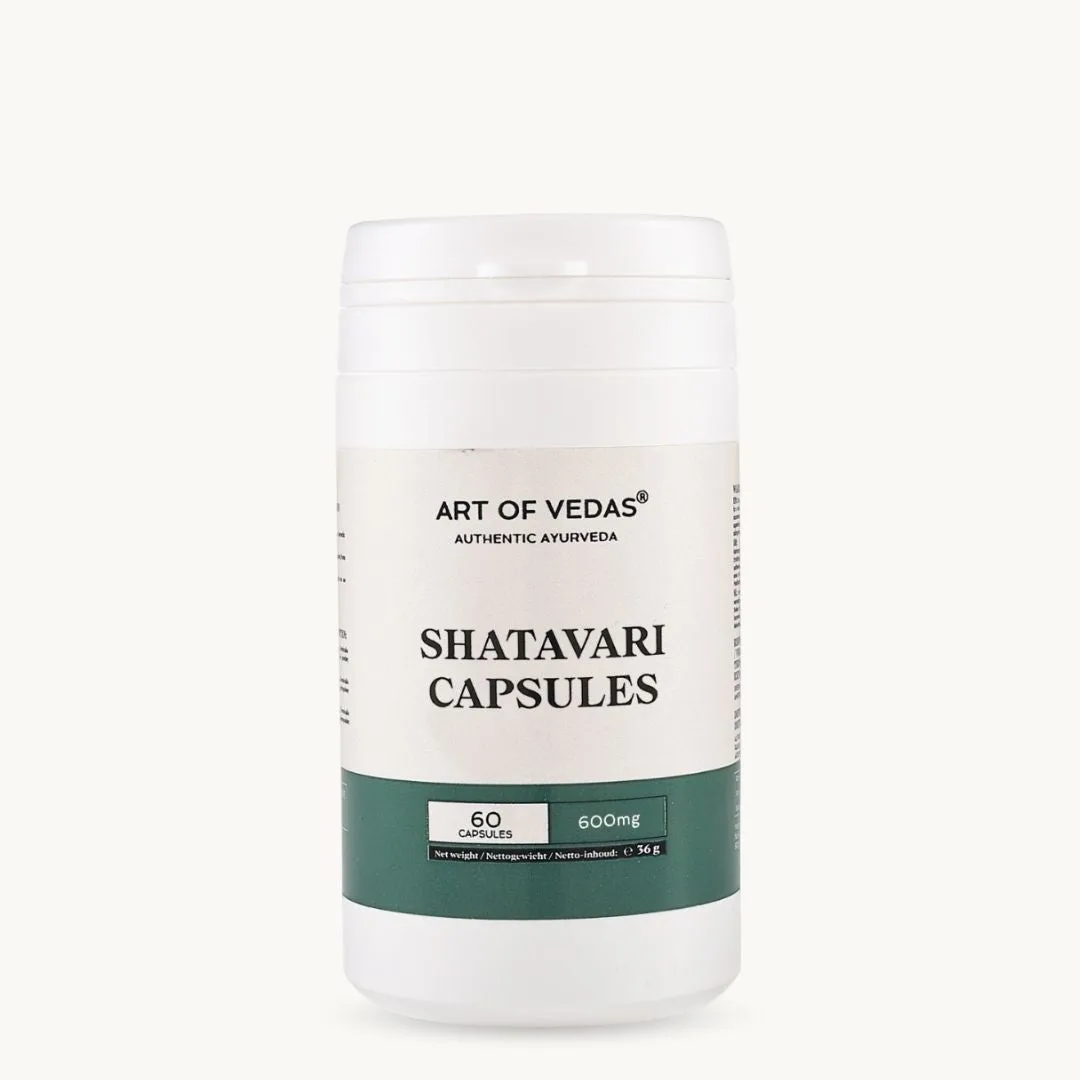
Shatavari (Asparagus racemosus) - described in classical texts as cooling, nourishing, and supportive for Pitta constitution.
-
Guduchi (Tinospora cordifolia) - a classical tridosha-balancing herb described as particularly beneficial for excess Pitta and inflammatory conditions in traditional Ayurvedic texts.
-
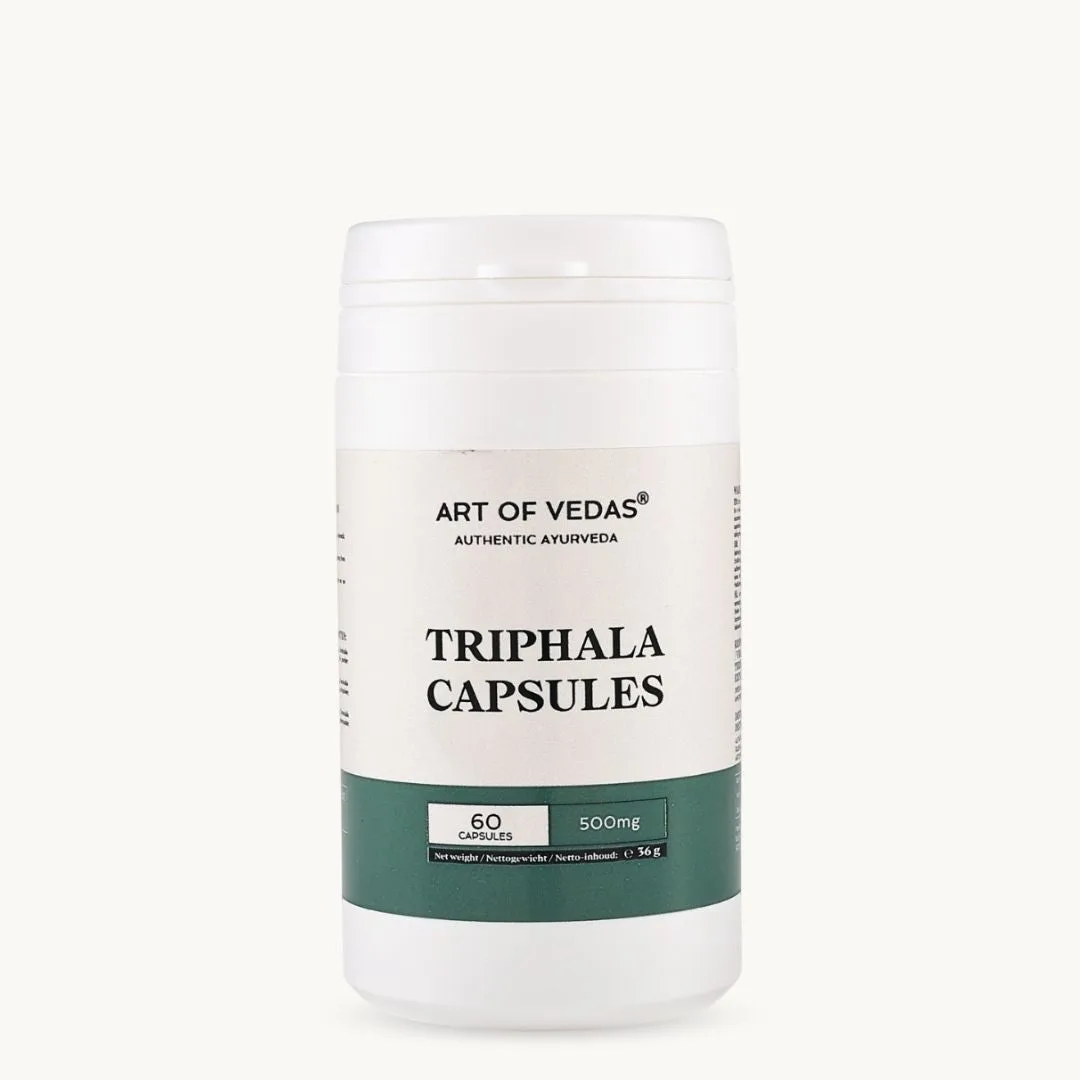
Triphala - the classical three-fruit formula of Haritaki, Bibhitaki, and Amalaki, traditionally described as balancing for all three Doshas and supportive for the digestive system. See our guide to Triphala for full details.
Understanding your Dosha: the next step
Pure Pitta types are relatively uncommon. Many people carry a dual constitution - Pitta-Vata or Pitta-Kapha - in which two Doshas are equally prominent. Understanding your specific combination gives a more nuanced foundation for daily self-care. Take the Ayurvedic Dosha test to identify your constitution.
For dual-constitution types, see our guide to mixed Dosha types in Ayurveda. For the Vata constitution, see the Vata type guide.
Pitta dosha meaning: the qualities of the fire principle
In Ayurveda, Pitta means the principle of transformation. It governs every process in the body that converts, metabolises or transforms: the digestion of food, the metabolism of nutrients in the tissues, the processing of visual information by the eyes, the maintenance of body temperature and the transformation of sensory experience into understanding. Where Vata initiates movement and Kapha provides structure, Pitta provides the intelligence and heat that turn raw material into something the body and mind can use. The Charaka Samhita places Pitta at the centre of the body's metabolic economy: without adequate Pitta, food cannot become nourishment, experience cannot become understanding and the tissue chain that produces Ojas cannot function.
Fire is both essential and destructive, and Pitta is the Dosha that can do the most rapid, intense damage in excess. Pitta's dual composition, fire tempered by water, produces six classical qualities (Gunas):
- Ushna (hot): Pitta's defining characteristic. Heat drives metabolism, keeps the body warm, gives the warm complexion of Pitta types and creates their sharp hunger and strong digestion. In excess, heat becomes redness, irritability and burning sensations.
- Tikshna (sharp): shows as a sharp intellect, sharp appetite, sharp features and a penetrating attention. In excess, it becomes sharp criticism, a quick temper, excess acid in the stomach and a cutting quality in speech and thought.
- Laghu (light): like Vata, Pitta is light, which keeps it free of the accumulation and heaviness of Kapha. In excess, lightness can become depletion, as Pitta's fire consumes its own tissue.
- Drava (liquid): the contribution of water. It shows as perspiration, oily skin, fluid digestion and a tendency towards loose stools when Pitta is in excess. Pitta types rarely have the dry, hard stools of Vata.
- Snigdha (oily): naturally lubricated skin, oily hair and a slight natural sheen to the complexion. In excess, it produces very oily skin and the T-zone shine common in Pitta-dominant people.
- Sara (spreading): a Pitta imbalance that begins in the stomach does not stay there; it spreads to the skin, the eyes, the blood and the liver. This is why Pitta imbalance is often felt throughout the body rather than in one place.
The five sub-doshas of Pitta
Classical Ayurveda divides Pitta into five sub-doshas, each with its own seat in the body.
Pachaka Pitta: the digestive fire
Seated in the stomach and small intestine. Pachaka Pitta is functionally the same as Jatharagni, the central digestive fire, and is the master Pitta that sustains all the others. When it is balanced, digestion is strong, complete and comfortable. In excess, it produces Tikshna Agni, the sharp digestive fire, with excessive hunger, acidity and burning sensations. Classical Ayurveda addresses Pachaka Pitta first in any Pitta imbalance, because when this root Pitta settles, the other sub-doshas often follow.
Ranjaka Pitta: the colouring fire
Seated in the liver, spleen and stomach. Ranjaka Pitta governs the formation of blood, specifically the transformation of Rasa Dhatu (nutrient fluid) into Rakta Dhatu (blood), as well as the colour of skin and blood and the function of the liver. In the classical model, disturbed Ranjaka Pitta shows as heat in the liver, changes in skin colour and reduced quality of the blood.
Sadhaka Pitta: the fire of understanding
Seated in the heart and brain. Sadhaka Pitta transforms sensory experience into emotional processing and intellectual understanding. It is what lets you "digest" your experiences: process emotions, learn from events and keep your inner balance. When it is disturbed, the texts describe emotional volatility, irritability, difficulty processing hard experiences and the driven, never-satisfied quality of mind that Pitta excess produces.
Alochaka Pitta: the visual fire
Seated in the eyes. Alochaka Pitta governs visual perception and the colour of the iris. In classical anatomy the eyes are a primary Pitta organ: hot, sharp, liquid and light. When Alochaka Pitta is disturbed, the eyes may burn, redden, become sensitive to light or tire easily, and these signs intensify in hot weather, with screen use and in periods of Pitta aggravation.
Bhrajaka Pitta: the fire of complexion
Seated in the skin. Bhrajaka Pitta governs skin colour, temperature and lustre, and the skin's ability to take up what is applied to it. Pitta skin absorbs oil efficiently, which is an advantage of Abhyanga and also the reason to choose cooling rather than heating oils. Disturbed Bhrajaka Pitta shows as heat and redness of the skin, sensitivity and a flushed complexion.
High Pitta dosha symptoms: how to know if Pitta is high
Pitta imbalance is usually easier to recognise than the changeable patterns of Vata, because fire gives clear signals. These are traditional observations, not diagnoses.
Physical signs
A feeling of heat in the body, burning sensations in the stomach, skin or eyes, profuse sweating, skin irritation and sensitivity, early greying or thinning of the hair, sensitivity to heat and sun, loose stools and a strong body odour.
Digestive signs
The classic Pitta pattern is Tikshna Agni: sharp, intense digestion with strong hunger that becomes urgent or irritable when a meal is delayed. Acidity may cause burning in the upper abdomen or chest, stools may be loose, particularly in the morning, and spicy, sour and fermented foods are poorly tolerated while Pitta is aggravated.
Mental and emotional signs
Irritability, impatience, criticism of oneself and others, perfectionism, competitiveness, anger that flares quickly and may pass just as quickly, a drive that makes it hard to rest or stop working, intolerance of inefficiency and judgemental thinking.
Seasonal and daily pattern
Pitta accumulates in summer, the hot, intense season of long days. Most Pitta-prone people notice more heat, skin sensitivity, irritability and digestive acidity between June and September. Within the day, Pitta signs tend to peak in the Pitta period around midday, roughly 10 a.m. to 2 p.m. Pitta is also strongest in the middle years of life.
What causes Pitta dosha to increase
Pitta follows the same rule as every Dosha: like increases like. Beyond the heat, spice, alcohol and pressure named above, the classical texts point to less obvious causes:
- Timing: working through the hottest part of the day.
- Fermented and salty food: both add to Pitta's sharpness, alongside very spicy and very sour food.
- No recovery: sustained effort without adequate rest, which the classical texts describe as the path to Pitta burnout.
- Eating in a heated state: eating while angry, stressed or emotionally heated, because Pitta's strong Agni amplifies whatever state is present during the meal.
- Screen time: long hours in front of screens strain Alochaka Pitta, the visual fire.
How to cool down Pitta dosha
The single governing principle is to cool the heat, moderate the intensity and temper the sharpness, without dulling Pitta's capacity for clarity, drive and transformation. Pitta pacification is not suppression. It channels Pitta's fire so that it transforms rather than destroys.
Pitta cooking: good food for Pitta
Alongside the cooling foods named above, leafy greens and basmati rice suit Pitta well. The cooling spices are coriander, fennel, cardamom and turmeric in moderate amounts. Regular meals at consistent times matter, because Pitta's Agni demands a regular supply of fuel.
Cooling oils for Abhyanga
For Pitta vitiation, Ayurvedic practice turns to cooling oils: coconut oil in summer, or cooling herbal Thailams prepared with herbs such as Manjistha and Sariva, which pacify Bhrajaka Pitta and keep heat from building up in the skin. In winter, mildly warming sesame-based oils may be appropriate, but while Pitta is aggravated, the warming quality of sesame can add to the heat that needs cooling.
Herbal support
- Brahmi: the foremost cooling herb for the Pitta mind. Its cooling Virya moderates the mental heat and intensity of Pitta excess without dulling clarity.
- Amalaki: the cooling fruit in Triphala and a primary Pitta Rasayana: nourishing, cooling and supportive of the tissues.
- Shatavari: the classical feminine Pitta tonic, cooling and nourishing for the reproductive and digestive systems.
Nature and water
Beyond time near water, the classical texts name swimming, gardens and moonlight as Pitta-pacifying. The modern equivalent includes less screen time, time outdoors in green surroundings and any practice that shifts attention from productive intensity to aesthetic appreciation.
The importance of rest
Pitta's drive and competitiveness can make rest feel unproductive, which is exactly why it is needed. Build deliberate rest periods into the day, avoid the habit of the "productive evening" and keep some activities that are neither competitive nor goal-oriented.
Pitta in balance: the gift of fire
Pitta in balance is one of the strongest constitutions: strong digestion, a sharp intellect, natural leadership, courage, determination, a warm complexion, good vision and a capacity for sustained, focused effort. The classical literature describes balanced Pitta people as able to process food, experience, information and emotion with unusual efficiency and completeness. The key is to keep this fire well regulated rather than consuming: regular meals, cooling food in hot seasons, suitable oil care, moderate intensity and periodic rest let Pitta burn cleanly and brightly without burning out.
Ayurveda distinguishes your birth constitution (Prakriti) from your current state of imbalance (Vikriti). The Dosha test gives an educational first reading of your tendencies; a qualified Ayurvedic practitioner can tell the two apart and give guidance specific to your Pitta pattern. During pregnancy, for children, when taking prescribed products or with persistent complaints, always ask a qualified practitioner.
Note: The Ayurvedic concepts on this page are for general information and education. Art of Vedas products are personal care products and food supplements, not medicines, and do not replace consultation with a qualified practitioner.
Frequently asked questions
What is Pitta in Ayurveda? Pitta is one of the three Doshas in Ayurveda, the principle of transformation. It combines fire and water and is hot, sharp, light and slightly oily. Classical Ayurveda attributes digestion, metabolism, body temperature and the sharpness of perception and understanding to Pitta, which is strongest in summer, at midday and in the middle years of life.
What are the signs of a Pitta imbalance? Classical Ayurveda describes increased Pitta through heat and sharpness: feeling too warm, a strong or impatient hunger, sensitive or reddened skin, irritability and a critical mood, and difficulty slowing down. A Pitta imbalance tends to rise in summer and under pressure. Persistent complaints always belong with a doctor or a qualified practitioner.
How do you balance Pitta? Pitta is balanced with cooling, calming qualities: fresh and moderately spiced food, sweet, bitter and astringent tastes, regular meals, time in nature and not working through the hottest part of the day. For Abhyanga, a cooling oil such as a coconut-based oil suits Pitta, while mildly warming sesame-based oils are better kept for winter.
What does Pitta mean, and what is Pitta dosha called in English? In Ayurveda, Pitta means the principle of transformation, and in English Pitta dosha is usually called the fire principle or the Dosha of transformation. It is formed from fire (Agni) and water (Jala) and governs everything that converts or digests: food in the stomach, nutrients in the tissues, light in the eyes and experience in the mind.
What are the Pitta subdoshas? Classical Ayurveda describes five Pitta subdoshas. Pachaka Pitta is the digestive fire in the stomach and small intestine. Ranjaka Pitta in the liver and spleen colours the blood. Sadhaka Pitta in the heart and brain digests experience. Alochaka Pitta governs vision in the eyes, and Bhrajaka Pitta governs the colour and lustre of the skin.
Where is Pitta in the body, and which organ is it linked to? In English terms, the main body part for Pitta is the digestive tract: classical texts seat it in the stomach and small intestine. Pitta is also linked to the liver and spleen, the heart and brain, the eyes and the skin, one organ for each Pitta sub-dosha. Its heat can spread from the stomach to the skin, eyes and blood.
Why does Pitta dosha increase in the body? Pitta increases whenever heat, sharpness or intensity build up, because like increases like. It happens in summer, at midday and with strong sun, and it occurs more readily with very spicy, sour, salty or fermented food, alcohol, overwork, competitive pressure, eating while angry and too little rest. Pitta is also naturally strongest in the middle years of life.
How do you reduce Pitta in the body? Ayurveda does not try to remove Pitta from the body, because its fire is needed for digestion and clarity. It cools and moderates it: sweet, bitter and astringent tastes, cooling foods such as cucumber and coconut, cooling oils such as coconut oil for Abhyanga, time near water, regular meals and deliberate rest. Persistent heat signs belong with a qualified practitioner.
What is the best food for Pitta? The best food for Pitta is fresh, cooling and moderately spiced, with sweet, bitter and astringent tastes in the lead. Classical examples are cucumber, leafy greens, sweet fruits, coconut and basmati rice, seasoned with coriander, fennel, cardamom and a little turmeric. Very spicy, very sour, very salty and fermented foods and alcohol increase Pitta.
Can a person have both Vata and Pitta together? Yes. Pure Pitta types are relatively uncommon, and many people have a dual constitution, Pitta-Vata or Pitta-Kapha, in which two Doshas are equally prominent. A dual-doshic constitution does not mean imbalance; it simply means that the qualities of both Doshas need attention in daily care. The Dosha test gives an educational first reading of your own combination.