In brief: Shadbindu oil (also written Shadbindu Thailam, Thailam, Taila, Tail or Tel) is a classical Ayurvedic oil of the Nasya tradition: Bhringaraja, castor root, Tagara, Jivanti, Rasna, Vidanga, Yashtimadhu, ginger and cinnamon cooked into sesame oil with goat milk. The classical texts, among them the Bhaishajya Ratnavali, describe it in the chapter devoted to the head. In the EU, Art of Vedas sells it as an oil for external use. This guide covers what it is, what the texts say, how it is applied as part of the classical Nasya ritual, and how it compares with Anu Thailam.
Shadbindu Thailam: the classical Nasya oil, what it is and how it is used
Reviewed by Dr. Anu Joy, MD (Ayurveda), Ayurvedic doctor of Art of Vedas
What Shadbindu Thailam is, and what the name means
Shadbindu Thailam is one of the classical Ayurvedic oils of Nasya, the practice of the daily routine (Dinacharya) in which an oil is applied to the head and face. Thailam, Thailam, Taila, Tail and Tel are the same word for oil in different Indian languages, and Shadbindu oil is simply the English form. Shadbindu itself is a Sanskrit compound of Shad, six, and Bindu, a point or a bead. The name records the measure the classical texts give for the oil in the ritual, a detail that belongs to a practitioner's instruction.
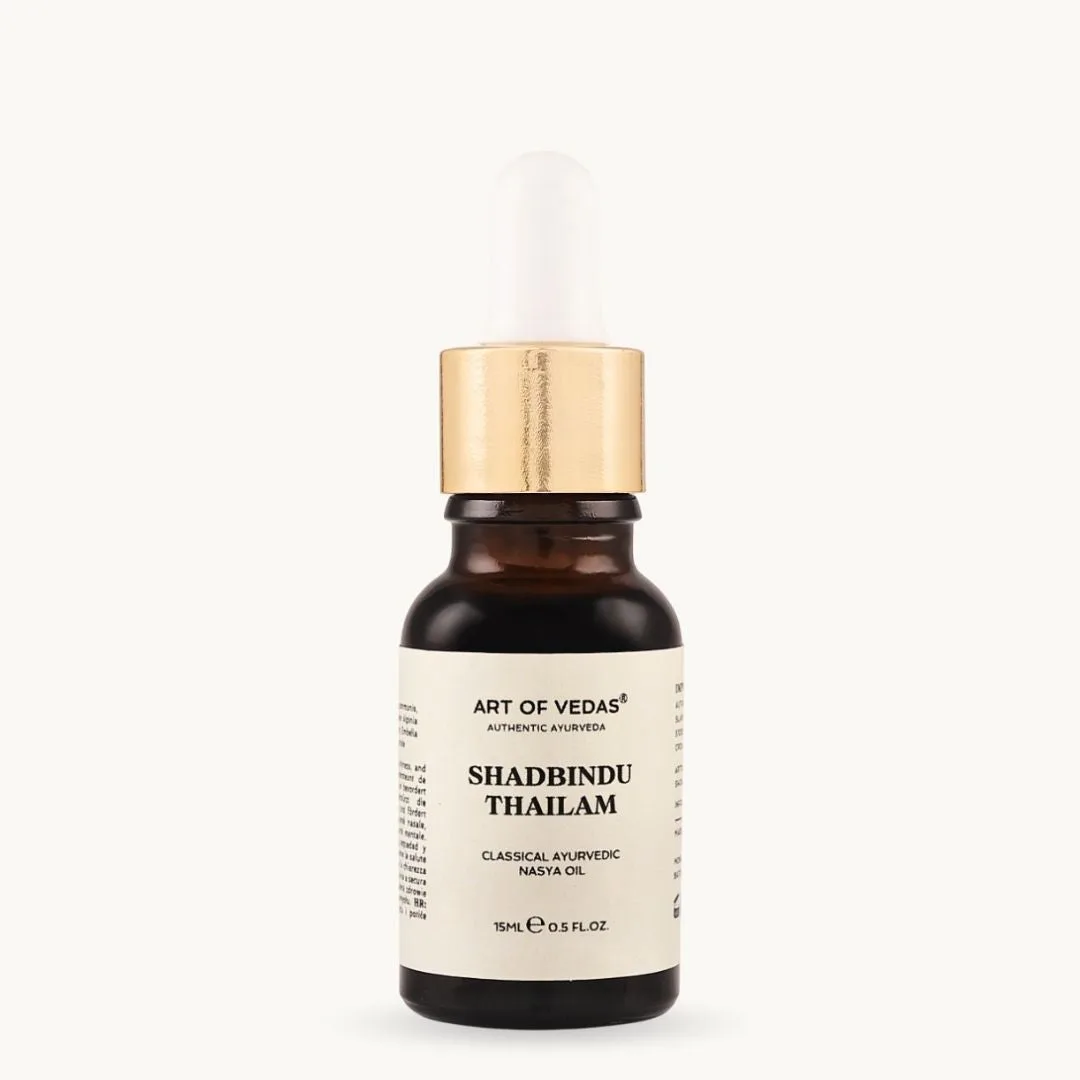
Art of Vedas offers Shadbindu Thailam in a 15 ml bottle; Nasya oils are used in very small quantities.
What the classical texts describe
The classical recipe is given in the Bhaishajya Ratnavali, in the chapter devoted to the head, and it is a short one by the standards of Ayurvedic oils. The texts name sesame oil as the base, goat milk and the juice of Bhringaraja as the liquids, and a paste of plants cooked into them, among them castor root (Eranda), Tagara, Shatapushpa, Jivanti, Rasna, Vidanga, Yashtimadhu, dry ginger (Shunthi) and cinnamon, with rock salt (Saindhava). The oil is prepared by Sneha Paka, the slow cooking that every Thailam shares; our guide to traditional Thailams explains the method in full.
The texts place the oil among the oils of Nasya and describe its character as sharp and warming. In the EU the oil is sold for external use, and what the texts say about its effects stays with the texts and with the practitioner who works from them.
The declared ingredients of the Art of Vedas oil
The declared list of the Art of Vedas Shadbindu Thailam follows the classical recipe closely: sesame seed oil, goat milk, Bhringaraja (Eclipta prostrata), castor root (Ricinus communis), Tagara (Valeriana wallichii), Shatapushpa, declared as dill seed (Anethum sowa), Jivanti (Leptadenia reticulata), Rasna (Pluchea lanceolata), rock salt, cinnamon bark (Cinnamomum verum), Vidanga (Embelia ribes), Yashtimadhu, liquorice (Glycyrrhiza glabra) and ginger root (Zingiber officinale). Cinnamal, eugenol, linalool, coumarin, benzyl benzoate and carvone are listed at the end: not added fragrance, but components naturally present in cinnamon, dill and the other aromatic plants, named as EU rules require.
The oil contains goat milk and is therefore not vegan, and it contains sesame. The full declaration is on the product page and on the label.
Character in Ayurvedic terms
Ginger, cinnamon, Vidanga, Rasna and castor root are all warming plants in the Ayurvedic description, and sesame oil is itself described as warming (Ushna). Shadbindu Thailam is therefore a warming oil, classically placed with Vata and Kapha. The texts describe the finished oil as sharp (Tikshna) rather than heavy. On the skin it feels warm and slightly spicy, with a clear aroma of cinnamon and dill.
How Shadbindu Thailam is used in practice
In the classical texts Nasya is a morning practice: the Ashtanga Hridayam lists it among the acts of Dinacharya, after tongue scraping and before the morning meal. Art of Vedas sells Shadbindu Thailam as an oil for external use, applied to the face as part of the classical Nasya ritual. How the ritual itself is carried out, how much oil is used and on how many days, is a practitioner's instruction: ask a qualified Ayurvedic practitioner before beginning.
What you can do at home is prepare the oil properly. Stand the closed bottle in a bowl of warm water for two or three minutes until it feels pleasantly warm on the inner wrist; do not use a microwave. Use a small amount, never the generous quantity of a massage oil. Apply it with a clean fingertip to the face in the morning, leave it to absorb, and keep it away from the eyes. Our Abhyanga guide describes where the morning practices fall in the day. Keep the bottle closed and out of direct sunlight.
Shadbindu Thailam or Anu Thailam: which one?
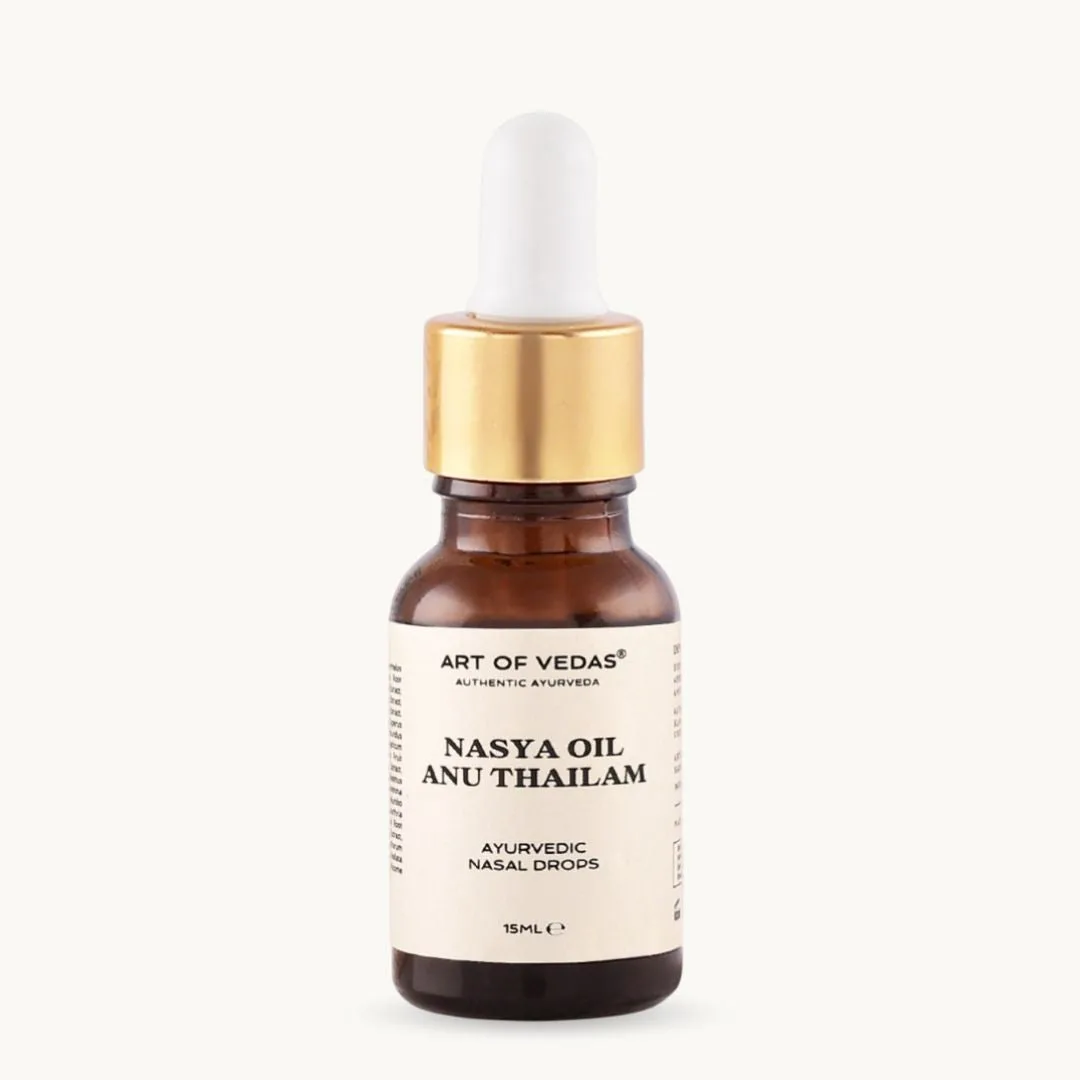
Both are classical Nasya oils and both are sold by Art of Vedas for external use. Anu Thailam is described in the Ashtanga Hridayam as the oil of the gentle daily form of the ritual, Pratimarsha Nasya: a long list of herbs cooked into sesame oil, mild on the skin and suited to a daily morning routine. Shadbindu Thailam is a shorter recipe from the Bhaishajya Ratnavali, warmer and sharper, and in the tradition it is the oil a practitioner chooses for a defined period rather than the one for every day. Without guidance, Anu Thailam is the usual first oil; if a practitioner has named Shadbindu Thailam, follow that instruction.
Who should ask first
Shadbindu Thailam is for external use only. Do a small skin test on the inner forearm before the first application, keep the oil away from the eyes and broken skin, and stop if the skin reacts. Children, and anyone who is pregnant or breastfeeding, should ask a doctor or a qualified Ayurvedic practitioner first; so should everyone who is new to Nasya.
Frequently asked questions about Shadbindu Thailam
What is Shadbindu oil? Shadbindu oil is the English name of Shadbindu Thailam, a classical Ayurvedic oil of the Nasya tradition. Bhringaraja, castor root, Tagara, Jivanti, Rasna, Vidanga, Yashtimadhu, ginger and cinnamon are cooked into sesame oil with goat milk. It is described in the Bhaishajya Ratnavali and is also written Shadbindu Taila, Thailam, Tail or Tel.
What is Shadbindu Thailam used for? In the classical texts Shadbindu Thailam is an oil of Nasya, one of the morning practices of the daily routine (Dinacharya). In the EU, Art of Vedas sells Shadbindu Thailam as an oil for external use, applied to the face as part of the classical Nasya ritual. How the ritual is carried out is a question for a qualified Ayurvedic practitioner.
How do you use Shadbindu oil? Warm the closed bottle in a bowl of warm water for two or three minutes; never use a microwave. In the morning, before eating, apply a small amount of Shadbindu oil to the face with a clean fingertip, keeping it away from the eyes. For the full classical Nasya ritual, its quantity and timing, ask a qualified Ayurvedic practitioner.
What are the ingredients of Shadbindu Taila? The Art of Vedas Shadbindu Taila declares sesame seed oil, goat milk, Bhringaraja, castor root, Tagara (Valeriana wallichii), dill seed, Jivanti, Rasna, rock salt, cinnamon bark, Vidanga, liquorice root and ginger root. Cinnamal, eugenol, linalool, coumarin, benzyl benzoate and carvone are naturally present fragrance components, declared as EU rules require. It is not vegan.
Which classical text is the reference for Shadbindu Taila? The recipe of Shadbindu Taila is given in the Bhaishajya Ratnavali, in the chapter devoted to the head, with sesame oil, goat milk and Bhringaraja juice as its liquids and a paste of plants cooked into them. The declared list of the Art of Vedas oil follows that recipe; the rules of the Nasya ritual itself come from the Ashtanga Hridayam.
Shadbindu Tail or Anu Taila: what is the difference? Both are classical Nasya oils in a sesame base. Anu Taila is the long recipe of the Ashtanga Hridayam, mild, and described as the oil of the gentle daily form of the ritual. Shadbindu Tail is the shorter recipe of the Bhaishajya Ratnavali, warmer and sharper, and in the tradition the oil chosen for a defined period under a practitioner's guidance.
Is Shadbindu Thailam warming? Yes. Ginger, cinnamon, Vidanga, Rasna and castor root are warming plants in the Ayurvedic description, and the sesame oil base is itself described as warming. The classical texts describe Shadbindu Thailam as sharp and warming and place it with Vata and Kapha. It is the warmer of the two Nasya oils Art of Vedas offers.
Does Shadbindu Tail have side effects? Art of Vedas sells Shadbindu Tail for external use only and makes no claims about its effects. It contains sesame and goat milk, so do a small skin test on the inner forearm first, and keep it away from the eyes. Children and anyone pregnant or breastfeeding should ask a doctor or a qualified Ayurvedic practitioner first.