In brief: Sudhabala Thailam (also written Sudha Bala Thailam, Sudhabala Thailam, Sudhabala Taila or Sudhabala oil) is a classical Ayurvedic massage oil of one plant: Bala, the root of Sida cordifolia, cooked into sesame oil. It belongs to the family of Bala oils that the classical texts place with Vata, and it is traditionally used for Abhyanga, the Ayurvedic oil massage. It is mild, light on the skin and simple in its declared composition. This guide covers what it is, what the tradition says about Bala, how to apply the oil and how often, and how it compares with Ksheerabala and Balaswagandhadi Thailam.
Sudhabala Thailam: the plain Bala oil, what it is and how to use it
Reviewed by Dr. Anu Joy, MD (Ayurveda), Ayurvedic doctor of Art of Vedas
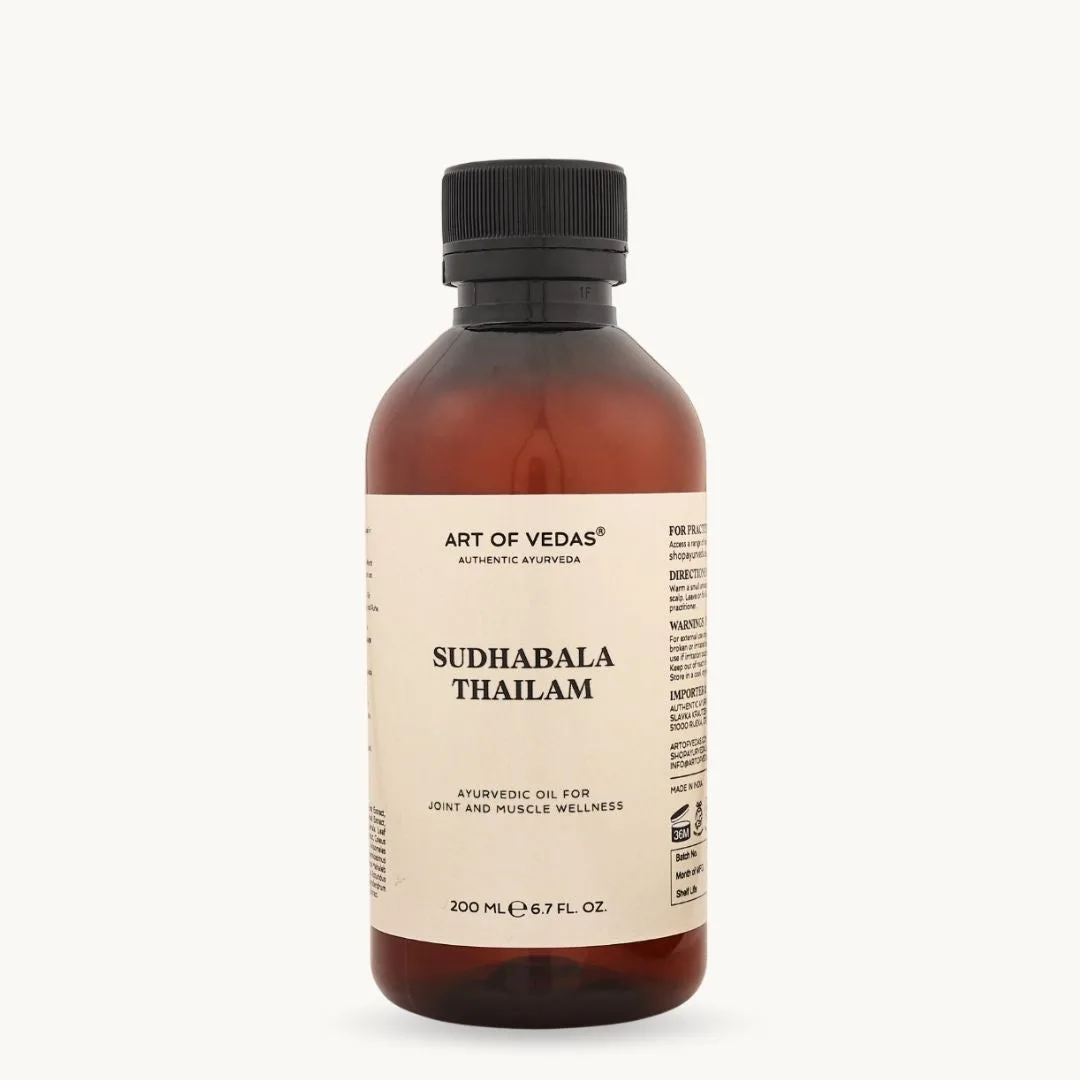
What Sudhabala Thailam is, and what the name means
Sudhabala Thailam is the plainest member of a well-known family of Ayurvedic oils: the Bala oils, all built on the root of Bala, Sida cordifolia, a small shrub of the mallow family. Bala is a Sanskrit word that means strength, and the plant has carried that name since the earliest compendia. In Sudhabala Thailam the root is cooked into sesame oil with nothing else declared, which is what sets it apart from its better-known relatives. Thailam, Thailam and Taila are the same word for oil in different Indian languages; Sudha Bala, written as two words, is the same name.
Art of Vedas offers Sudhabala Thailam in a 200 ml bottle, as a massage oil for external use.
Bala in the classical tradition
The classical texts give Bala a central place among the plants used for Vata, and several oils are built on it. The Ashtanga Hridayam describes a Bala Thailam with a long list of supporting plants; the classical Ksheerabala recipe cooks the root with milk, Ksheera; Balaswagandhadi Thailam pairs it with Ashwagandha. Sudhabala Thailam is the simplest expression of the same idea: Bala alone, in sesame oil, prepared by Sneha Paka, the slow cooking by which the root's decoction and paste are reduced into the oil until the water has gone. Art of Vedas does not attribute Sudhabala Thailam to a single source text; it is the plain Bala oil of the tradition, named for its one plant. Our guide to traditional Thailams explains the method and the family of oils.
The declared ingredients of the Art of Vedas oil
The Art of Vedas Sudhabala Thailam declares two ingredients: sesame seed oil (Sesamum indicum) and Bala root extract (Sida cordifolia). No milk, shellac, camphor or fragrance component is declared, so the oil is vegan and has only the soft, nutty scent of cooked sesame. It contains sesame. The declaration is on the product page and on the label.
Character in Ayurvedic terms
Sesame oil is described in the classical texts as warming (Ushna) and heavy; Bala is described as sweet in taste and cooling, with a soft, unctuous quality. Cooked together they give an oil that is mild: gently warming from the sesame base, but without the heat of the spice-rich oils such as Mahanarayana or Karpooradi Thailam. The classical texts place Bala with Vata above all, and Sudhabala Thailam is used as a Vata oil in the same way. Because it is mild, many people choose it when a strongly warming oil feels like too much, in the warmer months or on sensitive skin.
How Sudhabala Thailam is used in practice
Sudhabala Thailam is used for Abhyanga, the Ayurvedic oil massage. Warm it first: stand the closed bottle in a bowl of warm water for a few minutes until a drop feels pleasantly warm on the inner wrist, and never use a microwave. For a whole-body Abhyanga, apply a generous amount with long strokes along the limbs and circular strokes around the joints, leave it on the skin for 15 to 20 minutes, then take a warm shower or bath. For one area, massage a small amount in until the skin has taken it up.
In the classical daily routine, Dinacharya, Abhyanga comes in the morning before the bath, and Sudhabala Thailam is mild enough for daily use through the year. Two or three applications a week is the usual rhythm for people who do not oil daily. Our Abhyanga guide sets out the full routine.
Sudhabala Thailam for hair
Searches often ask whether Sudhabala Thailam can be used for the hair. It is sold as a body massage oil, but because it is mild and free of camphor and spices, some people also use it for Shiroabhyanga, the massage of the scalp that the tradition places alongside the body massage: a small amount warmed and worked into the scalp with the fingertips, left for a while, then washed out. The classical hair oil in the Art of Vedas range is Neelibhringadi Thailam; Sudhabala Thailam is the plainer choice for people who want a single-plant oil.
Sudhabala, Ksheerabala or Balaswagandhadi Thailam: which one?
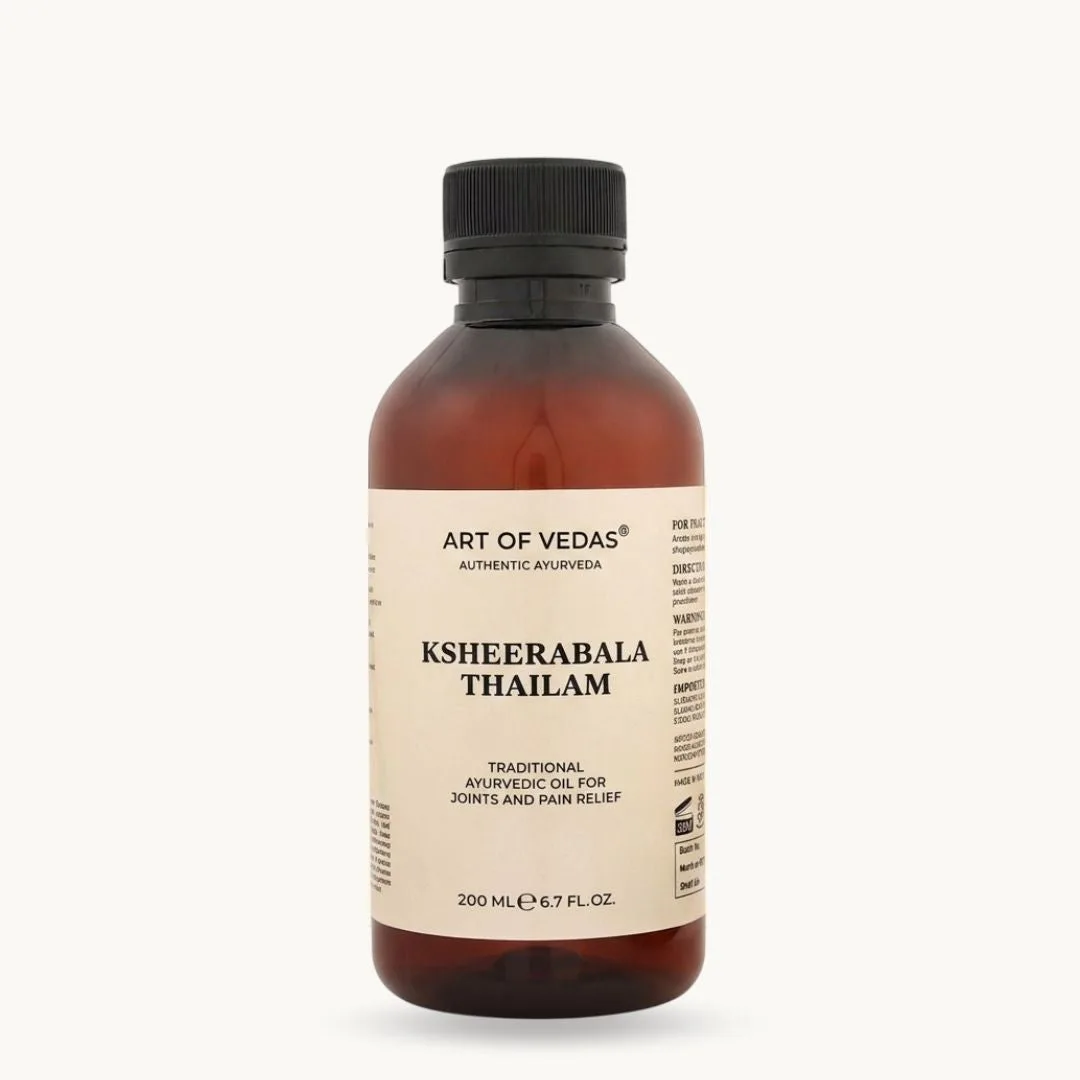
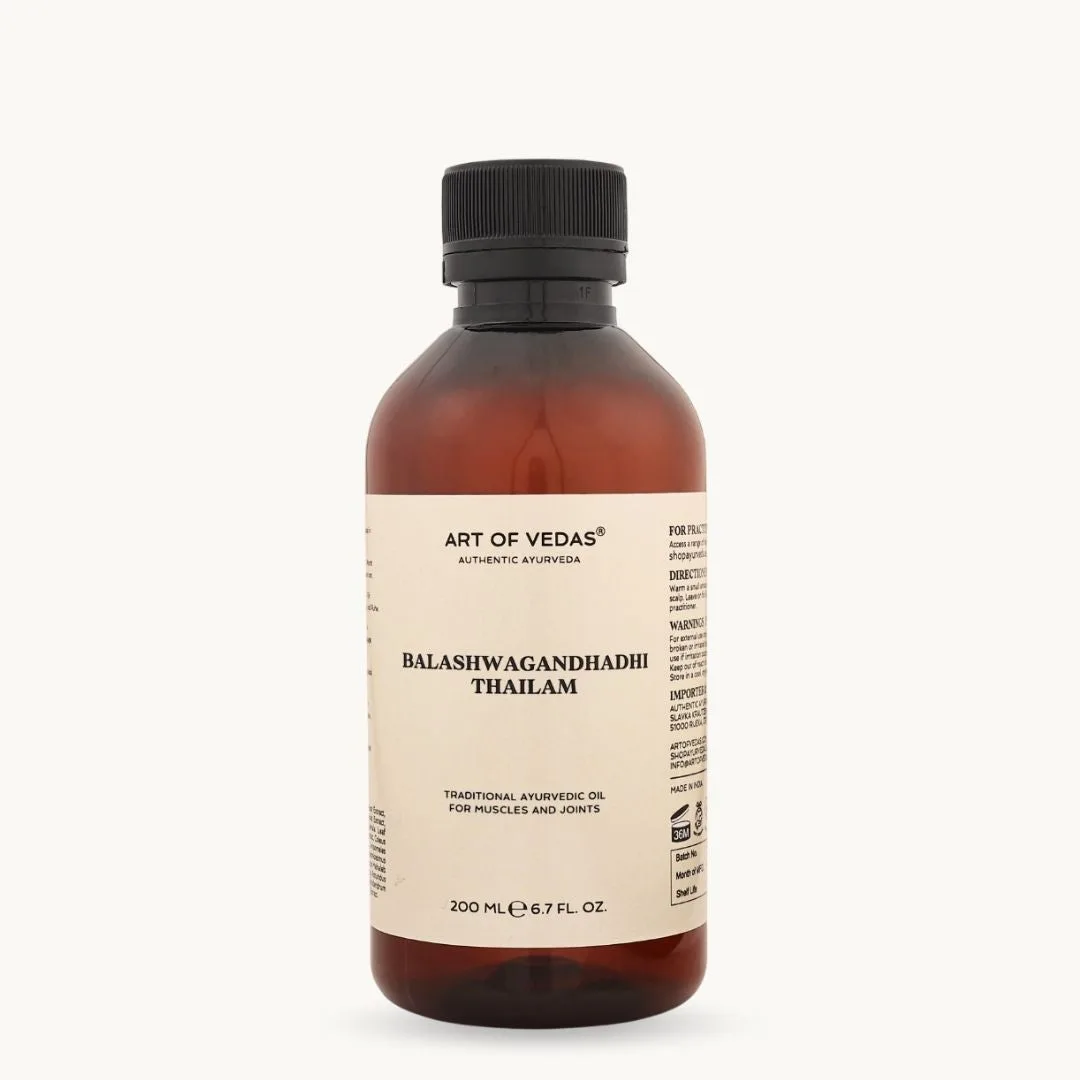
All three are Bala oils in a sesame base and all three are classically placed with Vata. Ksheerabala Thailam is the classical Bala oil whose recipe is prepared with milk, softer in character and the oil most often used on the head and for Shirodhara. Balaswagandhadi Thailam adds Ashwagandha and other plants and is warmer and fuller, suited to a massage of the muscles. Sudhabala Thailam is the plainest and lightest of the three, and the one to choose for a simple daily Abhyanga. Our comparison of Ayurvedic massage oils goes further.
Who should ask first
Sudhabala Thailam is for external use only. Do a small skin test on the inner forearm before the first full application, keep it away from the eyes and broken skin, and stop if the skin reacts. Children, and anyone who is pregnant or breastfeeding, should ask a doctor or a qualified Ayurvedic practitioner first; so should anyone unsure which oil suits their constitution.
Frequently asked questions about Sudhabala Thailam
What is Sudhabala Thailam? Sudhabala Thailam is a classical Ayurvedic massage oil of one plant: Bala, the root of Sida cordifolia, cooked into sesame oil. It is the plainest of the Bala oils, a family the classical texts place with Vata, and is also written Sudha Bala Thailam, Sudhabala Thailam or Sudhabala oil. Art of Vedas sells it as a massage oil for external use.
What are the benefits of Sudhabala Thailam? Art of Vedas makes no claims about the effects of Sudhabala Thailam. What can be said is what the tradition says: Bala is one of the plants the classical texts place with Vata, and an oil of Bala in sesame is used for Abhyanga, the daily oil massage. The oil is mild, light and vegan, which is why many people choose it for regular use.
What is Sudhabala Thailam used for? For Abhyanga, the Ayurvedic oil massage, over the whole body or on one area, and by some people for Shiroabhyanga, the scalp massage. Sudhabala Thailam is a mild Vata oil that suits daily use through the year, including the warmer months when a strongly warming oil feels like too much. It is for external use only.
Can Sudhabala Thailam be used for hair? Sudhabala Thailam is sold as a body massage oil, but it is mild and free of camphor and spices, so some people also use it for Shiroabhyanga: a small amount warmed and worked into the scalp, left for a while and washed out. The classical hair oil in the Art of Vedas range is Neelibhringadi Thailam.
How do you use Sudhabala Thailam? Warm the closed bottle in a bowl of warm water for a few minutes; never use a microwave. Apply Sudhabala Thailam generously with long strokes along the limbs and circular strokes around the joints, leave it on the skin for 15 to 20 minutes, then take a warm shower or bath. For one area, massage a small amount in until it is absorbed.
How often can you apply Sudhabala Thailam? Daily, as the classical daily routine (Dinacharya) describes, or two or three times a week. Because Sudhabala Thailam is mild, it suits daily use through the year, where the richer, warmer oils are usually kept for autumn and winter. Ask a qualified Ayurvedic practitioner what rhythm suits your constitution.
Is Sudhabala Thailam warming? Mildly. Sesame oil is described in the classical texts as warming, while Bala itself is described as sweet and cooling, so the finished oil is gentle: warming from its base, but without the heat of spice-rich oils such as Mahanarayana or Karpooradi Thailam. The classical texts place Bala, and therefore Sudhabala Thailam, with Vata.
Sudhabala or Ksheerabala Thailam: what is the difference? Both are Bala oils in a sesame base, classically placed with Vata. Ksheerabala Thailam is the classical Bala oil whose recipe is prepared with milk, softer in character and the oil most often used on the head and for Shirodhara. Sudhabala Thailam is the plain Bala oil, lighter, and the simpler choice for a daily Abhyanga of the body.