Few plants are as closely tied to the home as Tulsi. In many households it is grown in a raised planter in the courtyard and tended daily.
A household custom
The plant is watered each morning, and in many homes a lamp is lit beside it in the evening. The custom is devotional and domestic at once, and it is one reason Tulsi is so widely known.
What the names record
The classical synonyms reflect the same closeness: Gramya, of the village, and Sulabha, easily found, describe a plant that was always near at hand, as the names guide sets out.
Growing it in Europe
Holy basil is tender and dislikes frost, so in most of Europe it is grown in a pot and brought indoors for the winter, much like sweet basil.
On the label
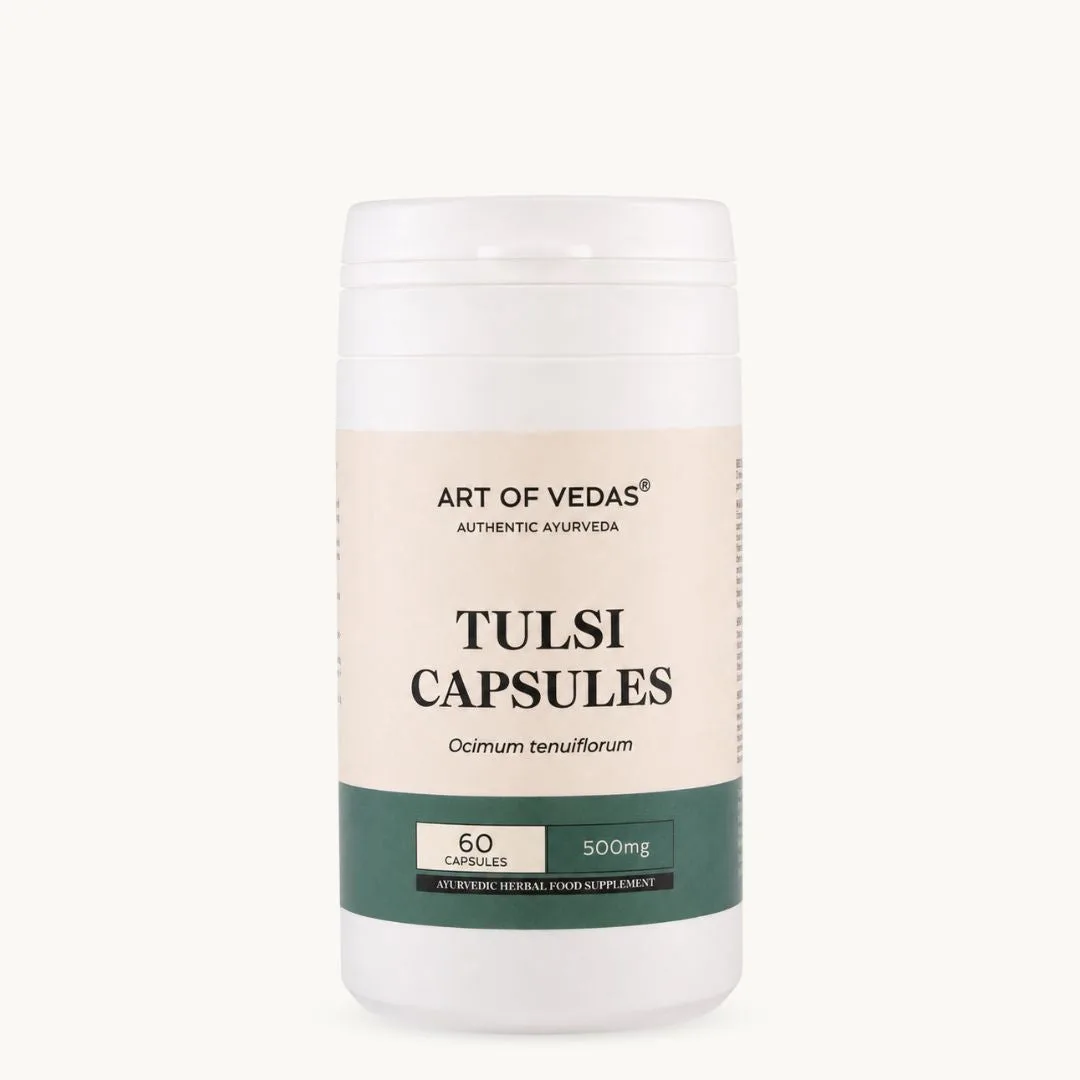
Tulsi Capsules contain holy basil as a single herb.
Frequently Asked Questions
Why is Tulsi grown at home?
It is a long-standing household custom, both domestic and devotional.
Can Tulsi be grown in Europe?
Yes, in a pot, brought indoors before frost.
Is the household plant the same species?
Yes. It is holy basil.
This article is for educational purposes and describes the classical Ayurvedic record. The products mentioned are food supplements, not a substitute for a varied, balanced diet, and are not intended to diagnose, treat, cure or prevent any disease. Take them under the guidance of a qualified Ayurvedic practitioner.