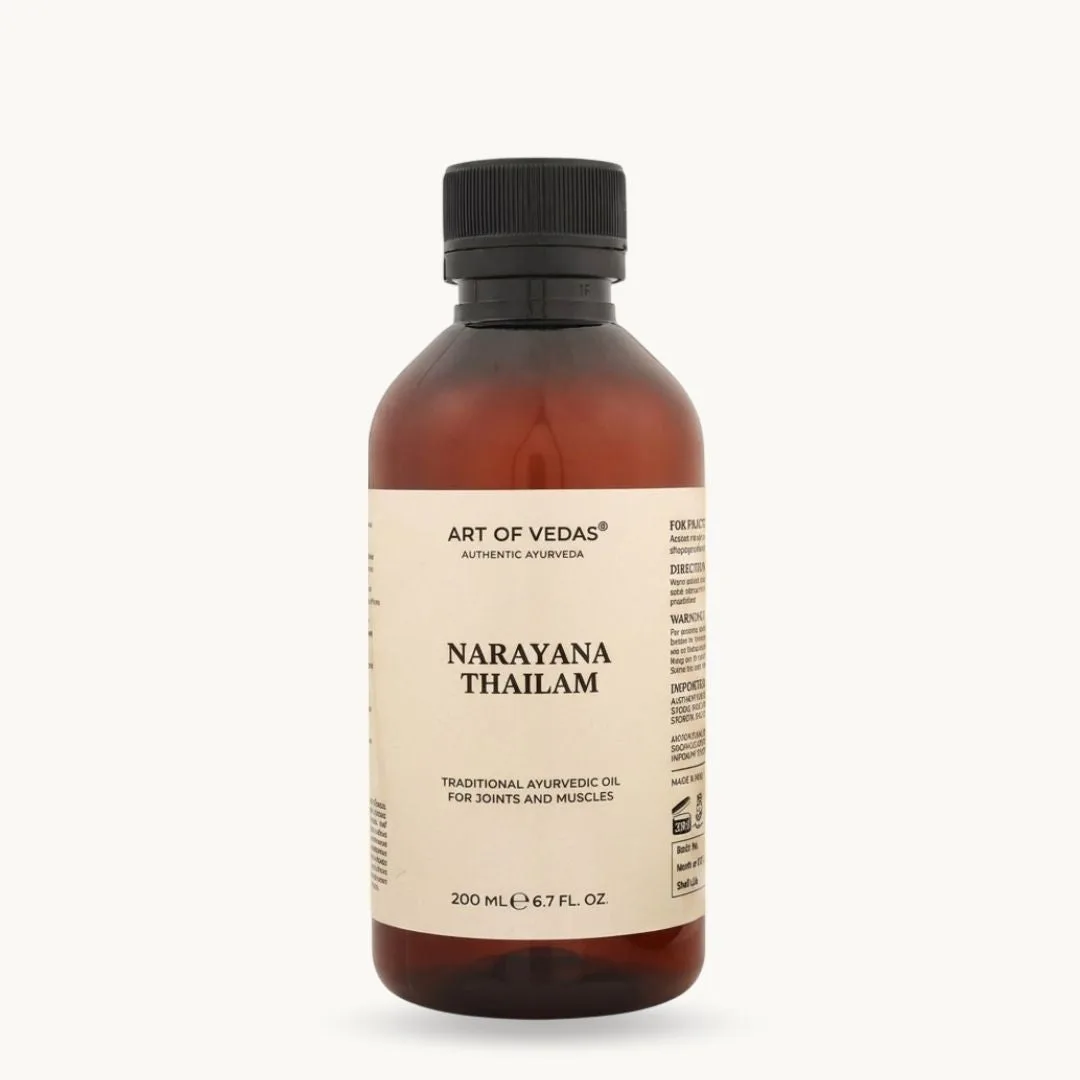
Traditional use: In the classical tradition, Narayana Thailam is applied in Abhyanga across the joints, lower back, neck and limbs. Nourishing (Brimhana) and strength-giving (Balya) by nature, it is traditionally valued to support comfortable movement, suppleness and steadiness, and is a mainstay of Vata-balancing daily routines and classical oleation practices.
The oil is also referenced in Sahasrayogam, a classical text containing thousands of Ayurvedic formulations, and is included in the Ayurvedic Formulary of India (AFI), the official government compendium of standardized Ayurvedic preparations.
Notably, Narayana Thailam is considered the parent formulation from which the more elaborate Mahanarayana Thailam later evolved through the addition of more herbs.
Sanskrit Name and Etymology
Sanskrit: नारायण तैलम् (Nārāyaṇa Tailam)
The name combines:
- Nārāyaṇa: A name of Lord Vishnu, the preserver deity in Hindu tradition, signifying the oil's preserving and protective qualities
- Taila/Thailam: Medicated oil
The divine name reflects the high regard in which this formulation has been held, suggesting therapeutic power of the highest order.
Narayana Thailam is classified as:
Ayurvedic Pharmacology (Dravyaguna)
Rasa (Taste): Predominantly Tikta (bitter), Kashaya (astringent), Madhura (sweet)
Guna (Qualities): Snigdha (unctuous), Guru (heavy), Ushna (warming)
Virya (Potency): Ushna (warm), balanced by cooling herbs like Shatavari and Shaileyaka
Vipaka (Post-digestive effect): Madhura (sweet)
Dosha Action:
- Vata Shamaka (strongly pacifies Vata) - Primary action
- Kapha Shamaka (mildly pacifies Kapha) - Secondary action
- Generally neutral to mildly aggravating for Pitta when used externally in moderation
Karma (Actions)
- Vatahara - Pacifies Vata dosha
- Vedanasthapana - Promotes comfort and ease
- Balya - Promotes strength
- Brimhana - Nourishes and builds tissues
- Srotoshodhana - Supports channel clarity
Dhatu (Tissue) Affinity
Narayana Thailam has particular affinity for:
- Mamsa Dhatu - Muscle tissue
- Asthi Dhatu - Bone tissue
- Majja Dhatu - Nerve tissue and marrow
Panchakarma Applications
In traditional Ayurvedic Panchakarma therapy, Narayana Thailam is used for:
- Abhyanga - Therapeutic oil massage
- Matra Vasti - Oil enema therapy (50ml daily, 7-14 days)
- Nasya - Nasal administration (8 drops per nostril)
- Shirovasti - Head oil retention therapy
- Shirodhara - Continuous oil stream on forehead
- Kati Vasti - Lower back oil pool therapy
Note: These Panchakarma applications should only be performed by or under the supervision of qualified Ayurvedic practitioners.