



Art of Vedas — Authentic Ayurvedic Products
If you are looking for Ayurvedic products that are genuinely traditional in their formulation and preparation, you are in the right place.
Art of Vedas is built on classical Ayurveda, following primary texts including the Ashtanga Hridayam, Sahasrayogam, and Charaka Samhita. Our Thailams are prepared using traditional Sneha Paka Vidhi. Our Kansa tools are hand-cast in genuine bronze. Our herbal supplements, Churnams, Arishtams, Kashayams, and Lehyams follow the same classical preparation standards — held to the same level of quality across the entire range.
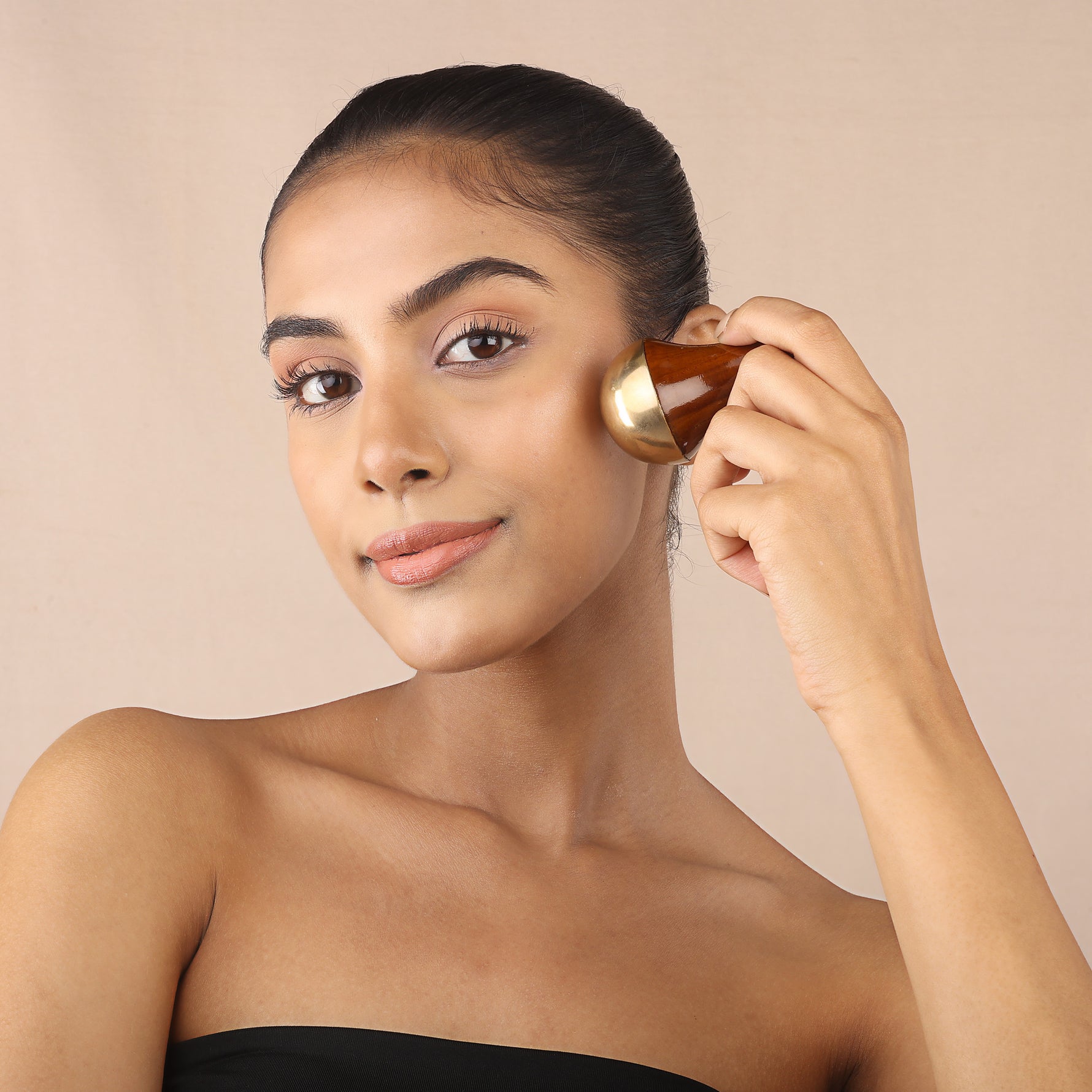
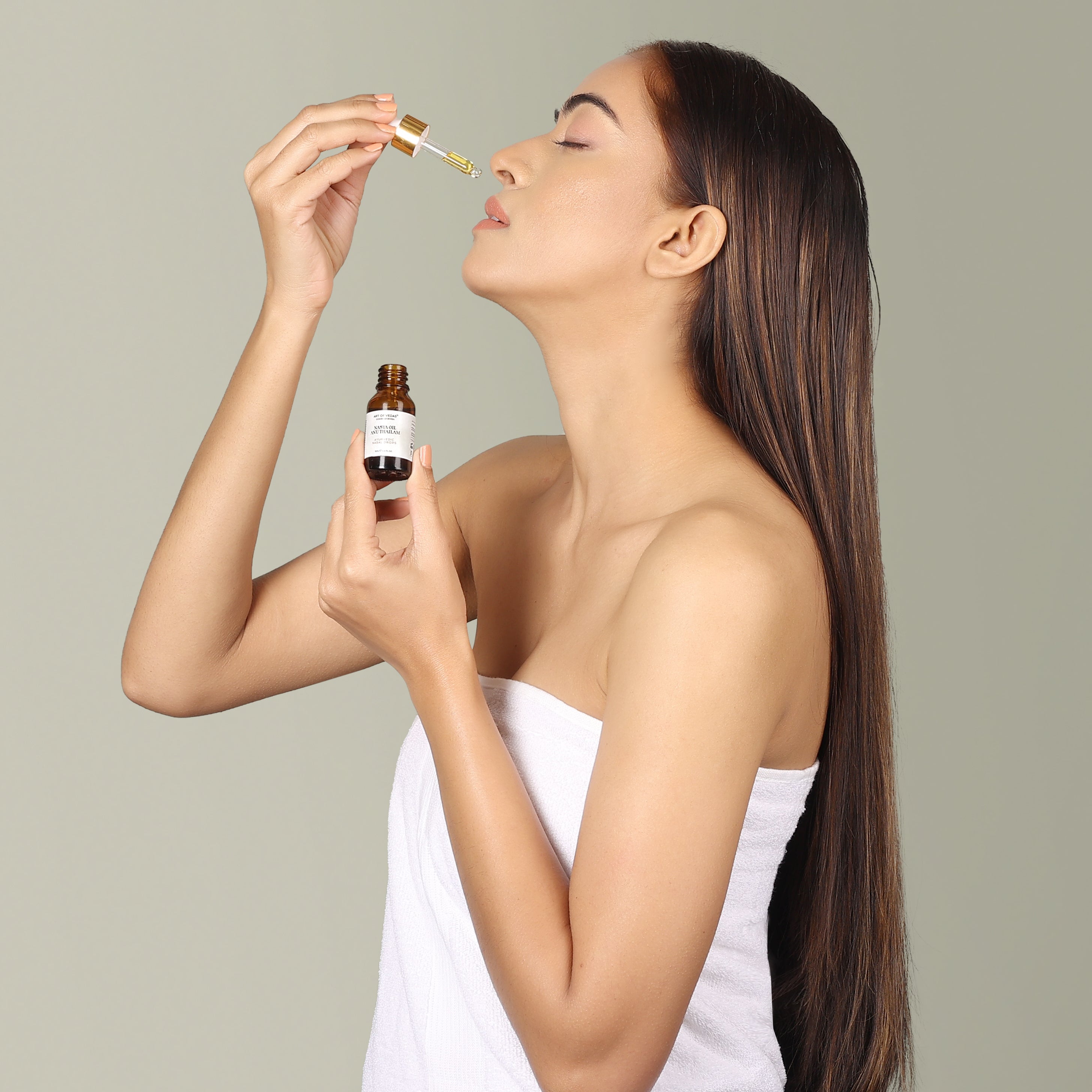
The collection covers the full breadth of Ayurvedic care: traditional Thailams and Abhyanga oils, Kansa and copper tools for face, scalp and body rituals, Nasya oils, Ayurvedic skincare, oral care, haircare, single herbs like Ashwagandha, Brahmi, Amla and Triphala, and a wide selection of classical formulations.
Used daily by Ayurveda practitioners, Panchakarma centres, and wellness professionals across Europe and equally suited to anyone building a serious Ayurvedic home practice.

Sahacharadi Kuzhambu is a classical formulation from the Ashtanga Hridayam, built around Sahachara (Strobilanthes ciliatus), the herb traditionally valued in Ayurveda for its specific action on the lower body. This is the preparation you reach for when the focus is the lower back, hips, thighs, and legs.
The semi-solid Kuzhambu form keeps the formulation in contact with the skin longer than Sahacharadi Thailam, making it the preferred choice for sustained application on the lower extremities. It softens with body heat and absorbs gradually. In classical practice, Sahachara is associated with Apana Vayu, the downward-moving energy that governs the lower body. The Kuzhambu form delivers that targeted action precisely where it is needed.
Practitioners use Sahacharadi Kuzhambu in Panchakarma protocols including Kati Basti and localised lower body therapies. At home, it is well suited to daily application on the lower back and legs.
For external use only. Not a substitute for professional medical advice.

Prabhanjanam Kuzhambu is a classical formulation from the Sahasrayogam, named after Prabhanjana, the Vedic term for the force of wind. In Ayurveda, this directly references Vata, the dosha of movement. This is a preparation designed specifically for conditions where Vata has accumulated and restricted normal movement.
The semi-solid Kuzhambu form holds the formulation in place over the affected area, allowing sustained contact with joints, the lower back, the neck, or limbs where stiffness and restricted mobility are felt. It softens with body heat and absorbs gradually. Practitioners value this preparation in Panchakarma protocols where targeted, prolonged application is required.
Prabhanjanam is one of the more specific Vata-targeting formulations in the classical tradition. The Kuzhambu form makes it practical for precise, localised use at home or in clinical practice.
For external use only. Not a substitute for professional medical advice.

Karparastyadi Kuzhambu is a classical formulation documented in the Sahasrayogam, led by Karpasa (cotton seed) and traditionally valued in Ayurveda for its action on Vata dosha in the musculoskeletal system. The semi-solid Kuzhambu form delivers this classical preparation with a consistency that holds in place over the area of application.
Where Karparastyadi Thailam flows and spreads, the Kuzhambu stays. This makes it the natural choice for localised application on specific joints, the neck, or the lower back, areas where sustained contact with the formulation supports the traditional Vata-pacifying action. It softens with body heat and works into the skin gradually.
Traditionally used in Ayurvedic practice for conditions involving stiffness, restricted movement, and discomfort associated with Vata aggravation. The Kuzhambu form is favoured by practitioners for localised external therapies.
For external use only. Not a substitute for professional medical advice.

Erandamoola Kwath Choornam is a classical decoction powder prepared from the root of the castor plant (Ricinus communis). Described in the Charaka Samhita and Ashtanga Hridayam, Eranda Moola is classified as one of the most important Vata-balancing herbs. The "Kwath Choornam" format means it is a coarse powder intended to be boiled in water to prepare a fresh decoction.
Eranda Moola's warming Virya and sweet Vipaka give it a distinctly nourishing yet mobilising quality. Classical texts describe it as Vatahara (Vata-pacifying), Shoolahara (comfort-supporting) and Basti Shodhana (purifying to the lower abdomen). Frequently used alongside other Vata-balancing therapies in Panchakarma protocols.
To prepare: boil 1 tablespoon of powder in 200ml water, reduce to 50ml, strain and drink warm. Once or twice daily as directed by your practitioner. Best taken on an empty stomach.
This product is a food supplement. Not intended to diagnose, treat, cure or prevent any disease. Consult a qualified practitioner before use if pregnant, breastfeeding or taking medication.

The Netra Basti Yantra is a professional-grade acrylic instrument designed for Netra Tarpana (also known as Netra Basti), one of the five classical Kriyakalpa procedures described in the Sushruta Samhita and Ashtanga Hridayam. In this traditional Ayurvedic eye care practice, lukewarm medicated ghee is gently retained over the eyes while the client lies supine. The ghee nourishes and soothes the delicate eye area, offering a deeply calming and restorative experience rooted in thousands of years of Ayurvedic tradition.

The large Gokarna is the same classical brass vessel, built for higher-volume Nasya Karma. Same traditional design — wide mouth, tapered spout, pedestal base cast in solid brass with the capacity to warm a larger quantity of oil in a single session.
Where the small Gokarna is sized for daily personal Nasya two to three drops per nostril, one session at a time the large vessel accommodates Marsha Nasya and extended Snehana protocols where more oil is required. It is also the practical choice for practitioners administering Nasya to multiple clients in sequence, where warming a larger reserve of oil saves preparation time between sessions.
The brass holds warmth evenly and for longer. The additional weight keeps the vessel stable on a Dhara table or treatment surface. The spout pours with the same control as the small precise enough for a dropper, steady enough for a direct pour.

The Gokarna is the classical brass vessel used in Ayurveda for Nasya Karma, warming and administering medicated oil through the nasal passages. Hand-cast in solid brass, shaped to the traditional design: a wide mouth for gentle warming in a water bath, a tapered spout for controlled pouring into a dropper or to the fingertip, and a pedestal base that holds the vessel stable and upright.
Brass holds warmth evenly, and the size is proportioned for a single Nasya session. Place the Gokarna in hot water, allow the oil to reach body temperature, and apply. Whether you use Anu Thailam daily as part of your Dinacharya or Shadbindu Thailam for more focused care, this is how the practice is traditionally performed not improvised, not approximated.
For Ayurveda practitioners and Panchakarma centres, this is a clinical-grade Nasya vessel suited to Pratimarsha and Snehana Nasya protocols. Stable on a Dhara table, easy to sanitise between clients, built for daily professional use.

Dooshivishari Gulika (also known as Dooshivishari Agada) is a classical compound from the Ashtanga Hridayam (Uttara Sthana) and Sahasrayogam. It belongs to the Agada Tantra branch of Ayurveda, traditionally classified as a Vishahara (purifying) formulation. "Dooshivisha" refers to latent or accumulated Ama that has become deeply lodged in the tissues over time.
The formulation combines Maricha (black pepper), Abhaya (Haritaki), Shunthi (dry ginger), Tankana (borax) and other cleansing ingredients. Classical texts describe it as Vishahara (purifying), Deepana (Agni-supporting) and Shodhana (cleansing). Frequently used by practitioners as a supportive formulation alongside other Panchakarma and purification therapies.
Take 1-2 tablets twice daily with warm water or honey, on an empty stomach, or as directed by your Ayurvedic practitioner.
This product is a food supplement. Not intended to diagnose, treat, cure or prevent any disease. Do not exceed the recommended daily dose. Not recommended during pregnancy or breastfeeding. Keep out of reach of children.

Shallaki (Boswellia serrata) is one of Ayurveda's most celebrated classical herbs, referenced in the Sushruta Samhita and Ashtanga Hridayam. The resin of the Boswellia tree has been valued for centuries in Ayurvedic practice. With a bitter and astringent taste, it has a particular affinity for Vata and Kapha Doshas.
Classical texts describe Shallaki as Shothaghna (comfort-supporting), Vedanasthapana (ease-promoting) and Rasayana (rejuvenative). Suitable for daily use as part of a balanced wellness routine. Take 2 capsules daily with warm water, or as advised by your healthcare professional.
This product is a food supplement. Not intended to diagnose, treat, cure or prevent any disease. Not recommended during pregnancy or breastfeeding.

Gokshura (Tribulus terrestris) is a highly regarded classical herb mentioned in the Charaka Samhita and Ashtanga Hridayam as a Rasayana of particular standing. With a sweet taste and cooling Virya, it is one of the few herbs in the classical tradition that pacifies both Vata and Pitta. It is also a key ingredient in the classical compound Gokshuradi Guggulu.
Classical texts describe Gokshura as Balya (associated with vitality in Ayurvedic tradition), Vrishya (a classical Ayurvedic property) and Rasayana (rejuvenative in the classical Ayurvedic sense). Suitable for daily use as part of a wellness-focused routine. Take 2 capsules daily with warm water, or as advised by your healthcare professional.
This product is a food supplement. Not intended to diagnose, treat, cure or prevent any disease. Not recommended during pregnancy or breastfeeding.

Dhanwantharam 101 Avarthy is the most concentrated form of the classical Dhanwantharam formulation. Named after Lord Dhanwantari, the patron deity of Ayurveda, this preparation undergoes Avartana — a process in which the oil is cooked with its herbal ingredients and then re-processed through the same cycle 101 times. Each cycle deepens the potency. The result is a small-volume, highly concentrated oil taken orally in drops.
This method of repeated processing is described in the classical texts as a way to intensify the Vata-pacifying properties of the formulation far beyond what a single processing can achieve. Where Dhanwantharam Thailam is designed for external massage and Dhanwantharam Kuzhambu for concentrated external application, the 101 Avarthy is specifically prepared for internal use.
Traditional Use
In classical Ayurveda, Dhanwantharam 101 Avarthy is valued for its deep Vata-balancing action. It is traditionally used to support the musculoskeletal and nervous systems, to promote strength and tissue nourishment, and as part of pre-natal and post-natal care protocols in Kerala Panchakarma practice. Practitioners use it where internal oil therapy (Snehapana) with concentrated formulations is indicated.
How to Use
Take 5 to 20 drops before food, with warm water or warm milk. This product should be used under the guidance of a qualified Ayurvedic practitioner who can determine the appropriate dosage and duration for your individual needs. Do not self-prescribe.

Dhanwantharam Kuzhambu is the thicker form of the classical Dhanwantharam formulation documented in the Ashtanga Hridayam. The same 28+ herbs, the same traditional preparation method, but with a semi-solid consistency that stays where you apply it.
This is the preparation you choose when you need sustained contact on a specific area. Lower back, knees, shoulders, or any joint where a flowing oil would simply run off. It softens with body heat and absorbs slowly, giving the herbs more time to work with the skin. Practitioners use it in localised Panchakarma therapies like Kati Basti and Janu Basti. At home, it is ideal for targeted daily application on areas that need consistent attention.
For external use only. Not a substitute for professional medical advice.

Traditional Ayurvedic dry-massage glove used in Garshana. Applied on dry skin (no oil), it gently exfoliates, stimulates micro-circulation and lymphatic flow, and is often used before Abhyanga to awaken and lighten Kapha while grounding Vata with rhythmic strokes.
How to use
- On completely dry skin, start at the feet and work upward toward the heart.
- Use long strokes on limbs; small circles over joints; clockwise circles on the abdomen.
- 3-7 minutes, then shower or follow with warm oil Abhyanga.
Care
Keep dry after use. Hand-wash occasionally with mild soap; air-dry fully. Do not use with oils.
Notes
External use only. Avoid face, broken or irritated skin, active skin sensitivities, varicose veins, or acute irritation. Use light pressure if skin is thin or very Vata. Avoid abdominal work during pregnancy.

Rasnadi Churnam is a classical external-use Ayurvedic powder described in the Ashtanga Hridayam and Sahasrayogam. It is the traditional post-bath and post-oil powder applied to the crown of the head (Brahmarandhra) and sinuses after Abhyanga, Shirodhara and Nasya procedures. In professional Panchakarma practice, Rasnadi Churnam is considered essential for completing any head-related therapy.
The formulation is anchored by Rasna (Alpinia galanga), from which it takes its name, combined with warming, aromatic herbs that support Kapha and Vata balance in the head and upper respiratory region. Its dry, light and warming qualities counter the heaviness that can accumulate after oil therapies. Classical texts specify its application to the Murdhni (crown), temples and forehead after bathing.
Art of Vedas Rasnadi Churnam is prepared following the classical proportions described in the Ashtanga Hridayam. After Abhyanga or Shirodhara, apply a small amount of powder to the crown of the head and temples. Gently pat into the scalp and leave for the desired duration. It may also be applied before bathing to the sinuses and forehead. Available in 500g and 1KG professional sizes.
For external use only. Not a medicine and not a substitute for professional medical advice. Avoid contact with eyes. Discontinue if irritation occurs. Store in a cool, dry place.

The Hrid Basti Yantra is a professional-grade instrument designed for Hrid Basti (also known as Uro Basti or Hridaya Basti), a localised oil-retention practice applied over the sternum and heart region. Rooted in the classical Bahya Snehana (external oleation) principles described in the Charaka Samhita, Sushruta Samhita, and Ashtanga Hridayam, Hrid Basti is one of the most valued localised practices in Panchakarma, addressing the Hridaya, which Ayurveda regards as one of the three Trimarma (vital points of the body).
In this traditional Ayurvedic procedure, the practitioner positions the Yantra over the sternum of the supine-lying client, seals the perimeter with a ring of Masha (urad dal) flour paste, and retains warm medicated oil or ghee within the reservoir. The sustained warmth and herbal properties of the medium nourish the Hridaya Marma region, offering a deeply calming and restorative experience traditionally associated with the care of Prana Vayu, Sadhaka Pitta, and Avalambaka Kapha.
This set includes one Hrid Basti Yantra with an oval profile, ergonomically shaped to conform to the sternal and upper thoracic contour.
Care and Cleaning
After each session, remove all flour paste residue and rinse the Yantra with warm water and a mild, fragrance-free detergent. Sanitise with isopropyl alcohol or a clinical-grade surface disinfectant. Allow to air dry completely before storing. Inspect regularly for any damage or rough edges that could cause discomfort during the session.
What is in the Set
- 1 x Hrid Basti Yantra
- Oval profile designed for the sternal and upper thoracic region
- Material: Durable, reusable clinical-grade construction
- Oil capacity: Approximately 200-300 ml
Classical Reference
Hridaya Marma, Sushruta Samhita (Sharira Sthana Ch. 6, Marma classification). Bahya Snehana principles, Charaka Samhita (Sutrasthana Ch. 13, Snehadhyaya), Sushruta Samhita (Chikitsasthana Ch. 24, Snehopayogika), Ashtanga Hridayam (Sutrasthana Ch. 16, Snehavidhi). Localised Basti practice refined within the Kerala Ashtavaidya Panchakarma tradition.
How it Works
The Hrid Basti Yantra acts as a structural frame for the dough-dam reservoir. The practitioner places the Yantra over the client's sternum, centred on the mid-chest, slightly to the left to align with the Hridaya Marma point, while the client lies in a supine (face-up) position. A ring of Masha (urad dal) flour paste is applied around the outer perimeter to create a watertight seal against the skin. Warm medicated oil or ghee is then poured through the open top until it fills the reservoir and covers the area.
The medium is maintained at a consistent warm temperature throughout the session by periodically removing cooled oil with a cotton swab or syringe and replacing it with freshly warmed oil or ghee. Sessions typically last 30 to 45 minutes, depending on the protocol and the practitioner's clinical assessment.
Why a Professional Basti Yantra?
Traditionally, the reservoir for localised Basti procedures is constructed entirely from Masha flour dough, shaped and moulded around the area by the practitioner. While effective, this method requires skill to maintain structural integrity over the full duration of a session, particularly on the relatively flat but subtly curved surface of the chest.
The Hrid Basti Yantra offers a practical, professional alternative. Its oval profile is ergonomically shaped to conform to the sternal contour, providing consistent structure throughout the session. The practitioner still uses flour paste to seal the instrument to the client's skin, combining the reliability of a reusable clinical tool with the traditional sealing method that ensures a proper fit for every body type.
Advantages for practitioners:
- Structural consistency, no risk of the reservoir collapsing or deforming during longer sessions
- Standardised volume, ensures even coverage of the Hridaya region
- Significantly reduced preparation time compared to full dough-dam construction
- Easy to clean and reuse between clients
- Oval profile designed specifically for the sternal and upper thoracic area
The Classical Medium: Medicated Oils and Ghee
Hrid Basti can use both medicated Thailams (oils) and medicated Ghritham (ghee) as the medium, selected by the practitioner based on the client's presentation, Dosha involvement, and session goals.
Commonly used medicated oils:
- Dhanwantharam Thailam, the primary classical choice for Vata-dominant presentations; deeply nourishing and warming
- Ksheerabala Thailam, traditionally valued for its Brimhana (nourishing) and nervine properties; balances both Vata and Pitta
- Balaswagandhadhi Thailam, traditionally valued for its Balya (strengthening) and Brimhana properties; supports tissue nourishment
- Chandanadi Thailam, a cooling Thailam, classically indicated where Pitta involvement predominates
Commonly used medicated ghee:
- Brahmi Ghritham, traditionally associated with calming the mind and supporting Sadhaka Pitta
- Dhanwantharam Ghritham, the ghee-based counterpart of Dhanwantharam Thailam; deeply nourishing
Plain cow's ghee (Goghrita) may be used for general nourishment and preventive care. The practitioner selects the medium based on the classical principles of Snehana and the client's individual constitution.
Suggested Procedure Overview
Preparation (Purva Karma):
Ensure a calm, warm, draft-free space with subdued lighting. Apply a brief local Abhyanga (oil massage) to the chest and upper thoracic region to prepare the tissue. Warm the selected medicated oil or ghee to a comfortable temperature (approximately 38-42 C) using a double-boiler or oil warmer, never heat directly over flame. Prepare a sufficient quantity of Masha (urad dal) flour paste for sealing. Position the client in a comfortable supine position.
During the session (Pradhana Karma):
Place the Hrid Basti Yantra over the sternum, centred on the Hridaya Marma region. Seal the outer perimeter with flour paste, ensuring a watertight boundary. Pour warm medicated oil or ghee through the open top until it covers the area. Maintain the temperature throughout the session by periodically exchanging cooled medium for freshly warmed oil or ghee. Typical session duration is 30 to 45 minutes. A standard course consists of 7 to 14 consecutive daily sessions, as determined by the practitioner.
After the session (Paschat Karma):
Drain the oil or ghee carefully. Remove the Yantra and flour paste. Gently wipe any excess and perform a light local massage. A mild Swedana (warm fomentation) may be applied to the area. Advise the client to rest in a calm environment and avoid cold drafts, physical exertion, and emotional exertion for several hours following the session. Classical texts recommend post-care precautions for twice the duration of the session itself (Dwiguna Parihara Kala).
This is a professional Ayurvedic practice instrument intended for use by trained practitioners. Hrid Basti should be performed by or under the supervision of a qualified Ayurvedic practitioner. This product is not a medical device and is not intended as a medical device. Always consult a qualified healthcare professional for chest or cardiac concerns.
Showing 105/105
Let customers speak for us

I was struggling to find authentic Ayurvedic items, i am glad to make my order


I ordered several supplements and oils from there and they are great quality

In advice of a good friend, I ordered and received my goods in really good condition. Wands are beautiful and nice to handle. I'm ready to learn more of Ayurveda and looking forward to see what is does with my body & soul. Service (responding to mail) is friendly and correct. Thx so much for that !


The order was quickly, all items in best conditions, massage oils smooth and healthy. I fully recommend.

Love the Art of Vedas high quality products and there follow up with emails. Highly reliable. Highly recommended.
