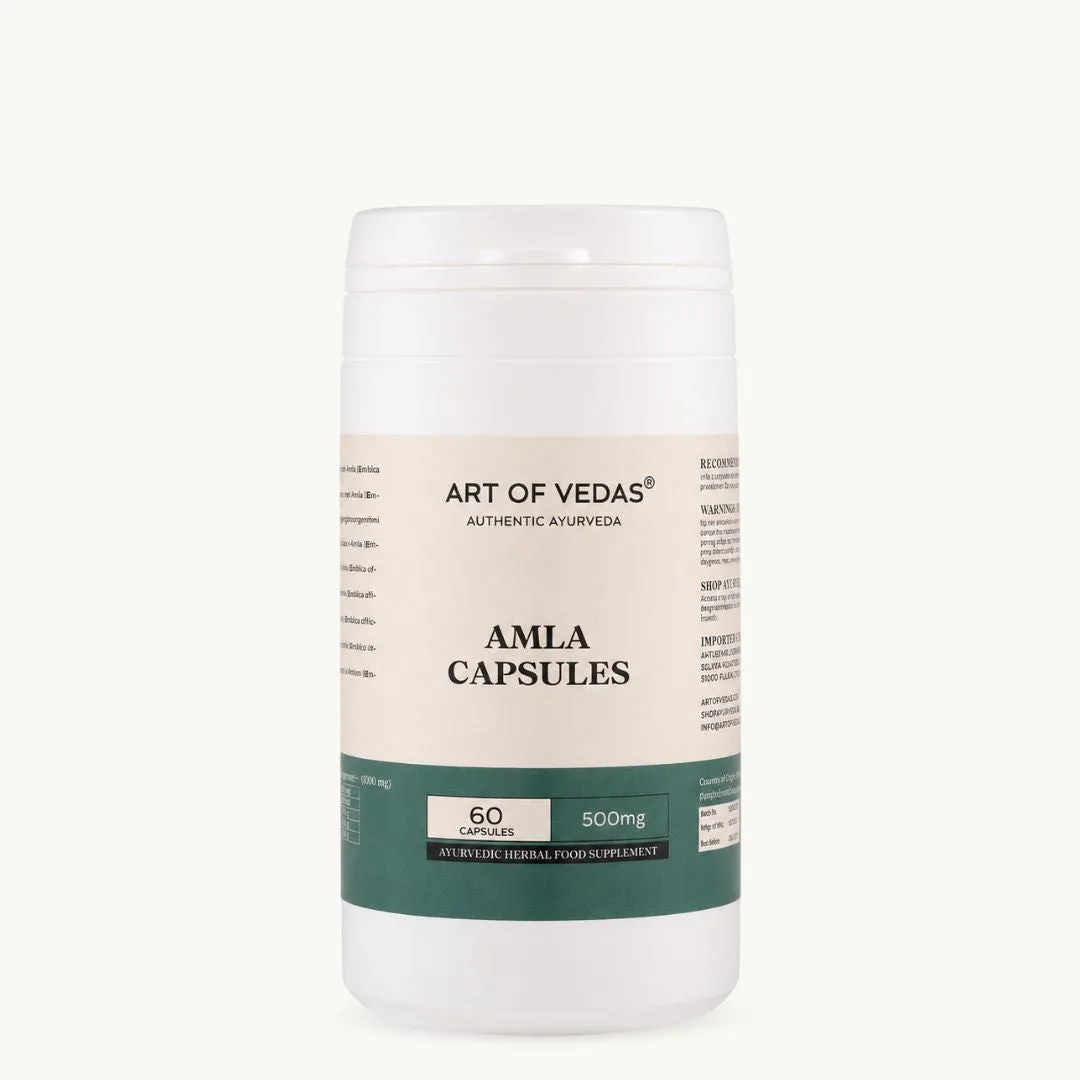
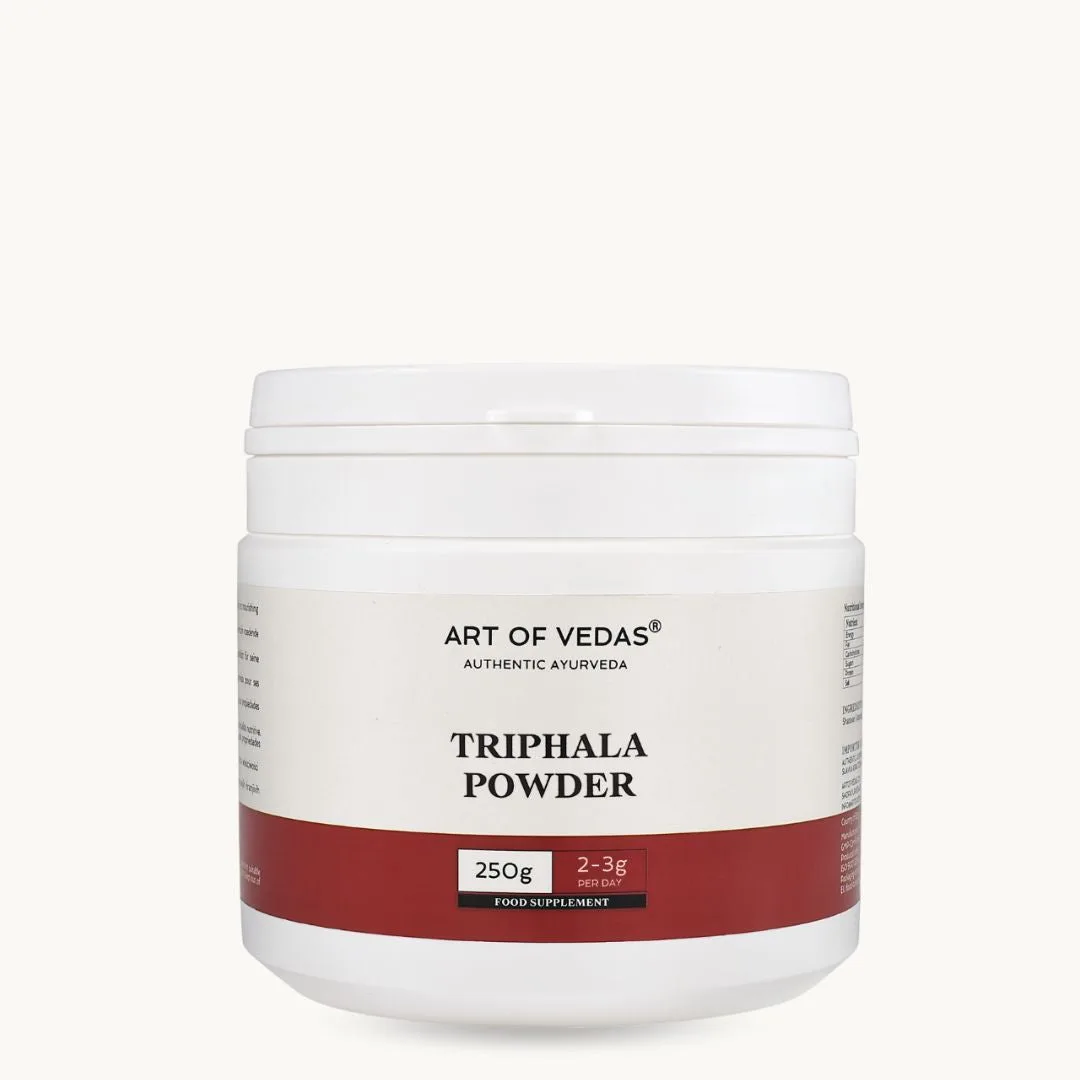
Ayurveda describes materials by taste, Rasa, and recognises six: sweet, sour, salty, pungent, bitter and astringent. Amalaki is one of the few materials described as carrying five of them.
Every taste but one
The texts say Amalaki has every taste except salt, with sour the most prominent. Haritaki, another of the three fruits of Triphala, is described in a similar way, which is one reason the two are so often discussed together.
A descriptive system
Rasa classifies a material within the tradition’s own framework. It records how the texts describe a substance; it is not a statement about what the material does in the body, and Art of Vedas uses it in that descriptive sense only.
Reading the vocabulary
Taste words on a classical product belong to this vocabulary. The botanical name and the part identify what is in the jar; the Rasa describes where the tradition places it.
On the label
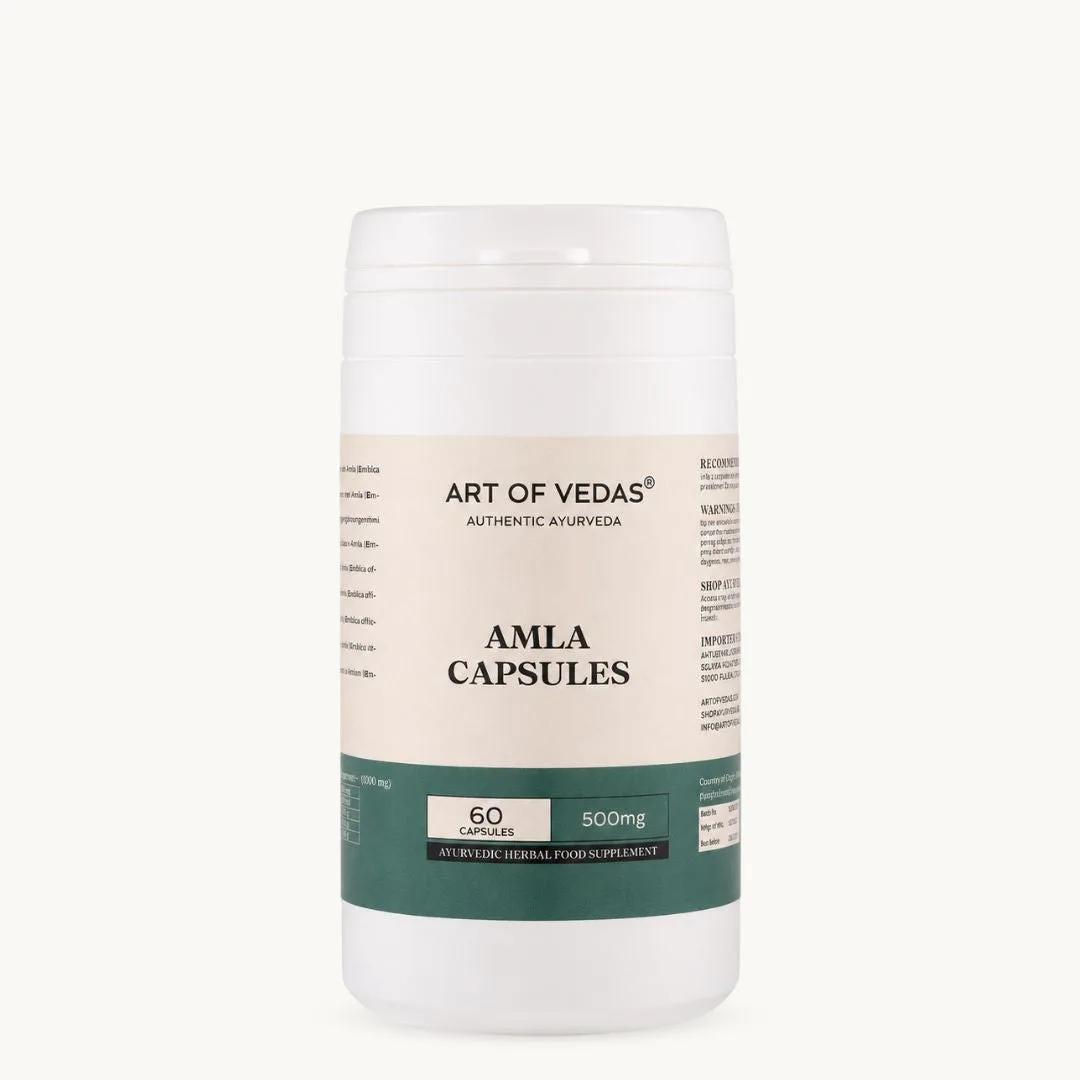
Amla Capsules present Amalaki in a capsule, which means the taste the texts describe is not tasted at all.
Frequently Asked Questions
What does Rasa mean?
Taste, as a descriptive category in the classical framework.
Which taste is missing from Amalaki?
Salt. The texts describe it with the other five, sour leading.
Does a capsule change the material?
No. It only avoids tasting the powder; the material inside is the same.
This article is for educational purposes and describes the classical Ayurvedic record. The products mentioned are food supplements, not a substitute for a varied, balanced diet, and are not intended to diagnose, treat, cure or prevent any disease. Take them under the guidance of a qualified Ayurvedic practitioner.