This article is part of our Amla (Amalaki): The Fruit Ayurveda Says Is the Closest Thing to a Universal Tonic guide series.
Among the hundreds of herbs described in classical Ayurvedic texts, Amalaki holds a singular status. The Ashtanga Hridayam describes it as the foremost among all Rasayana plants - the leading herb in the classical category of rejuvenating preparations that support long-term vitality, resilience, and nourishment. Its Sanskrit name derives from the root "amla" - the sour taste - which directly reflects its dominant flavour and one of the key aspects of its traditional classification. The plant is known in English as the Indian Gooseberry and botanically as Emblica officinalis or Phyllanthus emblica.
This guide covers what Amalaki is, its classification in classical Ayurvedic texts, its traditional uses, and the different forms available.
Classical Ayurvedic classification of Amalaki
Classical Ayurveda classifies every herb through a multi-dimensional framework. Amalaki's classification reveals why it is held in such high regard:
- Rasa (taste): Amalaki is one of the rare herbs described as containing five of the six primary tastes - all except salt (Lavana). The dominant taste is sour (Amla), followed by sweet, pungent, bitter, and astringent in varying degrees.
- Virya (potency): Despite being sour in taste - a quality usually associated with heating effects - Amalaki's potency (Virya) is cooling (Sheeta). This is a classical example of Prabhava - a specific action that cannot be predicted from taste alone.
- Vipaka (post-digestive effect): Sweet (Madhura) - meaning that its long-term effects on the body are nourishing and building, not depleting.
- Dosha relationship: Tridoshic (Tridosha Shamaka) - described as balancing for all three Doshas. The cooling Virya pacifies Pitta; the nourishing Vipaka supports Vata; the drying astringency moderates Kapha. This makes it one of the very few herbs described as appropriate for regular use across all constitutional types.
- Karma (action): Rasayana, Vrishya, Chakshushya, Hridya (supporting the heart), Deepana
Amalaki in classical texts
The esteem in which Amalaki is held in classical Ayurveda is reflected across multiple foundational texts:
The Charaka Samhita (Chikitsa Sthana, Chapter 1) includes Amalaki in the most significant Rasayana protocols, describing it as a primary ingredient in classical preparations for longevity and vitality.
The Ashtanga Hridayam (Sutrasthana, Chapter 6) describes Amalaki as "Shresthha phalanam" - the best among fruits - and as the most important single ingredient in the Triphala formula.
The Sahasrayogam includes Amalaki in numerous compound formulations, most notably Chyavanprash - one of the most famous classical compound Rasayana preparations, of which Amalaki is the primary ingredient.
Amalaki and Triphala
Amalaki is one of the three fruits that constitute Triphala - the most widely used classical Ayurvedic compound formula. Within Triphala, Amalaki provides the Pitta-balancing and Rasayana properties, while Haritaki addresses Vata and Bibhitaki addresses Kapha. The three fruits together are described as Tridoshic and suitable for long-term daily use. See our complete Triphala guide for full details on this classical formula.
Amalaki and Vitamin C
Amalaki is one of the most concentrated natural sources of Vitamin C known in botanical literature. Research has confirmed that Amalaki fruit contains exceptionally high levels of ascorbic acid, alongside tannins that are thought to stabilise the Vitamin C content even after processing and drying. This is consistent with the classical Ayurvedic description of Amalaki as a cooling, nourishing, and Pitta-pacifying herb - Pitta governs heat and metabolism, and Vitamin C is one of the body's key antioxidant nutrients.
Classical Ayurveda does not frame this in biochemical terms - it describes Amalaki's properties through the lens of Rasa, Virya, Vipaka, and Karma. But the convergence of classical and contemporary understanding makes Amalaki one of the most well-studied classical Ayurvedic herbs.
Forms of Amalaki available
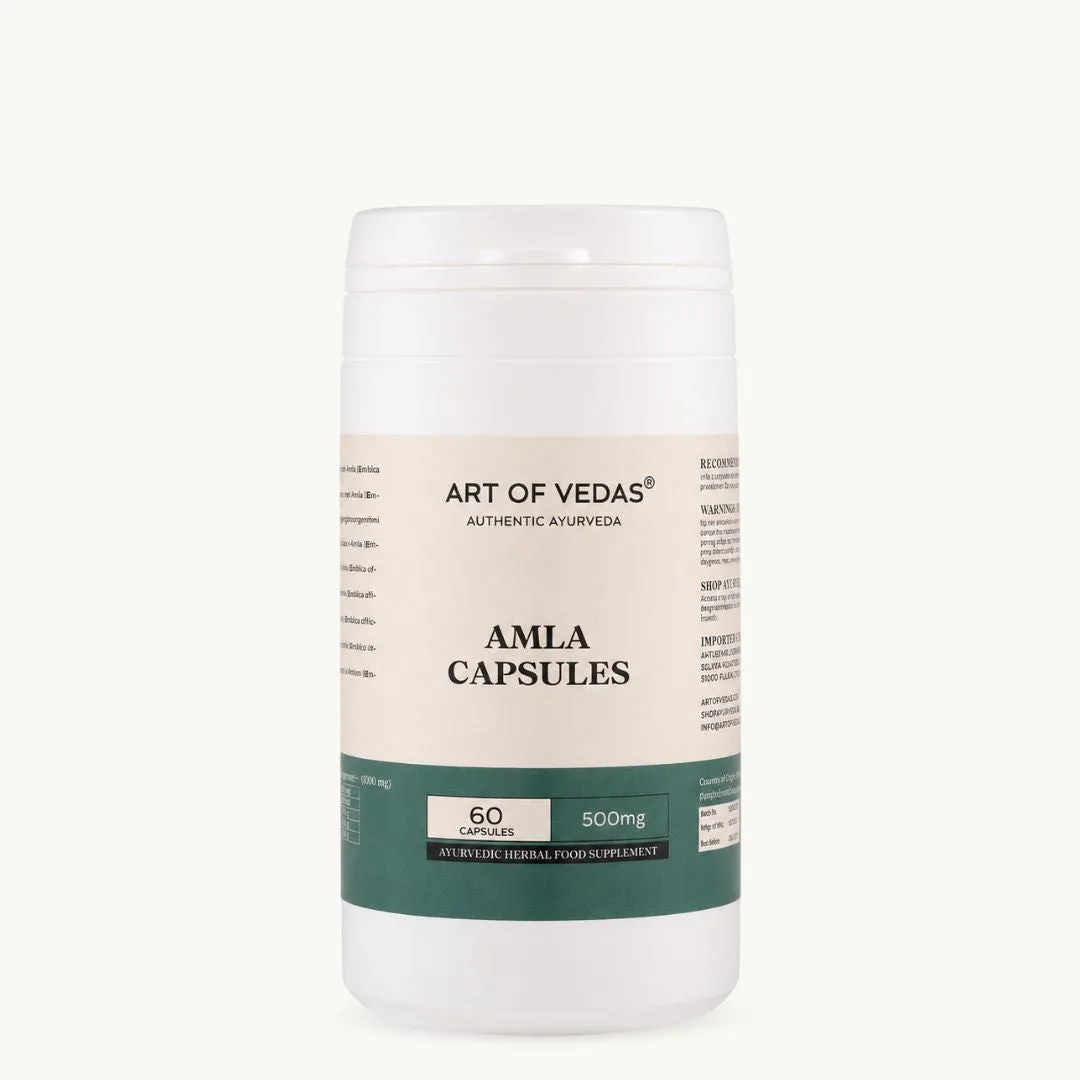
Amalaki Capsules (Amalaki Churnam in capsule form)
The most convenient way to incorporate Amalaki into a daily routine. Our Amla Capsules contain classical-quality Amalaki powder in vegetable capsules, suitable for daily Rasayana use. Typical dosage: 1, 2 capsules twice daily with warm water, as per product label.
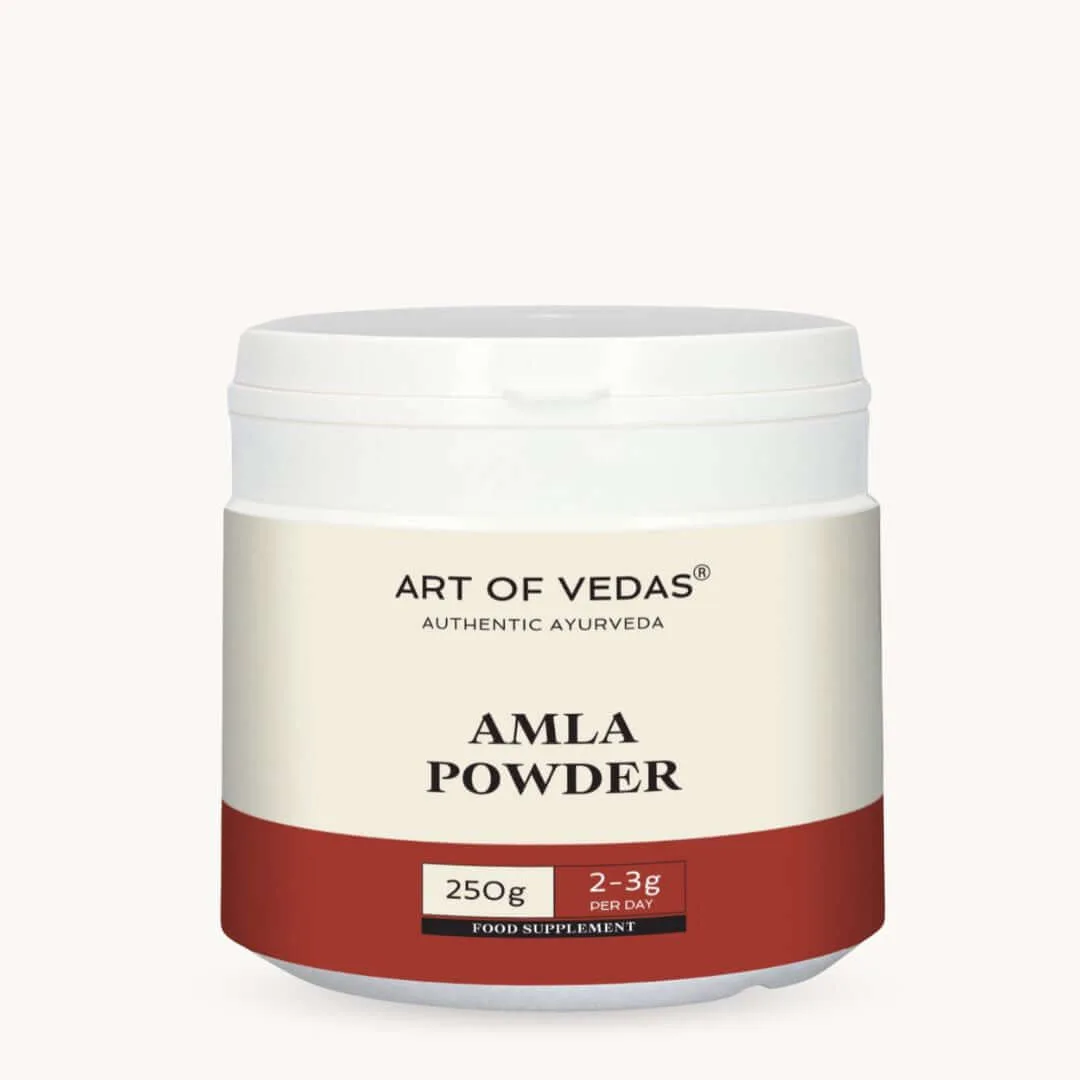
Amla Powder (Amalaki Churnam)
The traditional form - dried, powdered Amalaki fruit. Amla Powder can be mixed with warm water or honey. The taste is distinctively sour and slightly astringent - a reflection of the herb's classical Rasa properties.
Amalaki in Triphala
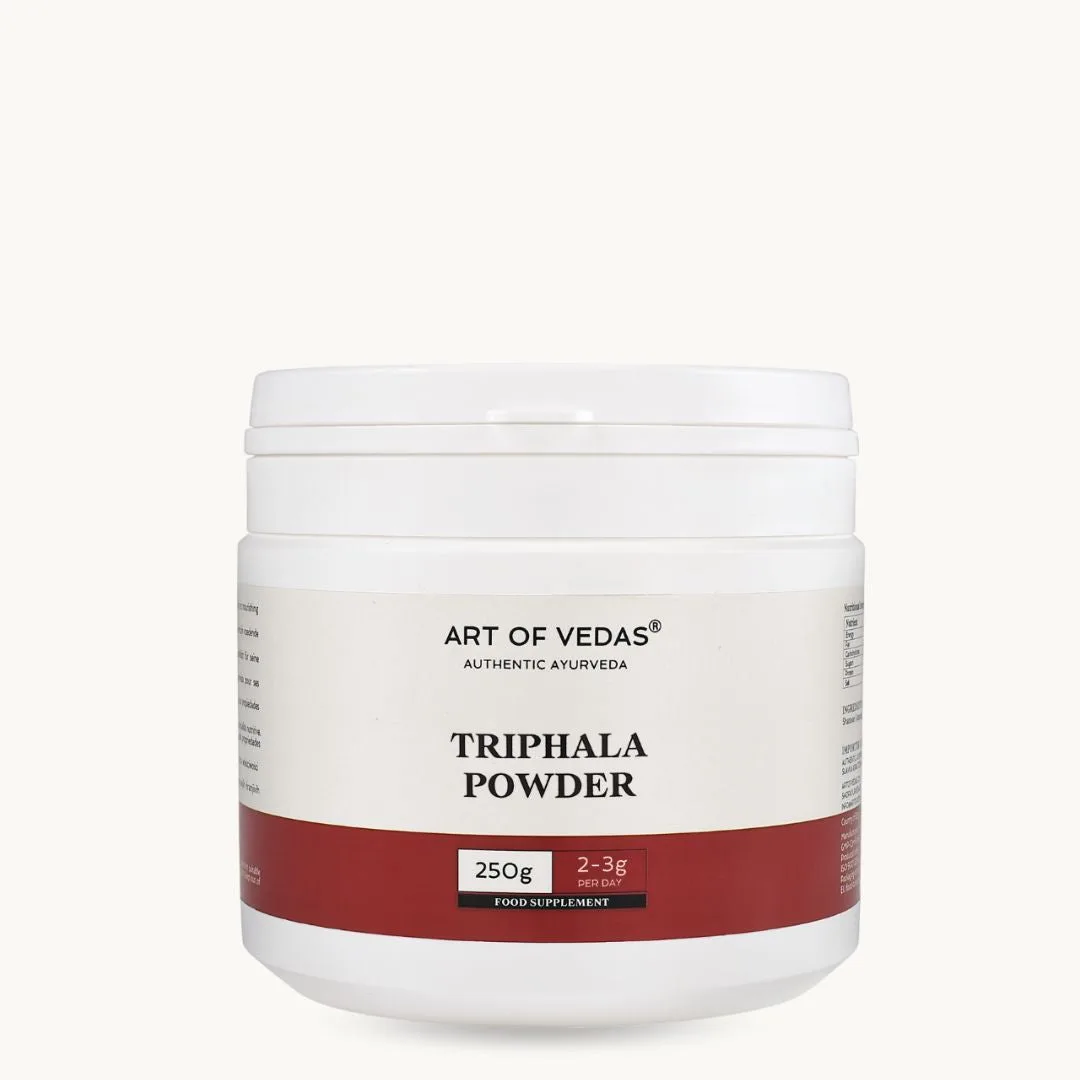
Those who prefer the full Tridoshic Triphala formula - which contains Amalaki alongside Haritaki and Bibhitaki - will find both Triphala Powder and Triphala Capsules in the Art of Vedas supplements range.
Classical use guidelines for Amalaki
Classical Ayurvedic texts describe several traditional uses for Amalaki:
- Daily Rasayana: A small daily amount of Amalaki Churnam or Amalaki Capsules taken over an extended period. The Charaka Samhita describes specific Rasayana protocols with Amalaki taken over weeks or months.
- Anupana (carrier): Classical texts often pair Amalaki with honey (Madhu) as a carrier for Pitta conditions, or with warm water as a general tonic.
- Triphala context: The most practically accessible form of Amalaki Rasayana is through the daily use of Triphala, which ensures the full classical Tridoshic formula alongside Amalaki's Rasayana properties.
Amalaki and the Ayurvedic herbs tradition
Amalaki sits at the centre of the classical Ayurvedic Rasayana tradition - alongside Ashwagandha, Shatavari, and Brahmi. For an overview of all major classical Ayurvedic herbs and their categories, see our guide to Ayurvedic herbs. For supplements by Dosha type, begin with our Dosha test to identify your constitution.
The full Ayurvedic supplements range - including Amalaki, Triphala, Ashwagandha, Guduchi, and more - is available in our Supplements collection.
Amalaki products from Art of Vedas are food supplements, not medicines. They do not replace consultation with a physician or qualified Ayurvedic practitioner. Do not exceed the recommended daily intake stated on the product label.