This article is part of our Ashwagandha: The Classical Ayurvedic Rasayana for Strength and Vitality guide series.
Ashwagandha (Withania somnifera) is one of the most important herbs in classical Ayurveda and, in recent years, one of the most widely studied adaptogenic herbs in Europe and globally. Its Sanskrit name - "the smell of a horse" - refers both to the distinctive odour of the root and to the classical Ayurvedic association of the herb with horse-like strength and vitality. The Bhaishajya Ratnavali, Charaka Samhita, and Ashtanga Hridayam all describe Ashwagandha as a primary Balya and Rasayana herb. Those asking what is Ashwagandha or searching for Ashwagandha kaufen in Germany and Europe will find it among the most deeply documented herbs in both the classical Ayurvedic and modern scientific literature.
Classical Ayurvedic properties of Ashwagandha
-
Rasa (taste): Tikta (bitter), Kashaya (astringent), Madhura (sweet)
-
Virya (potency): Ushna (warming) - Ashwagandha is a warming Rasayana, making it particularly suited to Vata and Kapha constitutions
-
Vipaka (post-digestive effect): Madhura (sweet, nourishing and building)
-
Dosha relationship: Primarily Vata and Kapha Shamaka. The warming, heavy, and building nature of Ashwagandha directly counters Vata's cold and depleting qualities. Used with care in Pitta types or in warm seasons.
-
Key classical karma: Balya, Rasayana, Vajikarana, Shothahara, Nidrajanana (supporting restful sleep)
The Charaka Samhita places Ashwagandha at the head of the Balya group of herbs - describing it as the foremost among preparations that build physical resilience and vitality. This is the classical basis for Ashwagandha's traditional effect as understood in Ayurveda: not a stimulant but a deep builder, acting on the tissues over time.
What does Ashwagandha do? Classical sphere of action
Classical Ayurvedic texts describe Ashwagandha's sphere of action across several interconnected areas:
-
Balya - building physical strength and stamina: The primary classical action. Ashwagandha is described as nourishing Mamsa Dhatu (muscle tissue) and Shukra Dhatu (reproductive tissue), supporting physical resilience and stamina over time.
-
Ashwagandha and sleep (Nidrajanana): The Ashtanga Hridayam lists Ashwagandha as Nidrajanana - supporting natural, restful sleep. This is consistent with its warming and grounding Vata-pacifying action. Sleep support is one of the most consistently described traditional uses.
-
Ashwagandha and stress - Vata and mental resilience: In classical Ayurveda, Vata governs the nervous system and the quality of mental experience. Ashwagandha's grounding, warming effect on Vata is described as supporting steadiness and resilience in the face of mental and physical demands - the Ayurvedic equivalent of what modern researchers call adaptogenic action.
-
Vajikarana - reproductive vitality: Described in classical texts as one of the foremost Vajikarana herbs - supporting the vitality and quality of the reproductive tissues in both sexes.
-
Rasayana - long-term vitality: Extended Ashwagandha use is described in classical Rasayana protocols. Unlike stimulants, the classical emphasis is on consistent, sustained use over months rather than short-term high doses.
Ashwagandha kaufen: forms available
Ashwagandha Kapseln (Ashwagandha Capsules)
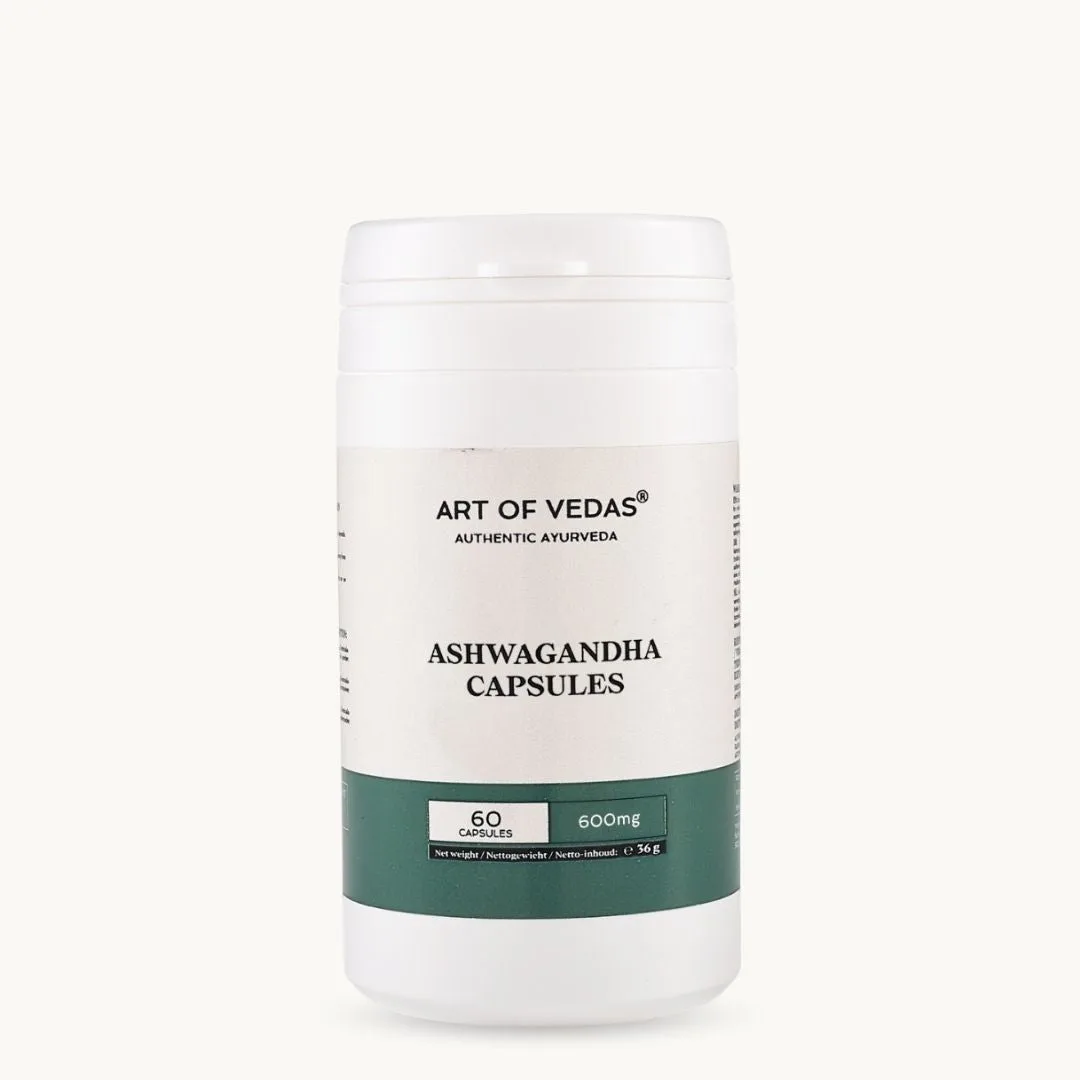
The most practical form for daily use. Our Ashwagandha Capsules contain classical-quality Ashwagandha root powder. Typical dosage: 1, 2 capsules twice daily with warm water or warm water. warm water is the traditional classical Anupana for Ashwagandha - the combination of warming Ashwagandha and nourishing milk is described in classical texts as particularly effective for building Ojas (vital essence).
Ashwagandha Pulver (Ashwagandha Powder)
The traditional Churnam form. Our Ashwagandha Powder can be mixed with honey, and a pinch of cardamom for the classical Ashwagandha milk preparation. Classical Rasayana protocols describe taking Ashwagandha Churnam in warm water with raw cane sugar or honey as a morning and evening preparation.
Ashwagandha dosage: classical guidance
-
Ashwagandha Churnam (powder): 3, 6 grams per day, typically divided into two doses of 1.5, 3g each
-
Ashwagandha Kapseln (capsules): As per product label - typically 500mg, 1g twice daily
-
Timing: Morning for general vitality support; evening (30 minutes before sleep) when the primary intention is sleep support
-
Anupana (carrier): warm water is the classical recommendation. Warm water is suitable as an alternative.
-
Duration: Classical Rasayana use is long-term. Significant effects from consistent use are typically described in classical texts after 30, 90 days of sustained daily intake.
Classical texts note that Ashwagandha should be used cautiously during pregnancy - consult a practitioner. High Pitta types may find warming herbs like Ashwagandha aggravating in hot weather - in such cases, cooling Shatavari may be more appropriate. See our Shatavari guide.
Ashwagandha in classical compound formulations
While Ashwagandha is highly effective as a single herb, classical Ayurvedic texts describe several compound formulations where it plays a key role. Among the most important is Ashwagandharishta - a classical fermented liquid preparation (Arishtam) containing Ashwagandha alongside other Balya and Rasayana herbs. Classical compound formulations tend to have broader action and are described as more bioavailable than single-herb preparations in classical theory.
Ashwagandha and the classical Dosha system
Ashwagandha is most appropriate for Vata and Kapha types, and for Vata-Kapha mixed constitutions. For Pitta types or those in Pitta season (summer), Shatavari is the classical cooling alternative Rasayana. For a personalised overview: take our Dosha test and read the Vata type guide or Kapha type guide.
The full Ashwagandha range - Capsules and Powder - is available in our Supplements collection alongside Shatavari, Brahmi, Amla, Guduchi, and Triphala.
Ashwagandha products from Art of Vedas are food supplements, not medicines. They do not replace consultation with a physician or qualified Ayurvedic practitioner. Do not exceed the recommended daily intake on the product label.