Shatavari (Asparagus racemosus) is one of the most important herbs in classical Ayurveda - a primary Rasayana preparation described across the Charaka Samhita, Ashtanga Hridayam, and Sahasrayogam as a supreme nourishing and rejuvenating herb. Its Sanskrit name means "she who possesses a hundred husbands" - a metaphor in the classical texts for the herb's deep nourishing and vitalising properties. Among classical Ayurvedic herbs, Shatavari kaufen (purchasing Shatavari) is increasingly sought after across Europe, and for good reason: it remains one of the most consistently referenced Rasayana preparations in the classical literature for supporting vitality and long-term wellbeing.
Classical Ayurvedic properties of Shatavari
The Charaka Samhita and Ashtanga Hridayam characterise Shatavari through its Rasa-Virya-Vipaka framework:
- Rasa (taste): Sweet (Madhura) and slightly bitter (Tikta)
- Virya (potency): Sheeta (cooling) - Shatavari is one of the principal cooling Rasayana herbs in the classical system
- Vipaka (post-digestive effect): Madhura (sweet, nourishing and building)
- Dosha relationship: Vata and Pitta Shamaka - particularly valuable for reducing excess Vata and Pitta. Its cooling, moistening, and building qualities directly counter both Vata's dryness and Pitta's heat.
- Key qualities (Gunas): Guru (heavy), Snigdha (unctuous/moist), Sheeta (cool)
The Ashtanga Hridayam classifies Shatavari under Vayasthapana and Jeevaniya (life-supporting preparations). The Charaka Samhita includes it in the Balya group (strengthening preparations) and among the most important Rasayana herbs of the classical system.
Traditional uses of Shatavari in classical Ayurveda
Classical Ayurvedic texts describe Shatavari's primary sphere of influence across several interconnected areas:
- Rasayana and deep nourishment (Ojas support): Shatavari is described as one of the most important herbs for supporting Ojas - the classical Ayurvedic concept of vital essence and resilience. Its sweet, cooling, and building nature is described as directly supporting the finest product of the digestive process.
- Vrishya: The classical texts describe Shatavari as deeply nourishing for the reproductive tissues (Shukra Dhatu). This is true for both sexes in classical Ayurveda, though the herb is perhaps best known in this context for its traditional use as a female Rasayana.
- Supporting Agni without aggravating Pitta: Unlike warming Rasayana herbs such as Ashwagandha, Shatavari supports digestive function gently and without heating the system - making it particularly appropriate for Pitta and Pitta-Vata types.
- Stanya (supporting lactation): The classical texts describe Shatavari as supporting healthy lactation in nursing mothers.
- Medhya: Several classical texts include Shatavari among Medhya herbs - those described as supporting mental clarity and cognitive function, albeit less prominently than Brahmi or Shankhapushpi.
Shatavari and the Vata-Pitta constitution
Among the three Dosha constitutions, Shatavari is most frequently recommended in classical texts for Vata and Pitta types - either as the primary Dosha or in mixed constitutions. Its cooling Virya makes it less appropriate as a primary Rasayana for strong Kapha types, for whom warming herbs such as Ashwagandha may be more suitable. For a clear picture of your own Dosha constitution and which Rasayana herbs are most appropriate, take our Dosha test. See also our guides to the Vata type and Pitta type.
Shatavari kaufen: available forms
Shatavari is available in two primary forms, each suited to different preferences and uses:
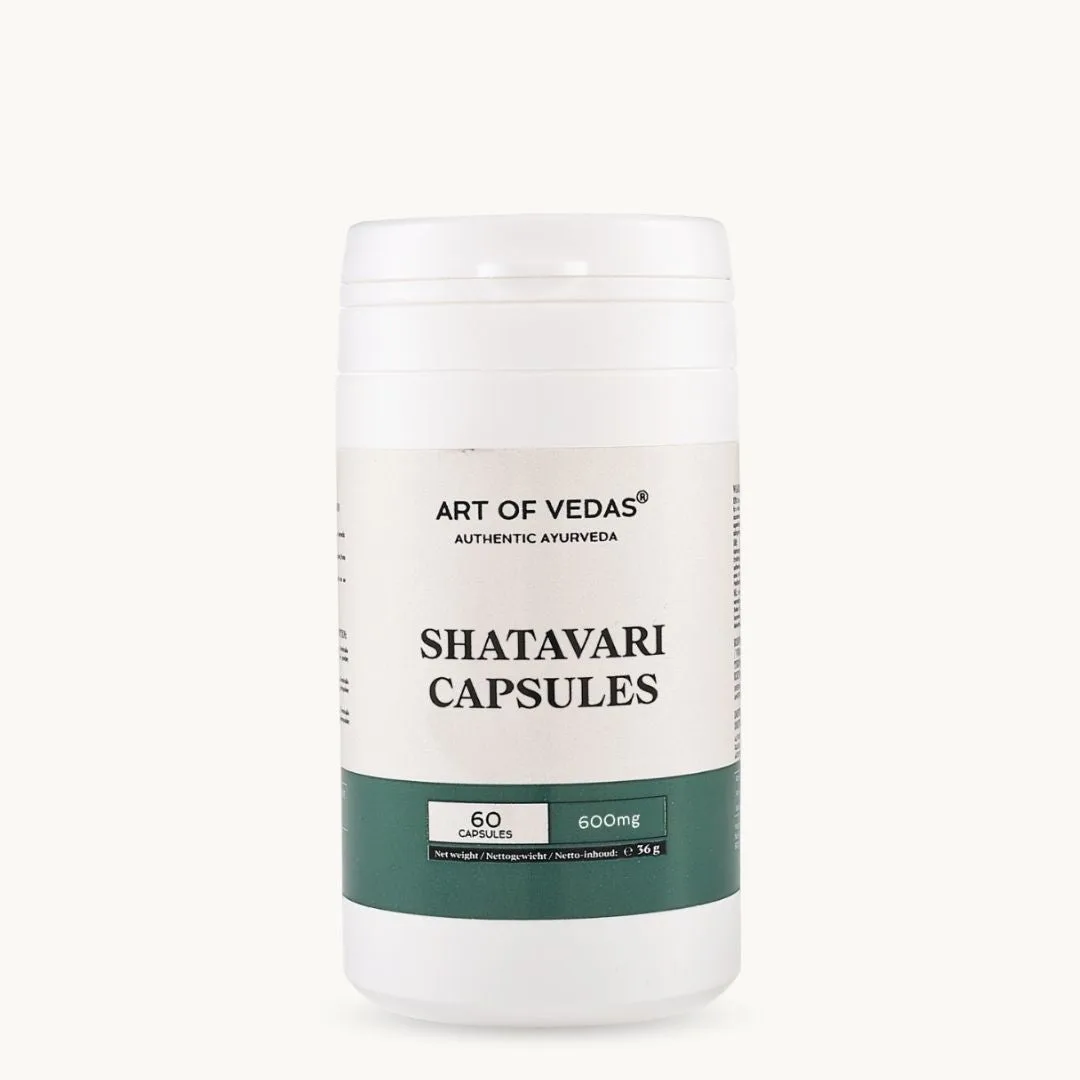
Shatavari Capsules
The most convenient form for daily Rasayana use. Our Shatavari Capsules contain classical-quality Shatavari root powder in vegetable capsules. Typical dosage: 1, 2 capsules twice daily with warm water or warm water, as per product label. warm water (Dugdha) is the traditional Anupana (carrier) for Shatavari in classical texts - milk and Shatavari share cooling, nourishing qualities that are described as synergistic.
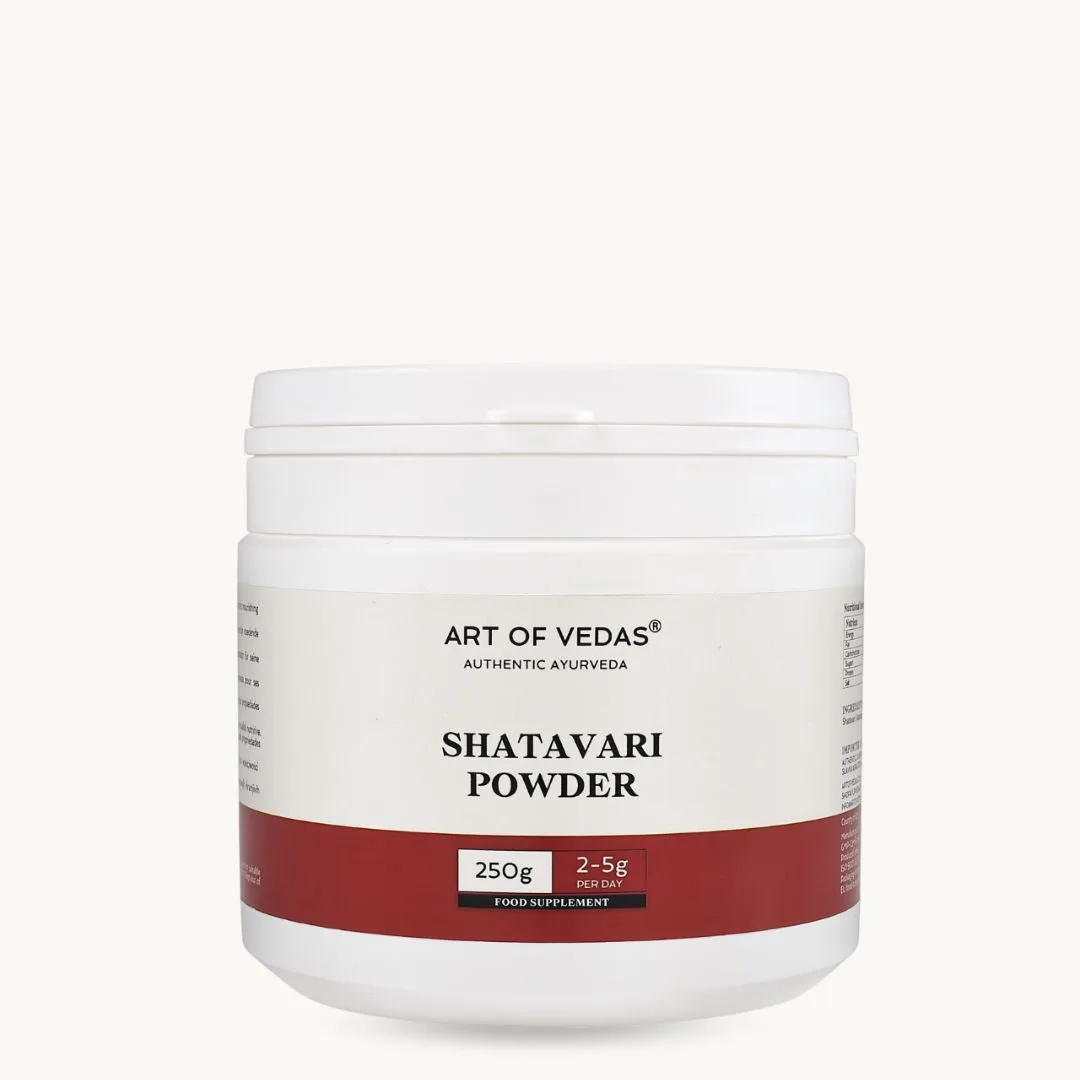
Shatavari Pulver (Shatavari Powder / Churnam)
The classical form. Our Shatavari Powder can be taken mixed into warm water with a small amount of honey or raw cane sugar. Classical texts recommend Shatavari Churnam taken in milk as the primary method for long-term Rasayana practice with this herb.
Shatavari dosage guidelines
- Churnam (powder): 3, 6 grams per day (approximately half to one teaspoon), typically divided into two doses
- Capsules: As per product label - typically 500mg, 1g twice daily
- Anupana (carrier): warm water is the classical recommendation; warm water is suitable as an alternative
- Timing: Morning and evening, after meals
- Duration: Shatavari is described as suitable for extended daily use as a Rasayana preparation
Consult a practitioner for personalised guidance, particularly during pregnancy. Classical texts describe Shatavari as beneficial during pregnancy, but individual guidance is always recommended.
Shatavari in the broader Rasayana tradition
Shatavari sits alongside Ashwagandha, Amalaki, and Brahmi as one of the four most commonly referenced classical Rasayana herbs. Each has a different primary action and Dosha affinity: Ashwagandha is warming and Vata-pacifying with strong Balya properties; Shatavari is cooling and nourishing with primary affinity for Vata-Pitta; Amalaki is tridoshic and rich in Vitamin C; Brahmi is specifically Medhya. For a complete overview of classical Ayurvedic herbs and their categories, see our guide to Ayurvedic herbs.
The complete Art of Vedas Ayurvedic supplements range - including Shatavari Capsules, Shatavari Powder, Ashwagandha, Amla, Guduchi, Triphala and more - is available in our Supplements collection.
Shatavari products from Art of Vedas are food supplements, not medicines. They do not replace consultation with a physician or qualified Ayurvedic practitioner. Do not exceed the recommended daily intake stated on the product label.