The Ayurvedic Perspective on Weight
Ayurveda does not approach weight through the lens of calories in versus calories out. Instead, it looks at metabolism as a function of Agni (digestive fire), constitutional type (Prakriti), and the balance or imbalance of the three Doshas. In this framework, excess weight is understood as a symptom of deeper metabolic patterns, not simply the result of eating too much.
Classical Ayurvedic texts describe Sthaulya (excess tissue accumulation) as a condition rooted in low Agni and accumulated Ama (metabolic waste). When the digestive fire is weak or sluggish, food is not fully transformed into usable tissue. Instead, it produces heavy, dense material that the body stores rather than utilises. This understanding shifts the conversation from restriction to optimisation: the goal is not to eat less, but to digest better.
Why Constitutional Type Matters
Not everyone gains weight for the same reason, and not everyone responds to the same approach. Ayurveda recognises this through the Dosha system.
Kapha and Weight
Kapha types are the most prone to weight accumulation. Kapha's inherent qualities are heavy, slow, cool, and moist. These qualities naturally promote tissue building. In balance, this creates a strong, stable, well-built physique. In excess, it leads to heaviness, sluggish digestion, and a tendency to store rather than metabolise.
For Kapha types, the classical approach involves stimulating Agni and reducing the heavy, moist qualities through food, movement, and daily routine. This is not about deprivation. It is about countering Kapha's natural tendencies with their opposites: lightness, warmth, dryness, and stimulation.
Pitta and Weight
Pitta types typically have strong Agni and efficient metabolism. Weight gain in Pitta types often relates to emotional eating patterns, excess alcohol consumption, or a diet too rich in heavy, sweet, and oily foods. When Pitta's strong fire is fed too much fuel, it can create a kind of metabolic overwhelm where excess is stored rather than burned.
The approach for Pitta-related weight concerns focuses on moderating intake without diminishing Pitta's natural metabolic strength. Cooling, bitter foods and consistent meal timing address the pattern without creating further Pitta aggravation.
Vata and Weight
Vata types are less commonly associated with weight gain, but it does occur. When Vata becomes deeply imbalanced, the body may respond by accumulating Kapha-type tissue as a protective mechanism. Irregular eating patterns, stress-driven eating, and poor digestion can all contribute.
For Vata-related weight patterns, the approach is the most gentle of the three. Harsh restriction, intense exercise, or cold, raw diets will aggravate Vata and worsen the pattern. Instead, warm, regular meals with gentle spicing and a grounding daily routine form the foundation.
Agni: The Key to Healthy Metabolism
In Ayurvedic theory, Agni is the master key to metabolism. Strong, balanced Agni transforms food efficiently, extracts nourishment, and eliminates waste. Weak Agni (Manda Agni) allows food to sit undigested, creating Ama, which classical texts describe as a sticky, heavy substance that clogs the channels of the body and promotes tissue accumulation.
Signs of weak Agni in classical Ayurveda include: a coated tongue in the morning, low appetite, heaviness after meals, irregular elimination, and a general sense of sluggishness. Strengthening Agni is the first and most important step in the Ayurvedic approach to healthy weight.
Classical Agni-Strengthening Practices
-
Warm water first thing in the morning: a glass of warm (not hot) water on waking is one of the simplest and most widely recommended Ayurvedic practices; it gently stimulates Agni and supports morning elimination
-
Ginger before meals: a thin slice of fresh ginger with lemon juice and a pinch of salt, taken 15 minutes before eating, is the classical Ayurvedic appetiser
-
Spice-rich cooking: cumin, coriander, fennel, ginger, black pepper, and turmeric are all traditionally used to kindle and maintain Agni
-
Avoid cold drinks with meals: cold water or iced beverages are traditionally understood to suppress Agni at the moment when it needs to be at its strongest
-
Leave space in the stomach: classical texts recommend filling the stomach one-third with food, one-third with liquid, and leaving one-third empty; this provides Agni with the space it needs to function
Dietary Guidelines for Healthy Weight
The Ayurvedic dietary approach to weight focuses on food quality, timing, and preparation rather than calorie restriction.
What to Emphasise
-
Cooked, warm meals: cooked food is easier for the body to digest than raw food; this is especially important when Agni is weak
-
Bitter and astringent tastes: leafy greens, cruciferous vegetables, legumes, and bitter herbs are traditionally associated with lightness and metabolism
-
Pungent spices: ginger, black pepper, long pepper (Pippali), mustard seeds, and fenugreek are classified as metabolism-supporting in classical texts
-
Light grains: millet, barley, buckwheat, and quinoa are lighter than wheat or rice and traditionally recommended for supporting healthy weight
-
Legumes: mung beans are considered the lightest and most digestible; red lentils and chickpeas are also suitable
-
Warm beverages: ginger tea, cumin-coriander-fennel tea (CCF tea), and warm water throughout the day
What to Reduce
- Heavy dairy products: cheese, cream, and ice cream increase Kapha and burden Agni
- Excess sugar and refined carbohydrates: these create rapid Kapha accumulation
- Cold, heavy, and fried foods: these suppress Agni and promote Ama formation
- Eating between meals: constant snacking keeps Agni working on old food rather than completing digestion
- Large portions at dinner: the evening meal should be the lightest; Agni naturally diminishes as the day progresses
The Role of Fasting in Ayurveda
Ayurveda has its own tradition of fasting (Langhana), distinct from modern intermittent fasting trends. Classical Ayurvedic fasting is not prolonged deprivation. It is a measured reduction in food intake designed to give Agni the opportunity to process accumulated Ama.
Common Ayurvedic fasting approaches include:
-
Warm water fast: consuming only warm water or herbal tea for half a day or a full day; the gentlest form
-
Kitchari mono-diet: eating only Kitchari (a simple dish of rice and mung beans with mild spices) for 1-3 days; provides nourishment while resting the digestion
-
Skipping dinner: having a substantial lunch and then only warm liquids in the evening; a practical daily Langhana approach
Fasting is not appropriate for all constitutions. Vata types should fast cautiously and briefly, if at all; their constitution does not tolerate extended food restriction. Kapha types generally respond well to periodic fasting. Pitta types can fast moderately but should not skip meals regularly, as their strong Agni creates discomfort when unfed.
Movement and Daily Routine
Ayurvedic texts do not prescribe exercise in the modern gym sense. They recommend Vyayama (physical exertion) calibrated to your constitution and current state. The classical guideline is to exercise to half your capacity, meaning you should stop when you begin to sweat on the forehead and breathe through the mouth. This prevents the exhaustion that intense exercise can cause.
For supporting healthy weight, the following Ayurvedic movement principles apply:
-
Morning exercise: physical activity in the Kapha time of day (approximately 6:00-10:00 in the morning) is traditionally considered most effective for countering heaviness and sluggishness
-
Walking after meals: a short walk of 10-15 minutes after each meal supports digestion; the classical text Ashtanga Hridayam specifically recommends this practice
-
Constitutional matching: Kapha types benefit from vigorous movement (brisk walking, cycling, active yoga); Pitta types from moderate, cooling exercise (swimming, hiking); Vata types from gentle, grounding movement (walking, restorative yoga, tai chi)
-
Consistency over intensity: daily moderate exercise is more valuable than occasional intense sessions; regularity matters more than peak performance
Herbal Support in Classical Ayurveda
Classical Ayurvedic texts describe several herbs traditionally used to support healthy metabolism and tissue balance. These are food supplements, not medicines, and they work within the broader context of diet and lifestyle, not as replacements for them.
-
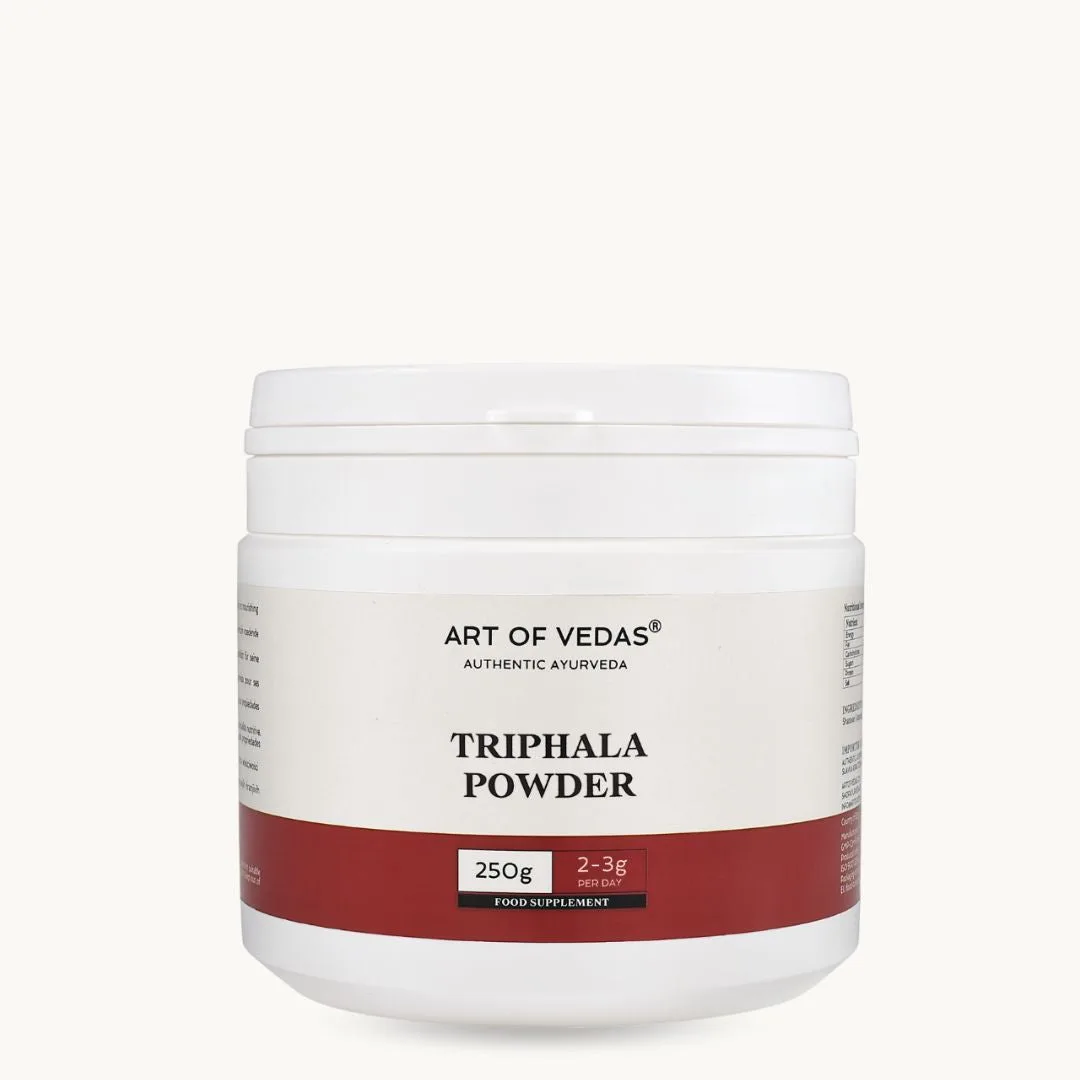
Triphala: the classical three-fruit formula; traditionally used to support healthy digestion and regular elimination; one of the most widely used Ayurvedic preparations
-
Guggulu: a resin traditionally used in Ayurveda to support healthy metabolism and tissue balance
-
Trikatu: a combination of ginger, black pepper, and long pepper; traditionally used to kindle Agni and support the digestive process
-
Punarnava: an herb traditionally used in Ayurveda to support healthy fluid balance in the body
These herbs are food supplements and not intended to diagnose, treat, cure, or prevent any disease. Consult a qualified Ayurvedic practitioner before beginning any herbal supplement programme.
Daily Routine for Healthy Metabolism
Beyond specific dietary choices, Ayurveda emphasises Dinacharya (daily routine) as a metabolic regulator. A consistent routine supports Agni by providing predictable rhythms that the body can optimise around.
Morning Practices
-
Rise before 6:00: waking during Vata time (before Kapha time begins at 6:00) starts the day with natural lightness and alertness rather than Kapha's heaviness
-
Warm water with lemon: stimulates Agni and supports morning elimination; add a pinch of ginger powder for additional metabolic support
-
Tongue scraping: removes overnight Ama accumulation from the tongue; a copper scraper is traditional
-
Self-massage (Abhyanga): dry brushing (Garshana) with raw silk gloves is particularly recommended for Kapha types before the morning shower; it stimulates circulation and promotes a sense of lightness
-
Exercise in the morning: physical activity during Kapha time (6:00-10:00) counteracts the heaviness of this period and supports metabolism for the rest of the day
Meal Structure
-
Light breakfast or none: if hunger is not present in the morning, waiting until it appears is preferable to eating by the clock; Kapha types may find they do well with just warm tea and a piece of fruit
-
Substantial lunch: the midday meal should be the largest and most complex, eaten between 12:00 and 13:00 when Agni peaks
-
Light, early dinner: finish eating by 18:00-19:00; a gap of at least 3 hours between dinner and bedtime allows digestion to complete before sleep
-
No snacking: allowing 4-6 hours between meals gives Agni the opportunity to fully process each meal before receiving new input
The Emotional Dimension
Ayurveda recognises that eating patterns are not purely physical. The classical texts describe the connection between mental states and digestive function. Eating from boredom, stress, sadness, or anxiety feeds the emotional pattern rather than the body. The food is consumed but not properly digested because Agni is disturbed by the emotional state.
The Ayurvedic approach is not to judge or suppress emotional eating but to address the underlying Dosha imbalance that drives it. Vata-type emotional eating is irregular and anxiety-driven. Pitta-type is intense and frustration-driven. Kapha-type is comfort-seeking and habitual. Recognising the pattern allows you to apply the appropriate constitutional balancing strategies rather than simply trying to exert willpower.
What Ayurveda Does Not Promise
Ayurveda does not promise rapid weight loss. It does not offer a quick fix or a universal solution. What it offers is a systematic approach to understanding your individual metabolism and working with it rather than against it.
The classical Ayurvedic approach is gradual. It works through consistent daily practices: eating appropriate foods at regular times, supporting Agni, moving your body, and maintaining a balanced routine. Results develop over weeks and months, not days. This pace may feel slow compared to crash diets, but the changes tend to be sustainable because they address the underlying metabolic pattern rather than simply restricting intake.
Sleep and Metabolism
Sleep quality directly affects metabolism. Classical Ayurveda recognises this connection: late nights aggravate Vata and deplete Ojas, while sleeping past 6:00 or 7:00 increases Kapha. Both patterns compromise healthy metabolic function.
For metabolic health, the classical sleep recommendations are: in bed by 22:00, awake by 6:00, with 7-8 hours of restful sleep. Sleeping in the Kapha morning hours (6:00-10:00) is specifically described as contributing to heaviness and sluggish metabolism. If early rising is challenging, start by moving your wake time 15 minutes earlier each week until you reach 6:00.
Adequate sleep also supports leptin and ghrelin regulation (the hormones governing hunger and satiety), though this is a modern framework rather than a classical one. The practical effect is the same: poor sleep leads to increased hunger and poor food choices the following day, creating a cycle that undermines metabolic health.
Explore the Kapha Dosha Complete Guide for a deeper understanding of the Kapha constitution and its role in weight and metabolism. Learn about Ayurvedic approaches to periodic cleansing in our Ayurvedic Fasting Guide.