This article is part of our Ayurvedic Hair Care: The Classical Guide to Shiro Abhyanga and Hair Oils guide series.
The information in this article is provided for educational purposes and reflects traditional Ayurvedic knowledge. It is not intended as medical advice and should not replace consultation with a qualified healthcare professional.
In brief: Classical Ayurveda describes hair loss as Khalitya - a condition rooted primarily in excess Pitta dosha and heat in the blood, not simply in genetics or hormones. The distinction matters because it changes the entire approach: rather than accepting hair loss as inevitable or managing it topically, the classical framework identifies internal causes and provides both internal and external interventions. This guide covers the classical framework, the key herbs, and the role of classical scalp oils.
Hair Loss and Ayurveda: The Classical Understanding of Khalitya That Dermatology Misses
Modern dermatology classifies most hair loss as androgenetic alopecia - a genetically determined, hormone-mediated process considered largely inevitable in those predisposed to it. The clinical approach focuses on slowing progression through pharmaceutical intervention or reversing it through transplantation. The possibility of a systematic approach to the underlying conditions that accelerate hair loss is largely outside the mainstream dermatological framework.
Classical Ayurveda describes hair loss under the term Khalitya, and its framework is entirely different. The Charaka Samhita and Ashtanga Hridayam describe the primary cause of Khalitya as excess Pitta dosha - specifically, excess heat in the Rakta dhatu (blood tissue) and the Rasa dhatu (plasma and lymph). The scalp's hair follicles are understood as being nourished by Asthi dhatu (bone tissue), and the classical framework describes excess Pitta heat in the blood as creating conditions in the follicular tissue that impair hair growth over time.
Whether or not one accepts the classical framework on its own terms, its practical implication is significant: it identifies modifiable internal conditions - dietary heat, lifestyle patterns that increase Pitta, and emotional intensity - as contributors to hair loss, and it provides specific internal and external interventions targeting those conditions. This is more actionable than genetic fatalism.
Khalitya in the Classical Texts: Causes and Mechanisms
The Charaka Samhita's discussion of Khalitya appears in the context of conditions arising from excess Pitta. The classical description identifies several factors that increase Pitta in the blood and thereby affect the follicular tissue: excessive consumption of hot, sharp, and pungent foods (particularly chili, fermented preparations, alcohol, and sour foods in excess); emotional patterns characterised by anger, competitiveness, and sustained high mental intensity; excessive sun exposure; and the use of harsh chemical preparations on the scalp.
The Ashtanga Hridayam provides additional detail, describing three types of scalp and hair conditions - Khalitya (hair loss), Palitya (premature greying), and Indralupta (patchy loss, equivalent to alopecia areata) - each with slightly different doshic profiles. Khalitya is primarily Pitta; Palitya also involves Pitta but with a specific effect on the colour of the hair shaft; Indralupta involves Vata, Pitta, and Kapha together with a specific pathological process in the follicular tissue.
The Sahasrayogam, the classical text with detailed clinical protocols, provides extensive guidance on hair care preparations and the specific herbs and oils used for Khalitya. The classical approach described involves both Shodhana (purification to reduce excess Pitta from the blood) in more serious cases and Shamana (palliative management) through dietary modification, lifestyle adjustment, and the regular application of appropriate classical oils to the scalp.
The connection between Asthi dhatu (bone tissue) and hair is a distinctive aspect of the classical framework. The Charaka Samhita describes hair as a byproduct (Upadhatu) of Asthi dhatu - meaning that the health of the bone tissue is directly reflected in the quality and density of hair. This connection provides the classical rationale for herbs that support Asthi dhatu - including calcium-rich and mineral-dense preparations - as relevant to hair health in ways that go beyond direct topical application.
The Role of Scalp Oils: Classical Shiroabhyanga
The application of oil to the scalp - Shiroabhyanga - receives specific classical guidance in both the Charaka Samhita and Ashtanga Hridayam as a practice supporting hair health, scalp nourishment, and the reduction of excess Vata and Pitta in the head region. The classical texts describe regular scalp oiling as nourishing the hair roots, supporting the health of the follicular tissue, and having beneficial effects on the sense organs and the nervous system of the head.
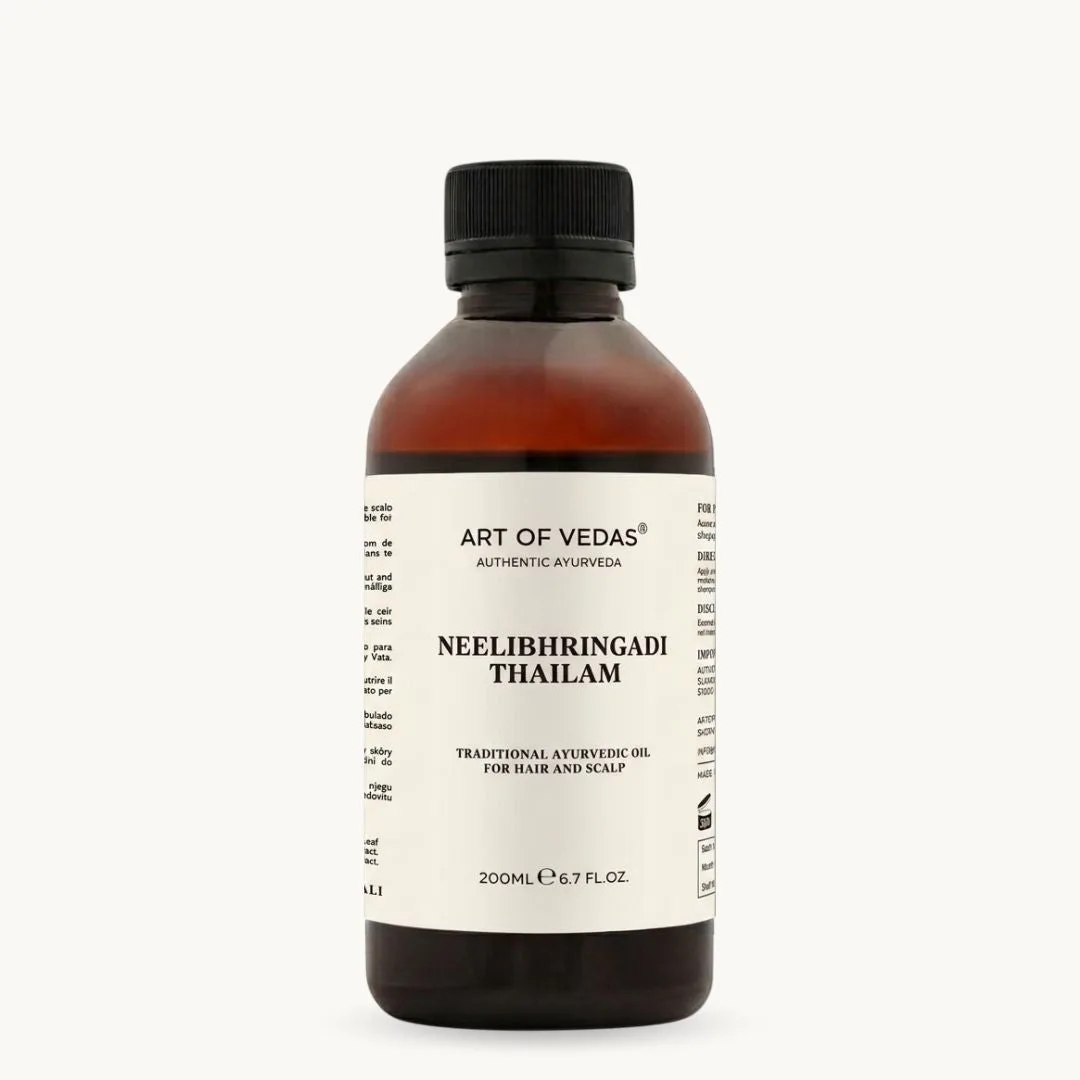
Neelibhringadi Thailam is the classical oil most specifically referenced in Ayurvedic tradition for Khalitya and general hair health. The Sahasrayogam describes this preparation - a medicated coconut oil base processed with Neeli (Indigofera tinctoria), Bhringaraj (Eclipta prostrata), and a range of other herbs - as having specific properties supporting the hair roots, scalp nourishment, and the reduction of the excess Pitta heat that underlies classical hair loss patterns. Bhringaraj is described in classical texts as having Kesharanjana (hair-colouring) and Keshya (hair-nourishing) properties, making it among the most specifically hair-relevant herbs in the classical pharmacopoeia. See the Art of Vedas hair care collection for Neelibhringadi Thailam and classical hair oils.
The method of application is described in classical texts as including gentle massage into the scalp and hair roots, allowing adequate time for the oil to be absorbed (typically left overnight or for several hours), and washing with a mild preparation. The temperature of the oil - warm rather than cold - is emphasised in classical guidance as essential for absorption and for reducing Vata in the scalp.
Internal Herbs for Khalitya: Addressing the Root Cause
Because the classical framework places the primary cause of Khalitya in excess Pitta in the blood, internal herbs that reduce Pitta and support Rakta dhatu are described as addressing the root cause rather than the surface presentation. Several classical herbs are referenced specifically in this context.
Bhringaraj (Eclipta prostrata) is referenced both externally (in scalp oils) and internally (as a churna or in compound preparations) in classical texts for hair and scalp conditions. Its cooling potency and specific Keshya (hair-nourishing) classification make it the most directly hair-relevant classical herb for internal use.
Amalaki (Indian gooseberry) is described in classical texts as having specific relevance to Rakta dhatu and Pitta reduction, and its high content of stable vitamin C supports the collagen and connective tissue that underlies follicular structure. Its Rasayana properties over sustained use are relevant to the gradual renewal of Asthi dhatu and its Upadhatu (hair). See our complete guide to Amalaki.
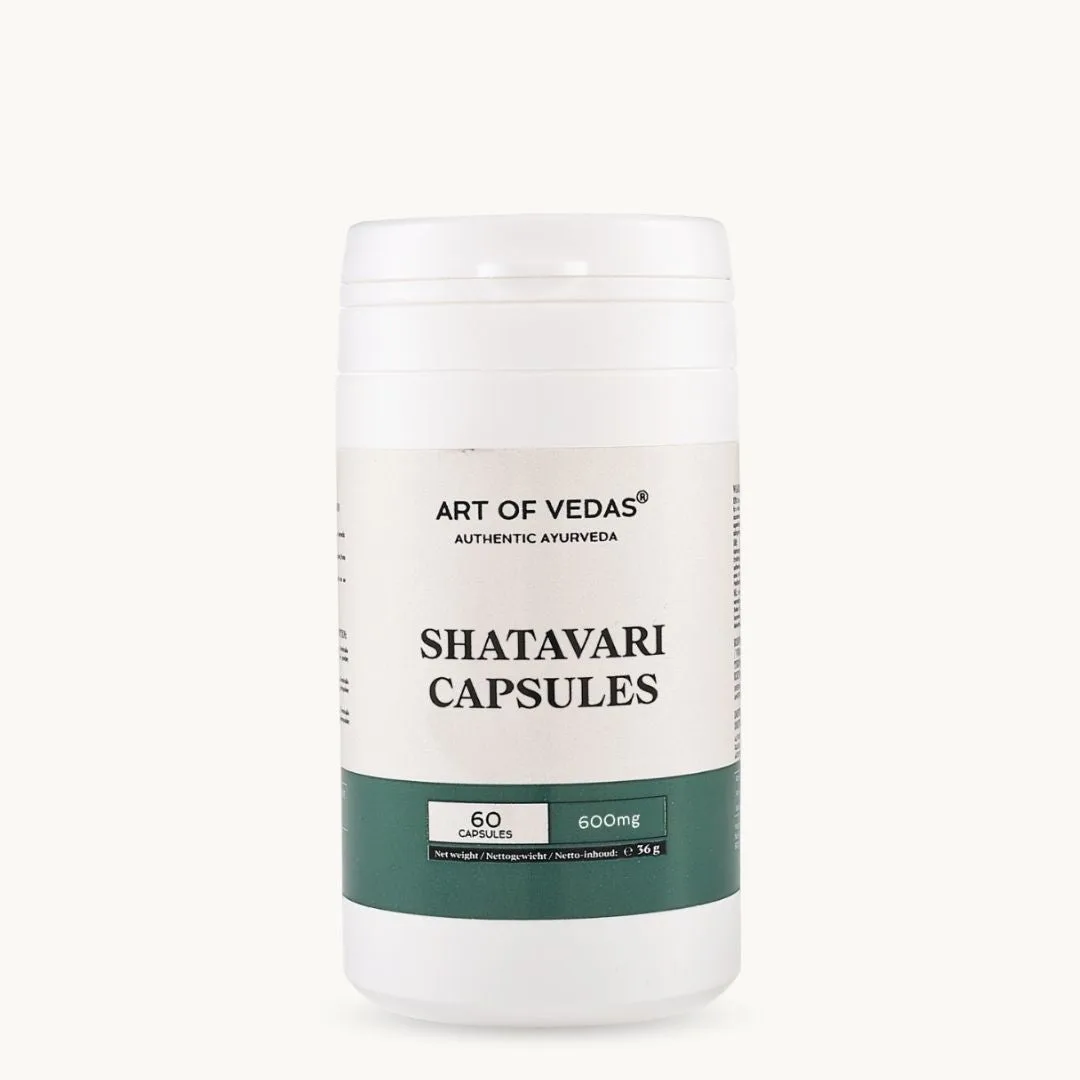
Shatavari's nourishing and Pitta-cooling properties are referenced in classical texts in contexts involving excess Pitta in the tissues, and its specific affinity for Rasa and Rakta dhatu makes it relevant to the classical mechanism described for Khalitya. See our guide to Shatavari.
Dietary and Lifestyle Modifications for Pitta-Pattern Hair Loss
The classical approach to Khalitya through dietary modification focuses on reducing the Pitta-aggravating factors identified in the classical texts. Practically, this means reducing or eliminating alcohol and fermented preparations, very spicy foods, and excessive sour foods; increasing sweet, cooling, and nourishing foods; managing the emotional intensity and sustained mental overwork that classical texts consistently associate with Pitta excess; and moderating direct sun exposure to the scalp.
The classical texts also emphasise sleep as a factor in hair health - specifically, the inadequate renewal of Ojas that results from poor sleep is described as affecting the quality of all seven dhatus including Asthi and its Upadhatu. The practical implication is that consistent sleep of adequate quality is among the most foundational interventions for Khalitya, a point that modern research on hair loss and sleep deprivation also supports. See our guide to sleep in Ayurveda.
Frequently Asked Questions
What is Khalitya in Ayurveda?
Khalitya is the classical term for hair loss, described as primarily caused by excess Pitta in the Rakta dhatu (blood tissue), creating conditions that impair follicular function. The classical framework also connects hair to Asthi dhatu (bone tissue), describing hair as a byproduct of Asthi - so tissue renewal at depth is part of the classical approach alongside topical care.
Which Ayurvedic oil is best for hair loss?
Neelibhringadi Thailam is the classical oil most specifically referenced in Ayurvedic tradition for Khalitya. The Sahasrayogam describes this medicated coconut oil processed with Neeli and Bhringaraj as nourishing the hair roots, supporting scalp health, and reducing the Pitta heat underlying hair loss. Bhringaraj is classified in classical texts as specifically Keshya - nourishing to the hair.
What foods cause hair loss according to Ayurveda?
Factors that aggravate Pitta in the blood are described as contributing to Khalitya: alcohol, fermented preparations, excessively spicy and pungent foods, and sour foods in excess. Emotional patterns - sustained anger and mental overwork - are given equal weight as Pitta-aggravating factors. The classical recommendation is to reduce these while increasing sweet, cooling, and nourishing foods that support Rakta dhatu quality.
Can Ayurveda stop hair loss completely?
Classical texts describe early-stage Khalitya as more responsive to the classical approach than long-established patterns. The interventions - Pitta reduction, scalp oil practice, dietary modification, and appropriate herbs - support the conditions for follicular health, with recovery understood as gradual and requiring sustained practice. Individual responses vary considerably, and those with significant hair loss concerns should also consult a dermatologist.
Explore Hair Care at Art of Vedas
Browse the Art of Vedas hair care collection for Neelibhringadi Thailam and classical scalp oils. Related reading: Amalaki complete guide, Pitta imbalance guide, sleep and Ayurveda, and Neelibhringadi Thailam guide.
For external use only. Not a substitute for professional medical advice.