This article is for educational purposes. For persistent health concerns, please consult a qualified healthcare professional. Products mentioned are for external use or are food supplements and not intended to diagnose, treat, cure or prevent any disease.
What Does Pitta Imbalance Actually Feel Like?
If you have ever experienced a period where everything felt too hot - your skin reacting to things it normally tolerates, your digestion turning acidic, your patience wearing thin over things that would not normally bother you, your sleep disturbed by heat in the early hours - you have likely experienced Pitta imbalance. The Ashtanga Hridayam (Sutrasthana Ch.11) describes aggravated Pitta as producing burning sensations, yellowish discolouration, excessive thirst, irritability and a bitter taste in the mouth. These are not abstract descriptions. They are precisely what Pitta excess feels like in daily life.
Pitta Dosha governs transformation, metabolism and the fire element in the body. In balance, it gives sharp intelligence, strong digestion, clear vision, warm complexion and decisive leadership. Out of balance, those same qualities become excessive: sharp intelligence becomes criticism, strong digestion becomes acid reflux, warm complexion becomes inflammation, and decisive leadership becomes aggressive impatience.
The Signs: How to Know Your Pitta Is Elevated
Physical Signs
The Charaka Samhita (Sutrasthana Ch.20) and Ashtanga Hridayam describe these physical manifestations of Pitta excess:
- Skin eruptions, redness, inflammation, increased sensitivity - the skin becomes reactive to products it previously tolerated
- Acid digestion, heartburn, loose stools with urgency, a burning sensation in the stomach
- Excessive body heat, especially in the palms, soles and face
- Yellowish tinge to the eyes, skin or urine
- Premature greying of hair and early hair thinning
- Excessive sweating with strong body odour
- Inflammation in joints, particularly the small joints of the hands
- Mouth ulcers, bleeding gums, sensitivity to spicy food
Mental and Emotional Signs
- Irritability and short temper, particularly when hungry (the classical "Pitta personality" under stress)
- Critical, judgemental thinking - finding fault in everything and everyone
- Competitiveness that crosses into aggression
- Difficulty sleeping between 2-4am (the Pitta time of night)
- Perfectionism that becomes paralysing
- Inability to tolerate heat, sun or waiting
If you recognise three or more of these signs, Pitta is likely elevated. A Dosha assessment can confirm your current state, and an Ayurvedic consultation can provide personalised guidance.
What Causes Pitta to Increase?
The Ashtanga Hridayam (Sutrasthana Ch.12) describes the causes of Pitta aggravation with characteristic classical precision:
Diet: Excess of Katu (pungent/spicy), Amla (sour) and Lavana (salty) tastes. Too much chilli, tomato, citrus, vinegar, fermented foods, alcohol, coffee and red meat. Skipping meals (which aggravates the fire element) or eating when already heated.
Season: Summer (Grishma Ritu) is the primary Pitta-aggravating season. Hot weather directly increases the fire element in the body. In Europe, the July-August period is the peak of Pitta accumulation. See our Ayurvedic summer guide for the seasonal protocol.
Lifestyle: Excessive sun exposure, overwork, competitive environments, anger, arguments, and insufficient rest. The modern high-pressure work culture is essentially a Pitta-aggravating environment.
Emotional: Suppressed anger, resentment, frustration and chronic competitiveness all increase internal Pitta. Classical Ayurveda understood that emotional states produce physiological consequences - a position that modern psychoneuroimmunology has confirmed.
The Classical Cooling Protocol
Step 1: Cool the Diet
The Charaka Samhita (Sutrasthana Ch.25) prescribes Madhura (sweet), Tikta (bitter) and Kashaya (astringent) tastes to pacify Pitta. In practical terms: favour rice, wheat, oats, sweet fruits (grapes, pears, melons), bitter greens (rocket, kale, dandelion), cucumber, courgette, fennel, coriander and coconut. Use cooling spices: fennel, coriander, cumin, turmeric (in small amounts), fresh mint. Reduce or eliminate chilli, raw onion, garlic, tomato, citrus, vinegar, alcohol and excessive coffee.
The Ayurvedic diet guide by Dosha type provides a complete food list for Pitta pacification.
Step 2: Cool the Body with Thailams
External oil application is one of the fastest ways to pacify Pitta. The classical texts describe specific cooling Thailams for this purpose:
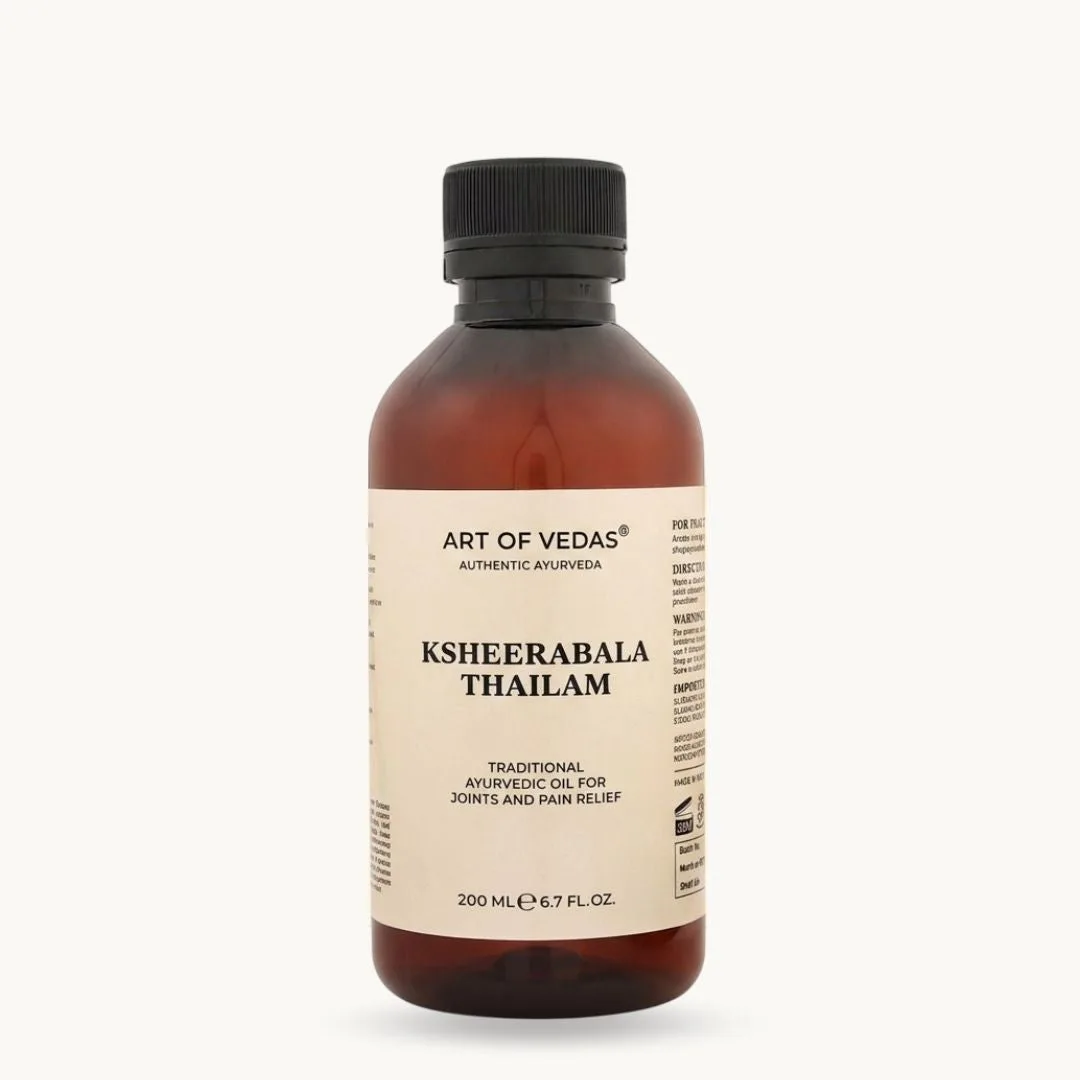
Ksheerabala Thailam is the primary Pitta-pacifying Thailam. The name means "milk-strength oil" - it is a sesame oil base processed with Bala herb and milk using the classical Ksheera Paka Vidhi method. The milk processing introduces cooling quality into the oil, making it uniquely suited for Pitta conditions. See our complete Ksheerabala guide.
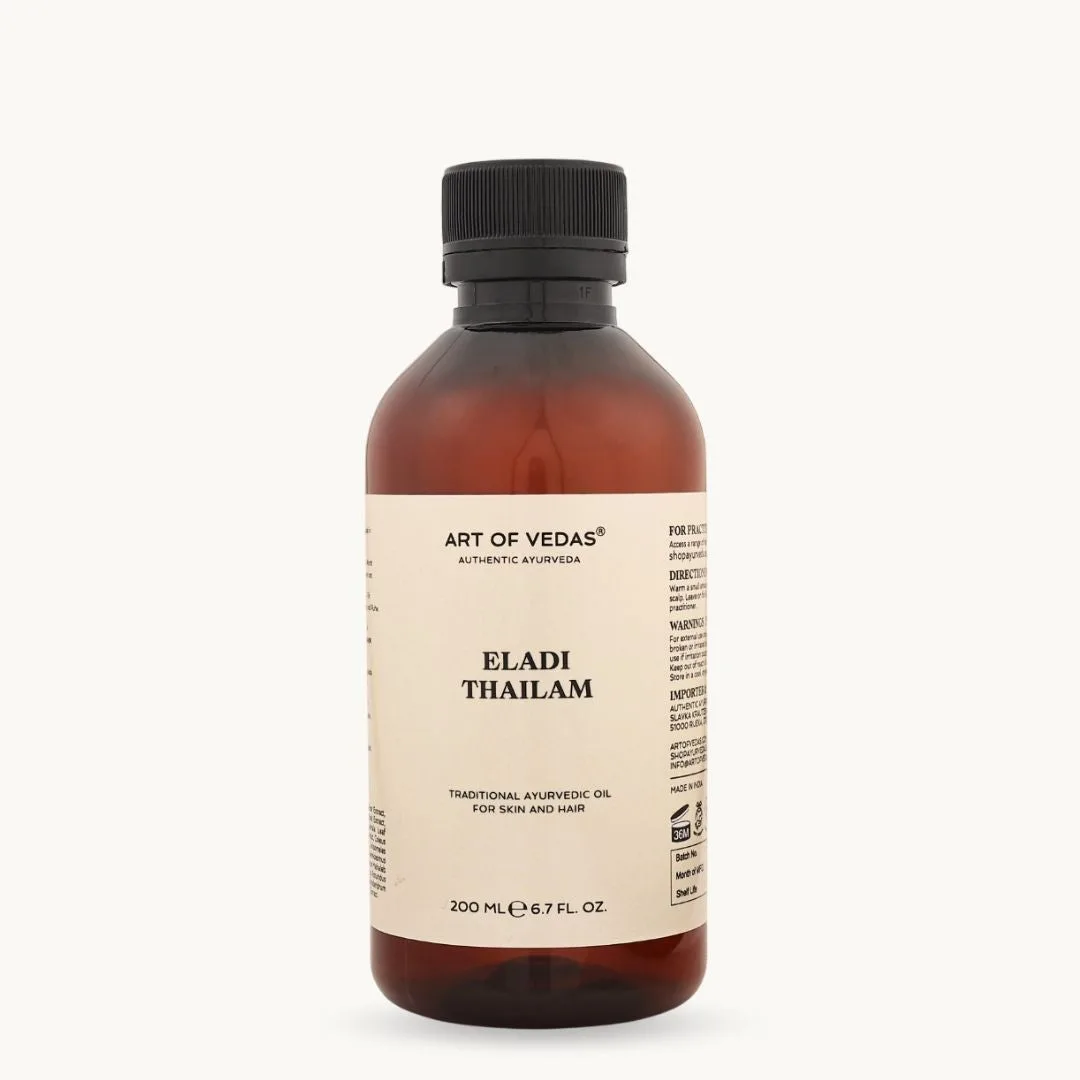
Eladi Thailam is the classical face oil for Pitta-type skin - reactive, sensitive, prone to redness. Its base of cooling herbs including cardamom, saffron and sandalwood directly pacifies facial Pitta.
Apply these oils during Abhyanga self-massage, using gentle pressure (Pitta skin is already sensitive - vigorous massage aggravates it). Coconut oil is also acceptable as a simple alternative during acute Pitta flares.
Step 3: Cool the Mind
Pitta imbalance is as much mental as physical. The classical texts prescribe Sheetala (cooling) activities: walking near water, spending time in nature (especially forests and gardens), moonlight exposure (the Charaka Samhita specifically describes moonlight as Pitta-pacifying), swimming, and creative activities that channel Pitta's intensity constructively rather than competitively.
Brahmi is the primary cooling Medhya herb - it pacifies Pitta in the nervous system and supports calm, clear thinking. Guduchi supports the body's Pitta-clearing capacity at the tissue level.
Step 4: Support with Internal Herbs
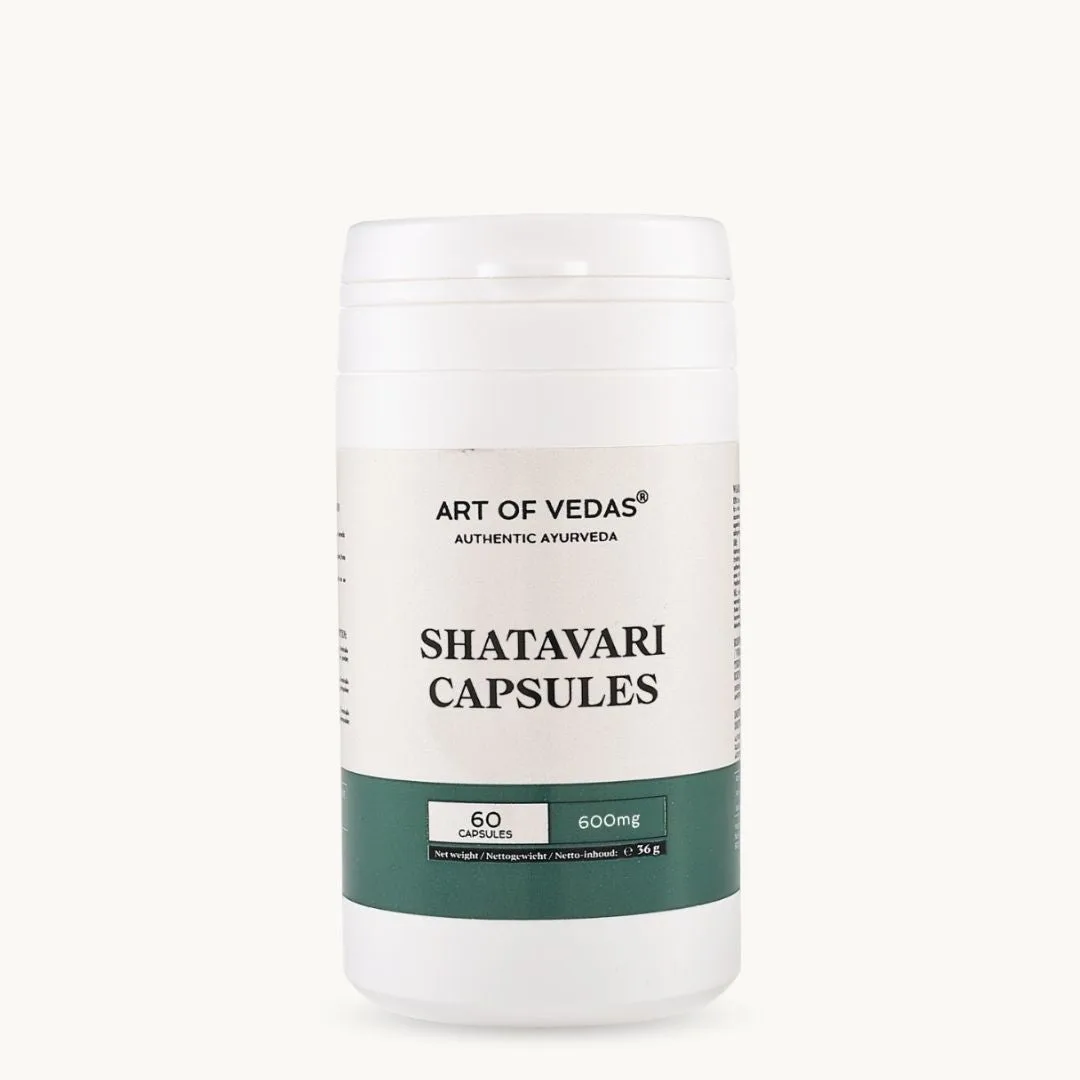
Shatavari is the primary cooling Rasayana - its Sheeta (cooling) Virya directly opposes Pitta's heat. Amalaki is cooling and rich in natural Vitamin C, supporting tissue integrity during Pitta-driven inflammation. Triphala gently clears accumulated Pitta from the digestive tract.
Step 5: Adjust the Daily Routine
The classical Dinacharya adjustments for Pitta pacification include: early waking (before the heat of the day), cooling Abhyanga before shower, avoiding midday sun (10am-2pm is Pitta time), eating the largest meal at lunch when Agni is naturally strongest, light early dinner, and early sleep (before 10pm, when the Pitta cycle begins). Avoid intense exercise during the heat of the day - morning or evening exercise is preferred.
Pitta Care Products from Art of Vedas
The classical Thailam collection includes several oils specifically suited to Pitta pacification. Ksheerabala Thailam for the body, Eladi Thailam for the face, and the cooling supplement range including Shatavari and Amalaki provide a comprehensive Pitta-calming toolkit grounded in classical formulations.
Frequently Asked Questions
How long does it take to balance Pitta?
Mild seasonal Pitta aggravation typically responds within 1-2 weeks of dietary and lifestyle adjustment. Deeper, chronic Pitta imbalance that has developed over months or years requires 4-8 weeks of consistent practice. The dietary changes have the fastest effect; the herbal and oil therapies build cumulative benefit over time.
Can Pitta types eat any spicy food at all?
Yes, but selectively. Mild warming spices like ginger (in small amounts), turmeric, cumin, coriander and fennel are acceptable and even beneficial. The spices to strictly limit during Pitta aggravation are chilli, black pepper in excess, mustard seeds and raw garlic. The goal is not to eliminate all warming foods but to shift the overall balance towards cooling.
Is Pitta imbalance seasonal?
Pitta accumulates during summer (Grishma Ritu) and naturally aggravates at the transition to autumn. The Ashtanga Hridayam describes this seasonal cycle in detail. In European climates, the July-September period is the primary Pitta season. Preventive cooling practices starting in June significantly reduce the severity of late-summer Pitta aggravation.
What if I have both Pitta and Vata imbalance?
Mixed imbalances are common. The classical principle is to address the more acute imbalance first. If Pitta symptoms (heat, inflammation, irritability) are dominant, cool Pitta first. If Vata symptoms (anxiety, dryness, insomnia) are dominant, ground Vata first. Ksheerabala Thailam is particularly useful in Vata-Pitta combined states because the milk processing provides cooling without being as cold as pure coconut oil. An Ayurvedic consultation is strongly recommended for complex mixed imbalances.