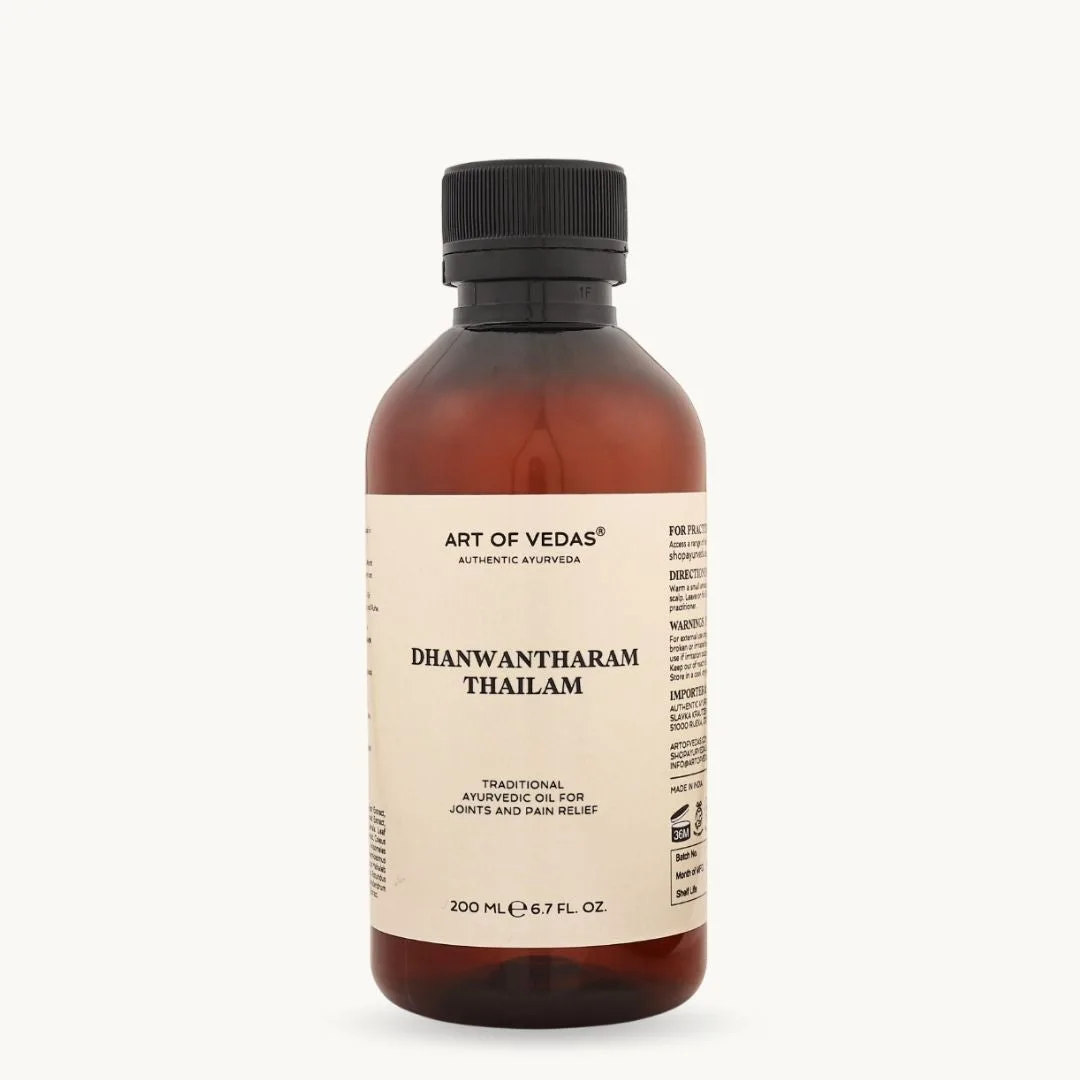
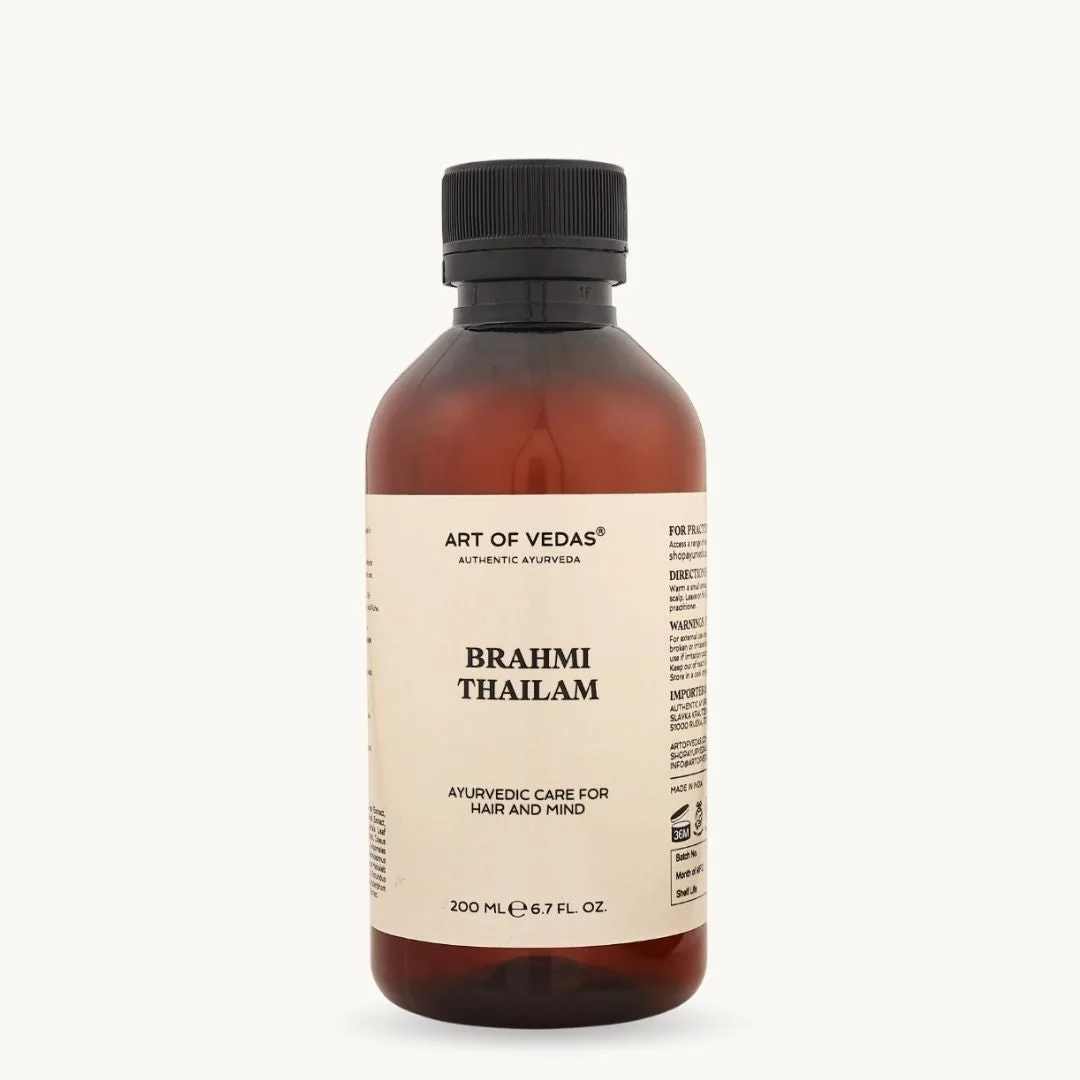
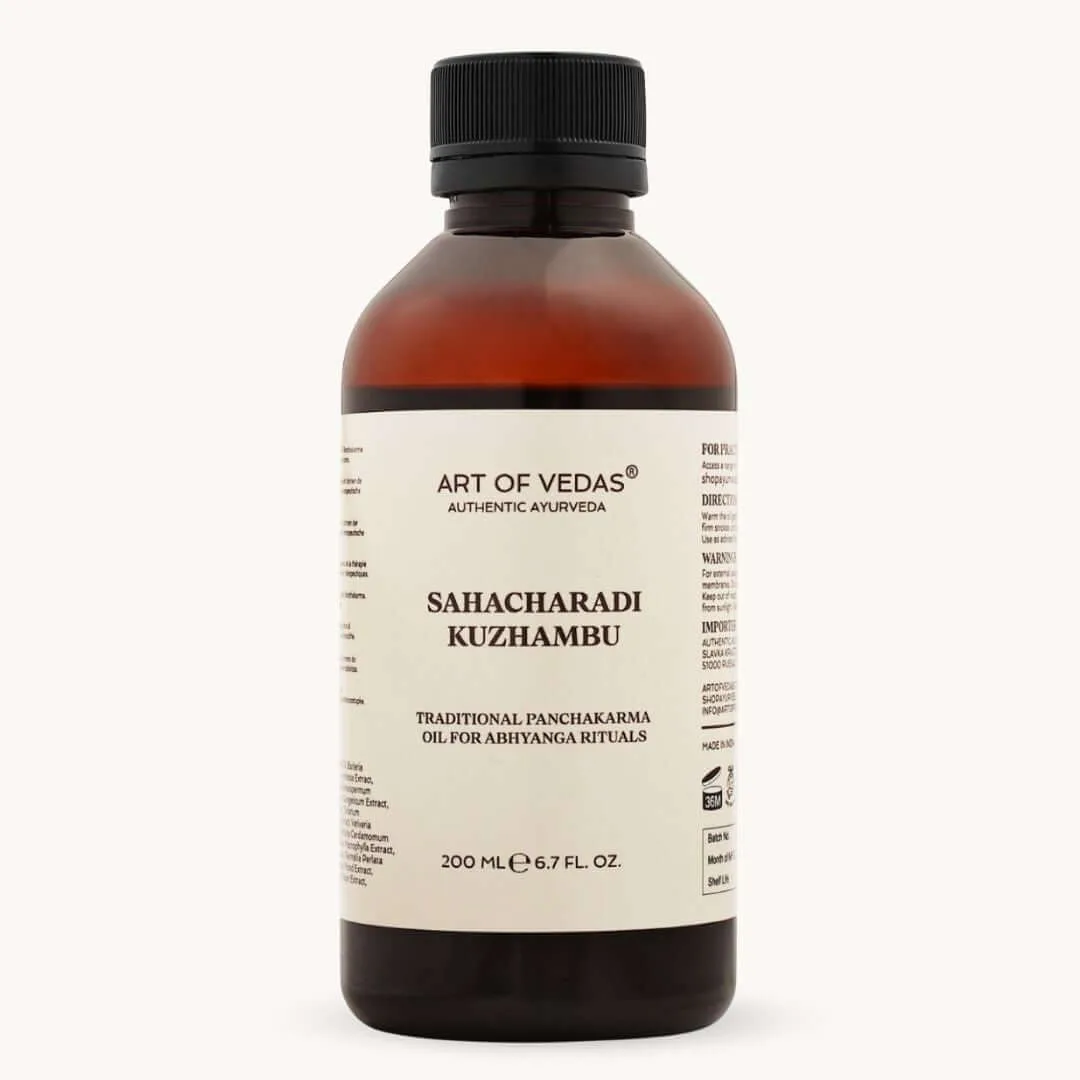
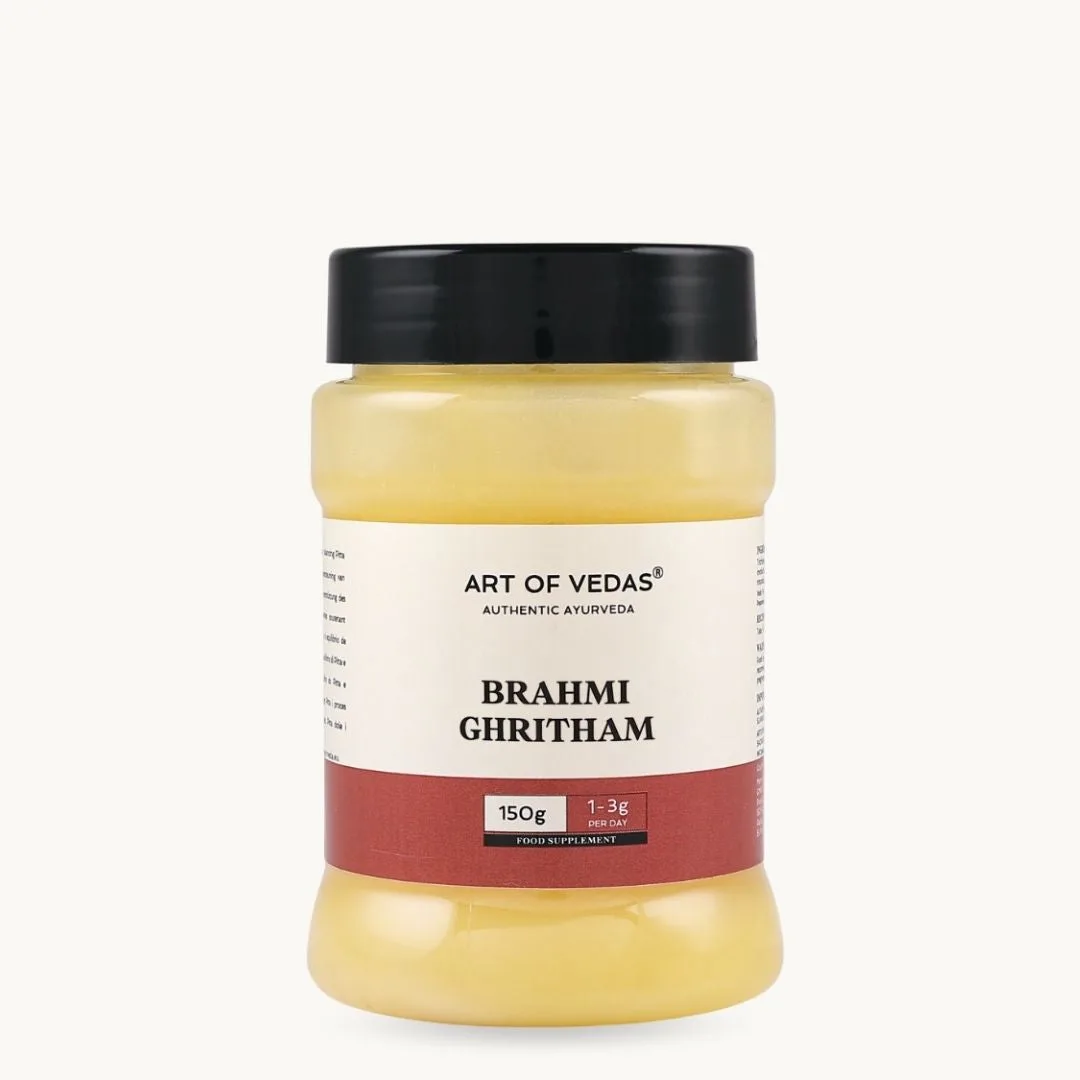
In short: The container changes what a parcel weighs, whether a bottle can shatter and which collection bin the empty goes into; it does not change the oil. Art of Vedas bottles its Thailams, Kuzhambus and Ghrithams in food-grade PET, which is light and shatterproof, and keeps glass for the small dropper oils.
Ayurvedic oil packaging is usually discussed as a question of quality, yet the differences a household actually notices are practical ones: how heavy the parcel is, whether anything arrives broken, and what to do with the empty bottle. This guide looks at those practical points for PET and for glass, and it is equally clear about the one thing the container leaves untouched, which is the oil inside. The wider comparison is set out in PET or glass for Ayurvedic oils.
Which containers does Art of Vedas use?
Thailams in 200 ml and 450 ml, Kuzhambus in 200 ml and the Dosha massage oils are bottled in food-grade PET, and Ghrithams come in food-grade PET jars of 150 g. The small oils that are used by the drop are in glass dropper bottles.
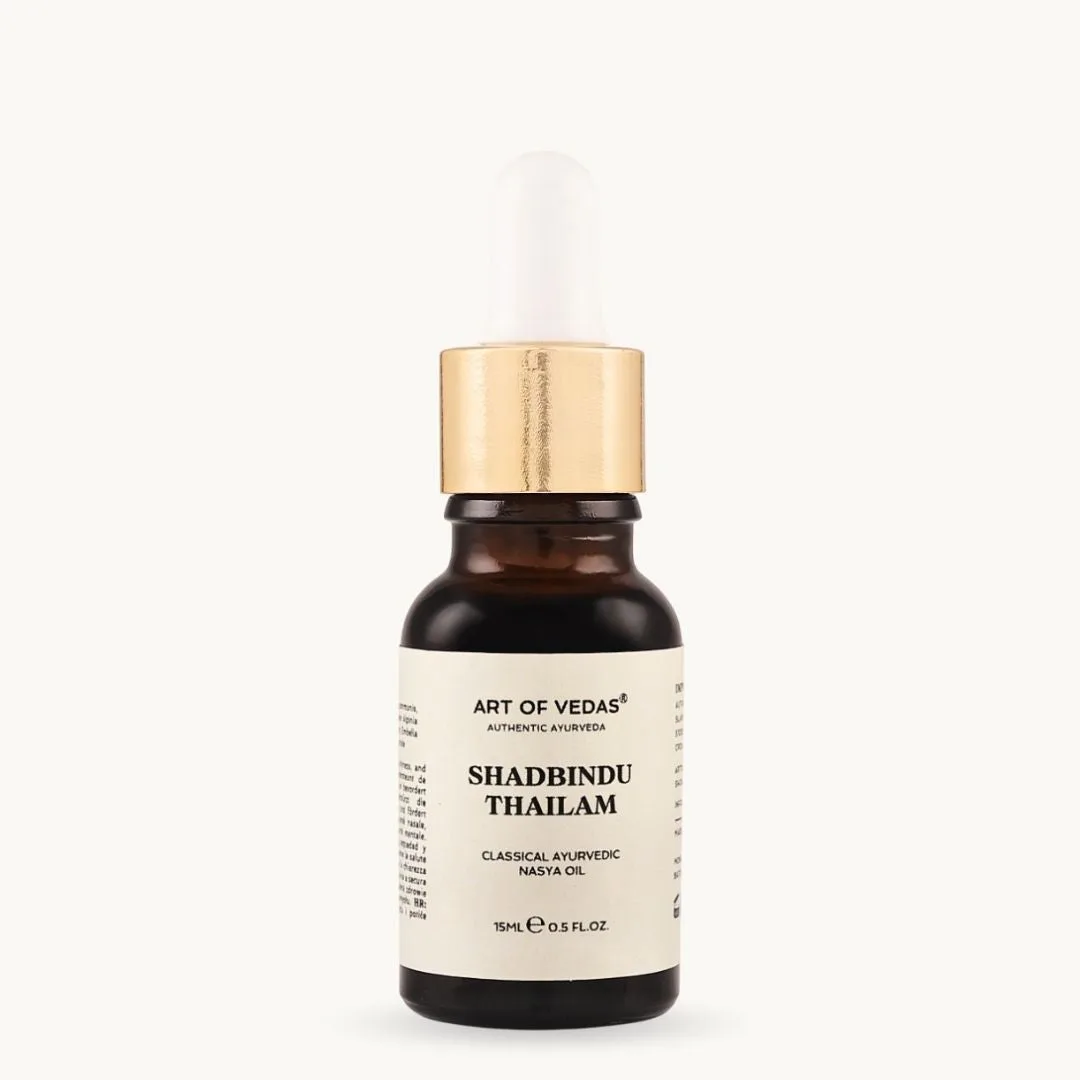
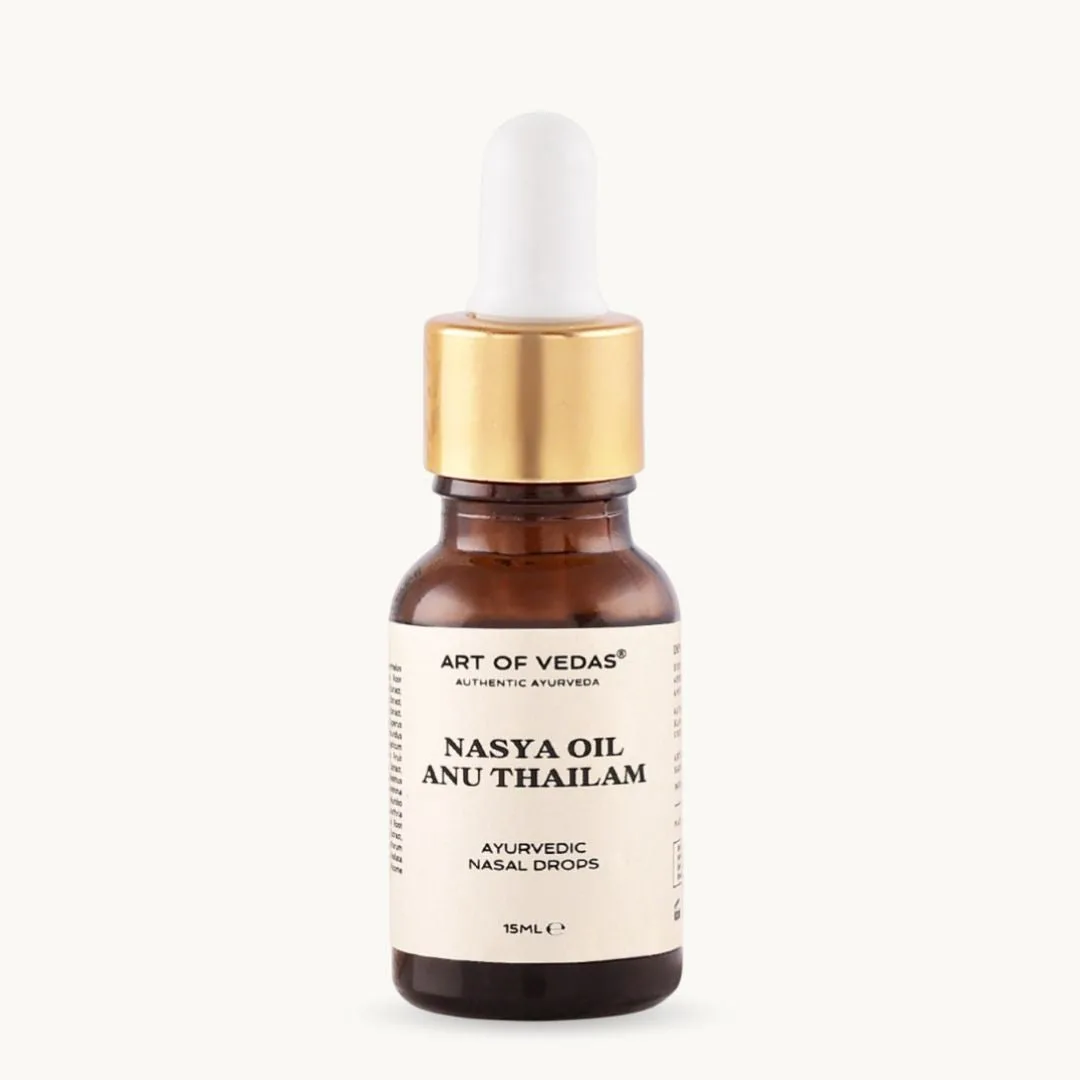
Those glass bottles are the Nasya Oil in 15 ml and 50 ml, Shadbindu Thailam in 15 ml and Dhanwantharam 101 Avarthy in 15 ml. They hold tiny volumes of concentrated oil that is dosed with a dropper, and glass suits a dropper bottle. It is a choice of format and not a ranking of quality, as explained in why Nasya oil is in glass.
PET is the clear, light plastic that is used for edible oils and drinks. It is not made with BPA and needs no plasticisers. In India, where classical Ayurvedic oils come from, PET has been normal practice for these oils for many years.
Does the container change the oil?
No. The quality team behind our oils confirms that the shelf life and the quality of the oil are the same in PET as in glass. Glass is not required for the quality of an Ayurvedic oil and it does not make the oil stronger.
A Thailam is cooked until the water has left the oil, the classical Sneha Paka process, and that is why a finished Thailam keeps well. More on this is in what keeps a Thailam fresh. The shelf life printed on each bottle applies to that bottle as sold, and the page on the shelf life of Ayurvedic oils and Ghritham explains how to read it.
What does PET mean for the parcel?
A PET bottle weighs far less than a glass bottle of the same volume and it does not shatter. A parcel of oils in PET is therefore lighter to carry and send, and a knock in transit does not end in broken glass and spilled oil.
This matters most for the larger sizes. A 450 ml Thailam for regular Abhyanga is a substantial bottle, and several of them in one box add up. In glass the same order would be noticeably heavier and would cost more to ship.
The same holds at home. Oil for Abhyanga is commonly used in the bathroom, with oily hands, near tiles and a hard floor. A PET bottle that slips from the hand can be picked up again.
What does glass add, and what does it not add?
Glass adds a certain look and feel: it is heavy in the hand, cool to the touch and fully inert. It also adds weight to the parcel and cost to the shipping, and it can break. It adds nothing to the oil itself.
There are good reasons to like glass. Many people find a glass bottle pleasing on a shelf, and for a small dropper bottle it is the natural format. What glass does not do is change the oil that was poured into it.
What changes with the container, and what does not
| Point | PET bottle or jar | Glass bottle |
|---|
| The oil itself | Unchanged | Unchanged |
| Shelf life | As printed on the bottle | As printed on the bottle |
| Weight of the parcel | Light | Heavy |
| Risk of breakage | Does not shatter | Can break if dropped or knocked |
| Recycling | Widely collected, resin code 1 | Recyclable through glass collection |
| Look and feel | Clear, light, practical | Weighty, cool to the touch |
How do you recycle the empty PET bottle or jar?
Empty it, close it and put it in the local plastic collection as your municipality asks. PET is widely collected for recycling and carries resin code 1, usually marked on the base of the bottle.
In practice this takes a moment:
- Use the oil or Ghritham up completely.
- Put the cap or lid back on, unless your local scheme asks for caps to be handed in separately.
- Place the bottle or jar in the plastic packaging collection, the container or the bag that your municipality provides.
Rules differ by country and often by town. Some places collect plastic packaging at the door and others use shared containers, and the instructions on rinsing and on caps are not the same everywhere. Where your municipality gives a specific instruction, follow it.
How do you recycle the glass dropper bottle?
Empty the bottle, close it and take it to the local glass collection as your municipality asks. Glass is recyclable, and most towns have a container or collection for it.
The dropper is made of more than one material, so check what your local scheme says about it. Where glass is sorted by colour, follow the signs on the container. Here too, rules differ by country.
How should the bottle be kept while it is in use?
Keep it closed, cool and dry, and away from direct sunlight. For a Ghritham, use a clean, dry spoon, and for oils use clean, dry hands.
These habits are the same for PET and for glass, and they do more for an open bottle than the choice of container does. The full advice is in how to store Thailam, Kuzhambu and Ghritham.
Choosing with the practical points in mind
Seen plainly, the choice of container is a choice about handling. PET keeps the larger bottles light and safe from shattering, and glass serves the small dropper oils well. In both cases the oil is the same classical preparation.
The full range is in the collections of Ayurveda Thailams, Kuzhambu and Ghritham, or start from the Art of Vedas home page.
Thailams and Kuzhambus are for external use only. Ghrithams are food supplements and do not replace a varied diet.