Best Ayurvedic Oils for Pitta: Classical Selection Guide
Pitta Dosha - the Dosha of heat, transformation, and precision - requires a different approach to oil therapy than Vata. Where the primary principle for Vata is warmth, weight, and nourishment, the classical Pitta oil approach centres on cooling (Sheeta), clarifying (Lekhaniya for Ama in Rakta Dhatu), and Pitta-soothing - providing the oleation and nourishment of Abhyanga while specifically counteracting rather than adding to Pitta's inherent heat.
Understanding the classical cooling oil tradition - and which preparations are specifically Pitta-addressing - allows Pitta-dominant individuals to practise Abhyanga in a way that genuinely supports their constitution rather than aggravating the Pitta quality that overheating oils can intensify.
Pitta's Relationship with Oil: The Classical Nuance
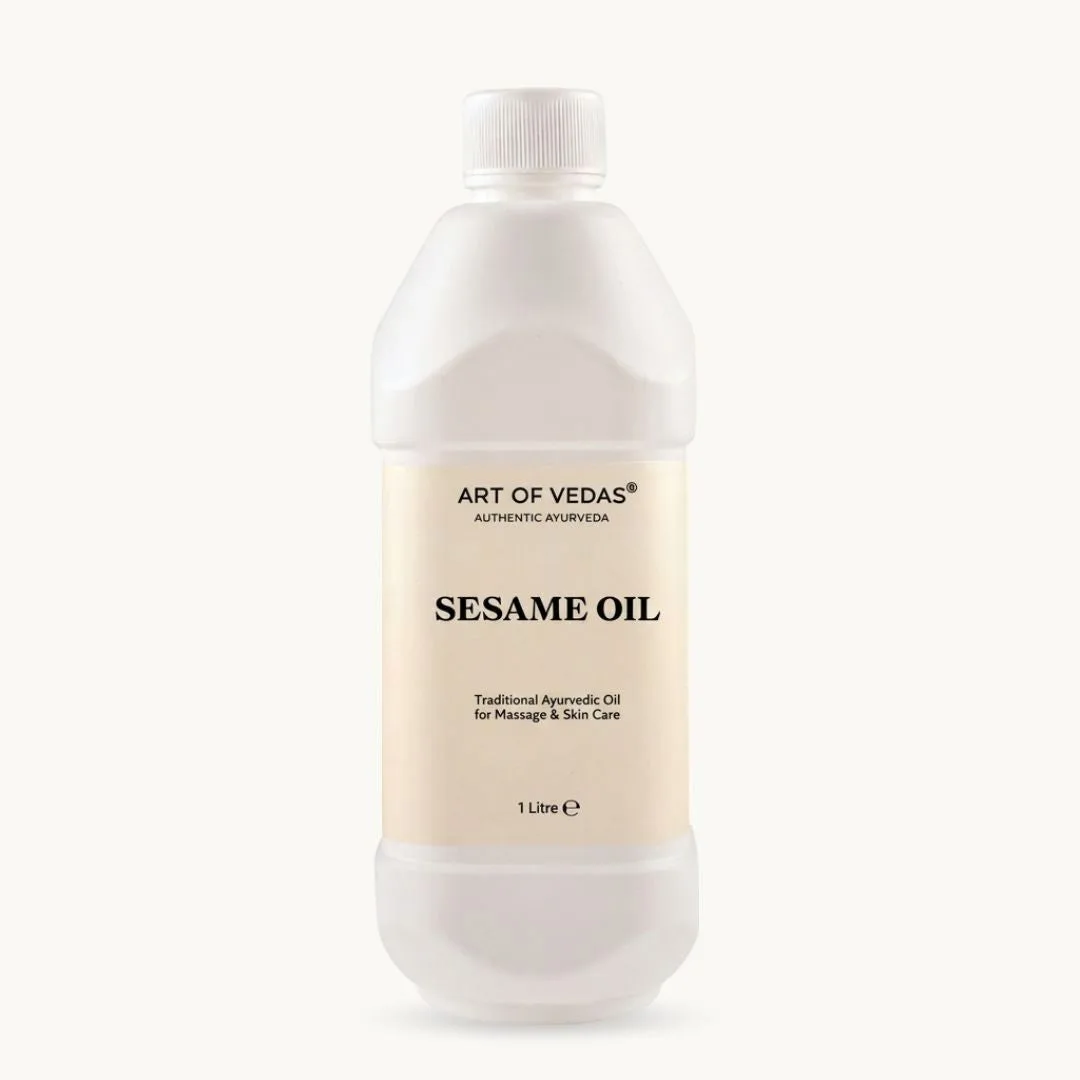
An important classical nuance: Pitta, unlike Vata, is not always directly benefited by heavy, warming oils. The Ashtanga Hridayam describes Pitta-type individuals as inherently warm-bodied, reactive, and susceptible to the effects of excess heat. Heavy, warming oils (plain sesame applied generously in summer on a Pitta constitution, for example) can add heat and aggravate Pitta even while providing the structural benefit of Snehana.
The classical solution is not to avoid oil therapy for Pitta, but to select oils whose cooling potency (Sheeta virya), cooling base, or specific herb composition specifically counteracts Pitta while providing the benefits of oleation. This is where the classical Pitta oil tradition offers genuinely different recommendations from the Vata protocol.
The Classical Pitta Oil Spectrum
For Pitta Skin: Heat-Reactive, Sensitive, Congestion-Prone
Pitta skin - warm, reactive, prone to heat-associated sensitivity and Rakta Dhatu congestion - is most benefited by oils that cool Bhrajaka Pitta in the skin while nourishing Rasa Dhatu.
-
Chandanadi Thailam: Sandalwood-based, the most specifically cooling and Pitta-addressing face and body oil in the classical tradition. Chandana's cooling, Varnya, Pitta-clearing properties make this the foremost Pitta skin oil.
-
Eladi Keram: The classical face oil for Pitta skin - cardamom, sandalwood, and cooling herbs in a coconut base. The lightest and most Pitta-appropriate of the classical face oils. See our face oil guide.
-
Nalpamaradi Thailam: The four-tree bark preparation - specifically described for skin clarity and Pitta-type skin conditions. See our face oil selection guide.
-
Coconut oil (plain): The simplest classical Pitta-skin oil - its Sheeta virya directly cooling, its Laghu quality appropriate for Pitta's inherent warmth. The appropriate base for all warm-season Pitta Abhyanga. See our coconut oil guide.
For Pitta Head and Hair
Pitta's tendency to manifest in the scalp - heat-associated hair thinning, scalp sensitivity, premature greying in the classical understanding - makes the head one of the most Pitta-relevant sites for oil therapy.
-
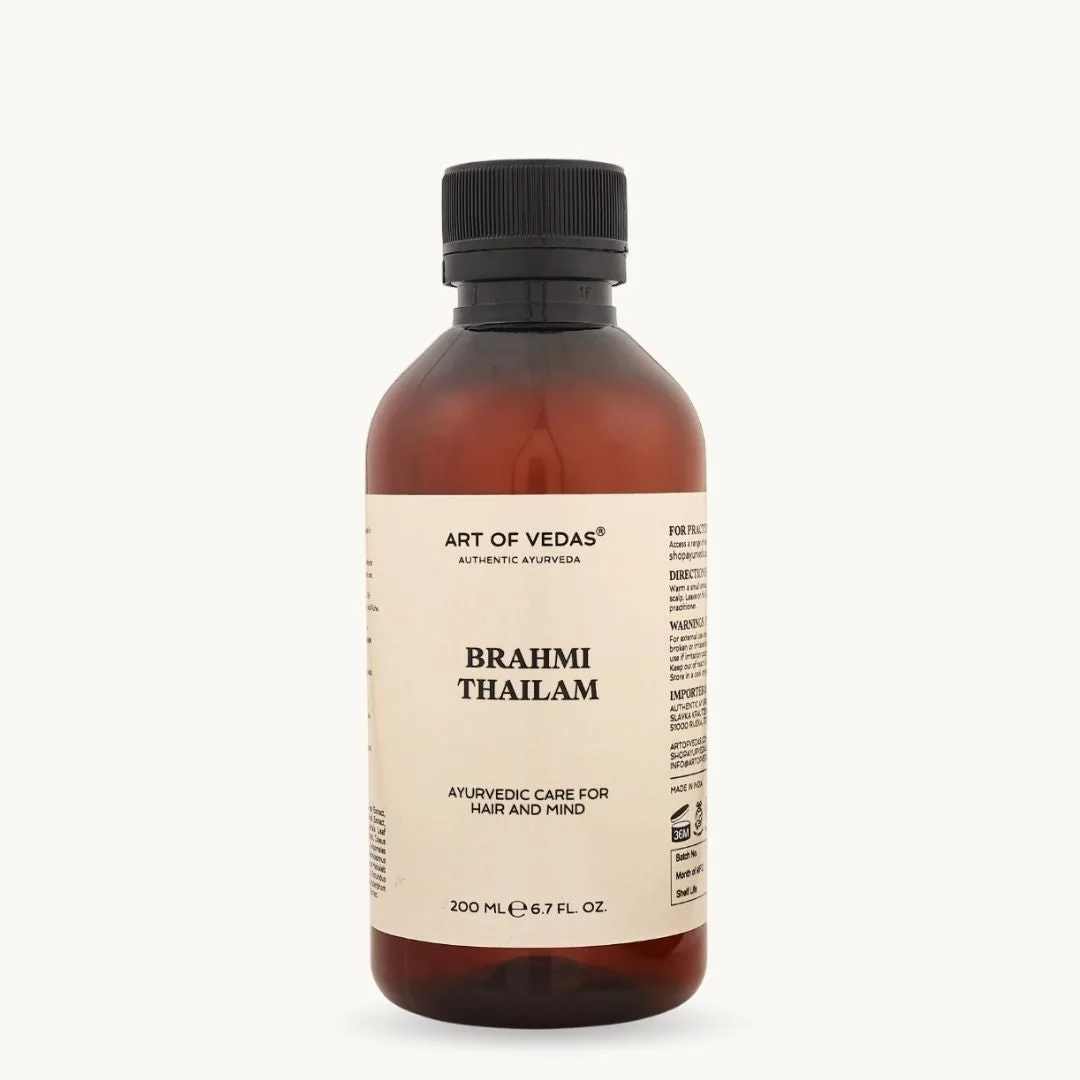
Brahmi Thailam: Sheeta virya, Medhya - the most directly Pitta-cooling of the classical head oils. Its cooling nervous-system action directly addresses Pitta in Sadhaka Pitta and the head region. See our Brahmi Thailam guide.
-
Neelibhringadi Keram: The classical Pitta scalp oil - coconut base with Neeli (Indigo) and Bhringraj for cooling and Kesha-nourishing properties. The foremost classical preparation for Pitta-type scalp conditions.
-
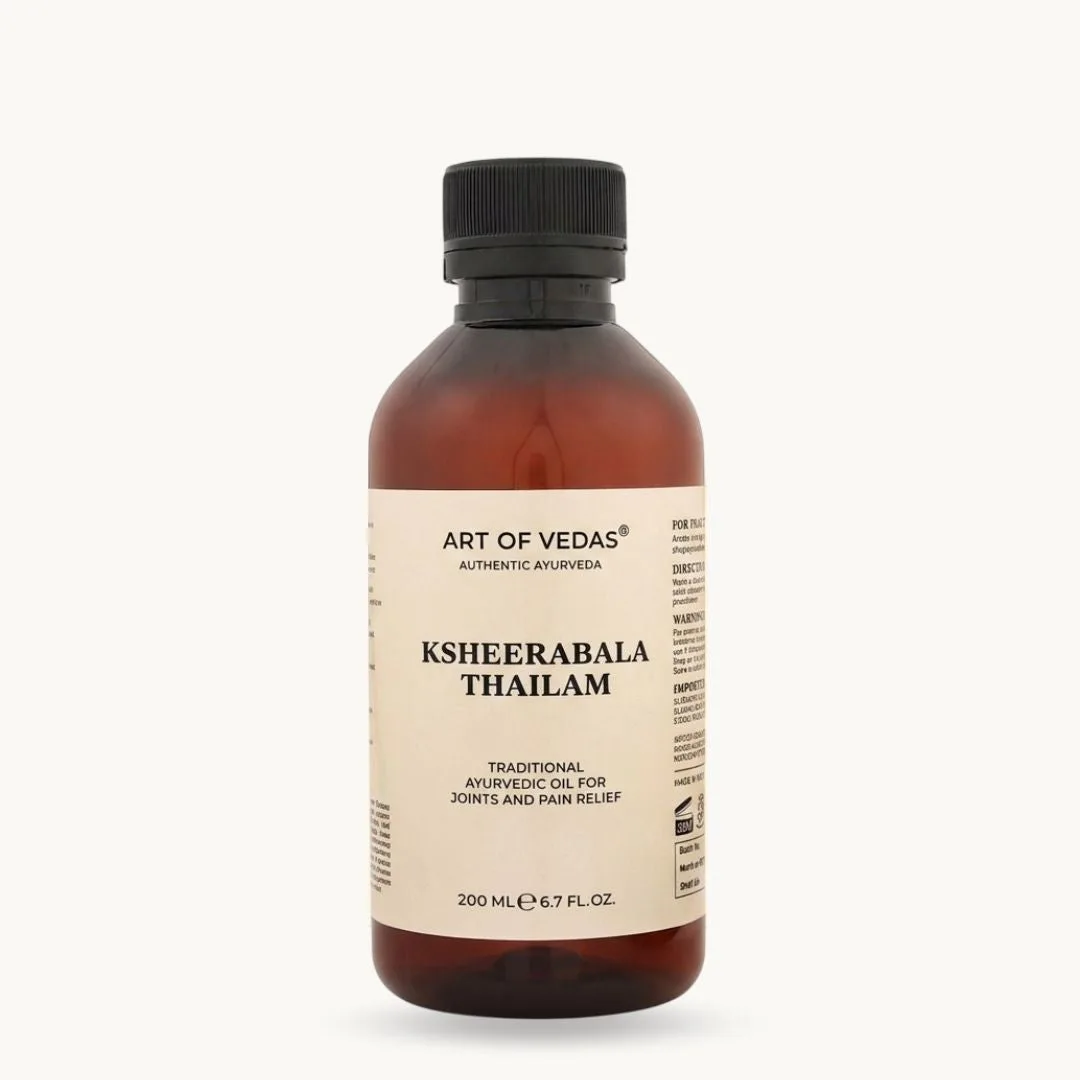
Ksheerabala Thailam: For head conditions where Vata-Pitta is the combined pattern - the milk-processed cooling and nourishing character of Ksheerabala bridges both Doshas. See our Ksheerabala guide.
For Pitta in the Liver and Rakta Dhatu
Pitta's primary organ affinity is the liver (Yakrit) and the blood tissue (Rakta Dhatu). When Pitta accumulates in these structures, the classical presentation extends from skin reactivity to general heat sensitivity, irritability, and the Rakta-Pitta pattern described in classical texts. Oil therapy complements internal Raktashodhana therapy in these situations.
-
Chandanadi Thailam: The most Pitta-specific body oil for conditions where Rakta-Pitta is elevated - its Chandana base specifically clears Pitta from Rakta Dhatu.
-
Internal Rasayana with Pitta-clearing herbs: External oil therapy for Pitta-Rakta conditions is most effective when combined with internal preparations - Manjishtha, Guduchi, and Amalaki being the primary Raktashodhana herbs. See our Manjishtha guide.
For Pitta Joints: Inflammatory Pattern
Pitta-type joint involvement - characterised by heat, redness, and sensitivity to warmth - requires a different oil approach than Vata-type joint conditions. Warming Vata oils (sesame, Dhanwantharam) are less appropriate here.
-
Ksheerabala Thailam: The most appropriate oil for Pitta-Vata joint conditions - its cooling, nourishing character addresses both the Pitta heat and the Vata dryness that typically co-exist in joint conditions. See our Ksheerabala guide.
-
Chandanadi Thailam: For joint presentations where Pitta heat is the dominant feature.
Pitta Season: Summer Practice
Classical Ritucharya identifies summer (Grishma) and the rainy season (Varsha) as the seasons of peak Pitta accumulation. The classical summer Abhyanga practice specifically adjusts to Pitta-cooling oils - coconut base, shorter sessions to avoid overheating, and gentle rather than vigorous technique. This is also the season when Shiro Abhyanga with Brahmi or coconut oil is most important - the head being particularly Pitta-prone in hot weather.
Frequently Asked Questions
Can Pitta types use sesame oil for Abhyanga?
In moderation and in cooler seasons, yes - sesame's warming quality is not so extreme as to be contraindicated for Pitta in general. However, in summer, for Pitta-dominant constitutions with active Pitta manifestation in the skin or head, switching to coconut or a Pitta-specific Thailam is the more classically appropriate choice. The key principle is to avoid adding warming, heavy oil to an already-hot Pitta state.
What is the best oil for Pitta skin type?
Chandanadi Thailam and Eladi Keram are the most specifically Pitta-appropriate classical skin oils - both with cooling, Varnya, Pitta-clearing properties. For the face specifically, Eladi Keram on coconut base is the most classically refined Pitta face oil. For the body, coconut base or Chandanadi Thailam in warm-season Abhyanga.
What is the best oil for Pitta hair loss or scalp heat?
Brahmi Thailam and Neelibhringadi Keram are the primary classical Pitta scalp oils - both cooling and Kesha-nourishing, both on coconut or milk base rather than warming sesame. Regular Shiro Abhyanga with these preparations is the classical approach for Pitta-type scalp conditions.
Related Guides
For the Vata and Kapha equivalents, see our Vata oil guide and Kapha oil guide. For the Abhyanga practice, see our complete Abhyanga guide. For skin-type specific oil selection, see our skin oil guide. Browse our Ayurvedic Thailam collection.
This article is for informational and educational purposes only. Ayurvedic oils are for external use and general wellbeing. They are not medicines and not intended to diagnose, treat, cure, or prevent any medical condition.