This article is part of our Brahmi Thailam: Classical Ayurvedic Oil for Mind and Nervous System guide series.
Why Brahmi Thailam Occupies a Unique Place in Classical Ayurveda
Most classical Ayurvedic oils are designed for the body - for muscles, joints, skin or channels. Brahmi Thailam is one of the rare formulations specifically designed for the mind and nervous system. Its primary herb, Brahmi (Bacopa monnieri), is classified in classical texts as a Medhya Rasayana - a rejuvenating substance that specifically nourishes Medhya Dhatu, the tissues and channels associated with intellect, memory and the clarity of consciousness.
This is not a marketing claim. The Charaka Samhita, the foundational text of Ayurvedic internal medicine, lists Brahmi among the four principal Medhya herbs alongside Shankhapushpi, Yashtimadhu and Guduchi - each with a distinct mode of cognitive support. Brahmi's action is described as Dhi (intellect), Dhriti (retention) and Smriti (recall) enhancing, meaning it supports the full arc of mental function from alertness and comprehension through to long-term memory.
When Brahmi is processed into a Thailam - a classical medicated oil prepared by cooking herb paste, water decoction and a base oil together through the traditional Taila paka vidhi method - its active properties are preserved in an oil-soluble medium that allows them to penetrate the skin and reach deeper tissues, including the nervous system through topical application. This is the classical rationale for Shiro Abhyanga (head oil massage) and its particular affinity for the scalp, skull and brain channels.
The Classical Formulation
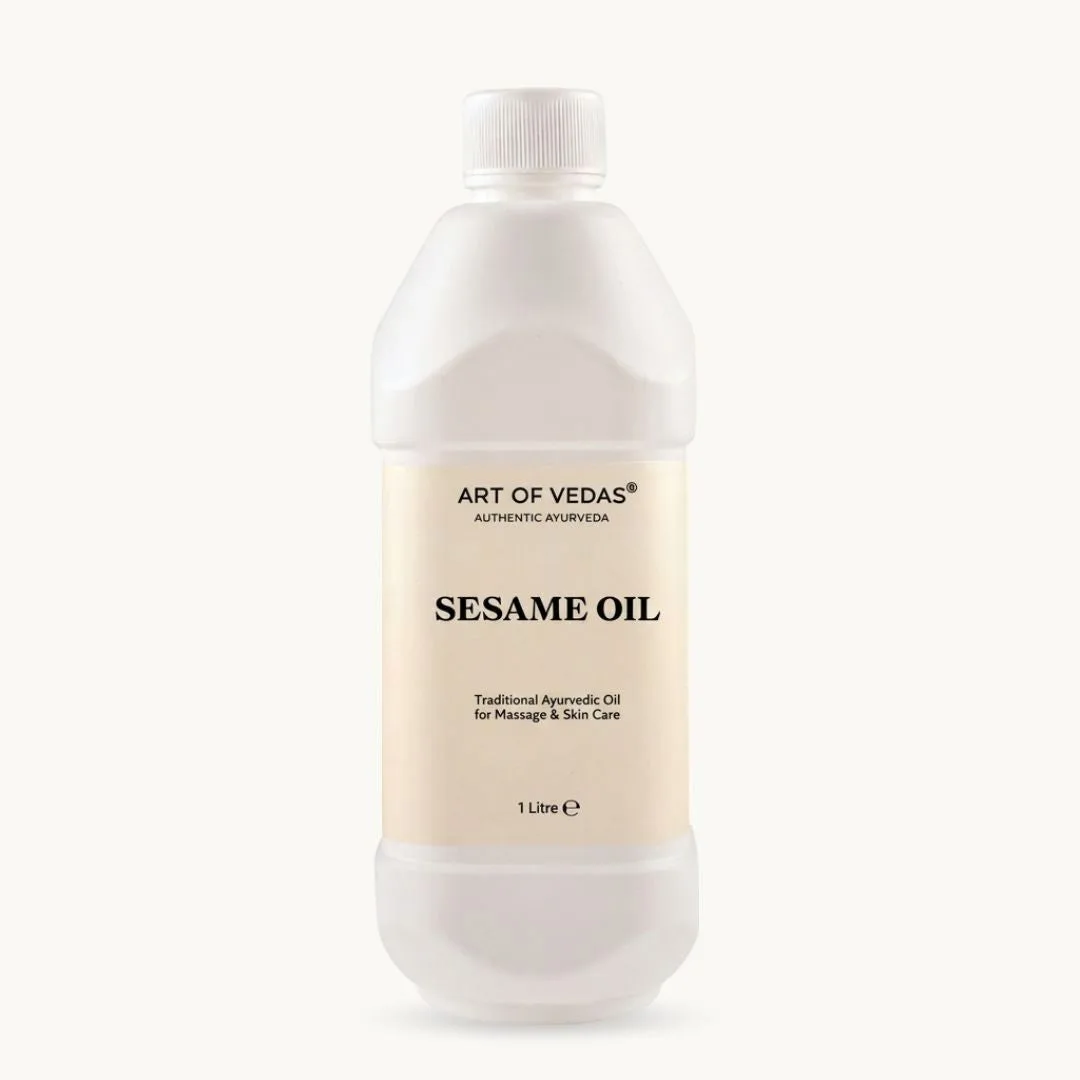
Classical Brahmi Thailam is based on Brahmi (Bacopa monnieri) as the primary herb, typically combined with Amalaki (Phyllanthus emblica), which provides a Rasayana base and protects the formulation. The base oil is traditionally Sesame (Tila taila), chosen because of its own Medhya and nervine properties and its classical designation as the best among all base oils - Taila Shreshtha - by Charaka.
Some classical and traditional preparations include additional supportive herbs:
-
Brahmi (Bacopa monnieri) - Primary Medhya Rasayana herb; Tikta (bitter) and Kashaya (astringent) rasa, Sheeta (cooling) virya, Madhura vipaka; classical affinity for Majja (nervous) and Mano (mental) channels
-
Amalaki (Phyllanthus emblica) - Rasayana base herb; all five rasas present; Sheeta virya; supports Ojas (vital essence) and provides antioxidant protection to the formulation
-
Sesame oil (Tila taila) - Base oil; Ushna virya in its own right, yet specifically listed as suitable for Shiro Abhyanga by Ashtanga Hridayam; penetrating and nourishing
-
Milk (Kshira) - Classical Brahmi Ghritham and Brahmi Thailam preparations often incorporate milk as an additional processing medium, enhancing the formulation's Brimhana and Sheeta (cooling) qualities
The classical preparation follows Taila paka vidhi - a controlled multi-stage cooking process where herb paste, water decoction and base oil are combined and reduced until the water has fully evaporated and the herbal properties are fully absorbed into the oil. This process is described in detail in Sharangadhara Samhita and forms the technical basis for all classical medicated oils.
Classical Properties and Dosha Affinity
Brahmi Thailam has a predominantly Pitta-pacifying and Vata-nourishing profile:
-
Rasa (taste): Tikta (bitter), Kashaya (astringent)
-
Virya (potency): Sheeta (cooling)
-
Vipaka (post-digestive effect): Madhura (sweet)
-
Primary dosha action: Pacifies Pitta Dosha, particularly Sadhaka Pitta (the aspect of Pitta governing mental clarity and emotional processing); also nourishes and steadies Prana Vata (the Vata governing mental function and the nervous system)
-
Dhatu affinity: Majja Dhatu (bone marrow and nervous tissue); Mano Vaha Srotas (channels of the mind)
Brahmi's Sheeta (cooling) quality is particularly important for understanding its classical use. Heat - Ushna Guna - is one of the principal causes of Pitta disturbance in the mind; mental overwork, excessive stimulation, competitive environments and emotional intensity all generate heat in the Sadhaka Pitta. The cooling, bitter-sweet nature of Brahmi works to reduce this heat, allowing the mind to regain its natural clarity and capacity for deep concentration.
Classical Indications and How to Apply
Classical Ayurvedic texts reference Brahmi Thailam and Brahmi-based formulations in connection with several categories of use. On consumer-facing contexts, we always frame these as traditional Ayurvedic knowledge - not as guarantees of clinical outcomes.
Brahmi Thailam is traditionally applied in the following contexts:
-
Shiro Abhyanga - Head and scalp oil massage; the primary classical application. Described in Ashtanga Hridayam (Sutrasthana, Chapter 2) as part of Dinacharya for mental clarity, scalp nourishment and the calming of Vata in the head
-
Nightly scalp application - A small amount applied to the crown and temples before sleep; supports rest and mental relaxation
-
Shirodhara support oil - Used as the oil for Shirodhara (the classical oil-stream therapy for the forehead), alongside more complex formulations like Ksheerabala Thailam or Narayana Thailam
-
Foot massage (Padabhyanga) - The classical nervous system connection between the feet and the head; Brahmi Thailam applied to the soles as part of an evening Padabhyanga routine
Shiro Abhyanga: Step-by-Step Classical Method
The classical Shiro Abhyanga method for Brahmi Thailam follows the standard Dinacharya protocol described in Ashtanga Hridayam:
-
Warm the oil: Place the bottle in warm water for 5, 10 minutes before use. Brahmi Thailam should be comfortably warm - not hot. Warming enhances penetration and activates the classical properties of the oil.
-
Begin at the crown (Brahmarandhra): Apply a small quantity - a few drops to a teaspoon - to the crown of the head. The crown is considered the meeting point of Prana Vata and the classical seat of Ojas. Using the fingertips, work the oil in with slow, circular movements.
-
Move to the temples and hairline: Apply oil to the temples and along the hairline, using gentle circular pressure. The temples are considered the location of Shanka Marma - classical vital points where Pitta and Vata channels are accessible through the skin.
-
Work down to the nape: Extend the application to the back of the head and the nape of the neck. These areas correspond to Krikatika Marma, the classical junction of head and neck, important for the circulation of Prana and Vyana Vata.
-
Duration: 5, 15 minutes is the classical recommendation. Allow the oil to remain on the scalp for at least 30 minutes before washing - or apply as a nightly treatment and wash in the morning.
-
Frequency: Daily Shiro Abhyanga is described in Ashtanga Hridayam as a practice that "prevents hair from falling, gives strength, nourishes the head, steadies the mind and promotes long life." In practice, 3, 4 times per week is a sustainable frequency for most people.
Brahmi Thailam in the Context of Pitta Season and Mental Fatigue
Brahmi Thailam is particularly well suited to the Pitta season (summer and early autumn), when the accumulation of heat in the environment directly affects Sadhaka Pitta - the fire of the mind. This is the season when mental tiredness, irritability, disrupted sleep and a sense of depletion in concentration are most commonly experienced.
The Ritucharya (seasonal routine) described in classical texts recommends cooling Pitta-pacifying practices during this season, and Shiro Abhyanga with cooling Medhya oils is one of the core protocols.
For year-round use, Brahmi Thailam sits naturally within a broader Dinacharya routine: Shiro Abhyanga in the morning, Nasya (nasal oil therapy) to support the head channels directly, and tongue scraping and oil pulling as the oral care component of the same morning sequence. Together, these form the classical Urdhvanga Chikitsa - care for the upper part of the body including the head, sensory organs and mind.
How Brahmi Thailam Relates to Other Classical Mind-Nourishing Formulations
Several classical oils and preparations address the mind and nervous system; understanding their distinctions helps in choosing the right formulation for a given context:
-
Brahmi Thailam - Specifically Medhya; focuses on clarity, memory and calm mental function; cooling and Pitta-pacifying; ideal for Shiro Abhyanga and scalp care
-
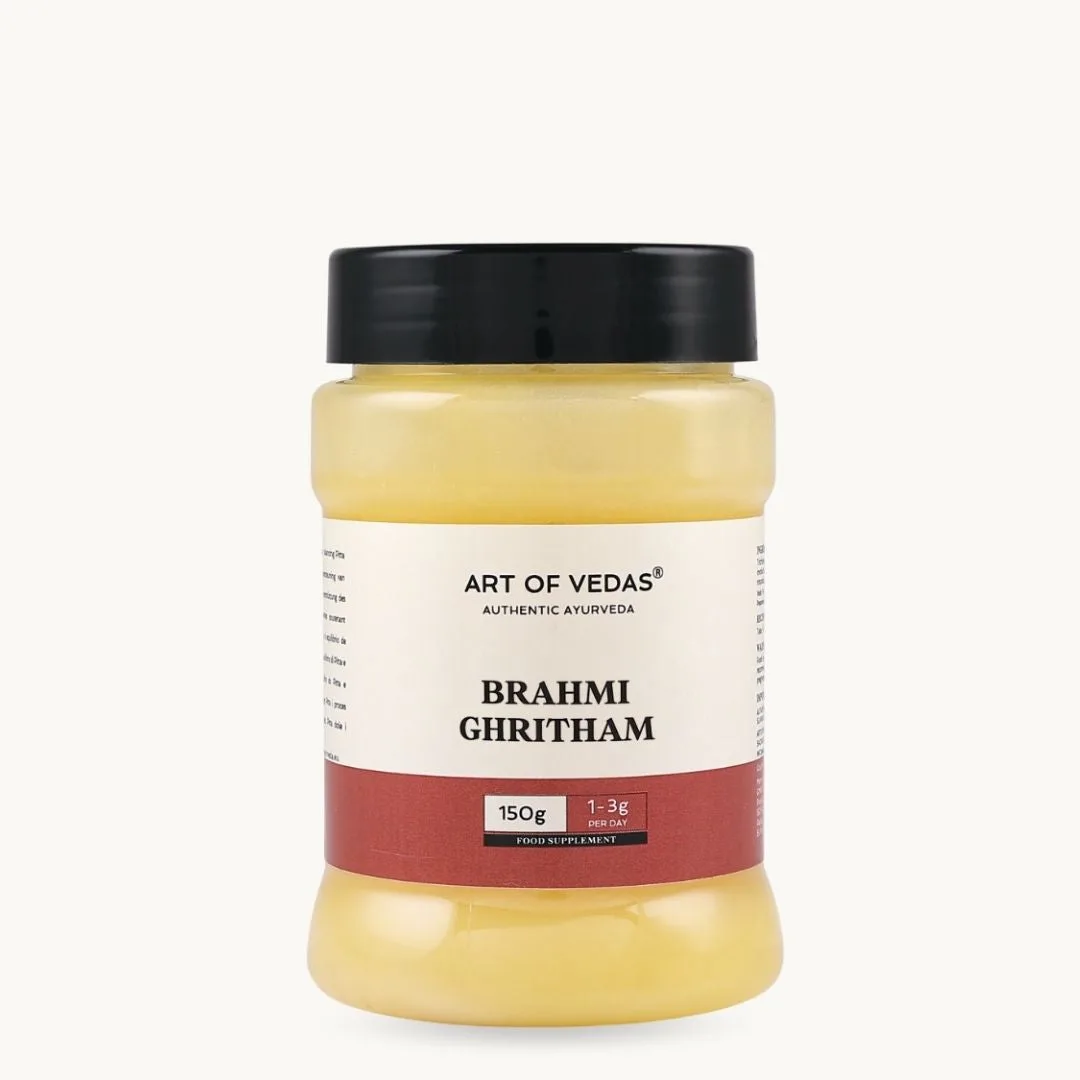
Brahmi Ghritham - The classical medicated ghee preparation for Medhya support; taken internally under classical guidance; considered the strongest classical vehicle for Medhya herbs since ghee is said to carry properties deep into the Majja Dhatu
-
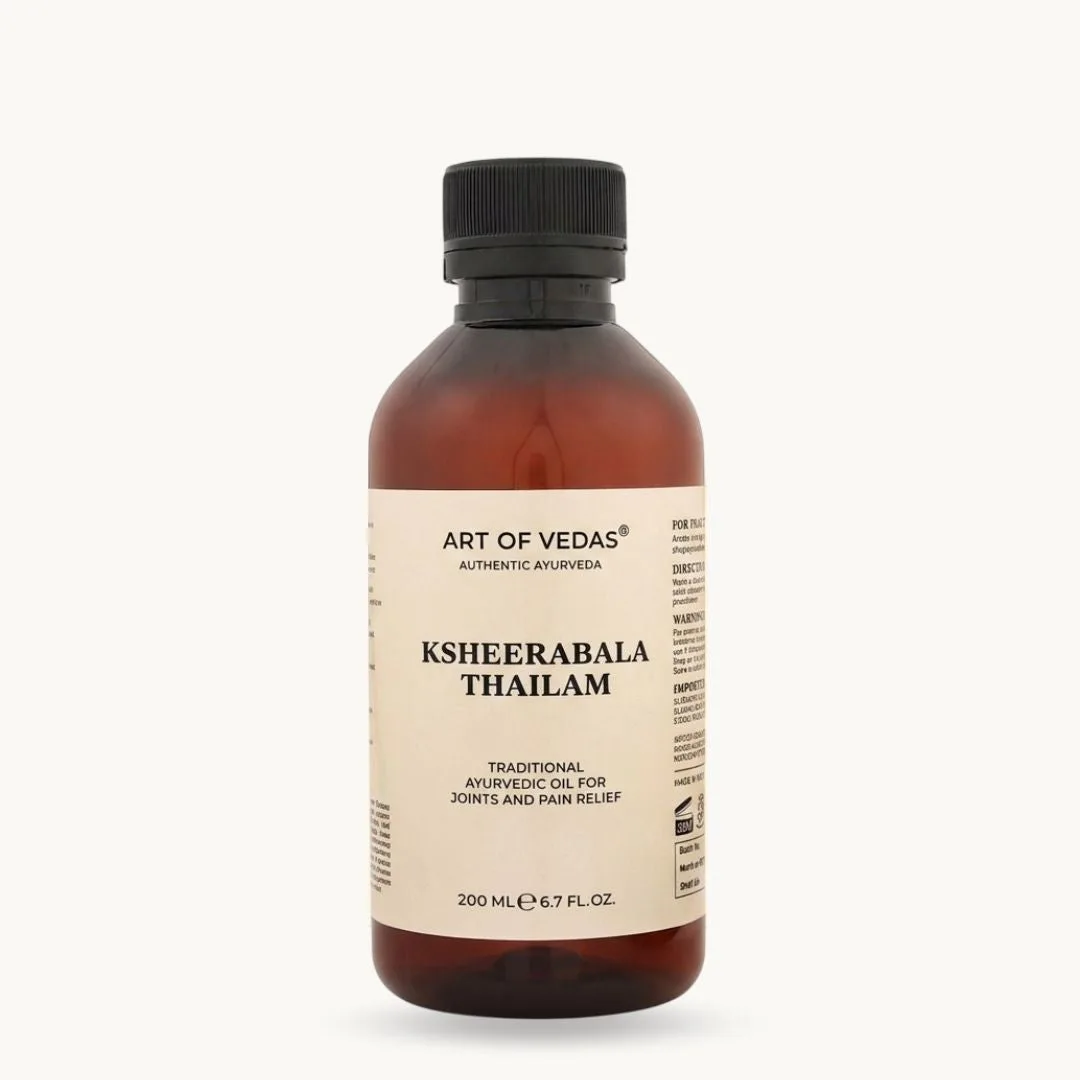
Ksheerabala Thailam - A milk-processed oil with broader nervous system and musculoskeletal support; warming and Vata-nourishing; covers a wider scope of Majja Dhatu care; used for full-body Abhyanga as well as Shiro Abhyanga
-
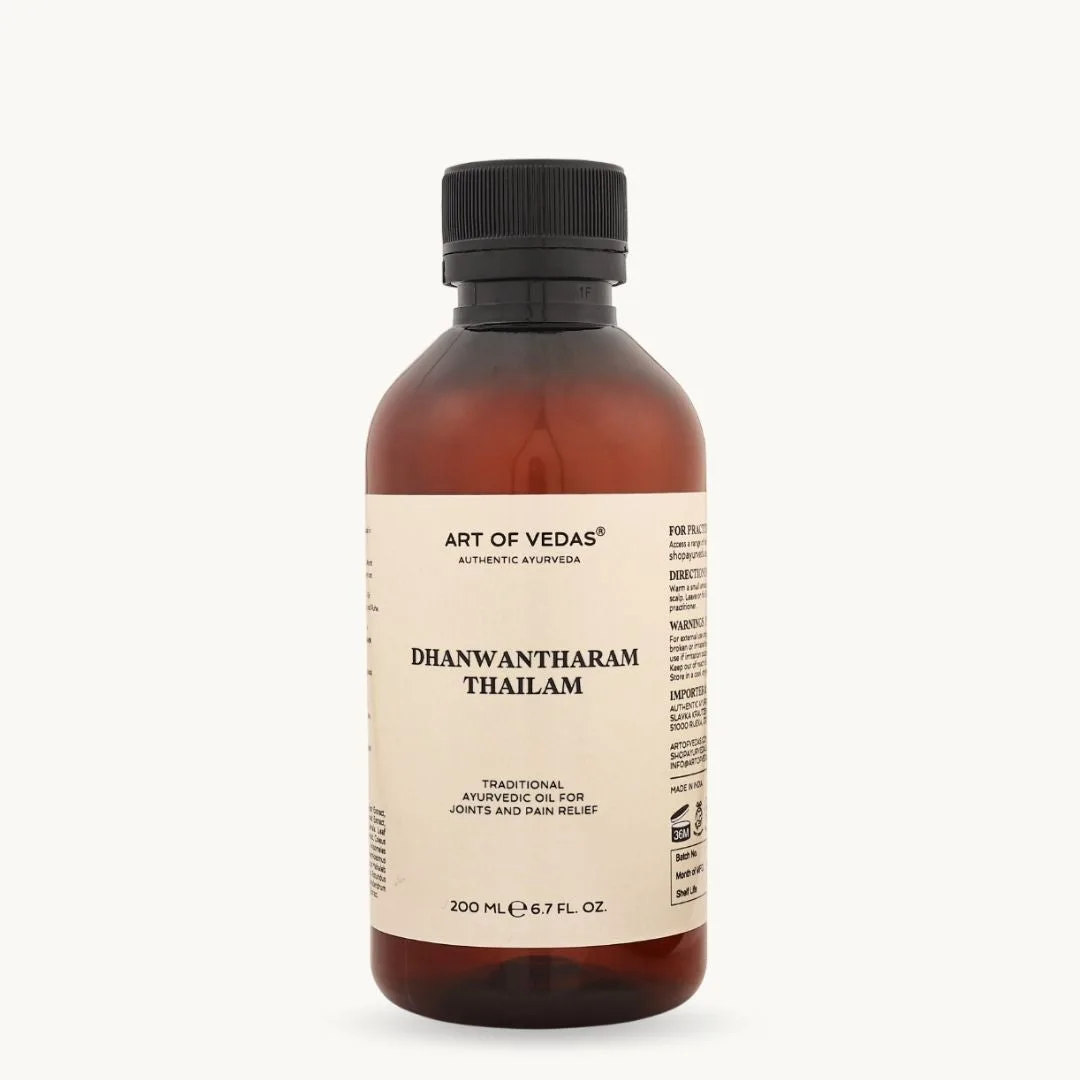
Dhanwantharam Thailam - The classical Vata-balancing oil; broader musculoskeletal and systemic Vata care; not specifically Medhya-focused but supports Vata stabilisation which indirectly supports mental steadiness
For practitioners looking at a more comprehensive perspective on oil selection across formulations, the Classical Ayurvedic Massage Oil comparison guide provides a systematic overview.
Frequently Asked Questions
Can Brahmi Thailam be used for body massage as well as scalp?
Brahmi Thailam is primarily formulated for Shiro Abhyanga - head and scalp application. It can be used for full-body Abhyanga, particularly in Pitta-dominant constitutions or during Pitta season, but for full-body use, broader formulations like Ksheerabala Thailam or Dhanwantharam Thailam are typically more appropriate. Classical texts recommend using oils that match the indication and constitution for each part of the body.
How long should Brahmi Thailam be left on the scalp?
The classical recommendation is a minimum of 30 minutes before washing. Many practitioners apply it the evening before and wash the hair the following morning. The oil needs time to penetrate through the scalp into the tissue layers below for the Medhya properties to take effect. Short applications of 5, 10 minutes are also beneficial for the immediate experience of calming and grounding, even if the deeper penetration requires longer contact.
Is Brahmi Thailam suitable for Vata-dominant constitutions?
Brahmi Thailam is primarily Pitta-pacifying and suitable for Pitta and Vata-Pitta constitutions. For predominantly Vata-dominant constitutions, particularly those experiencing dryness, anxiety and cold, a warming Vata-nourishing oil like Ksheerabala or Narayana Thailam may be more appropriate as the primary choice. However, Brahmi Thailam remains valuable for Vata types in terms of its mental and cognitive support, and can be used alongside a Vata-nourishing oil in different applications.
Does Brahmi Thailam cause hair fall or hair growth?
Classical texts describe head oil application in general as supporting the prevention of hair fall and nourishing the scalp. The classical term is Kesha Vriddhikara - supporting the natural growth and strength of hair. This is attributed not specifically to Brahmi but to the regular practice of Shiro Abhyanga itself combined with a suitable oil. Brahmi Thailam supports this practice well.
Can Brahmi Thailam be used in summer?
Yes - its Sheeta (cooling) virya makes it particularly well suited to summer, which is the Pitta season. Classical seasonal care recommends increasing Pitta-pacifying practices including head oil massage with cooling oils during this period. This is one of the reasons Brahmi Thailam is described as a year-round option with heightened relevance in hot weather.
Brahmi Thailam bridges two distinct traditions within Ayurveda: the tradition of daily oil massage as a preventive and rejuvenating practice, and the classical Medhya therapeutics that form the basis of Ayurvedic cognitive care. In its simplest form, it asks very little - a few minutes with warm oil at the scalp before the day begins, or a quiet application before sleep. The classical texts suggest these small gestures, repeated over time, have a cumulative effect on the health of the mind and the steadiness of the nervous system.
Explore Brahmi Thailam from Art of Vedas, or browse the full Ayurvedic Thailams collection.
This guide is written for educational purposes based on classical Ayurvedic sources. Brahmi Thailam is a food supplement and wellness product for external use. It is not a medicine and not a substitute for professional medical advice.