In brief: Most treatment rooms run on four to six Thailams: one or two general oils for Abhyanga that carry the volume, a cooling oil, a warming oil, a head oil and one for localised work. This overview groups the classical oils of our range by character to help build that core.
How to read the groups
The classical texts describe every Thailam (herbal oil prepared by slow decoction into an oil base) by its qualities: warming (Ushna) or cooling (Sheeta), heavier or lighter, and the Dosha it is directed towards. Those qualities, rather than price or habit, decide where an oil belongs on the shelf. The groups below follow them. The choice for each client remains the practitioner's.
General oils for Abhyanga
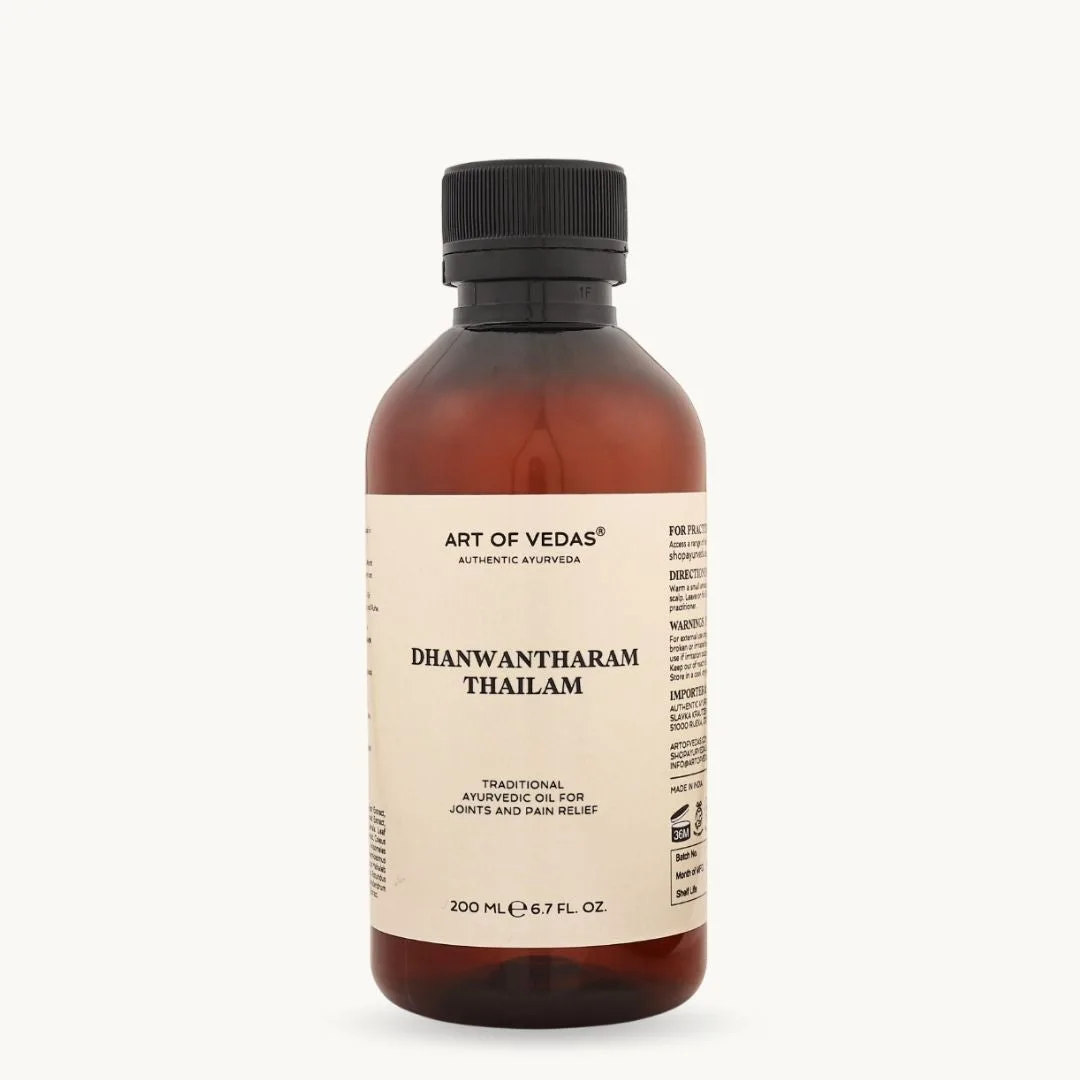
- Dhanwantharam Thailam: a nourishing oil of more than thirty herbs, documented in the Ashtanga Hridayam and directed towards Vata. The usual default for general Abhyanga.
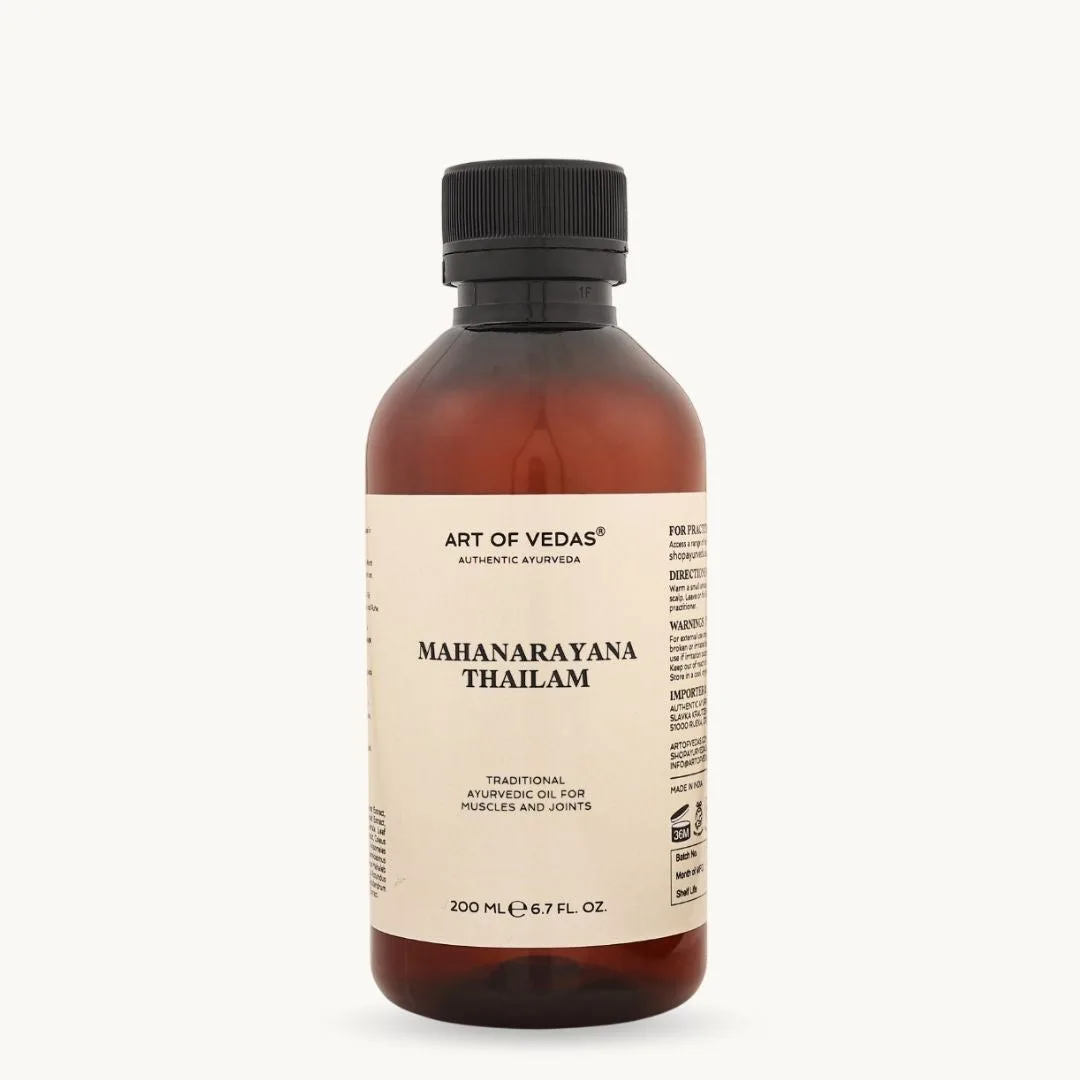
- Mahanarayana Thailam: a warming oil of more than fifty herbs, recorded in the Bhaishajya Ratnavali, used where a heavier, more penetrating application is wanted.
- Balaswagandhadi Thailam: built on Bala and Ashwagandha, recorded in the Sahasrayogam and valued as Balya, strength-promoting.
- Narayana Thailam: a warming Vata oil with the ten Dashamoola roots, recorded in the Bhaishajya Ratnavali.
- Sudhabala Thailam: Bala in sesame oil, a gentle two-ingredient oil for daily use.
- Mahamasha Thailam: led by Masha, black gram, with more than forty herbs, recorded in the Bhaishajya Ratnavali.
- Prabhanjanam Thailam: named after Prabhanjana, the force of Vata, with Dashamoola, Bala and Ashwagandha among its herbs.
Cooling oils
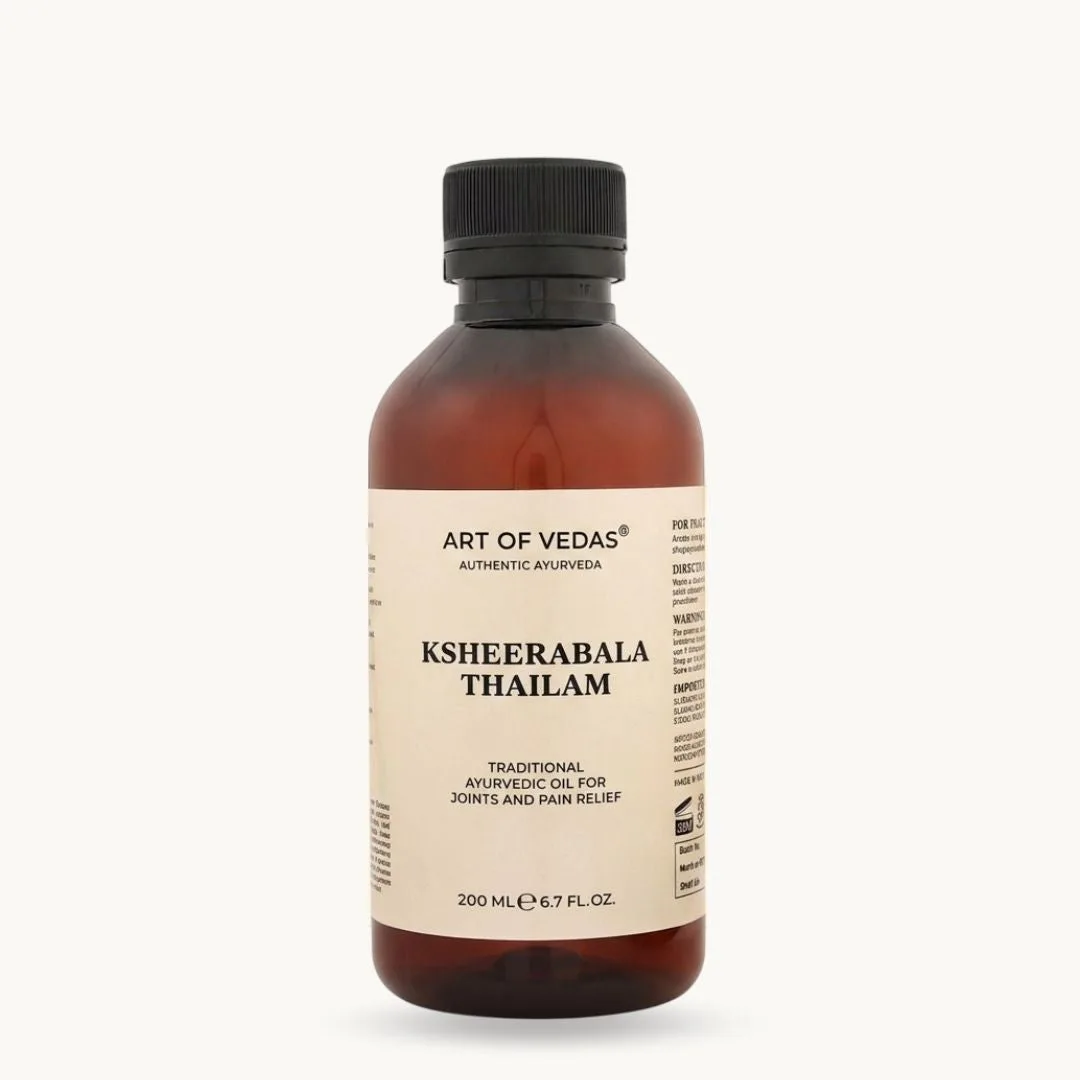
- Ksheerabala Thailam: cooling and calming, built on Bala and documented in the Ashtanga Hridayam. A common choice for the head, for Shirodhara and for Padabhyanga, the foot massage.
- Chandanadi Thailam: a cooling oil directed towards Pitta.
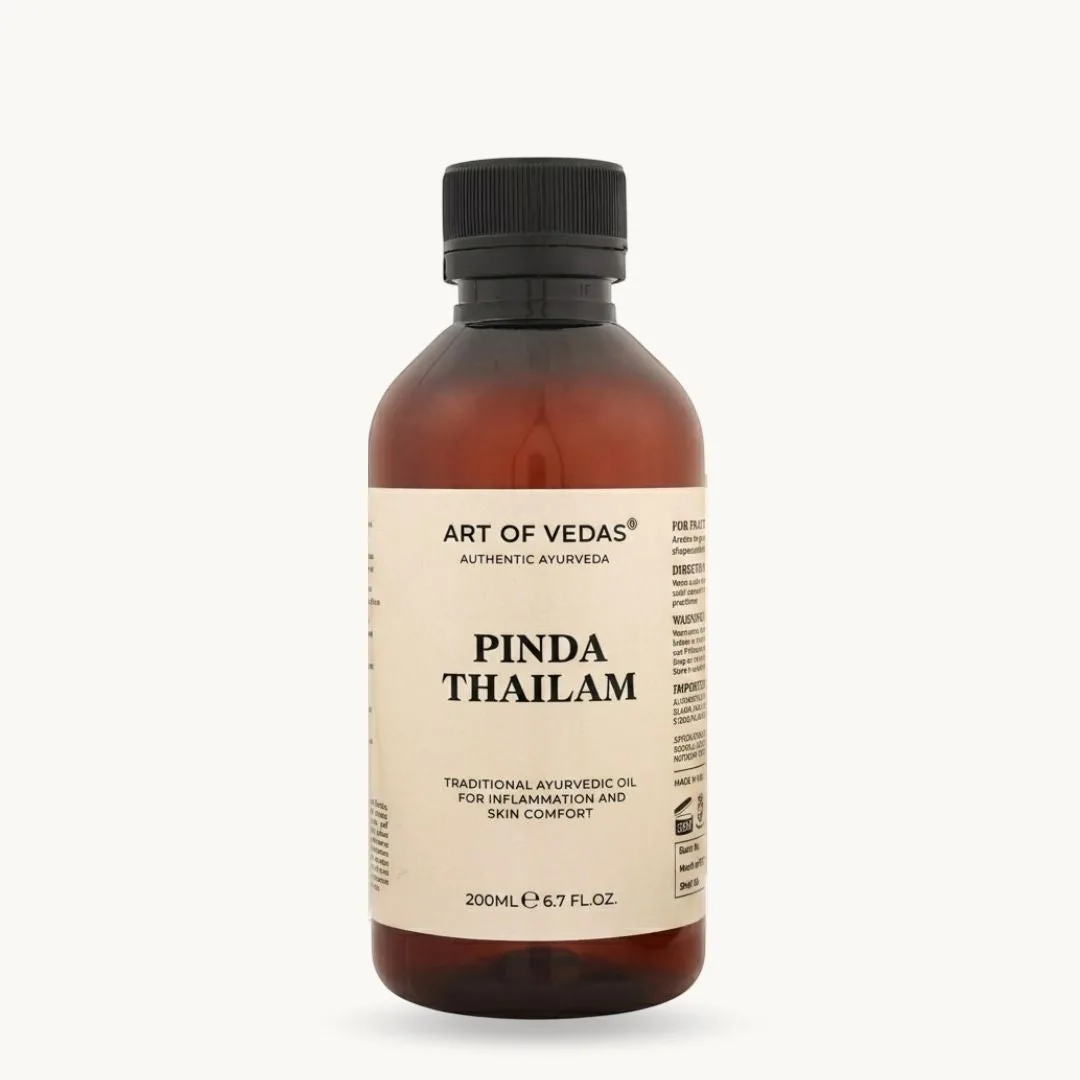
- Pinda Thailam: of cooling potency (Sheeta Virya), directed towards Pitta and documented in the Ashtanga Hridayam.
Warming oils
- Karpooradi Thailam: warming and penetrating, recorded in the Sahasrayogam.
- Mahanarayana and Narayana Thailam, above, also belong to the warming side of the shelf.
Oils for localised work
- Kottamchukkadi Thailam: classically used for localised application over the limbs and the lower back, and a common working oil in rooms offering Kati Basti.
- Sahacharadi Thailam: documented in the Ashtanga Hridayam and classically associated with the lower body.
- Prasarini Thailam: a Vata oil named after Prasarini, "that which spreads", recorded in the Sharangdhara Samhita.
- Murivenna: a cooling oil in a coconut base, traditionally applied after physical exertion.
For targeted work that needs a thicker preparation, the Kuzhambu range stays where it is applied rather than spreading: see the Kuzhambu collection.
Head oils
Building the core of a room
A general practice starts with Dhanwantharam Thailam from the first group, Ksheerabala Thailam as its cooling oil, and plain sesame oil. It then adds one warming oil, Brahmi Thailam for the head, and Kottamchukkadi Thailam where localised work is on the menu. That is six oils, and it covers most of what comes through the door. Further oils follow the clients rather than the catalogue.
The oils that carry the volume belong in the 1 litre or 5 litre format; see Thailam in professional formats. Our guide to a new practice's first order places the oils within a complete opening range, and the full professional range is on our wholesale page.
Common questions
Which Thailam is used for Shirodhara?
The practitioner chooses for the client. Ksheerabala, Brahmi and Chandanadi Thailam are common choices, and all three are in our range.
How many oils does a treatment room need?
Four to six carry most practices: general oils for Abhyanga, one cooling, one warming, a head oil and an oil for localised work. Further oils follow demand.
Which oils come in 1 litre and 5 litre formats?
The oils used in volume, among them Dhanwantharam, Ksheerabala, Mahanarayana, Karpooradi and Prabhanjanam Thailam. The current list, with sizes, is in our guide to Thailam in professional formats.