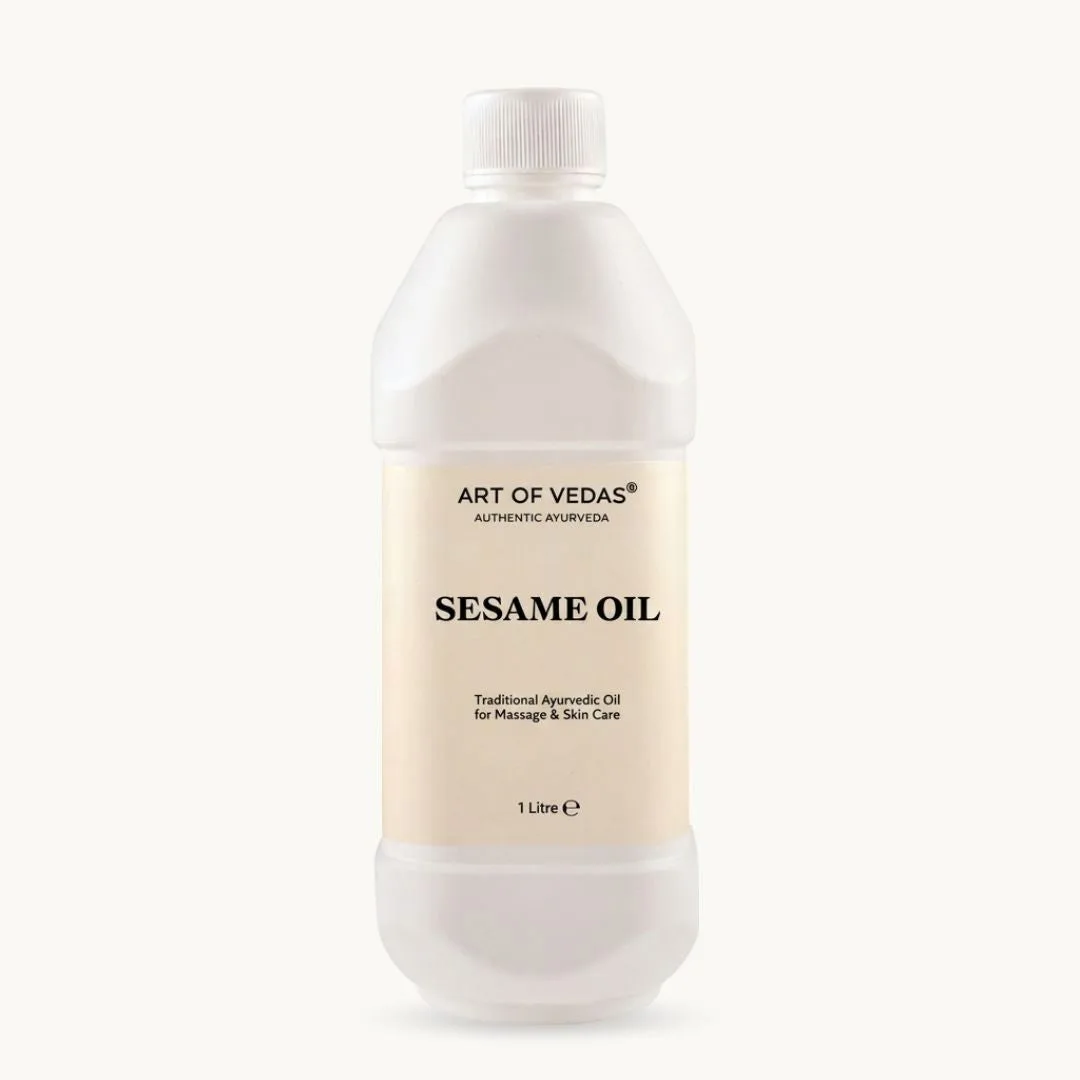
Coconut oil (Narikela Taila) holds a distinct and complementary position to sesame oil in the classical Ayurvedic pharmacopoeia. Where sesame is warming, penetrating, and Vata-pacifying, coconut is cooling, soothing, and Pitta-pacifying. The two oils together cover the entire Dosha spectrum - sesame for cold, dry conditions and coconut for hot, inflamed ones - making the understanding of when to use each a fundamental skill in Ayurvedic self-care.
Classical Profile
Rasa (taste): Madhura (sweet)
Virya (potency): Sheeta (cooling)
Vipaka (post-digestive effect): Madhura (sweet)
Guna (qualities): Snigdha (unctuous), Guru (heavy)
Dosha action: Pitta-pacifying primarily. Also supports Vata (through its nourishing, sweet quality) but does not match sesame's warming penetration for deep Vata conditions. May increase Kapha due to its heavy, sweet, cool qualities.
The cooling Virya is the defining characteristic. In any situation where heat needs to be reduced - Pitta-type skin inflammation, summer Abhyanga, post-sun exposure, overheated scalp, burning sensations - coconut oil is the classical first choice.
Primary Classical Uses
Pitta-Type Abhyanga
For Pitta constitutions and during summer months, coconut oil replaces sesame as the Abhyanga oil. Its cooling quality directly counteracts the heat that Pitta accumulates in the skin and tissues. The application can be at room temperature or slightly cool - unlike sesame, which must be warmed. Pitta individuals often notice an immediate calming effect from coconut oil Abhyanga that sesame does not provide.
Hair Care
Coconut oil has particular affinity for hair - its molecular structure allows it to penetrate the hair shaft more effectively than most other oils. Classical texts describe head oiling (Shirobhyanga) with coconut oil as cooling, nourishing to the hair roots, and supportive of the scalp tissue. The Ayurvedic hair care guide covers head oiling technique in detail. For Pitta-type hair concerns (premature greying, heat-related thinning, scalp sensitivity), coconut oil is preferred over sesame.
Skincare
In the Ayurvedic skincare framework, coconut oil serves as the base for Pitta skin types - calming, cooling, and protective without the warming quality that can aggravate sensitive or reactive skin. It is also the classical choice for post-sun care, soothing skin that has accumulated environmental Pitta.
Cooking
Coconut oil's cooling quality makes it the preferred cooking fat during summer in Ayurvedic nutrition - or year-round for Pitta constitutions. It is lighter than ghee for those who need to manage Kapha while keeping Pitta cool.
When NOT to Use Coconut Oil
In cold weather: Coconut's cooling Virya works against you when external cold is already challenging the body. During autumn and winter (Vata season), switch to sesame for Abhyanga.
For deep Vata conditions: Coconut nourishes but does not penetrate and warm as sesame does. If the primary pattern is Vata - cold, dry, depleted - sesame-based Thailams are more effective.
For Kapha types: Coconut's heavy, sweet, cooling quality can increase Kapha accumulation, particularly in spring. Kapha constitutions may prefer lighter oils like sunflower or mustard.
The oil selection guide provides the complete decision framework, and an Ayurvedic consultation matches the optimal oil to your specific Dosha pattern and the current season.
Classical Ayurvedic knowledge for educational purposes. Not medical advice.
Explore more in this series