In brief: Dhanvantari Thailam, best known as Dhanwantharam Thailam, takes its name from Dhanvantari, the physician of the gods in the classical tradition. It is also written Dhanwantari Thailam, Dhanvantari Thailam, Dhanvantaram Thailam, Dhanwantram Thailam or Dhanvantara Taila. This guide covers the origin of the name, the classical text that describes the oil in the Ashtanga Hridayam, how it is prepared by the Sneha Paka method, the forms in which the formula exists, and how to recognise a carefully made oil.
Therapies & Oils
Dhanvantari Tailam: Origin, Classical Text and Preparation of Dhanwantharam Thailam
Reviewed by Dr. Anu Joy, MD (Ayurveda), Ayurveda physician at Art of Vedas
The name: Dhanvantari, the physician of the gods
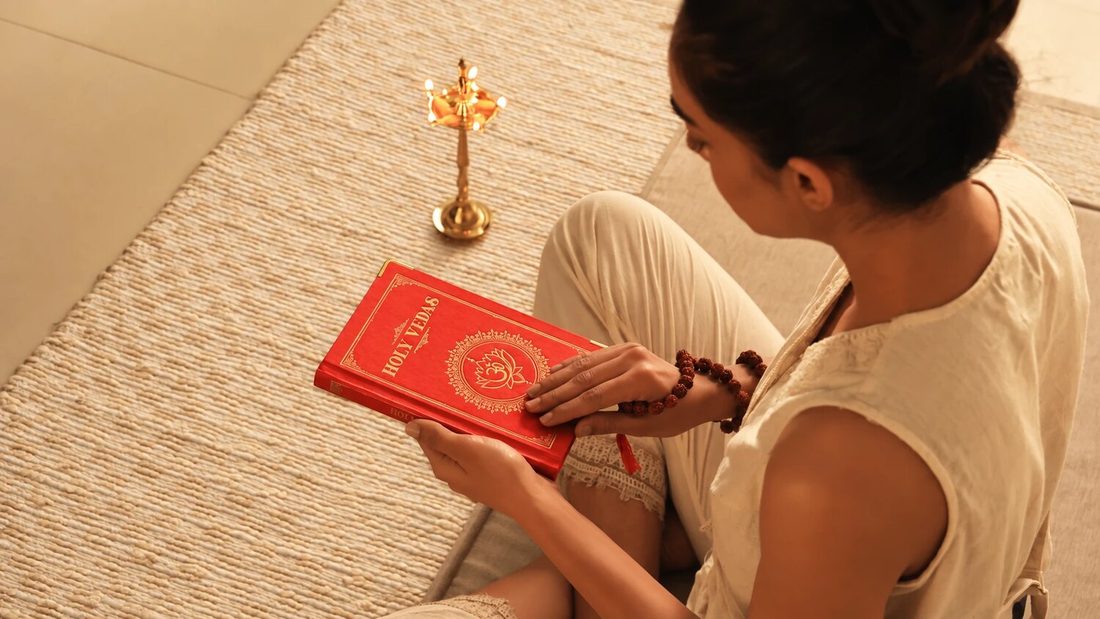
In the classical tradition, Dhanvantari is the physician of the gods. The Puranas tell how he rose from the churning of the ocean holding a vessel of Amrita, the nectar of immortality, and Ayurveda honours him as its patron. Many classical preparations carry the name of a sage, a plant or a quality; a few carry the name of Dhanvantari himself, and Dhanwantharam Thailam is the best known of them.
The many spellings come from transliteration. In Sanskrit the oil is Dhanvantara Taila, the oil "of Dhanvantari". In common usage the Sanskrit ending changes and the oil becomes Dhanwantharam Thailam or Dhanvantaram Thailam; English writing adds variants such as Dhanwantari Thailam, Dhanvantari Thailam, Dhanwantram Thailam or simply Dhanvantari oil. All of them name the same classical formula.
Dhanvantari Thailam in the classical text
The Ashtanga Hridayam, composed by Vagbhata around the seventh century CE and counted with the Charaka Samhita and the Sushruta Samhita among the three great classical texts of Ayurveda, gives the classical description of the oil's composition. Its Chikitsa Sthana, the section on classical therapy, contains the guidance on its use within the Vata tradition. The Sahasrayogam, a later compilation of classical recipes, carries the same formula and gives practical guidance on its preparation.
The text sets out the oil in stages. A decoction is made from Bala (Sida cordifolia), the ten roots of the Dashamoola, barley, jujube and horse gram; a paste is made from a further group of herbs; both are cooked into sesame oil. Bala opens the recipe and gives the formula its character: its name means "strength" in Sanskrit, and the texts place it among the Balya and Rasayana herbs.
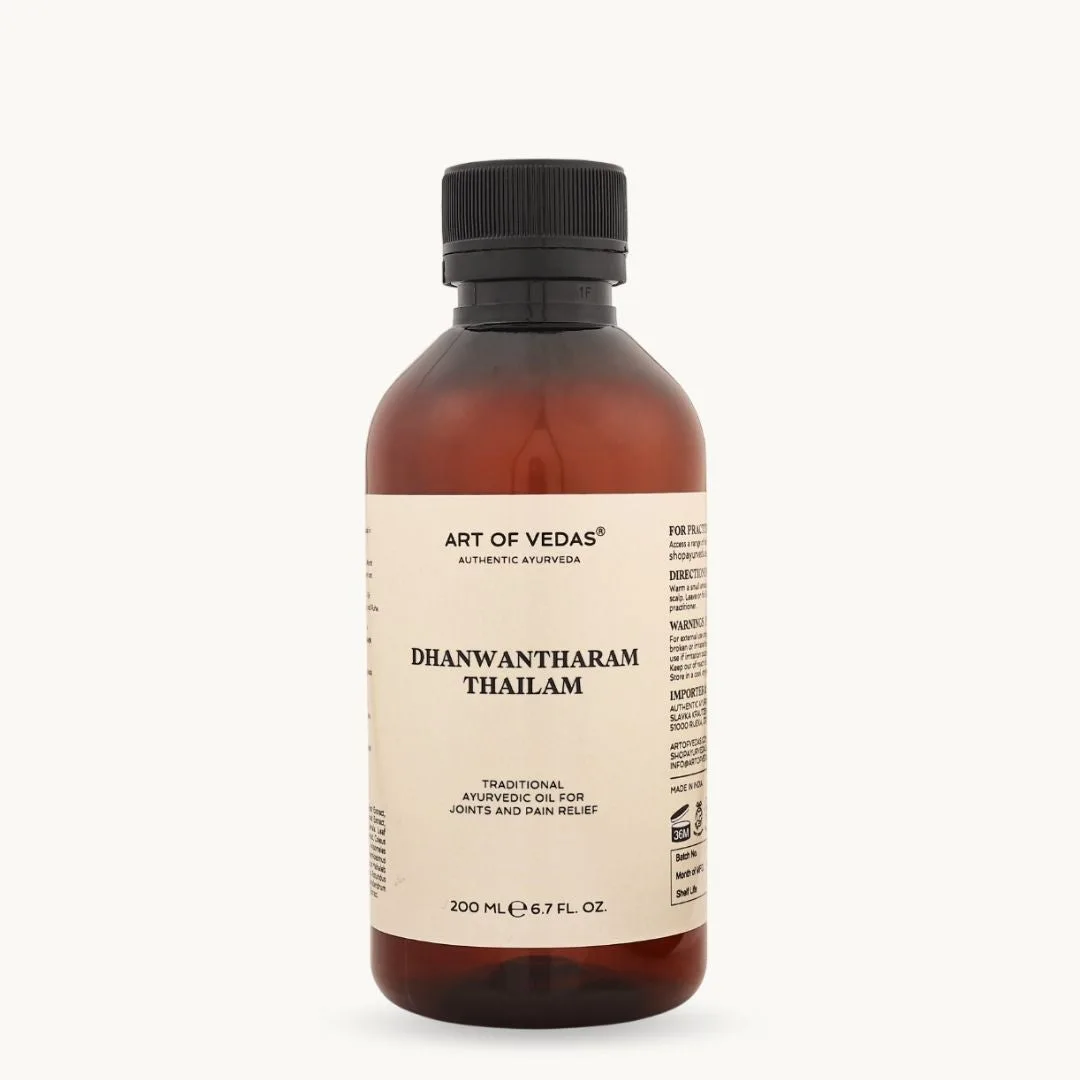
The Dashamoola, "ten roots", is a classical group of its own: Bilva, Agnimantha, Shyonaka, Patala, Gambhari, Brihati, Kantakari, Shalaparni, Prishniparni and Gokshura. It opens many classical Vata formulas. In Dhanwantharam Thailam it stands next to Ashwagandha, Shatavari, the three Triphala fruits and many further plants. The Art of Vedas oil declares 34 plant ingredients cooked into sesame oil; the complete list, plant by plant, is on the page Dhanwantharam Thailam ingredients.
How Dhanwantharam Thailam is prepared: Sneha Paka
A classical Thailam is not a mixture of oil and powder. It is made by Sneha Paka, the classical method of cooking a fat with herbs; for an oil it is also called Taila Paka. The method has three components:
- Kashayam (decoction): the tougher roots, grains and pulses, Bala and the Dashamoola first among them, are simmered in water and reduced to a decoction.
- Kalka (paste): the finer herbs are ground with a little water into a paste.
- Sneha (the base): sesame oil, Tila Taila, the classical base of the Vata oils.
Decoction, paste and oil are cooked together over a low flame for a long time, stirred again and again, until all the water has evaporated and the qualities of the plants have passed into the oil. The classical texts give finishing tests (Sneha Siddhi Lakshana) to judge the moment: the paste no longer sticks to the fingers and can be rolled into a wick (Varti) that burns without crackling when held to a flame, a sign that no water is left, and the oil has taken on the colour, scent and taste of the herbs. Only then is the oil filtered. The aromatic notes of cinnamon, cardamom, deodar and dill are part of the finished oil you smell when you open the bottle.
Avartana: why some oils are cooked 101 times
The same oil can be taken through the whole process again, each time with a fresh decoction and paste. One such round is called an Avartana, a Sanskrit word for a turn or repetition; Avarthy and Avarti are other spellings. An oil cooked seven times is a 7 Avartana oil; Dhanwantharam 101 has been cooked one hundred and one times.
The tradition regards each round as making the oil finer and more concentrated. That is why the 101 oil comes in small bottles and is used in drops on one area rather than poured for a whole-body massage, best with the advice of a qualified Ayurvedic practitioner. The Dhanwantharam 101 Avartana guide explains it in detail.
One formula, several forms
The Dhanwantharam formula exists in several classical forms. They share the same core of Bala and Dashamoola and differ in the base and in how long they are cooked:
- Thailam: the free-flowing oil in a sesame base, the form for a full-body Abhyanga.
- Kuzhambu: a thicker, heavier preparation for one area; see Dhanwantharam Kuzhambu vs Thailam.
- Mezhukupakam: the recipe cooked longer, until it is semi-solid and wax-like; see the Dhanwantharam Mezhukupakam guide.
- 101 Avartana: the oil cooked 101 times, used in drops; see the 101 Avartana guide.
- Ghritham: the formula cooked into ghee, a preparation for use with practitioner guidance; see the Dhanwantharam Ghritham guide.
How to recognise a carefully made Dhanwantharam Thailam
A carefully made oil can be recognised by a few simple signs. The label carries a complete ingredient declaration, so you can compare what is in the bottle rather than claims about how many herbs were used; compare the list with the declared ingredients of the Art of Vedas oil. The base is sesame oil. The scent is warm, earthy and herbal, the result of plants cooked into the oil, not of a few drops of essential oil added to plain sesame oil. The oil is clear and free of water: a cooked Thailam does not separate into layers or sputter when you warm it.
For a product sold in the European Union, the label also names the batch, the best-before date and the responsible person in the EU. These details do not describe the classical method, but they show that the oil has been registered and documented as a cosmetic product.
Uses, Abhyanga and the postnatal tradition
Dhanwantharam Thailam is classically placed with Vata and traditionally used for Abhyanga, the warm oil massage of the whole body or of the muscles and joints of one area. The classical qualities, the step-by-step Abhyanga, the quantity and the use for the skin are explained in a separate guide: uses and how to use Dhanwantharam Thailam.
The oil also has a place in the classical tradition of care after birth; this is described in Dhanwantharam Thailam in the postnatal tradition.
Frequently asked questions about Dhanvantari Thailam
Why is the oil called Dhanwantharam? The name comes from Dhanvantari, the physician of the gods in the classical tradition and the patron of Ayurveda. Dhanvantara Taila means the oil "of Dhanvantari"; Dhanwantharam Thailam is the more common form of the same name.
Is Dhanvantari Thailam the same as Dhanwantharam Thailam? Yes. Dhanvantari Thailam, Dhanwantari Thailam, Dhanvantari Thailam, Dhanvantaram Thailam, Dhanwantram Thailam and Dhanvantara Taila are spellings of the same classical oil. The spelling depends on the language and the transliteration; the formula is the same.
Which classical text describes Dhanwantharam Thailam? The Ashtanga Hridayam of Vagbhata, with guidance on its use in the Chikitsa Sthana. The Sahasrayogam, a later compilation of classical recipes, carries the same formula.
How is Dhanwantharam Thailam prepared? By Sneha Paka: a decoction (Kashayam) of Bala, the Dashamoola roots, barley, jujube and horse gram and a paste (Kalka) of further herbs are cooked slowly into sesame oil until all the water has gone and the classical finishing tests are met. The oil is then filtered.
What does 101 Avartana mean? Avartana is one complete round of cooking the oil with a fresh decoction and paste. Dhanwantharam 101 has been taken through this process one hundred and one times, which the tradition regards as making the oil finer and more concentrated. It is used in drops on one area.
How many ingredients does Dhanwantharam Thailam contain? The classical text sets out the formula in stages, and the number given by different makers varies. The Art of Vedas oil declares 34 plant ingredients cooked into sesame oil; the full list is on the ingredients page.
Where can I read how to use Dhanwantharam Thailam? In the guide Dhanwantharam Thailam: uses, benefits and how to use it. Before the first use, ask a qualified Ayurvedic practitioner or your doctor, especially in pregnancy, while breastfeeding, with medication or for children.
Dhanwantharam Thailam and related classical oils are in the Art of Vedas Thailams collection.
For external use only. This article describes the classical tradition and does not replace the advice of a doctor or of a qualified Ayurvedic practitioner.