This article is part of our Ghrithams: Classical Ayurvedic Medicated Ghee guide series.
The information in this article is provided for educational purposes and reflects traditional Ayurvedic knowledge. It is not intended as medical advice and should not replace consultation with a qualified healthcare professional.
In brief: Ghritham - classical medicated ghee - occupies a unique position in Ayurvedic pharmaceutics. The Charaka Samhita describes ghee as the best of all fats and the most effective vehicle for carrying herbs into the deepest body tissues, and classical texts devote entire chapters to the preparation and uses of Ghritham. This guide explains why ghee was chosen, how classical Ghritham is prepared, and the most important preparations in the Art of Vedas range.
Ghritham: Why Classical Ayurveda Considers Medicated Ghee the Most Powerful Delivery System
In modern nutritional thinking, ghee is a cooking fat - a clarified butter valued for its smoke point and flavour. In classical Ayurveda, ghee is an entirely different category of substance. The Charaka Samhita describes it as Sarvesnehottamam - the best of all fats - and attributes to it properties that go far beyond its nutritional content: the capacity to penetrate the deepest layers of the body's tissues, to carry the properties of whatever it is prepared with into those tissues, and to support the renewal of Ojas (the vital essence) in ways that no other preparation can replicate.
Medicated ghee - Ghritham - takes these properties further. By processing specific herbs into ghee through the classical Sneha Paka method, the herbs' therapeutic properties become incorporated into the fat in a way that the classical pharmaceutical texts describe as increasing both their potency and their bioavailability, particularly in relation to the nervous system and the deepest tissue layers (Majja dhatu and beyond) that water-based preparations reach poorly.
Why Ghee? The Classical Pharmaceutical Rationale
The Charaka Samhita's pharmaceutical chapters provide a specific rationale for ghee's primacy as an oral vehicle. The key properties described are as follows.
Deepest tissue penetration: Classical texts describe ghee as having Sukshma (subtle and penetrating) qualities that allow it to reach the Majja dhatu (marrow and nerve tissue) and beyond - the deepest tissue layers that are the last to receive nourishment in the classical tissue transformation chain and, correspondingly, the most difficult to nourish therapeutically. Water-based preparations are described as reaching primarily the first three tissue layers; oil-based preparations reach deeper; ghee reaches deepest. This classical claim underlies the specific use of Ghritham for neurological and psychological conditions in classical practice.
Thousand-quality transformation: The Charaka Samhita contains the famous statement that ghee, processed with herbs and subjected to repeated purification and preparation, absorbs the qualities of those herbs while losing none of its own - described as acquiring a thousand additional qualities (Sahasraveerya) through the processing. This is the classical pharmaceutical principle behind Ghritham preparation: the ghee does not simply carry the herbs; it becomes a transformed preparation with properties that the unprocessed ghee and the raw herbs do not separately possess.
Compatibility with all constitutions: Unlike sesame oil, which is primarily Vata-reducing, ghee's classical properties include specific affinity for Pitta. Its cooling potency (despite being a fat and despite being warming in modest quantities), sweet taste, and specific Pitta-pacifying properties make it suitable for Pitta-predominant individuals in a way that sesame oil is not, and appropriate for use across all three constitutions in appropriate quantities. The Charaka Samhita describes ghee as the most universally applicable of the fat-based vehicles.
Classical Ghritham Preparation: The Sneha Paka Method
The classical preparation of Ghritham follows the same Sneha Paka (fat processing) method used for Thailams, adapted for ghee's different base properties. The herbs are first decocted in water to produce a concentrated liquid extract; this decoction, combined with fresh herb pastes, is then processed with ghee through prolonged gentle heating until all the water is evaporated and the ghee is infused with the herbs' properties. The endpoint of correct Sneha Paka is described in classical texts with specific tests - the absence of crackling sounds (indicating all water has been removed), the correct consistency of a test portion, and specific sensory characteristics.
Classical Ghritham preparations can involve a single herb (such as Brahmi Ghrita, processed primarily with Brahmi) or complex compound formulas involving ten, twenty, or more herbs (such as Kalyanaka Ghrita, a classical compound for broader mental and tissue renewal). The more complex compound preparations reflect classical pharmaceutical strategies for addressing multiple dimensions of a condition simultaneously through a single preparation.
Key Classical Ghritham Preparations
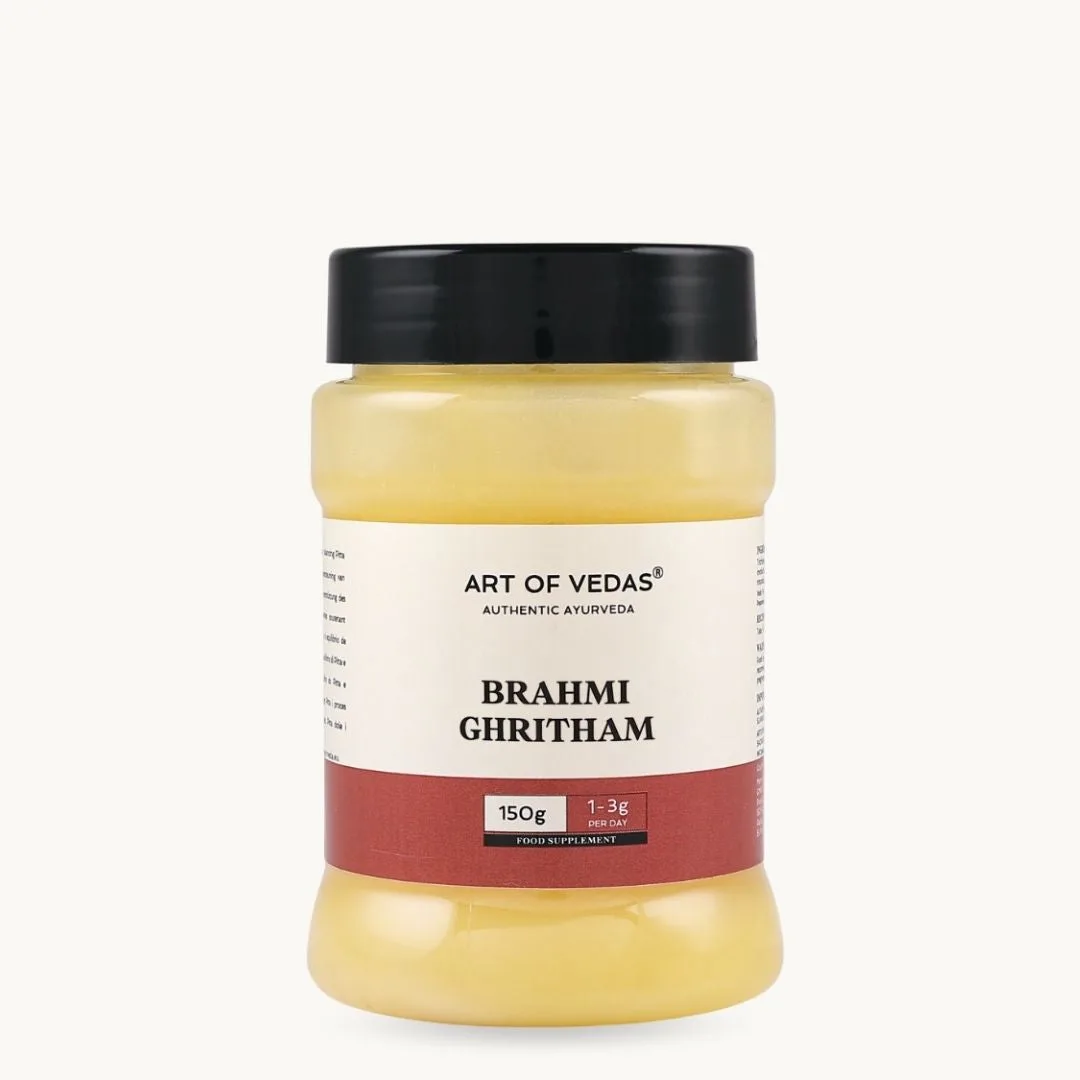
Brahmi Ghrita is the most widely referenced classical medicated ghee for mental clarity, memory support, and nervous system nourishment. The Charaka Samhita and Sahasrayogam both describe Brahmi (Bacopa monnieri) as a primary Medhya Rasayana - a herb with specific affinity for the nervous system and mental function - and its processing in ghee creates a preparation that the classical texts describe as having specific action on Majja dhatu (the tissue corresponding to the nervous system and marrow). See our guide to Brahmi.
Triphala Ghrita combines the Rasayana properties of Triphala with ghee's deep tissue penetration, and is referenced in the classical texts for eye care, general Rasayana use, and the systematic support of all seven dhatus through sustained use. See our guide to Triphala.
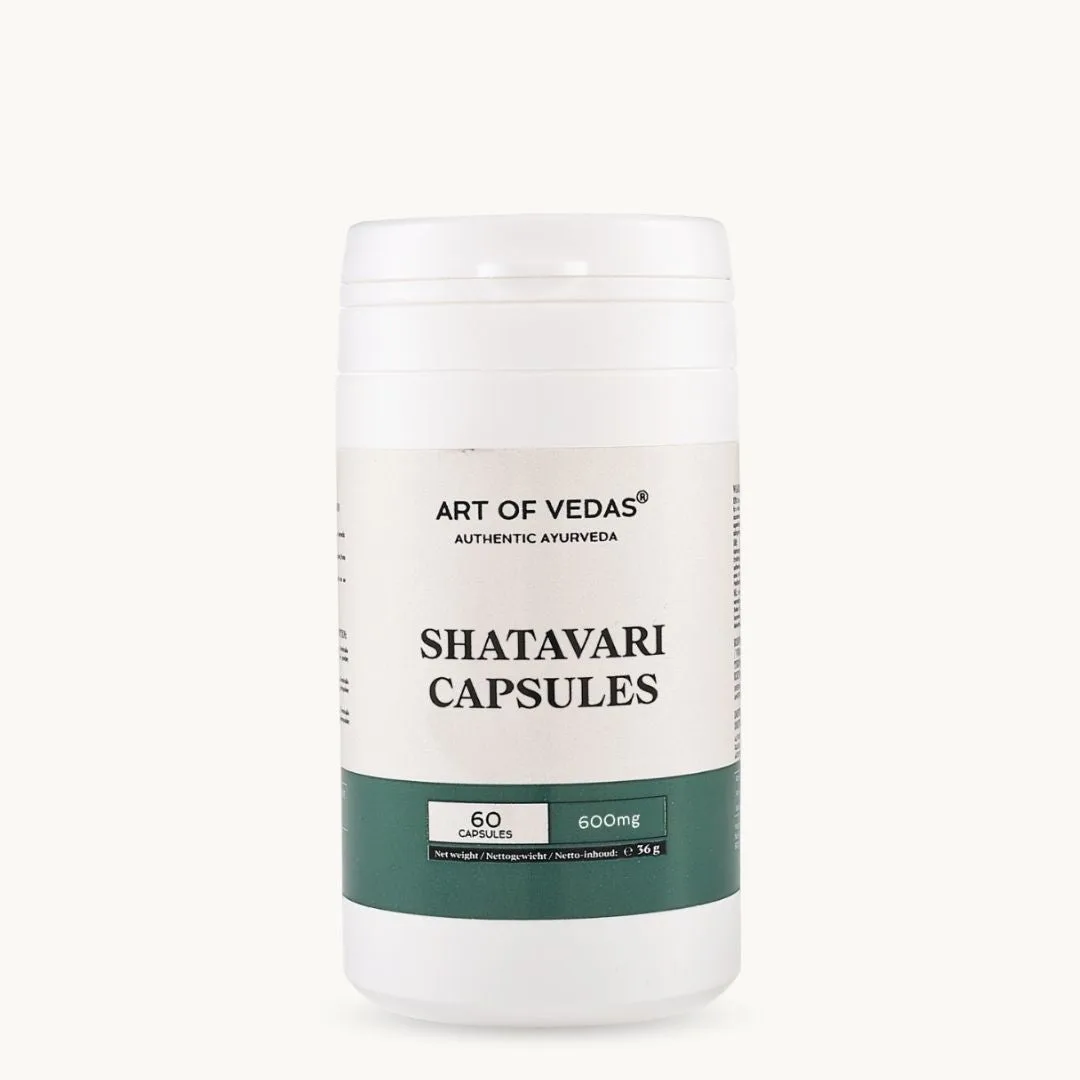
Shatavari Ghrita processes Shatavari (Asparagus racemosus) in ghee, creating a deeply nourishing preparation specifically relevant to Rasa and Rakta dhatu support, female reproductive tissue nourishment, and the cooling Pitta-reducing action of both Shatavari and ghee combined. See our guide to Shatavari.
Ashwagandha Ghrita provides the strengthening, Vata-balancing, and Rasayana properties of Ashwagandha in the deep-penetrating ghee vehicle - particularly relevant for the kind of deep tissue depletion and nervous system exhaustion described in classical texts as the underlying cause of the most serious Vata-pattern conditions. See our guide to Ashwagandha.
Browse the Art of Vedas supplements collection for classical Ghritham preparations.
How to Take Ghritham: Classical Guidance
Classical texts describe Ghritham as typically taken orally, in quantities ranging from a teaspoon to several tablespoons depending on the preparation, the condition being addressed, and the individual's constitution and digestive capacity. The Charaka Samhita's guidance on Snehapana (the therapeutic internal use of fats) describes taking Ghritham warm, on an empty stomach in the morning, with warm water to facilitate absorption. For general Rasayana use, smaller quantities - a teaspoon of Brahmi Ghrita or Triphala Ghrita in warm water before bed - are the more accessible home practice.
The classical texts emphasise that Ghritham should not be taken when digestion is impaired or Ama is present - the rich fat-based preparation requires adequate Agni (digestive fire) for proper transformation and will burden a weak Agni. Ensuring good digestive function before beginning Ghritham use is described as essential in classical pharmaceutical guidance. See our guide to digestion and Agni.
Frequently Asked Questions
What is Ghritham in Ayurveda?
Ghritham is medicated ghee - ghee processed with specific herbs through the classical Sneha Paka method. The Charaka Samhita describes ghee as the best of all fats and the most effective vehicle for carrying herbs into the deepest body tissues, particularly the nervous system and marrow (Majja dhatu). Preparations range from single-herb Brahmi Ghrita to complex compound formulas involving twenty-plus herbs.
Why does Ayurveda use ghee as a vehicle?
Ghee has Sukshma (subtle and penetrating) qualities allowing it to reach the deepest tissue layers that water-based preparations reach less effectively. Classical texts describe ghee as absorbing the herbs' qualities while retaining its own - creating preparations with greater potency than either alone. Ghee's cooling Pitta-pacifying properties also make it suitable across all three constitutions, unlike sesame oil which is primarily Vata-suited.
What is Brahmi Ghrita?
A classical medicated ghee processing Brahmi (Bacopa monnieri) in ghee through Sneha Paka. Brahmi is classified as a primary Medhya Rasayana with specific affinity for the nervous system. The Charaka Samhita and Sahasrayogam describe Brahmi Ghrita as having specific action on Majja dhatu. Taken orally in small quantities with classically for sustained Rasayana use.
How should Ghritham be taken?
Warmed, orally, on an empty stomach or with warm water. For general Rasayana use, a teaspoon with warm water in the evening is the most accessible home practice. Classical texts emphasise adequate Agni as a prerequisite - Ghritham should not be taken when digestion is impaired or Ama is present, as it requires strong digestive fire for proper transformation.
Explore Classical Ghritham at Art of Vedas
Browse our supplements collection for Brahmi Ghrita, Triphala Ghrita, and other classical Ghritham preparations. Related reading: Brahmi complete guide, Triphala guide, classical Rasayana guide, and digestion and Agni.
This product is a food supplement and not intended to diagnose, treat, cure or prevent any disease.