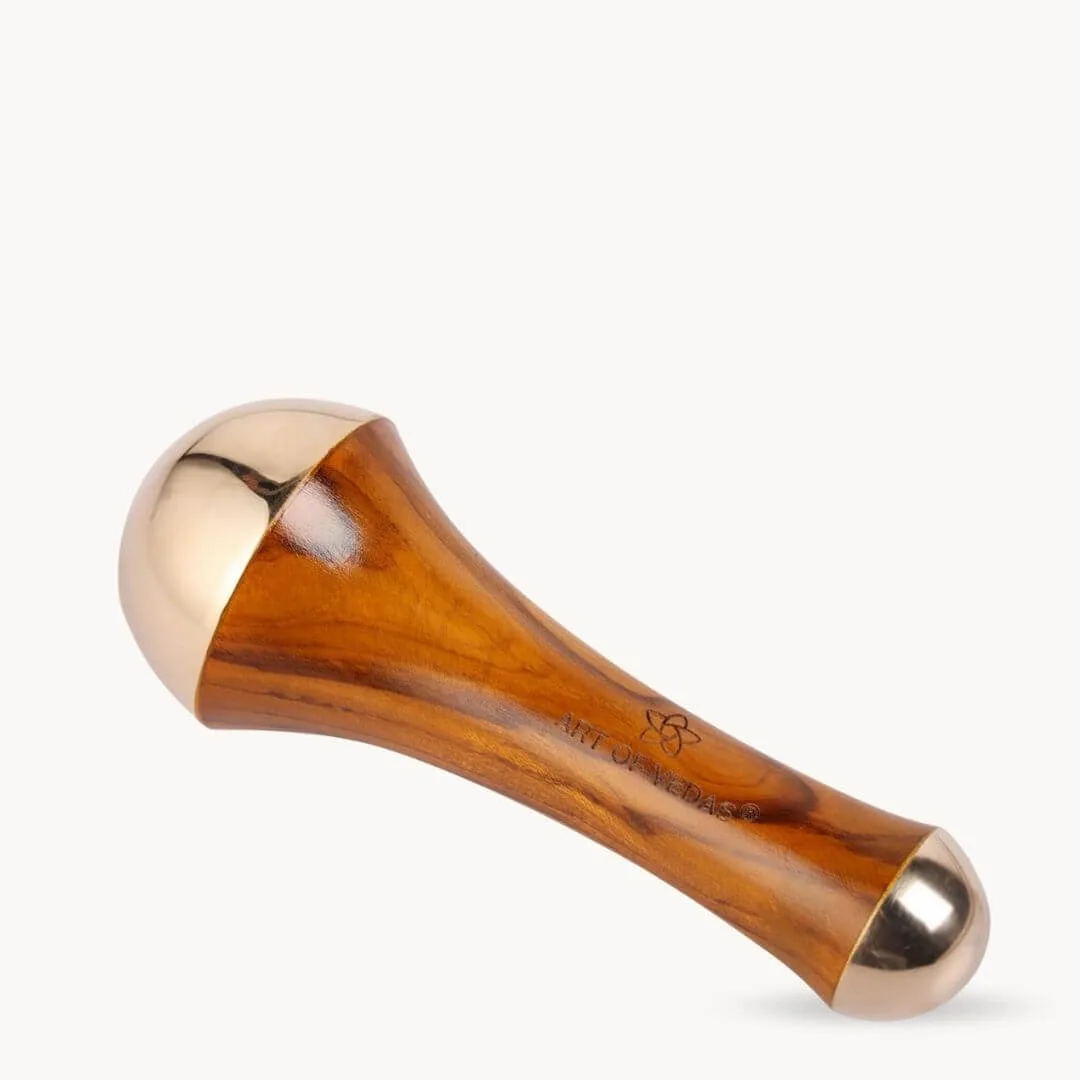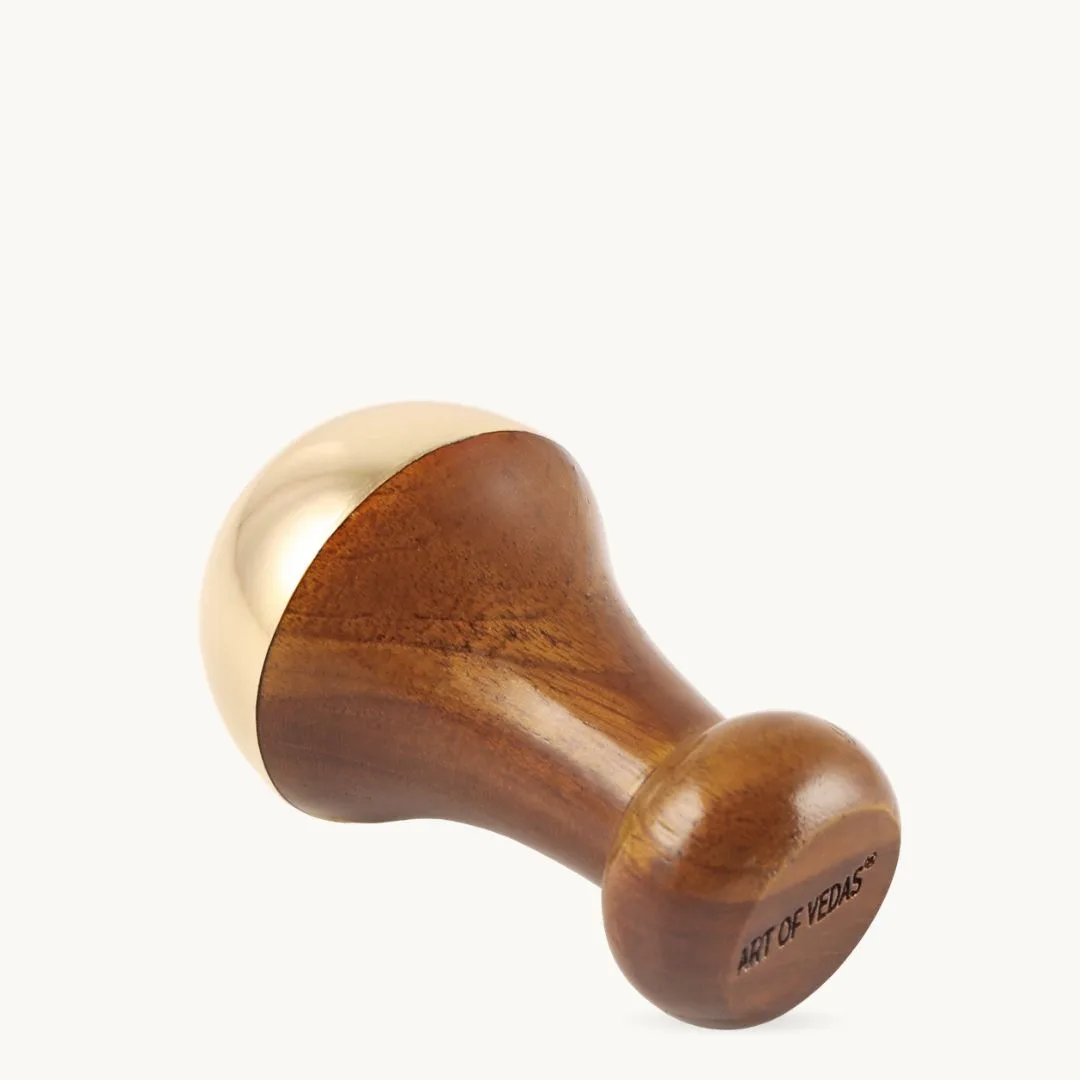
In brief: A Kansa wand is a hand-held Ayurvedic massage tool with a smooth dome of Kansa, the traditional bell-metal alloy of copper and tin, on a wooden or bamboo handle. Kansa wand massage is done over a thin layer of oil with gliding, circular and figure-eight strokes: the facial wand, with a dome of about 5 to 6 cm, on the face and neck, and the larger Abhyanga wand, about 7 to 8 cm, on the body and the soles of the feet. This guide explains the alloy, the tools, the technique, the grey mark on the skin and how to recognise a genuine Kansa wand.
Kansa Wand: What It Is and Why the Alloy Matters
Reviewed by Dr. Anu Joy, MD (Ayurveda), Ayurveda physician at Art of Vedas
Among the tools of classical Ayurvedic self-care, Kansa has a long history. The Kansa wand used for facial massage, the larger Abhyanga wand used on the body and the bowl-shaped Kansa tools are present-day forms of a material that has been part of Ayurvedic and Vedic daily life for centuries, from eating vessels to massage tools.
This guide explains what a Kansa wand is, what Kansa is as an alloy, how the tradition sees it, which tools exist and how to recognise genuine Kansa. The massage itself is shown step by step in how to use a Kansa wand, and the metal in more depth in Kansa metal.
What Kansa is: the classical alloy
Kansa (also written Kamsya or Kāṃsya in Sanskrit) is a bronze alloy, an alloy of two metals, composed primarily of copper, with tin as the secondary component. The classical proportion in genuine Kansa is approximately 78 to 80% copper with most of the remainder being tin.
Kansa is a bronze in its traditional proportion, which is why it is distinct from bronzes of other ratios, from brass (copper and zinc) and from copper-coated modern metals. The composition and the traditional hand-casting method give the alloy its character: a warm, dense weight in the hand, a clear resonance when tapped and a surface that feels different on the skin from stone, steel or modern copper.
Classical Ayurvedic texts including the Ashtanga Hridayam name Kansa among the metals and materials of Ayurvedic practice. Kansa vessels (Kamsya Patra) appear in the classical Vedic and Ayurvedic food tradition as a preferred material for eating, a custom still kept in traditional households in India. The same regard for the material carries over to its use in massage.
Why Kansa Is Used in Ayurvedic Massage
The classical understanding of Kansa draws on the study of the qualities of metals and materials. Copper, the main metal of the alloy, is described as warming (Ushna Virya); tin, the second metal, as lighter and slightly cooling. Together they give Kansa a more balanced quality than pure copper.
In massage this is felt as a gentle warmth that comes from the friction of the dome on oiled skin, together with the weight and smoothness of the bronze. These sensory qualities, rather than any promise of results, are why the tradition values Kansa for self-care.
In the tradition, Kansa massage is associated with:
Slow, even strokes over face and body. The weight of the dome and the gliding pressure give a steady, even contact over the face and neck, which the tradition values for a calm, unhurried self-care practice.
Gentle work over the Marma points. The face has a number of Marma points, the vital points of classical Ayurvedic anatomy. Kansa tools are traditionally moved over them in small gliding and circular movements. The guide to Marma points in Ayurveda describes the classical Marma system.
Pitta and the face. Pitta, the Dosha of heat and transformation, is traditionally placed in the face, around the eyes, temples and forehead. The tradition describes Kansa as balancing for Pitta, which is why the wand is often chosen as a calm evening ritual for the face.
Vata and a settled mind. From a Vata perspective, the steady, rhythmic pressure of Kansa massage and the warmth of the oil are classical ways of bringing calm and steadiness to the daily routine.
The main Kansa tools: what each one is for
The Kansa wand is not a single tool but a family of instruments, each shaped for a different application.
The Kansa Wand (Facial Massage Tool)
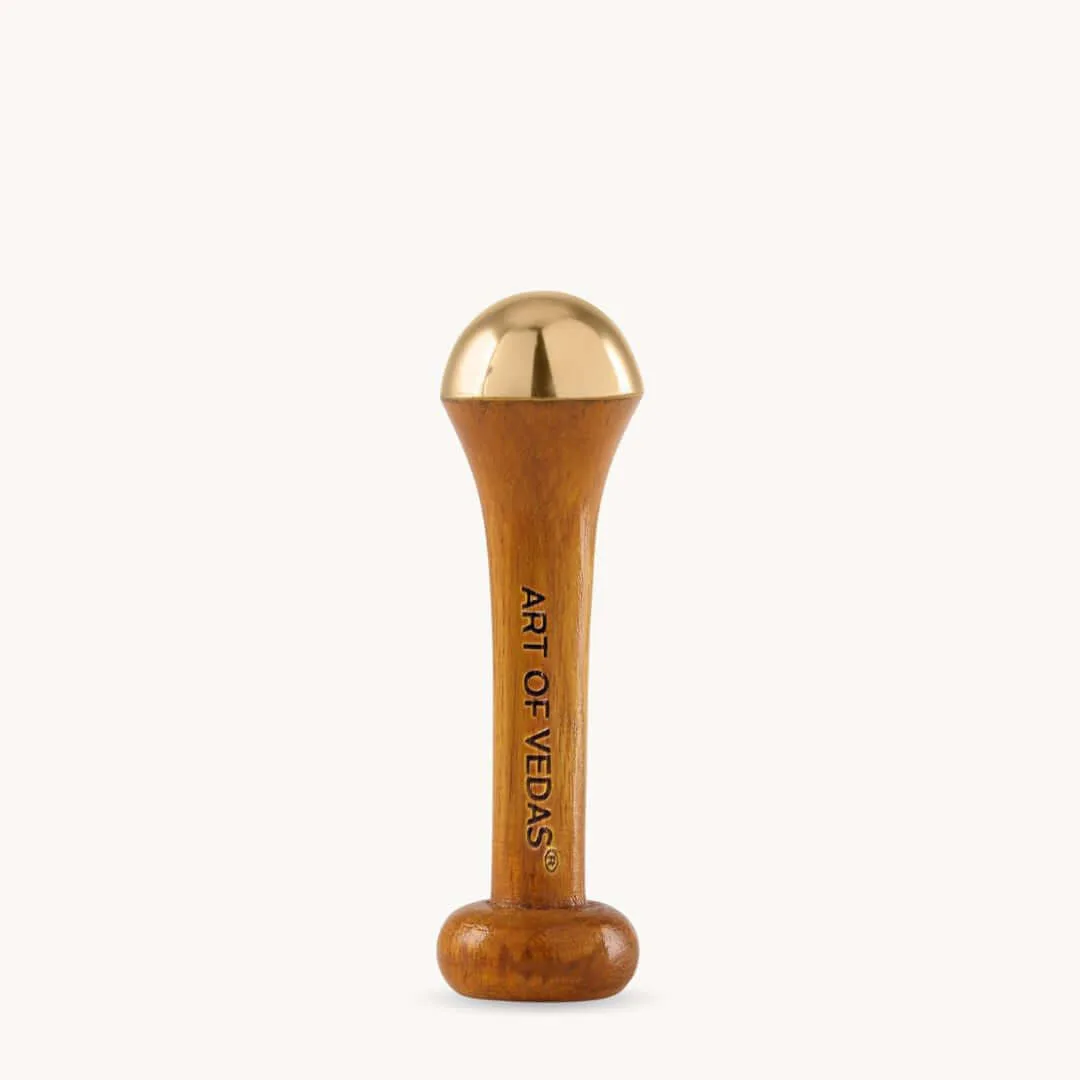
The facial Kansa wand is a hand-held tool with a smooth, dome-shaped Kansa head mounted on a wooden or bamboo handle. The dome, typically 5 to 6 cm in diameter, is sized to fit comfortably over the contours of the cheek, forehead, and jaw, allowing the therapist or individual to use gliding, circular, and figure-eight movements across the face.
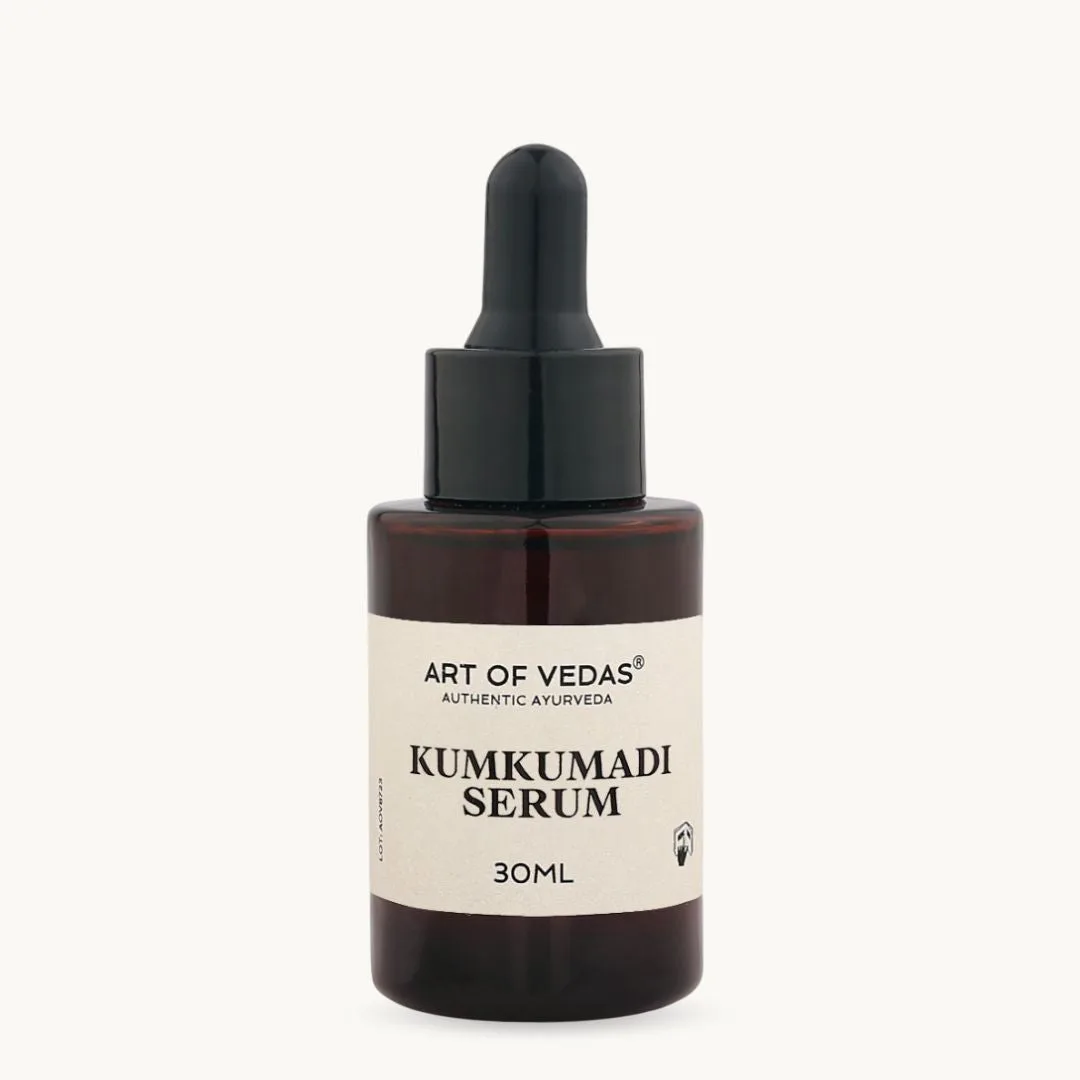
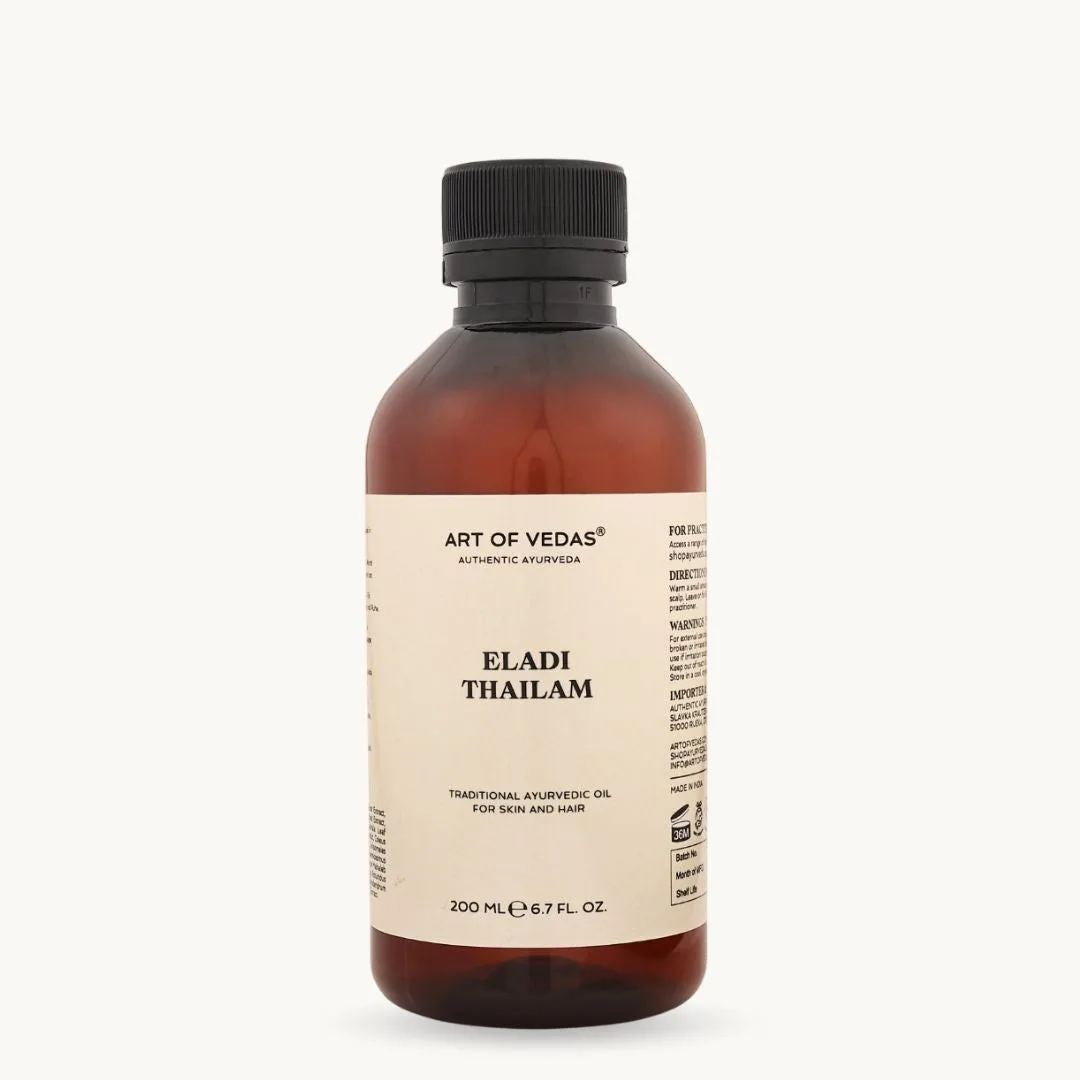
The facial wand is used on the face, neck and décolletage, always with a thin layer of face oil, traditionally a classical Mukha Taila such as Eladi Thailam, or a face oil such as Kumkumadi Serum, so that it glides without friction. The facial technique and the Marma sequence are covered in the Kansa wand facial massage guide.
The Kansa Abhyanga Wand (Body Massage Tool)
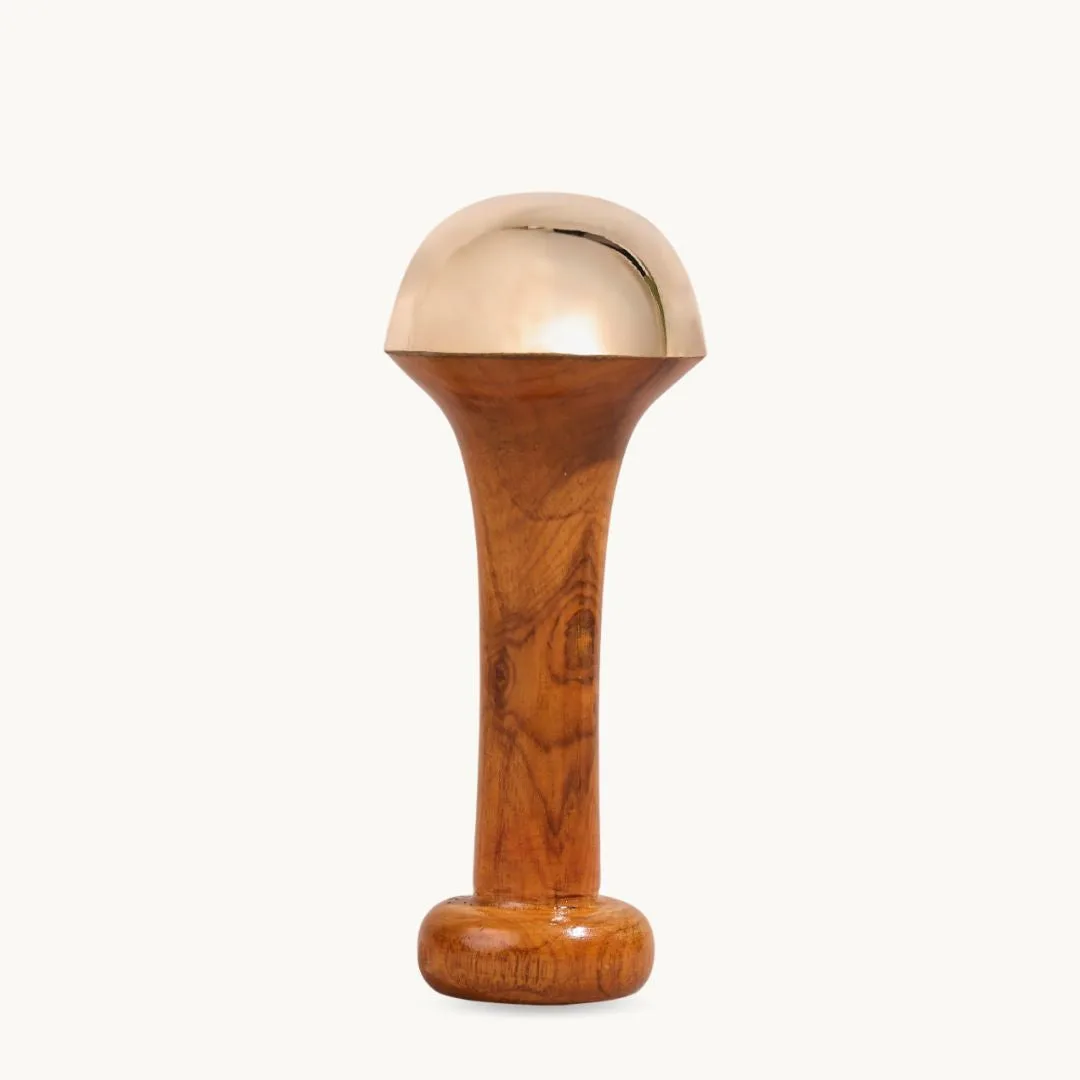
The body Kansa wand has a larger Kansa head, typically 7 to 8 cm, and a longer handle, shaped for application to the back, legs, arms, and larger muscle groups of the body. It is used in Kansa body massage as part of a broader Abhyanga practice, applied over warm Ayurvedic massage oil with longer gliding strokes suited to the larger surface areas of the body.
The body wand is also used on the soles of the feet, Pada Abhyanga with Kansa, a classical evening practice associated with Vata. How to use a Kansa wand on the feet is explained in the Kansa wand feet guide; longer strokes over the body in the Kansa Abhyanga wand guide.
The Kansa Bowl (Kamsya Patra)
A smaller category of Kansa tool is the bowl or plate, the original vessel form associated with Kansa in the Vedic and Ayurvedic tradition. Small Kansa bowls are warmed in the palm and pressed gently over the body, and the Kansa Vatki is used on the soles of the feet; see the Kansa Vatki guide.
How Kansa feels in use: what to expect
First-time users often notice a grey or darkish trace on the skin after the massage. It is normal with Kansa and wipes away with a cloth; why it appears and when to pause are explained on the page about Kansa wand side effects. For the massage itself, step by step, see Kansa wand massage.
The warmth generated during use is another characteristic quality. As the Kansa head glides across the skin, friction produces gentle heat: a sustained, localised warmth that is quite different from applying a warmed stone. It is the friction itself, combined with the thermal conductivity of the alloy, that generates it.
Choosing a Kansa Tool: What Genuine Looks Like
The quality difference between a genuine Kansa tool made from the correct alloy and an imitation matters practically. Tools made from aluminium, brass, or copper-plated modern metals feel different in the hand, generate heat differently during use, and do not produce the same interaction with the skin.
When selecting a Kansa tool, look for:
Alloy specification. A genuine Kansa supplier states the composition of the alloy explicitly. Traditional Kansa is approximately 78 to 80% copper with the balance primarily tin.
Handcrafted production. Traditional Kansa tools are hand-cast and hand-finished. The weight, density and surface quality of a hand-cast Kansa dome differs from a machine-produced alternative.
Weight and resonance. A genuine Kansa tool has a noticeable weight relative to its size, and produces a clear resonant tone when tapped. Lightweight or dull-sounding tools are unlikely to be the correct alloy.
Smooth, even dome surface. The massage surface should be perfectly smooth, with no seams, rough spots or sharp edges, which would cause friction rather than gliding.
All Art of Vedas Kansa tools, with their dome sizes, are in the Kansa wand collection; the Kansa wand buying guide helps you choose between them. For guidance on genuine Ayurvedic products in Europe in general, see where to buy authentic Ayurvedic products in Europe.
Kansa in a Broader Daily Practice
The Kansa wand belongs to a broader Ayurvedic practice rather than standing alone as a beauty tool. In classical Ayurveda the face and body are seen as parts of one whole, and the daily routine as a whole is what the tradition emphasises.
A natural place for Kansa facial massage is the morning or evening Dinacharya sequence, together with cleansing and a suitable face oil. The guide to Ayurvedic facial massage covers how to build this sequence.
On the body, Kansa foot massage and body massage are combined with warm classical Abhyanga oil, so that the nourishing quality of the oil and the bronze surface complement each other. The guide to Ayurvedic self-massage sets out the full Abhyanga framework.
For a complete guide to traditional Ayurvedic facial tools, how Kansa compares with other classical instruments and how to combine them in a facial ritual, see traditional Ayurvedic facial tools. For the full range of at-home Ayurvedic practice tools, see the self-massage tools guide.
Who Kansa Massage Is Particularly Suited To
Kansa massage suits most adults. In classical Ayurvedic terms, the tradition points to the following:
Pitta constitutions: the tradition describes the alloy as balancing for Pitta, the Dosha of heat, and the face as a place where Pitta shows. Those with a Pitta constitution often choose Kansa facial massage as a calm daily practice.
Vata constitutions: the weight, warmth and steady rhythm of Kansa massage suit the classical approach to Vata, which asks for warmth, oil and regularity. The foot application, Kansa Pada Abhyanga, has a special place in the tradition because of the Marma points of the soles.
Anyone building a daily Ayurvedic self-care practice: Kansa tools need only a little oil and 5 to 10 minutes for the face, and they last for many years with simple care.
For personalised guidance on which tools and practices are most appropriate for your constitution, an Ayurvedic consultation with an AYUSH-certified Ayurvedic doctor provides a full assessment.
Kansa massage tools are traditional self-care tools, not medical devices. Before starting, especially in pregnancy, while breastfeeding, with sensitive skin or when taking medication, consult a qualified Ayurvedic practitioner or your doctor.
Related questions each have their own page: how to use a Kansa wand step by step, what Kansa massage is in the tradition, what Kansa metal is called in English, Kansa wand side effects and the grey trace, and where to buy a Kansa wand.
Frequently asked questions about the Kansa wand
What is a Kansa wand? A Kansa wand is an Ayurvedic massage tool with a smooth, dome-shaped head of Kansa on a wooden or bamboo handle. Kansa, also written Kamsya, is an alloy of copper and tin; Art of Vedas Kansa is lab tested at approximately 80% copper and 20% tin. Classical texts including the Ashtanga Hridayam name Kansa among the materials used in Ayurvedic practice.
What is Kansa therapy? Kansa therapy is the common name for massage with a Kansa tool over Ayurvedic oil. In Ayurvedic Kansa practice the wand is glided along the face, neck and body, with circular movements over the marma points, the vital points of classical Ayurvedic anatomy. It is part of the daily routine (Dinacharya) and of a broader Abhyanga practice.
How do you do a Kansa wand massage? Apply a thin layer of oil so the dome glides without friction. On the face, use gliding, circular and figure-eight movements over the cheeks, forehead and jaw, then the neck. A face practice with the Kansa wand takes 5 to 10 minutes. On the body, use longer gliding strokes over warm massage oil on the back, arms and legs.
What is the Kansa wand foot massage? Kansa wand foot massage is Pada Abhyanga with Kansa: warm massage oil on the soles, then the dome of the Kansa Abhyanga wand glided in circles over the sole and around the ankle. The tradition places it with Vata and gives the soles a special place because of their marma points. It is a classical evening practice.
Which oil do you use with a Kansa wand? For the face, a thin layer of a classical face oil (mukha taila) such as Eladi Thailam or Kumkumadi Thailam is traditional. For the body and the feet, a warm Ayurvedic massage oil is used, applied as in Abhyanga. The Kansa wand is never used on dry skin, as the dome needs oil to glide.
Why does the skin turn grey with a Kansa wand? The grey or darkish trace is a reaction between the copper in the Kansa alloy and the slightly acidic surface of the skin. It is not a defect and wipes away easily with a cloth. When the trace is normal and when to pause are explained under Kansa wand side effects.
How do you recognise a genuine Kansa wand? A genuine Kansa wand comes with a stated alloy composition, is hand-cast and hand-finished, feels heavy for its size and gives a clear tone when tapped. The dome should be smooth, with no seams, rough spots or sharp edges. Aluminium, brass or copper-plated tools feel different and do not react with the skin in the same way.
Which Kansa wands does Art of Vedas sell? Art of Vedas sells the Kansa Marma Wand, the smaller wand for the face and neck, the Kansa Abhyanga Wand, the larger wand for the body and the soles of the feet, and the double-sided Kansa wand; all are in the Kansa wand collection. In pregnancy, ask your doctor or a qualified Ayurvedic practitioner first; for a routine suited to your constitution, consult a qualified Ayurvedic practitioner.