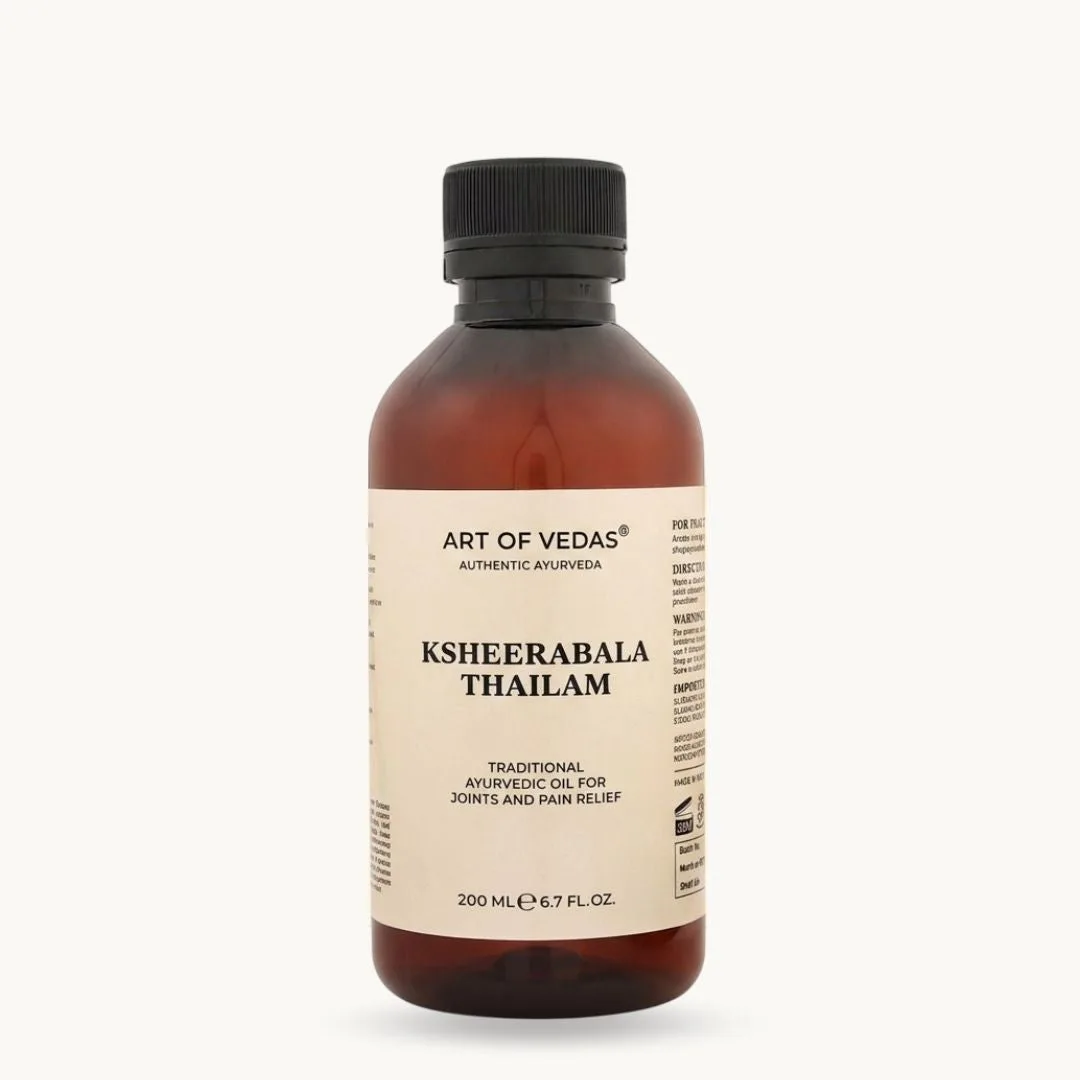
Ksheerabala Thailam is among the gentlest and most trusted oils of classical Ayurveda, recorded in the Ashtanga Hridaya tradition and prepared from remarkably few ingredients. Its name tells its recipe: Ksheera, and Bala, the strengthening root Sida cordifolia, united in a base of sesame oil. It is traditionally used in Ayurveda to support calm, comfort and softness wherever a mild, cooling-natured oil is wanted, from the crown of the head to the soles of the feet.
What Ksheerabala Thailam Is
Most classical oils are crowded with herbs; Ksheerabala is deliberately spare. The tradition regards this simplicity as its strength. With so few ingredients, each must be excellent, and the slow Ksheerapaka method, in which the oil is cooked with a milk decoction of Bala, must be carried out with patience. The result is a soft, mild Thailam with a quiet character: neither strongly warming like the great joint oils, nor astringent like the skin formulas, but even-tempered and kind. This is why practice reaches for it so readily for sensitive constitutions and for the head.
Three Ingredients, Carefully Chosen
The composition can be named in a single breath. Bala (Sida cordifolia, the classical strengthening root and the soul of the formula) is prepared as decoction and paste; sesame oil (the warm, steady carrier of the Vata tradition) receives it; and milk (the classical Ksheerapaka medium, lending the finished oil its rounded softness) completes the cooking. Nothing else is required. Those who prefer their traditions transparent will appreciate a recipe in which every element can be accounted for, and the milk stage means those avoiding animal-derived processing should choose knowingly.
Traditional Uses: Head, Body and Feet
In classical practice Ksheerabala Thailam serves three settings above all. On the head it is the quiet evening oil of Shiro Abhyanga, applied to the crown and scalp when the day has been long; our guide to Ksheerabala for hair and head describes this ritual fully. On the body it is chosen for Abhyanga where a mild oil is wanted, particularly for those of Pitta temperament or with delicate, easily flushed skin; it is likewise a classical choice for the face, treated separately in Ksheerabala for the face. And on the feet it closes the day, a small warm application to the soles before sleep. In clinical settings the same oil is a standby of Shirodhara, the steady stream of warm oil over the forehead, which speaks to how gentle the tradition considers it.
- A soft, mild texture that suits sensitive and easily warmed skin
- A cooling-natured calm that makes it a favourite evening oil
- The classical choice for quiet head and scalp rituals
- A simple recipe in which every ingredient is known by name
- Skin left supple and comfortable rather than heavily coated
Ksheerabala 101 and the Related Oils
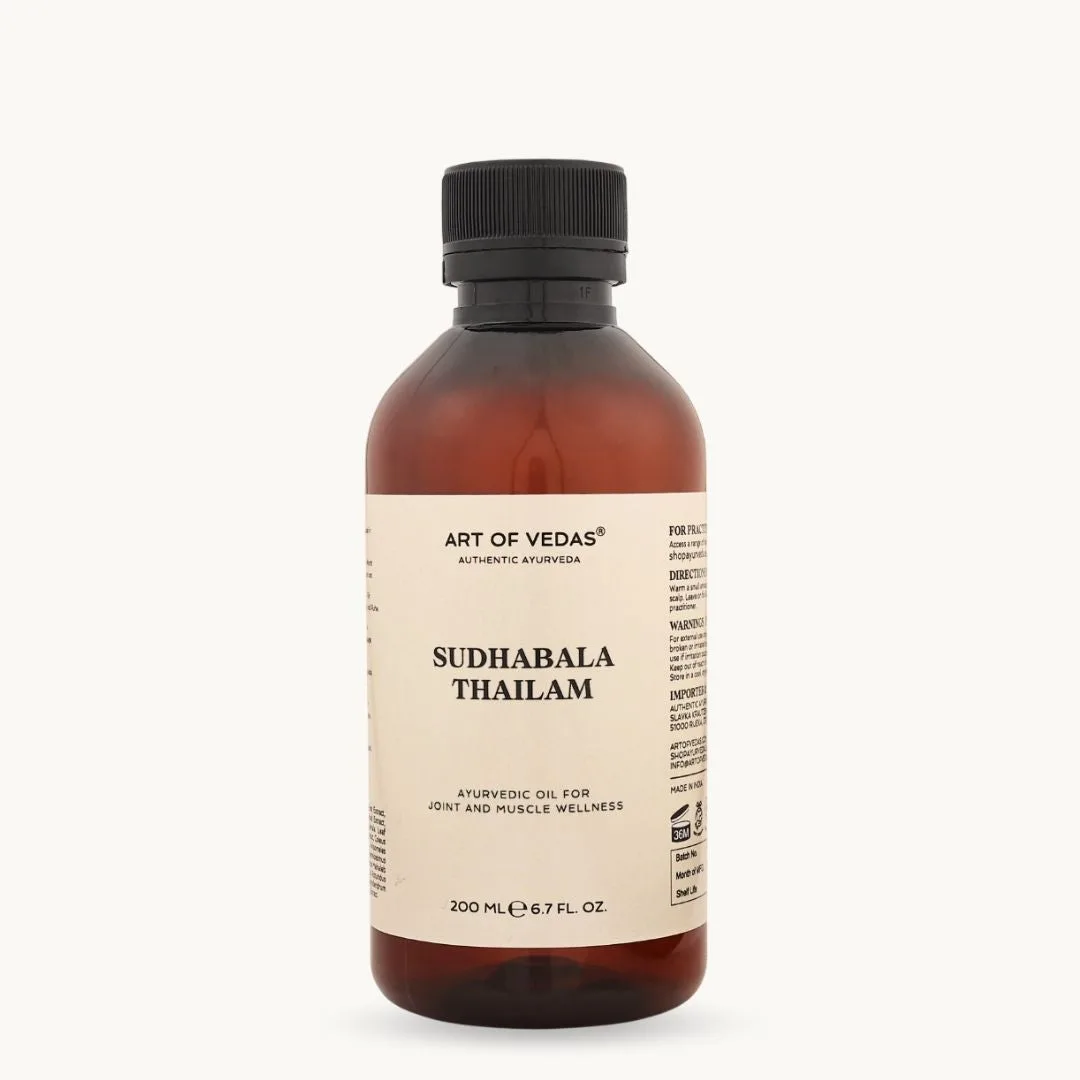
Labels sometimes show Ksheerabala 101, which refers to Avartana, the repeated processing of the oil, classically one hundred and one cycles. Each cycle re-cooks the oil with fresh decoction, concentrating the preparation until it is taken in drops under professional guidance rather than used for massage. The distinction matters when buying, and our guide to Ksheerabala 101 and the Avartana explains it plainly. Within the wider family, Sudhabala Thailam is the related Bala oil traditionally prepared for the youngest and most delicate skin, while a blended Vata massage oil serves those who want a single everyday oil for the whole household ritual.
Frequently Asked Questions
Is Ksheerabala Thailam suitable for sensitive skin?
It is the classical answer to exactly that question. The formula is mild, the herb list short, and the milk-processed texture soft. As with any oil, sensible practice applies: warm it gently, begin with a small application, and give new skin a simple patch test on the inner forearm before the first full use.
Should it be used warm or cool?
Gently warm, as with every Thailam. Warmth improves the spread and the sensory experience without contradicting the oil's cooling nature, which lies in its formulation rather than its temperature. Stand the bottle briefly in hot water and test a drop on the wrist before applying.
Can Ksheerabala Thailam be used on the hair?
Yes; the head is its most traditional seat. It is applied to the crown and worked gently through the scalp in the evening, often left for a while before washing. Where the goal is hair care itself rather than a quiet head, a dedicated hair formula may serve better; our hair and head guide weighs the choice.
What does the 101 on some labels mean?
It counts the Avartana, the repetitions of the classical cooking cycle. A 101 preparation has been processed one hundred and one times, yielding a concentrated oil taken in drops under professional guidance. It is a different tool from the massage Thailam described here, and the two should not be interchanged.
Is the preparation vegan?
No. The classical Ksheerapaka method cooks the oil with a milk decoction, and that stage defines the formula. We state this plainly so that readers who avoid animal-derived processing can choose with full knowledge; the tradition offers other oils, such as plain sesame preparations, that may suit them better.
For external use only. This article describes traditional Ayurvedic practice for educational purposes and does not constitute medical advice. Always consult a qualified professional before beginning a new routine, especially during pregnancy, while nursing, or if you have specific concerns.