In brief: Maharajaprasarini Thailam (also written Maharaja Prasarini Thailam, Maharaja Prasarini Thailam or Maharajaprasarini Taila) is the larger, expanded form of the classical Prasarini oil: the Prasarini plant, Paederia foetida, cooked into sesame oil together with a long list of nourishing roots, among them the Dashamoola group, Bala and Ashwagandha. The classical texts describe it as warming and place it with Vata, for Abhyanga of the muscles and joints. This guide explains what it is, how it differs from the shorter Prasarini Thailam that Art of Vedas sells, and how it is used.
What Maharajaprasarini Thailam is and what the name means
Prasarini is Paederia foetida, the climbing plant whose name means "the one that spreads", the lead ingredient of every oil in this family. Maharaja means "great king" and marks the larger, richer recipe, as Maha marks Mahanarayana against Narayana Thailam. Thailam, Thailam and Taila are one word in three spellings, so Maharajaprasarini Thailam, Maharaja Prasarini Thailam and Maharaja Prasarini Taila all name one preparation: the great Prasarini oil.
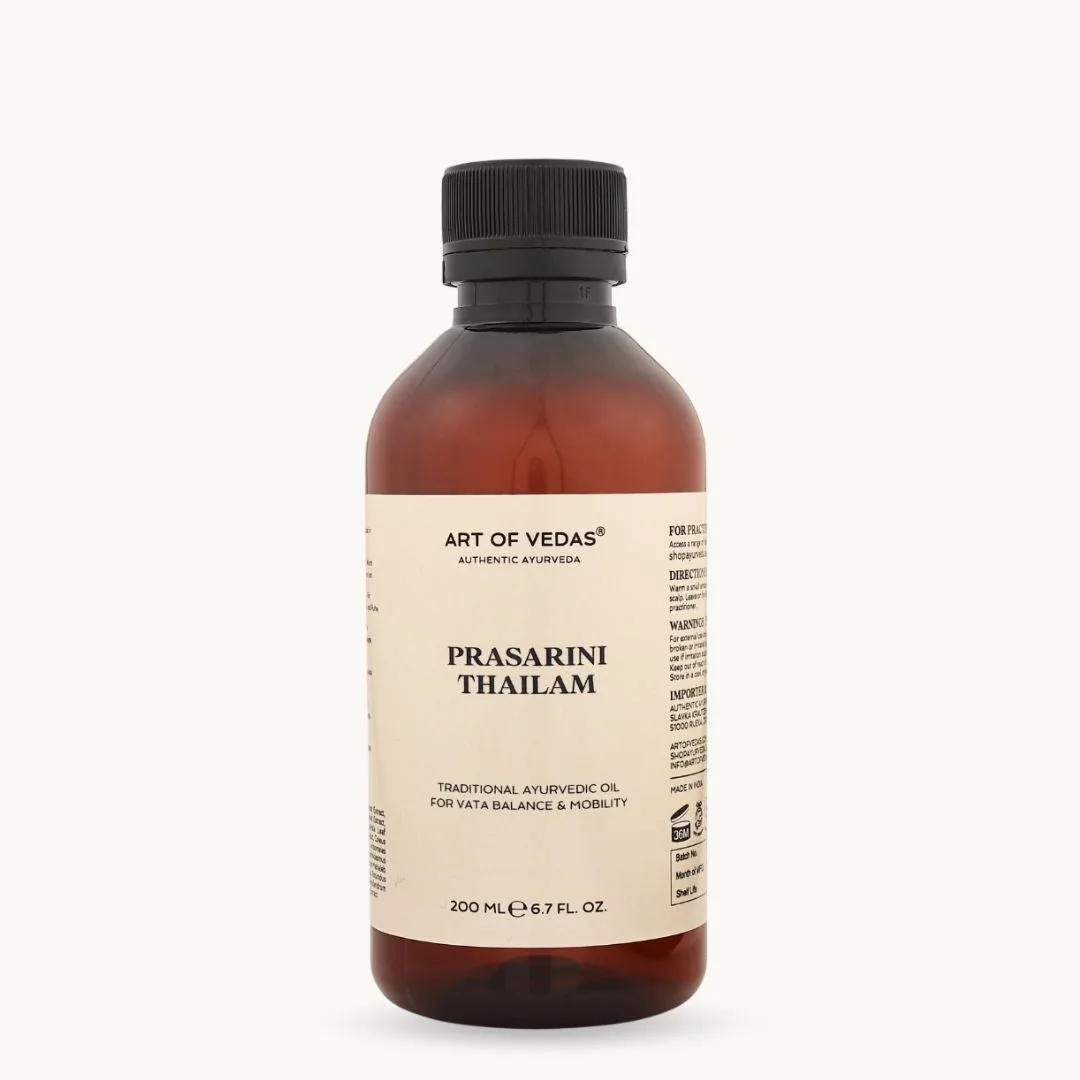
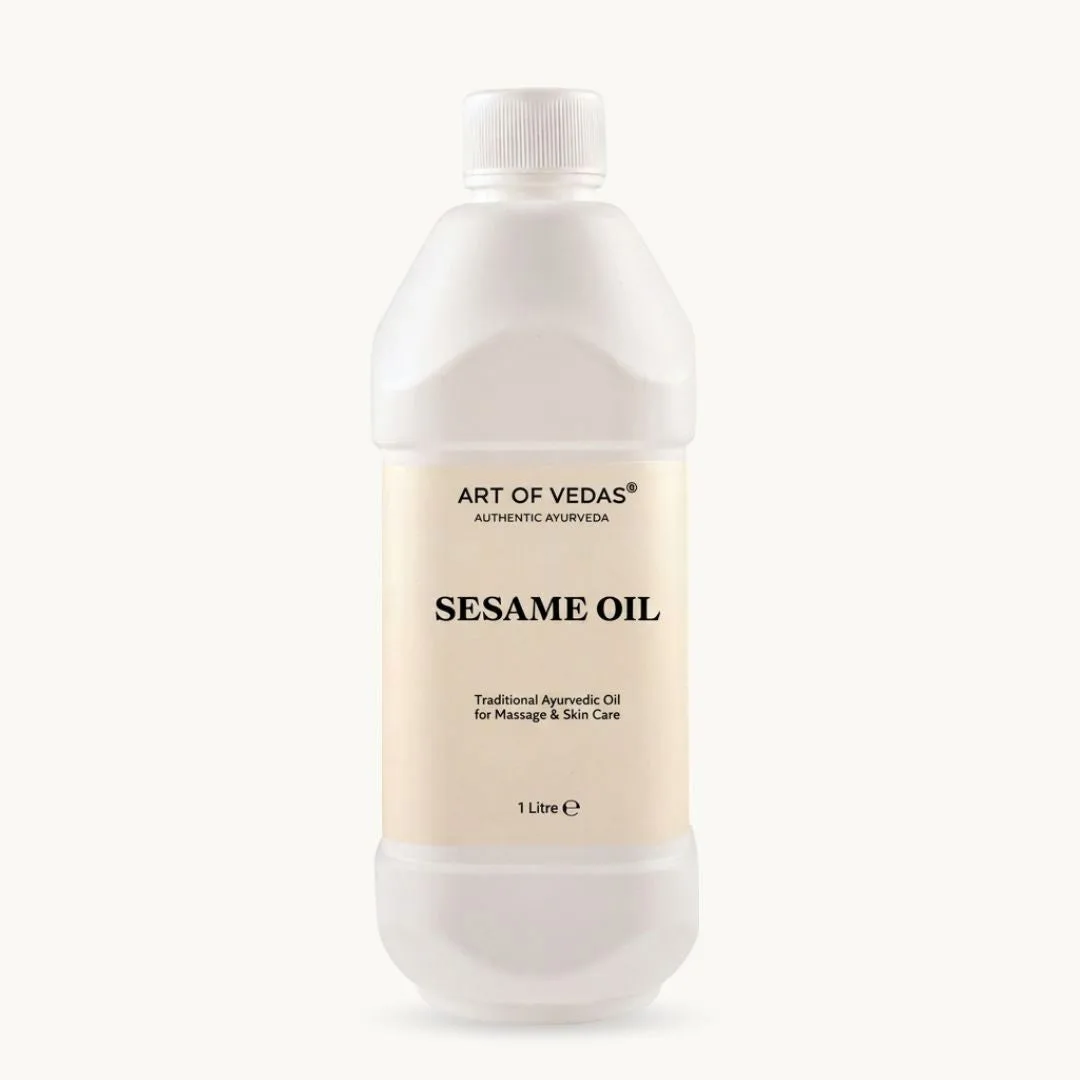
Prasarini Thailam is the shorter recipe, in which Prasarini is cooked into sesame oil with a handful of supporting plants; Maharajaprasarini Thailam is the expanded recipe, in which the same plant leads a much longer list. The Art of Vedas Prasarini Thailam is the shorter oil, the point of comparison throughout this guide.
The classical description
Prasarini Thailam is described in the Ashtanga Hridayam and the Sahasrayogam, and the classical texts place the larger Maharajaprasarini Thailam alongside it among the Vata oils. The classical recipe of the larger oil names, among others, Prasarini itself, the ten Dashamoola roots, Bala, Ashwagandha and Shatavari, with warming plants such as deodar wood, Rasna and Chitraka, and rock salt. It is cooked by the Sneha Paka method: decoction, paste and sesame oil are cooked slowly together until the water has gone.
For comparison, the Art of Vedas Prasarini Thailam declares Prasarini, Laksha, deodar wood, liquorice root, Chitraka root, dill seed, long pepper and Gajapippali in a sesame seed oil base, with rock salt. The shorter oil keeps the lead plant and the warming spices; the larger oil adds the nourishing roots of the Vata tradition. Our complete guide to traditional Thailams describes the method.
Character in Ayurvedic terms
The classical texts describe Prasarini as light and penetrating, and Prasarini Thailam as a sharp, warming oil that is also placed with Kapha. Maharajaprasarini Thailam keeps that warmth and adds the heavy, sweet roots, so the tradition describes it as fuller and more nourishing, where the shorter oil mainly warms and moves. Both are named for the Abhyanga of the muscles and joints.
Prasarini Thailam or Maharajaprasarini Thailam
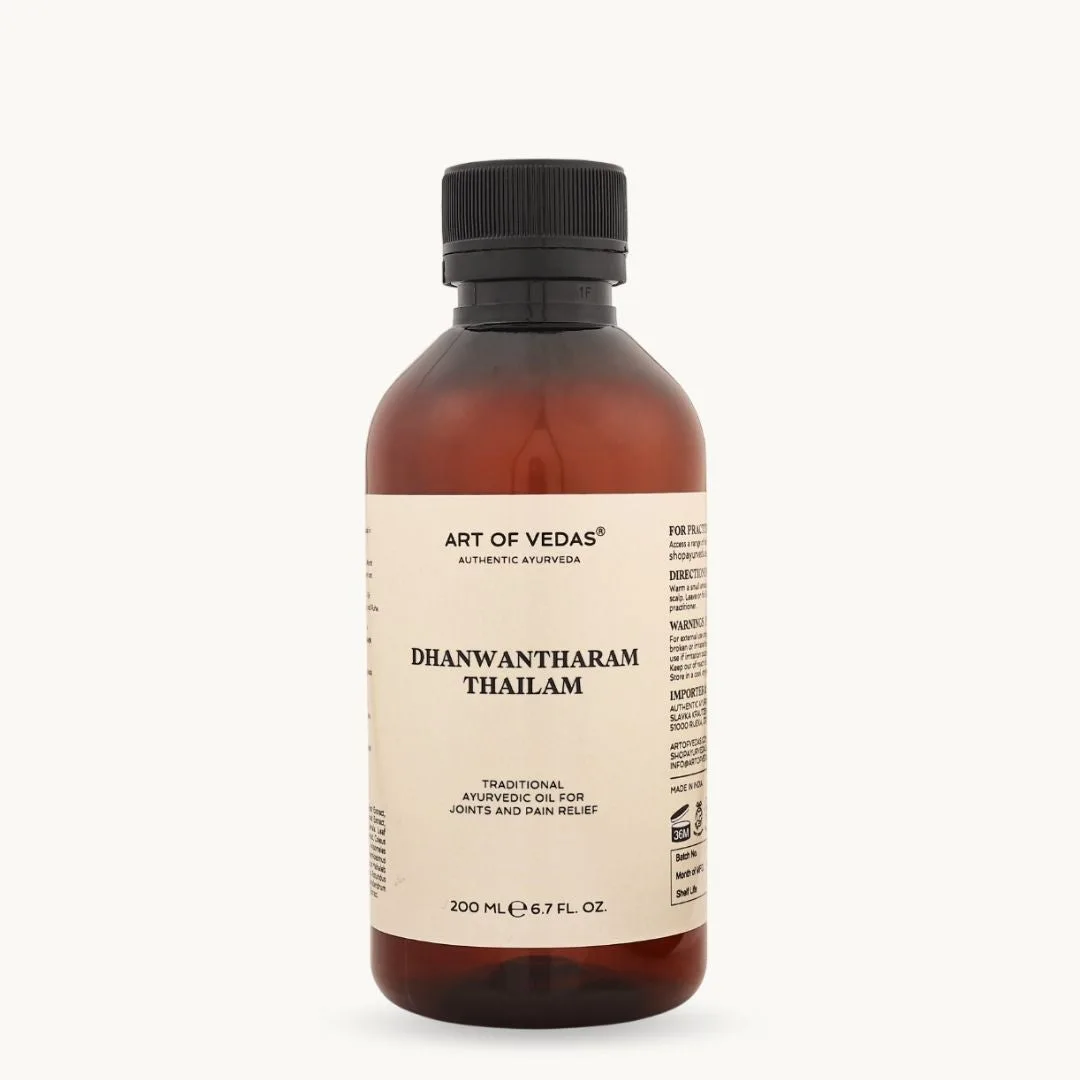
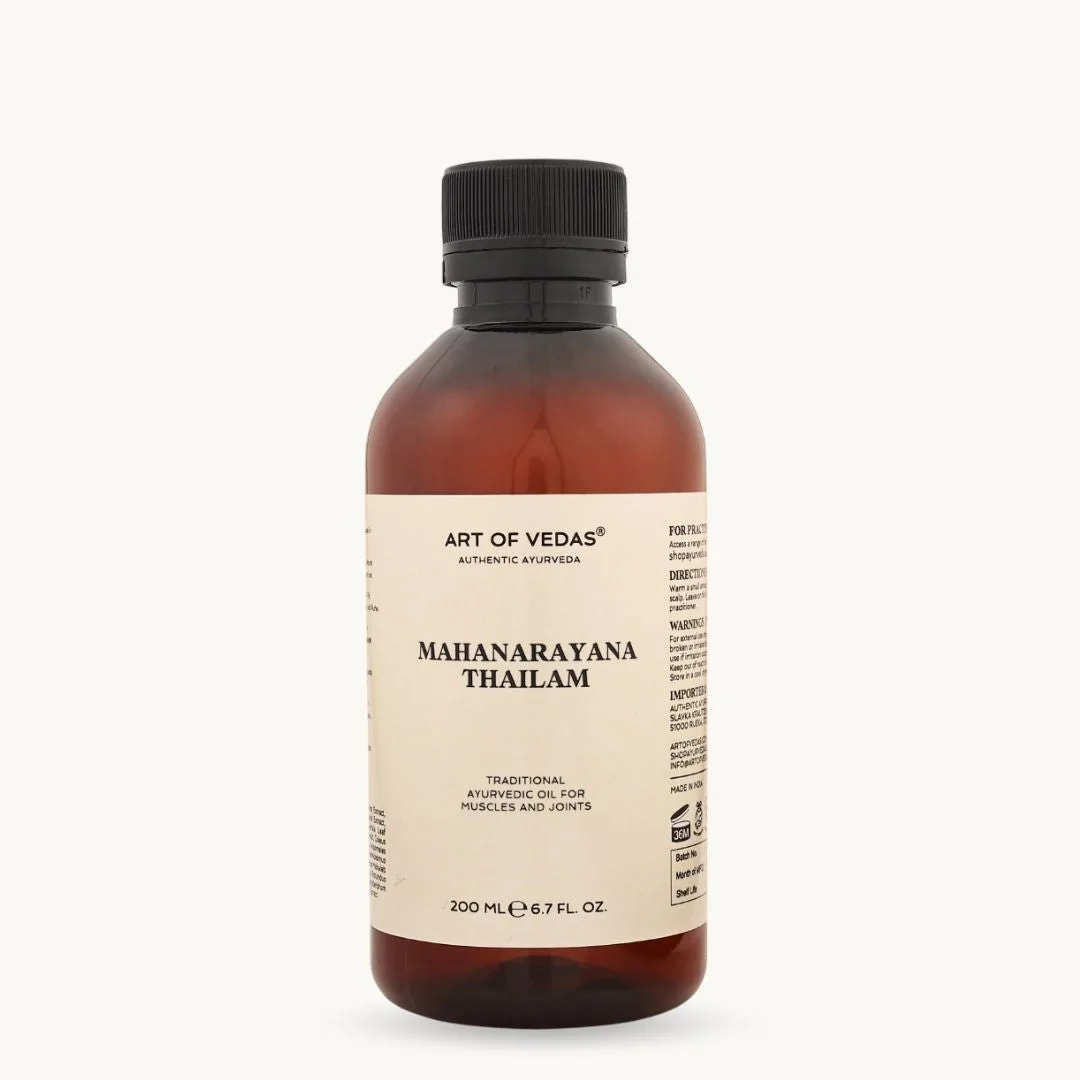
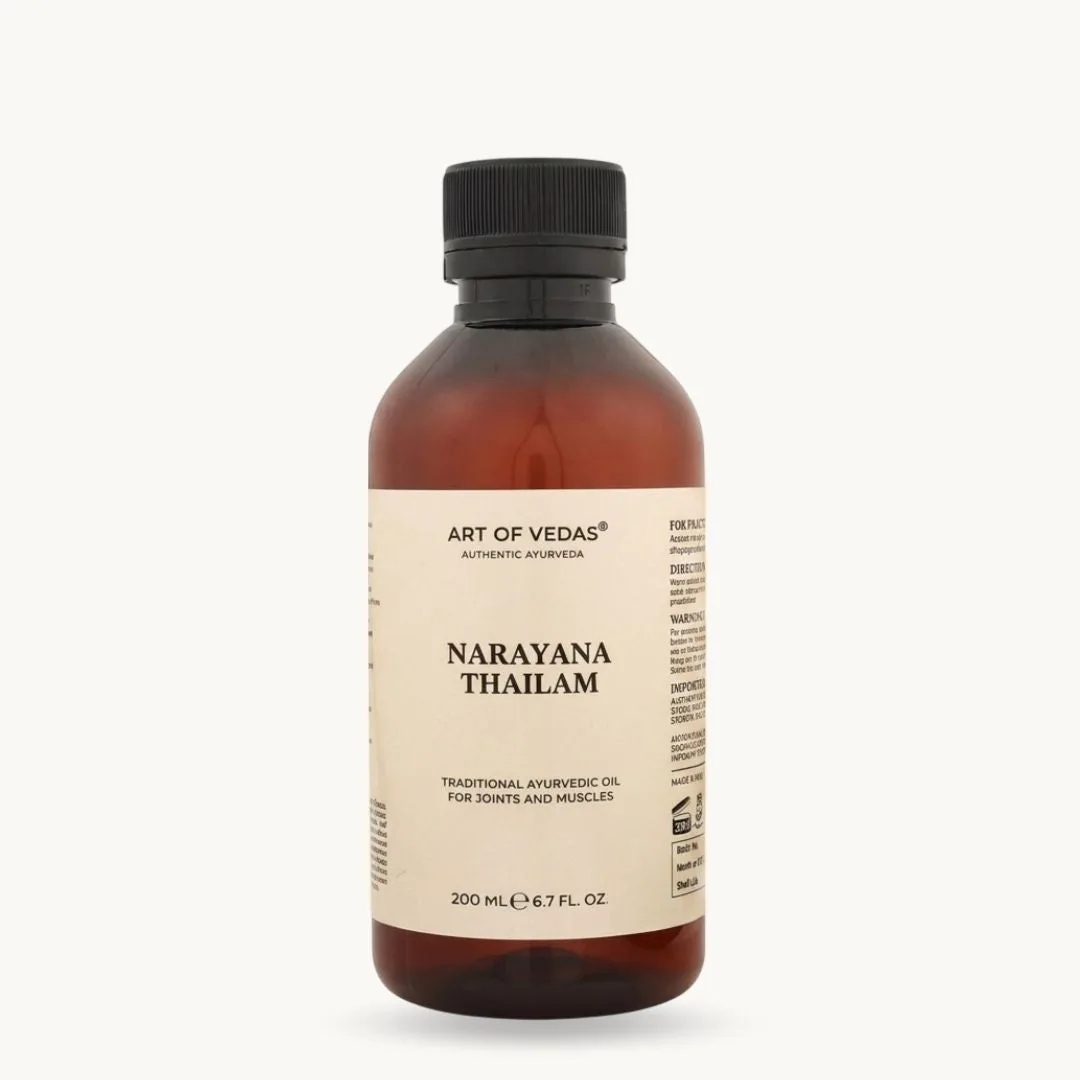
The choice follows the same logic as Narayana against Mahanarayana. The shorter Prasarini Thailam is lighter on the skin, quicker to absorb and sharper in character; it suits a focused massage of one area and the warmer months. The larger Maharajaprasarini Thailam is richer and heavier; it suits a full-body Abhyanga in autumn and winter. If you cannot find the larger oil, use the shorter one and a fuller Vata oil such as Mahanarayana Thailam or Dhanwantharam Thailam on alternate days, rather than mixing oils in one application. Our comparison of Ayurvedic massage oils sets these oils side by side.
How Maharajaprasarini Thailam is used in practice
The oil is used externally, for Abhyanga. Warm the closed bottle in a bowl of warm water for a few minutes until a drop feels pleasantly warm on the inner wrist; never use a microwave. Apply a generous amount with long strokes along the limbs and circular strokes around the joints, leave it on the skin for 15 to 20 minutes, then take a warm shower or bath. For one area, massage a small amount in until it is absorbed. Daily use in autumn and winter follows the classical daily routine; two to three times a week is a common rhythm in Europe. Because both oils are warming, neither is used on the head or the face. The full sequence is in our Abhyanga guide.
Who should ask first
Maharajaprasarini Thailam and Prasarini Thailam are for external use only. Do a small skin test on the inner forearm before the first full application, and keep the oil away from the eyes and broken skin. Both are sesame-based, and an oil that declares Laksha is not vegan. Warming oils are not applied to skin that already feels hot. If you are pregnant or wish to use any oil on a child, ask your doctor or a qualified Ayurvedic practitioner first; a practitioner can also tell you whether the shorter or the larger oil suits your constitution and the season.
Maharajaprasarini Thailam and the Art of Vedas range
Art of Vedas does not currently offer Maharajaprasarini Thailam. The closest oil in our range is the Prasarini Thailam described above, sold in 200 ml and 5 litre, with the same lead plant in the shorter classical recipe. For the fuller character of the larger oil, Mahanarayana Thailam comes closest.
Frequently asked questions about Maharajaprasarini Thailam
What is Maharajaprasarini Thailam? The larger, expanded form of the classical Prasarini oil: the Prasarini plant, Paederia foetida, cooked into sesame oil with a long list of nourishing roots, among them the Dashamoola group, Bala, Ashwagandha and Shatavari. It is also written Maharaja Prasarini Thailam or Maharajaprasarini Taila and is placed among the warming Vata oils.
What is Maharaja Prasarini Thailam used for? For Abhyanga, the Ayurvedic oil massage, of the whole body or of the muscles and joints of one area. The classical texts describe Maharajaprasarini Thailam as warming and nourishing and place it with Vata. It is a body oil, not a head oil, for external use only.
What is the difference between Prasarini and Maharajaprasarini Thailam? The lead plant is the same; the list around it is not. Prasarini Thailam is the shorter recipe, sharper and lighter, with a handful of warming plants. Maharajaprasarini Thailam adds the Dashamoola roots, Bala, Ashwagandha and Shatavari and is fuller and heavier. Art of Vedas sells the shorter Prasarini Thailam.
Is Maharajaprasarini Thailam warming? Yes. Both Prasarini Thailam and Maharajaprasarini Thailam are warming sesame-based oils placed with Vata. The shorter oil is described as sharp and penetrating; the larger one keeps the warmth and adds the heavy, sweet roots, so it is warming and nourishing.
How do you use Maharajaprasarini Thailam? Warm the closed bottle in warm water, apply the oil with long strokes along the limbs and circular strokes around the joints, leave it on for 15 to 20 minutes and wash off with a warm shower. For one area, massage a small amount in until it is absorbed and keep the area warm afterwards.
How often can you apply Maharaja Prasarini oil? Daily in autumn and winter, as the classical daily routine describes, or two to three times a week. A lighter rhythm fits the warmer months, because the oil is warming. Ask a qualified Ayurvedic practitioner what rhythm suits your constitution and the season.
Does Art of Vedas sell Maharajaprasarini Thailam? Not at present. Art of Vedas sells the shorter Prasarini Thailam, in 200 ml and 5 litre, which carries the same lead plant in the classical short recipe. For the fuller character of the larger oil, Mahanarayana Thailam is the closest oil in our range.
Can Maharajaprasarini Thailam be used in pregnancy or for children? Ask your doctor or a qualified Ayurvedic practitioner first. Maharajaprasarini Thailam is for external use only; do a small skin test on the inner forearm before the first full application, keep it away from the eyes and broken skin, and do not apply a warming oil to skin that already feels hot.