The qualities of Pitta and how they show in excess
The Ashtanga Hridayam (Sutrasthana, chapter 1) describes Pitta through its qualities (Gunas): Ushna (hot), Tikshna (sharp, penetrating), Laghu (light), Visra (slightly malodorous), Sara (flowing, spreading) and Drava (liquid). In balance, these qualities digest food, metabolise nutrients, turn experience into understanding, keep the body warm and sharpen perception. In excess, each one leaves its own trace:
- Ushna becomes excess heat.
- Tikshna becomes a sharp, cutting quality of discomfort.
- Sara becomes redness that spreads across the skin.
- Drava becomes excessive sweating.
- Visra becomes a strong body odour.
The classical logic is to identify the quality that is most prominent in the excess. That points to the Pitta sub-type and the tissue most involved: Pachaka Pitta (the digestive fire in the small intestine), Ranjaka Pitta (blood and liver), Sadhaka Pitta (heart and mental clarity), Alochaka Pitta (eyes and visual perception) or Bhrajaka Pitta (the skin surface).
Samanya-Vishesha: the classical reason why Pitta increases
The Samanya-Vishesha principle, "like increases like, opposites decrease", is the foundation for understanding Pitta aggravation. Pitta is hot, sharp and spreading, so any input with the same qualities increases it. Beyond the causes listed above, the classical texts name activity at midday (the Pitta time of day), over-analysis and perfectionism, and emotional heat: suppressed anger, resentment, frustration and constant competitiveness raise Pitta from the inside.
The Ashtanga Hridayam (Sutrasthana, chapters 3 and 12) names Katu (pungent), Amla (sour) and Lavana (salty) tastes and hot food as the main dietary drivers. In practice that also means tomato, coffee and red meat, and eating when already heated. Even without obvious stress, a diet built on these foods can keep Pitta elevated. In Europe, July and August are the peak of Pitta accumulation.
Pitta aggravation symptoms in detail
The Charaka Samhita (Sutrasthana, chapter 20) and the Ashtanga Hridayam add further physical signs of Pitta excess to those described above:
- Excessive body heat, especially in the palms, soles and face
- Premature greying and early thinning of the hair
- Excessive sweating, including the hands and feet, with a strong body odour
- Heat and sensitivity in the joints, particularly the small joints of the hands
- Sensitivity in the mouth to spicy food
- Competitiveness that crosses into aggression, and poor tolerance of heat, sun or waiting
If three or more of these signs apply, and especially if they have intensified recently, Pitta is likely elevated. The Dosha test gives an educational first reading; it is not a diagnosis.
The six stages of Pitta imbalance (Shat Kriya Kala)
The three stages described above are the beginning of a longer classical sequence of six. The earlier the stage, the simpler and more effective the classical response.
- Sanchaya (accumulation): Pitta builds up in its home site, mainly the small intestine, the domain of Pachaka Pitta. Drive feels productive at first but has a pressured quality.
- Prakopa (aggravation): the burning in the digestive tract becomes consistent. The Ashtanga Hridayam names Daha (burning) as the main sign of this stage.
- Prasara (spreading): driven by its Sara quality, Pitta spreads outward through the blood (Ranjaka Pitta) and skin (Bhrajaka Pitta) channels, with bloodshot eyes, general body heat and sensitivity in the joints.
- Sthana Samshraya (localisation): Pitta settles in tissues that are already weakened or depleted. Where it settles depends on the individual constitution and history.
- Vyakti (manifestation): the established excess produces clearly recognisable signs in the affected tissue.
- Bheda (differentiation): the pattern becomes complex, involving several tissues and possibly other Doshas.
The classical strategy is to act as early as possible, ideally at Sanchaya or Prakopa. The cooling diet, oils and routine described on this page are most effective at these early stages; later stages belong with a qualified practitioner.
Pitta signs by tissue (Dhatu)
- Rasa Dhatu (plasma): the first tissue Pitta enters. General body heat, excess sweating, a slight burning of the skin before any visible change and heat in the palms and soles (Paada Daaha), which the Ashtanga Hridayam names as a Rasa-level Pitta sign.
- Rakta Dhatu (blood): Ranjaka Pitta in excess gives the most visibly fiery signs: red, hot, spreading skin changes, a flushed complexion and bloodshot eyes.
- Mamsa Dhatu (muscle): muscles that feel hot and sensitive after exertion, slow recovery from training and a burning rather than cold, aching quality.
- Asthi Dhatu (bones and joints): hot joints with a sharp, burning quality, worse in summer and after Pitta-aggravating food.
- Majja Dhatu (nervous system): Sadhaka Pitta at this depth turns concentration into obsession, perfectionism into self-criticism and clarity into harsh judgement, with high productivity and an inner burning at the same time.
The mental and emotional side of Pitta imbalance
Balanced Pitta produces the qualities most valued in intellectual and professional life: clarity, focus, ambition, leadership and efficient problem-solving. Pitta excess distorts them: clarity becomes harsh criticism, focus becomes obsession, ambition becomes ruthless competition and analysis becomes fault-finding. The Charaka Samhita (Shareera Sthana, chapter 4) describes the Pitta emotional pattern as anger (Krodha), jealousy (Irshya) and sharp, cutting speech when provoked. Unlike the scattered unease of Vata, Pitta reactivity is fast, intense and directed, like a flame applied to a specific fuel. In the classical framework these mental signs are as relevant as the physical ones, and a coherent Pitta picture on both levels calls for cooling and softening on both levels at once.
The classical cooling protocol in more detail
Cool the diet
The Charaka Samhita (Sutrasthana, chapter 25) is the classical source for the sweet, bitter and astringent tastes that pacify Pitta. Beyond the foods named above, it suits Pitta to favour rice, wheat, oats, sweet fruits such as grapes, pears and melons, bitter greens such as rocket, kale and dandelion, and courgette, with cumin and fresh mint among the cooling spices. Reduce chilli, raw onion, garlic, tomato, citrus, vinegar and excessive coffee. Mild warming spices such as a little ginger are acceptable; the ones to limit while Pitta is aggravated are chilli, black pepper in excess, mustard seeds and raw garlic.
Cool the body with Thailams
External oil application (Bahya Snehana) is one of the fastest ways to pacify Pitta.
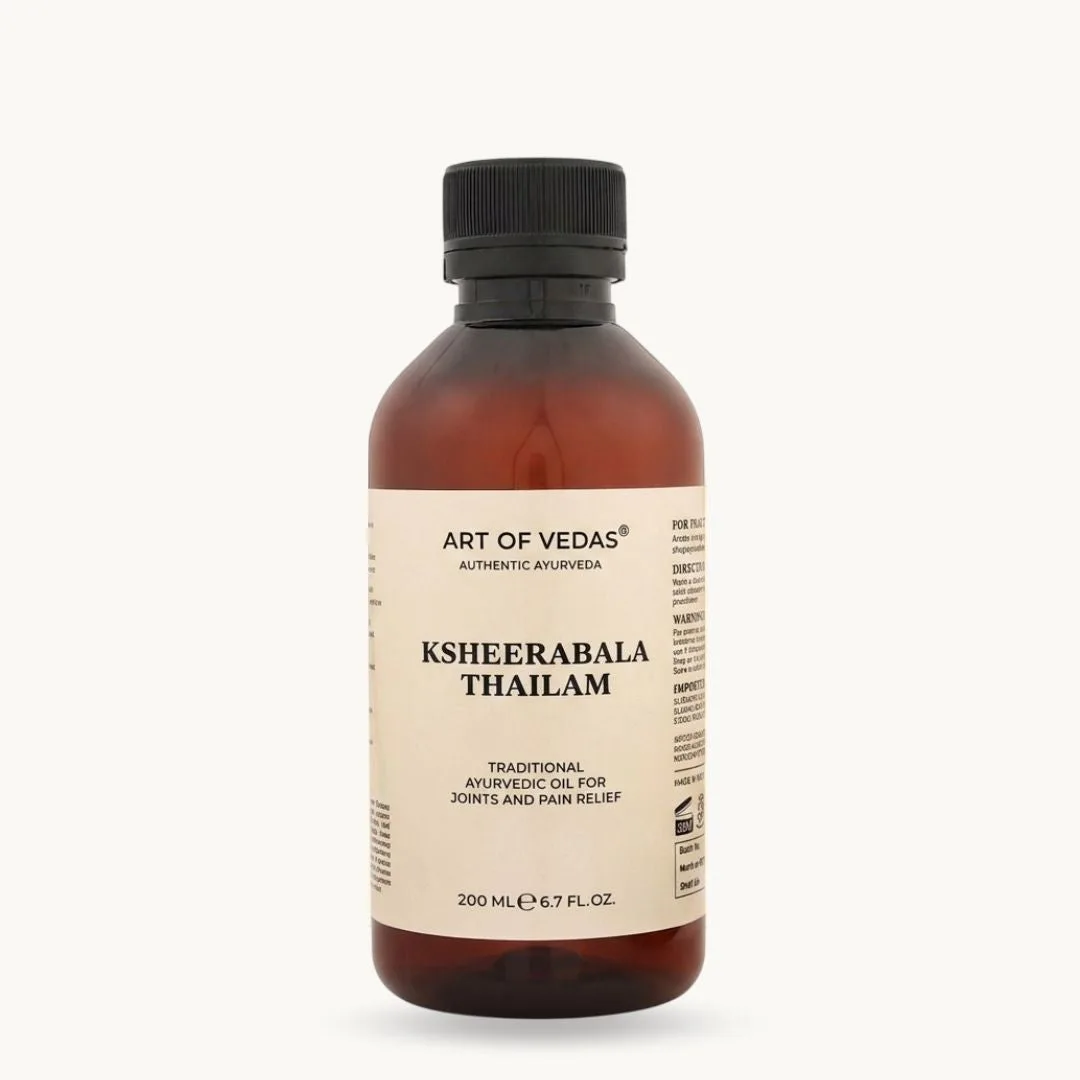
- Ksheerabala Thailam: described as a primary Pitta-pacifying Thailam, prepared with Bala on a sesame base. Its cooling, nourishing character gives it a particular affinity for Majja Dhatu and makes it suited to combined Vata-Pitta states.
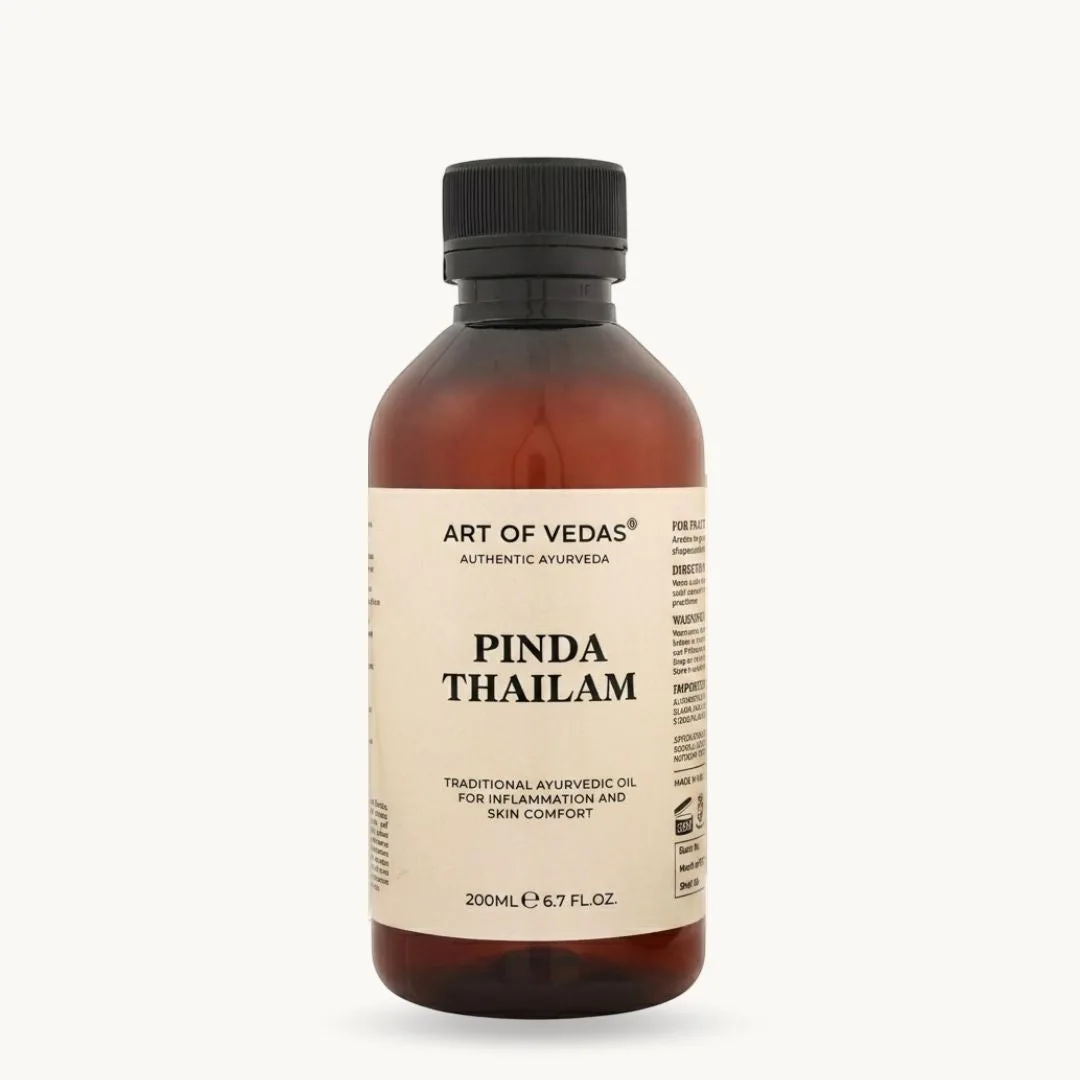
- Pinda Thailam: the classical cooling oil traditionally applied to hot hands, feet and joints.
- Brahmi Thailam: used for Shiro Abhyanga (head and scalp massage) to cool the mental side of Pitta excess: the burning urgency, perfectionism and sharp inner criticism.
- Tri Dosha Massage Oil: a balanced option for mixed constitutions or transitional seasons.
Use gentle pressure, because Pitta skin is already sensitive and vigorous massage aggravates it. Plain coconut oil is a simple alternative during acute Pitta flares.
Cool the mind
The classical texts prescribe Sheetala (cooling) activities: time in forests and gardens, swimming, moonlight, which the Charaka Samhita specifically describes as Pitta-pacifying, and creative activities that channel Pitta's intensity without competition. Brahmi is the primary cooling Medhya herb for calm, clear thinking, and Guduchi supports the body's capacity to clear Pitta at tissue level.
Support with internal herbs
Shatavari is the primary cooling Rasayana: its Sheeta (cooling) Virya directly opposes Pitta's heat. Amalaki is cooling and nourishing, and Triphala gently clears accumulated Pitta from the digestive tract. Internal herbs should be chosen with a qualified practitioner, and always so during pregnancy, for children or while taking prescriptions.
Adjust the daily routine
Wake early, before the heat of the day; do a cooling Abhyanga before the shower; avoid the midday sun between 10 a.m. and 2 p.m., the Pitta time of day; eat a light, early dinner; and go to sleep before 10 p.m.
Further classical practices for Pitta
Daily Pratimarsha Nasya with Anu Thailam supports the cooling of Alochaka Pitta and the head. The tin in Kansa carries a classically cooling, Pitta-pacifying quality, so regular Kansa facial massage with a cooling oil addresses Bhrajaka Pitta in the facial skin and Alochaka Pitta through the facial Marma points. In summer, Kansa Vatki foot massage is traditionally added as a preventive practice.
What Pitta Imbalance Means
Pitta's primary quality is heat - Agni (fire) is the classical metaphor for Pitta in all its forms, from digestive fire to the sharpness of mental discrimination. When Pitta is in balance, this fire is useful: it transforms food, digests experience, and illuminates understanding. When it is elevated, the fire burns beyond what is useful - it becomes excess heat, excess sharpness, excess drive.
The classical texts describe three stages of imbalance for all Doshas. For Pitta:
Sanchaya (accumulation): Pitta begins to accumulate beyond its normal level. Subtle signs - a slight increase in skin temperature, a sharper edge to criticism, a stronger hunger, a tendency to feel too warm. At this stage, small adjustments are highly effective.
Prakopa (provocation): Pitta becomes clearly elevated. The signs described below are persistent and noticeable. This is the most common stage at which people recognise there is a pattern to address.
Prasara (spread): Elevated Pitta moves from its primary seat (the small intestine, liver and blood) into other systems - the skin, the eyes, the mind. Classical Ayurveda describes skin inflammatory conditions, eye sensitivity and intense mental reactivity as later-stage Pitta spread.
Common Causes of Elevated Pitta
The causes of Pitta elevation share the qualities of Pitta itself - heat, intensity, sharpness, penetration.
Dietary causes:
- Spicy, pungent food - the fastest direct Pitta aggravator in the diet
- Sour food in excess - citrus, fermented foods, vinegar, wine
- Alcohol - warming, sour, rapidly absorbed, directly Pitta-increasing
- Very salty food
- Fried, oily food at high heat
- Skipping meals - the Pitta digestive fire, when it has no food to transform, turns on the system itself
Lifestyle causes:
- Overwork and competitive pressure - the psychological state of continuous competition and high performance is classically described as elevating Pitta
- Excess heat - summer, hot environments, saunas, very hot showers, direct midday sun
- Excess screen time, particularly in brightly lit environments
- Physical exercise beyond constitutional capacity, or exercise in heat
- Insufficient downtime - Pitta types are particularly resistant to rest, which compounds the accumulation
Seasonal causes:
- Summer - the Pitta season, when environmental heat directly elevates Pitta in everyone, and most strongly in Pitta-dominant constitutions
- Late spring - the transition into Pitta season, when the rising heat begins to accumulate Pitta before the full summer arrives
The Signs of Elevated Pitta
In the body:
- Skin that is hot to the touch, or skin that flushes easily with heat, spicy food, alcohol or emotion
- Skin reactivity - redness, sensitivity and reactions to products, heat or sun that did not previously cause problems
- Excess body heat - feeling hot when others are comfortable, sweating more than expected
- Acid reflux, heartburn or a sharp, burning quality to digestion - the excess digestive fire that classical Ayurveda describes as Tikshna Agni (excess Agni)
- Very strong, urgent hunger - the Pitta hunger that cannot be delayed without significant irritability
- Loose stool or diarrhoea - excess Pitta moving downward through the digestive system
- Inflamed or tender scalp, sensitivity at the scalp that increases in summer
- Eye sensitivity - light sensitivity, redness in the eyes, a hot or strained quality to the eyes after screen use
In the mind and behaviour:
- Irritability, particularly when things are not proceeding as expected
- Sharpness of criticism - of oneself and others - that crosses from useful to excessive
- Perfectionism that becomes paralysing or demanding
- A driven, relentless quality that resists rest even when the body needs it
- Impatience - particularly with inefficiency, incompetence or situations outside of control
- Heated, confrontational communication - the Pitta who is normally direct becoming aggressive or critical
- Disturbed sleep - the mind replaying the day's events, planning tomorrow, critical and active when it should be settling
In the skin (the most visible Pitta sign):
The skin is where Pitta imbalance often presents most visibly in European patients. The face, particularly the cheeks and nose, is prone to flushing and reactivity. The skin may become more sensitive to the sun, to spicy food and to alcohol in ways that are sometimes the first noticeable sign of accumulating Pitta.
The Classical Approach to Restoring Pitta Balance
The classical principle: introduce the opposite qualities of Pitta - coolness, moderation, softness, spaciousness and calm.
1. Introduce Cooling Practices
The body: Cool environments, cool showers after exercise, time near water, shade during midday in summer. Protection from direct sun - not as a skincare instruction but as a Pitta-management one.
The diet: Cooling foods take the lead. Sweet, bitter and astringent tastes pacify Pitta. Reduce spicy, sour and very salty food. Fresh coconut, cucumber, leafy greens, sweet ripe fruit, coriander, fennel. Reduce or temporarily eliminate alcohol and very spicy food. Drink cool (not cold) water.
2. Cooling Oil Massage (Abhyanga)
Abhyanga with a cooling oil directly addresses elevated Pitta. The physical contact, the oil's cooling properties and the calming pace of the practice together lower the overall Pitta activation.
For Pitta Abhyanga: Coconut-based oil or a classical cooling formula at a comfortably warm (not hot) temperature. Light to moderate pressure - no vigorous friction. 4 to 5 times per week, or daily during periods of elevated Pitta.
Full Abhyanga guide How to choose the right oil for Pitta
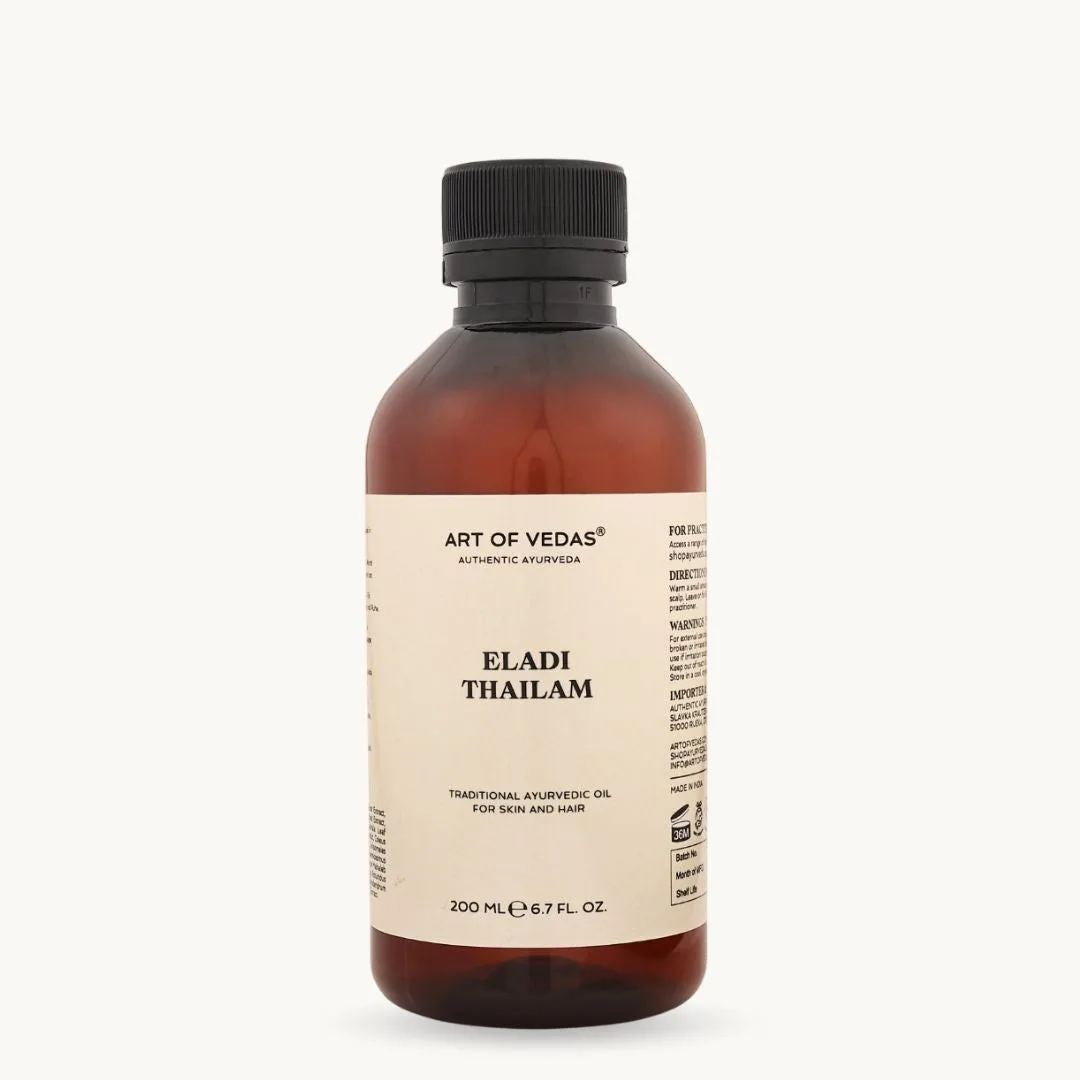
For the skin specifically, Eladi Thailam - formulated with vetiver, sandalwood and cardamom in a sesame base - is the classical face oil for Pitta skin states and directly addresses Bhrajaka Pitta (the skin's governing Pitta subtype).
3. Never Skip Meals
The single most important Pitta dietary practice. The Pitta digestive fire is powerful enough that when deprived of food at its natural peak times, it produces irritability, hypoglycaemia-like symptoms and a sharpness that affects both mood and cognition. Regular meals - particularly a solid lunch at midday when Pitta Agni is strongest - is the simplest daily Pitta management practice.
4. Build in Non-Performance Time
Pitta's most powerful self-compounding pattern is the resistance to rest. The same drive that makes Pitta types high achievers also makes them resist the recovery practices that prevent Pitta from accumulating. Deliberately scheduling non-productive time - walks in nature, time near water, gentle physical practices, reading that is not work-related - is itself a clinical Pitta intervention in classical Ayurvedic terms.
5. Moderate Exercise
Pitta types benefit from physical exercise - the excess Pitta needs an outlet, and vigorous exercise provides it. The classical adaptation: exercise at moderate to high intensity but avoid exercising in peak heat. Early morning or evening are the ideal times. Cooling down adequately after exercise and not allowing the body to overheat during it.
6. Summer as the Most Important Season
Pitta season (summer) is when the practices above matter most. Beginning cooling dietary and lifestyle adjustments in late spring - before the full summer heat arrives - prevents accumulation from building to the Prakopa stage. See the full seasonal guide.
When to Seek More Support
The practices above are the foundation of classical Pitta management in everyday life. When Pitta imbalance is significant, persistent or has been present for an extended period - particularly if it is affecting the skin, digestion or sleep consistently - a professional assessment gives you more precision and a more targeted protocol.
Our AYUSH-certified Ayurvedic doctors assess both your constitutional Prakriti and your current Vikriti, identify the specific pattern of Pitta elevation in your case, and give you a personalised protocol that addresses your situation directly.
Book an online consultation with an AYUSH-certified Ayurvedic doctor
Frequently Asked Questions
What does Pitta aggravation feel like? Pitta aggravation feels like too much heat: skin that flushes or reacts, acidic or burning digestion, strong thirst, hunger that turns into irritability, a bitter taste in the mouth and a short fuse. The Ashtanga Hridayam describes aggravated Pitta through burning sensations, a yellowish tinge, excessive thirst and irritability. Persistent complaints belong with a qualified practitioner.
How do you reduce Pitta immediately? Classical Ayurveda gives three immediate steps to reduce Pitta in an acute flare: step away from the aggravating input, whether a hot room or a heated argument, apply a cooling oil such as Pinda Thailam or coconut oil to the hands and feet, and calm the digestive fire with a light, sweet, cool meal. Daily cooling Abhyanga then sustains the effect.
Can Pitta types eat any spicy food at all? Yes, but selectively. Pitta types can use mild spices such as a little ginger, turmeric, cumin, coriander and fennel, which are even helpful. The spices to limit while Pitta is aggravated are chilli, black pepper in excess, mustard seeds and raw garlic. The aim is not to remove all warming food but to shift the overall balance of the diet towards cooling.
Is Pitta imbalance seasonal? Yes. Pitta imbalance follows the heat: it builds from late spring and peaks in summer, and in European climates July to September is the main Pitta season, with late summer often the most aggravated time. Starting cooling food, cooling oils and shade from the midday sun in June keeps the summer build-up of Pitta much milder.
What should you do when Vata and Pitta are both imbalanced? Mixed Vata and Pitta imbalances are common. The classical principle is to address the more acute imbalance first: if heat, redness and irritability dominate, cool Pitta first; if dryness, worry and light sleep dominate, ground Vata first. Ksheerabala Thailam is traditionally chosen for combined Vata-Pitta states. A qualified practitioner can help with complex mixed patterns.
How do I tell Pitta imbalance from normal stress? The difference is in the quality of the reaction. Pitta-type stress is hot, sharp and directed: irritability, criticism, burning urgency, intolerance of imperfection and physical heat. Vata stress shows as restless, scattered worry, Kapha stress as withdrawal and heaviness. If anger, a critical inner voice and heat recur, the Pitta pattern is likely dominant. The Dosha test gives an educational first reading.
Are the signs of Pitta imbalance the same for men and women? The core signs of Pitta imbalance, heat, redness, sharpness, irritability and reactive skin, are the same for men and women, while the tissues affected differ with individual constitution. In women, the monthly cycle creates natural Pitta peaks that can amplify existing tendencies at those times. The same cooling oils and practices apply to the same Pitta signs regardless of gender.
What are the six stages of Pitta imbalance? Classical Ayurveda calls them Shat Kriya Kala: Sanchaya (Pitta accumulates in the small intestine), Prakopa (burning and heat become noticeable), Prasara (Pitta spreads through blood and skin), Sthana Samshraya (it settles in a weakened tissue), Vyakti (clear signs appear) and Bheda (the pattern becomes complex). Pitta is easiest to rebalance in the first two stages.
Which Ayurvedic oils are used for Pitta imbalance? For Pitta imbalance, classical Ayurveda uses cooling oils with gentle pressure. Ksheerabala Thailam is a primary Pitta-pacifying Thailam and suits combined Vata-Pitta states, Pinda Thailam is traditionally applied to hot hands, feet and joints, Brahmi Thailam is used for head and scalp massage, and plain coconut oil is a simple choice in summer or during a flare.
Can Pitta be elevated even in a Vata or Kapha constitution? Yes. Anyone can have elevated Pitta regardless of their primary constitutional type. Summer, very spicy diet, overwork and competitive pressure elevate Pitta in all constitutions - it is simply most pronounced and most frequent in Pitta-dominant individuals.
How long does it take to reduce Pitta? Dietary changes produce rapid effects for Pitta - reduced skin reactivity and improved mood balance are often noticeable within one to two weeks of significantly reducing spicy and sour foods. Sustained Pitta balance across the season develops over 4 to 8 weeks of consistent practice. For skin conditions associated with Pitta, deeper improvement develops over 2 to 3 months.
Is anger always a Pitta problem? In classical Ayurvedic terms, the hot, directed, critical anger associated with frustration and confrontation - the "fire" quality of anger - is classically associated with elevated Pitta. The anxious, fearful quality of emotional distress is more Vata-related. The heavy, attachment-driven grief and stubbornness are more Kapha-related. Most emotional states involve multiple Doshas - a professional assessment clarifies the primary pattern. Book here.
Does a Pitta constitution always tend toward imbalance? No. Pitta in balance is one of the most capable and productive constitutional types. The goal is not to reduce Pitta but to keep it in its productive, balanced range - which is achieved through appropriate food, seasonal adaptation, deliberate rest and consistent cooling practice.
Understand your full Pitta constitution: Pitta Dosha guide
Explore the other imbalance guides: Vata imbalance Kapha imbalance
Not sure which Dosha is elevated? Take the free Dosha test
Browse Pitta-balancing massage oils