Pizhichil: Classical Ayurvedic Oil Bath Therapy Guide
Pizhichil - sometimes called the "King of Ayurvedic therapies" in the tradition - is one of the most lavish and deeply effective classical oil treatments in the entire Panchakarma canon. The name derives from the Malayalam "Pizhichil" meaning to squeeze or press - referring to the technique of squeezing warm medicated oil continuously from cloth over the entire body while two to four therapists simultaneously perform a gentle massage. The result is a full-body warm oil bath sustained without interruption for forty-five minutes to an hour: the most thorough and sustained Snehana (oleation) treatment described in the classical literature.
Pizhichil is documented in the Chikitsa tradition and is described in classical texts under the category of Kayaseka or Sarvanga Dhara - whole-body oil pouring therapy. It is classified as a major Panchakarma Purvakarma (preparatory) therapy and as a standalone Rasayana treatment in the tradition.
Classical Understanding of Pizhichil
In the classical framework, Pizhichil is the most comprehensive expression of the Snehana (oleation) principle applied to the entire body simultaneously. The Ashtanga Hridayam describes Snehana as one of the two foundational Panchakarma preparatory therapies (alongside Swedana - sudation), explaining that thorough oleation of all the body's tissue layers and channels is the essential preparation for the deep elimination therapies that follow.
Pizhichil takes this principle to its maximum expression: warm oil covering every surface of the body simultaneously, continuously, for an extended duration. The classical understanding is that the sustained warmth and oil contact progressively penetrates from the skin (Twak) through each successive Dhatu layer - Rasa, Rakta, Mamsa, Meda, Asthi, Majja - mobilising accumulated Vata and Ama from their locations in the deeper tissues and bringing them toward the channels from which they can be subsequently eliminated.
The Primary Classical Indications for Pizhichil
Classical texts identify Pizhichil as the most appropriate therapy for conditions characterised by:
-
Extreme Vata depletion: Where Vata has become both excessive in its movement (causing agitation and dysregulation) and deficient in its nourishing relationship with the tissues - leading to profound weakness, wasting, or loss of function in the musculoskeletal and nervous systems
-
Neuromuscular conditions: The classical tradition specifically describes Pizhichil in the context of conditions affecting the nervous system and voluntary muscle function - where the Majja Dhatu and its conductivity are compromised
-
Exhaustion and systemic depletion: Where the Ojas (vital essence) and overall tissue strength have been depleted by illness, excessive exertion, or prolonged exposure to depleting influences
-
Advanced Vata-type musculoskeletal conditions: Where Vata has penetrated deeply into the Asthi and Majja Dhatus and surface treatments are insufficient to reach the affected tissue layers
The Pizhichil Procedure
Therapists and Setup
Classical Pizhichil requires two to four therapists working in perfect synchrony - one on each side of the body, pouring and massaging simultaneously. The recipient lies on the classical wooden Droni (treatment table) that allows oil to drain from the edges. The temperature of the treatment room must be warm to maintain the oil temperature and prevent Vata aggravation from cold exposure.
The Oil
Pizhichil uses a substantial volume of warm medicated oil - typically three to four litres for a full session, continuously rewarmed and reused throughout the treatment. The oil must remain at a consistent warm temperature throughout - the therapeutic benefit of Pizhichil depends critically on the sustained warmth as much as on the oil itself.
The Technique
Pieces of cloth (typically fine cotton or linen) are soaked in the warm oil and squeezed over the body in a continuous, coordinated stream while the therapists simultaneously apply gentle, rhythmic massage strokes with the oil-soaked cloths and their palms. The entire body - from the scalp to the soles of the feet - is covered in warm oil at all times. The recipient is turned periodically to ensure all surfaces receive equal treatment.
Duration and Course
A single Pizhichil session lasts forty-five minutes to one hour. Classical courses run seven to twenty-one consecutive days depending on the therapeutic intention and the patient's condition and constitution. The longer courses are reserved for the most significant Vata-depletion and neuromuscular conditions; seven-day courses are appropriate for Rasayana and rejuvenation purposes.
Classical Oils for Pizhichil
The most classically documented oils for Pizhichil reflect the therapy's primary Vata-Majja Dhatu focus:
-
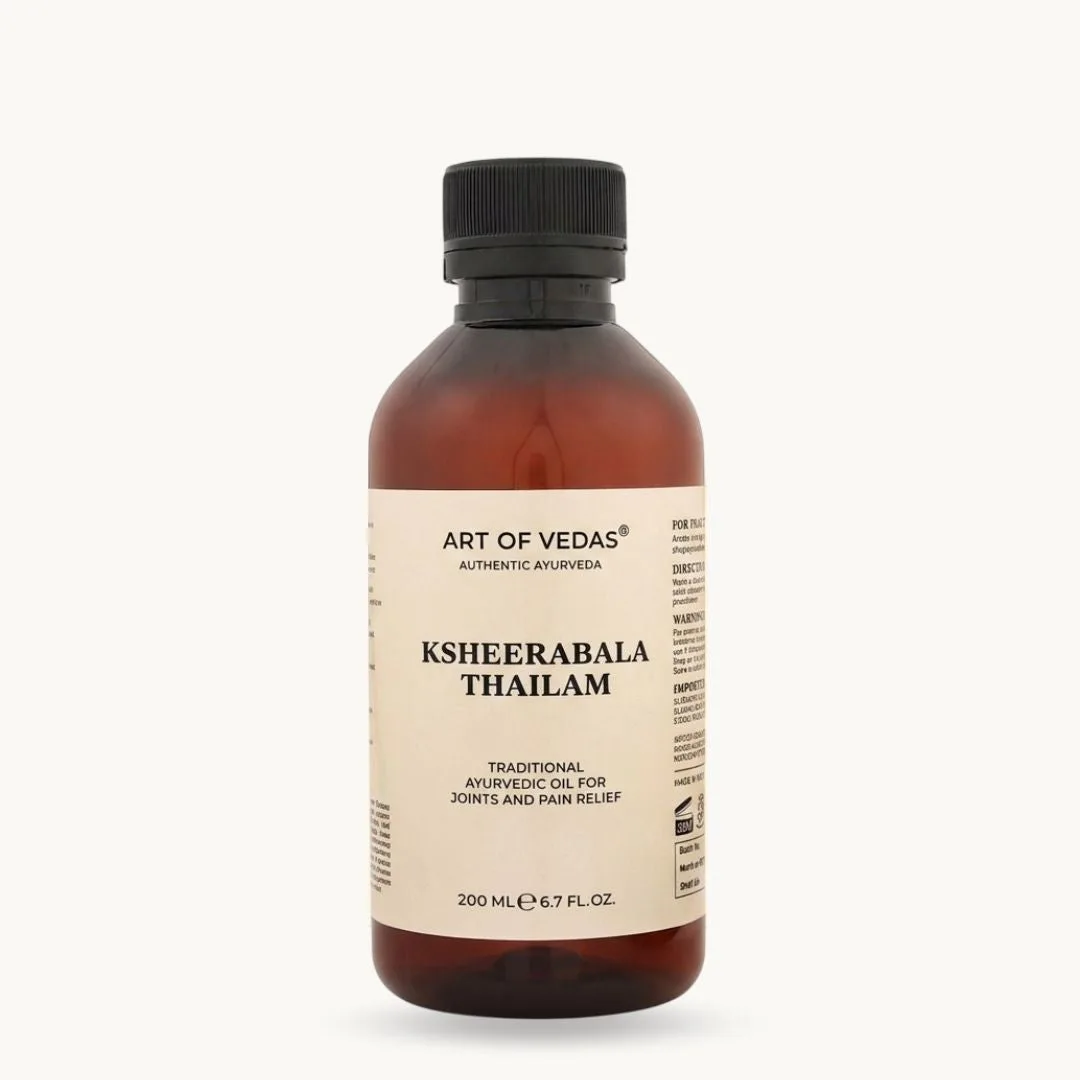
Ksheerabala Thailam: The foremost classical Pizhichil oil - its milk-based processing provides the most deeply nourishing, Majja Dhatu-directed action of any single classical oil, directly aligned with Pizhichil's primary therapeutic target. See our Ksheerabala guide.
-
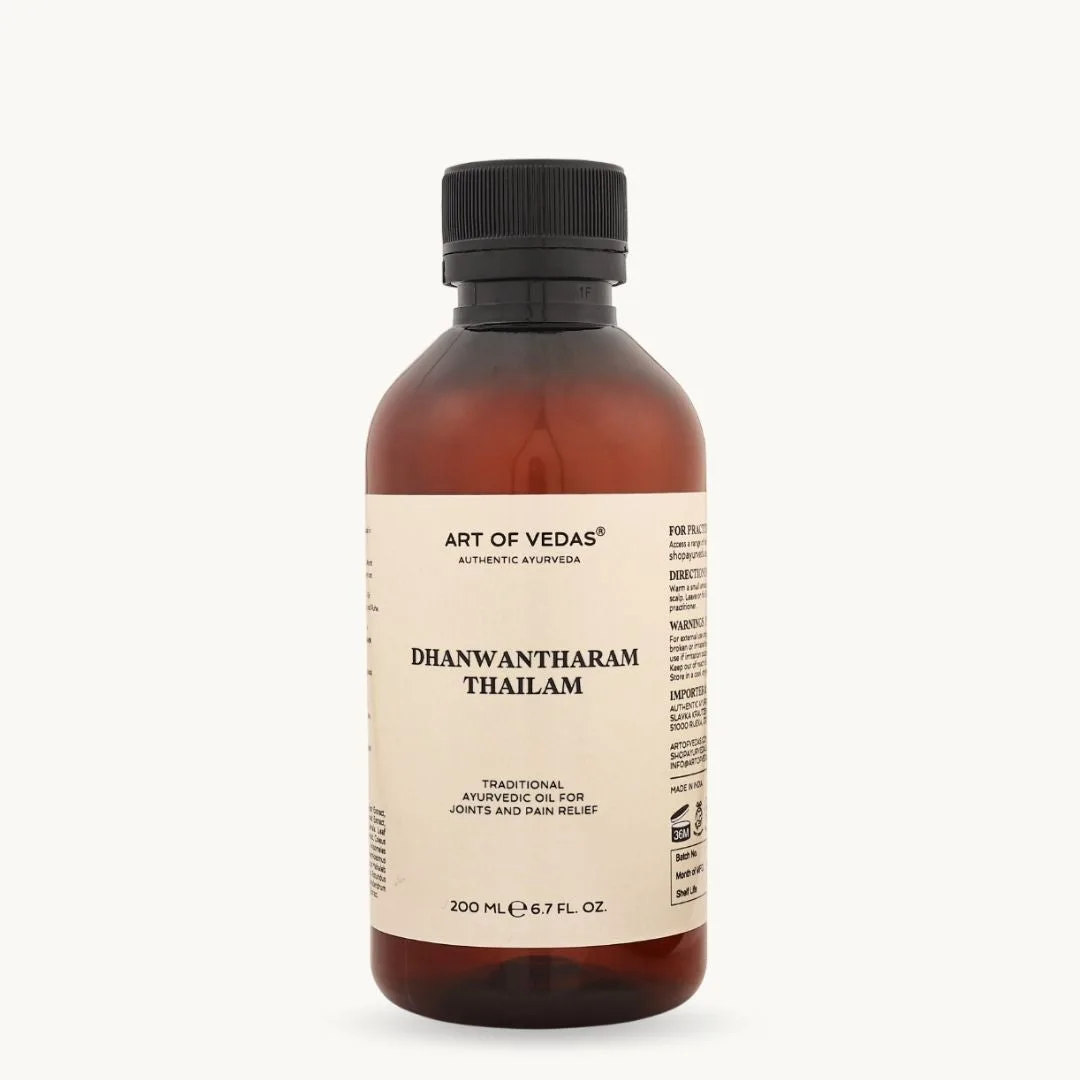
Dhanwantharam Thailam: For comprehensive musculoskeletal and systemic Vata involvement. See our Dhanwantharam guide.
-
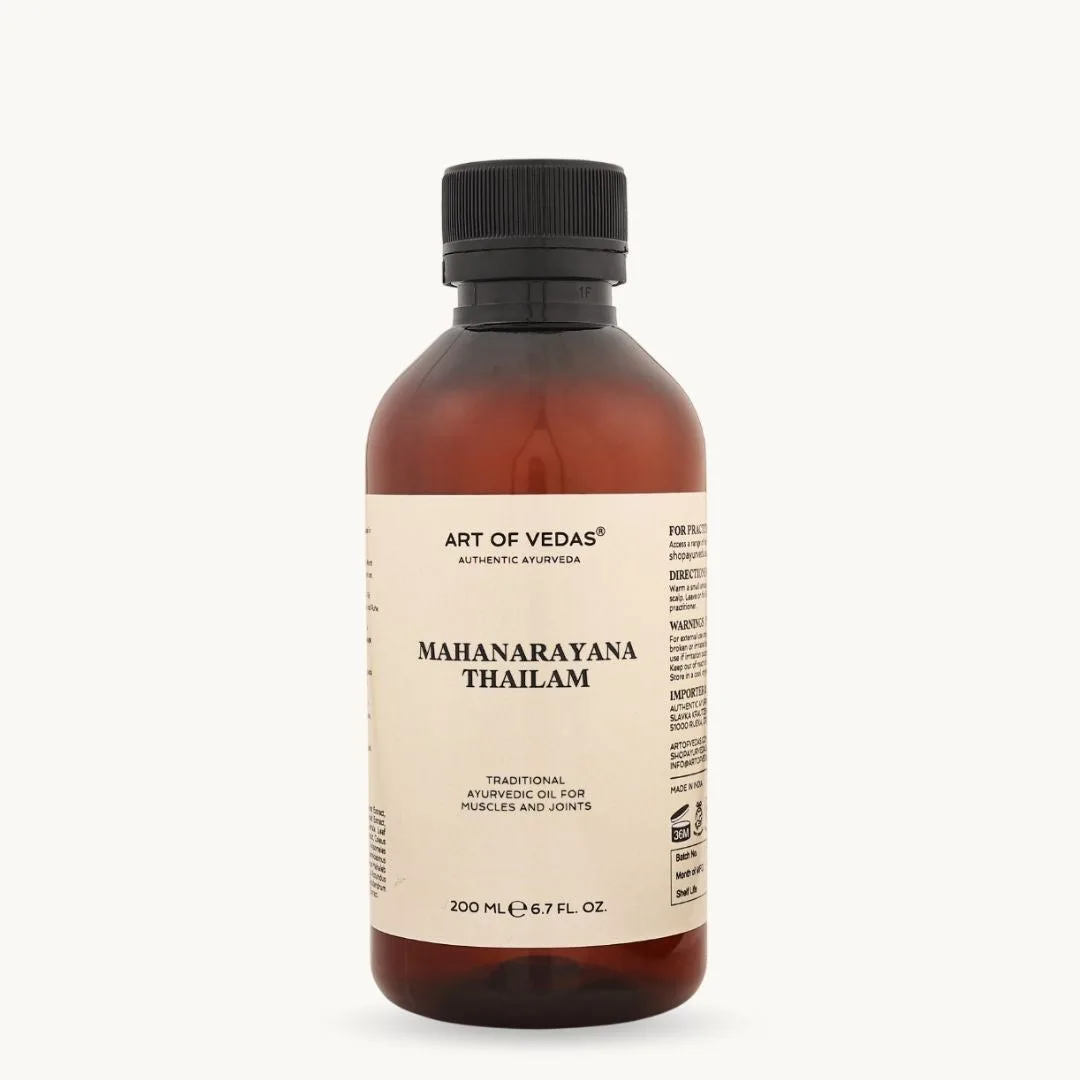
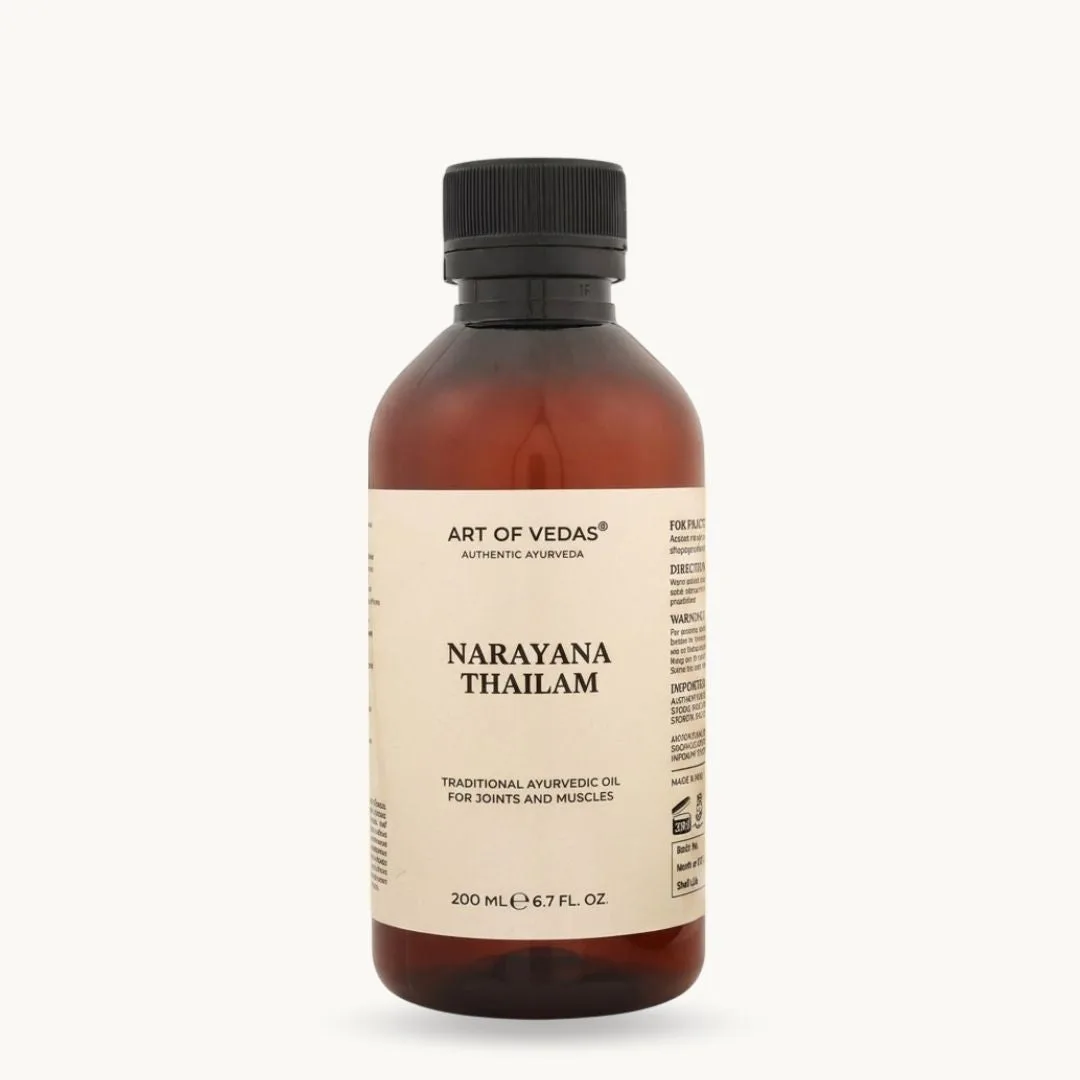
Mahanarayana Thailam: For Sarva Vata hara - widespread Vata elevation across multiple tissue layers. See our Narayana guide.
-
Sahacharadi Thailam: For lower body predominance - particularly when lower limb strength and function are the primary therapeutic concern. See our Sahacharadi guide.
Pizhichil and Rasayana
Beyond its therapeutic applications for significant Vata-depletion conditions, the classical tradition also describes Pizhichil as a Rasayana therapy in its own right - used in the context of rejuvenation, longevity practice, and the maintenance of peak physical vitality. A seven-day course of Pizhichil with appropriate Rasayana oils in the correct seasonal context is described as one of the most powerful available Sarvanga Snehana (full-body oleation) Rasayana practices - nourishing all seven Dhatu layers simultaneously and supporting the quality of Ojas at the deepest level.
In modern Ayurvedic wellness settings in Europe, Pizhichil is often offered as a luxurious rejuvenation experience for this Rasayana purpose - its therapeutic indications for serious Vata-depletion conditions being less common in the general wellness context, while the Rasayana application is broadly relevant for those seeking deep physical restoration and recovery.
Frequently Asked Questions
What is Pizhichil?
Pizhichil is a classical Ayurvedic therapy in which warm medicated oil is squeezed continuously over the entire body by two to four therapists while simultaneously providing gentle massage. It is the most comprehensive full-body oleation therapy in the classical literature - described as the "King of Ayurvedic therapies" in the tradition - primarily indicated for deep Vata depletion and as a Rasayana practice.
How is Pizhichil different from Abhyanga?
Abhyanga is classical oil massage - oil applied and massaged into the body with specific strokes. Pizhichil is oil immersion - warm oil poured continuously over the entire body for an extended duration with gentle massage but with total-surface oil saturation maintained throughout. Pizhichil uses significantly more oil, requires multiple therapists, and provides a far deeper and more sustained Snehana effect than standard Abhyanga. In the Panchakarma context, Abhyanga is a daily component; Pizhichil is used for cases requiring deeper oleation.
Which oil is used in Pizhichil?
Ksheerabala Thailam is the most classically appropriate Pizhichil oil for most indications - its milk-processed Vata-Majja Dhatu nourishing action being directly aligned with the therapy's primary therapeutic target. Dhanwantharam, Mahanarayana, and Sahacharadi Thailams are used for specific variations of indication.
How long does Pizhichil last?
A single session is forty-five minutes to one hour. Classical courses run seven to twenty-one consecutive days depending on the indication - seven days for Rasayana purposes, longer courses for more significant therapeutic conditions.
Related Therapies and Oils
See our complete Abhyanga guide for the foundational oil massage practice. For related therapies, see our Njavarakizhi guide and Shirodhara guide. Browse our Ayurvedic Thailam collection.
This article is for informational and educational purposes only. Pizhichil is a classical Ayurvedic therapy that should be administered by a qualified Ayurvedic practitioner. The information provided does not constitute medical advice and is not a substitute for professional guidance.