The information in this article is provided for educational purposes and reflects traditional Ayurvedic knowledge. It is not intended as medical advice and should not replace consultation with a qualified healthcare professional.
In brief: Sesame oil - Til Taila - is not a carrier oil in classical Ayurveda. It is identified in the Charaka Samhita as the best of all oils for Vata, described with specific classical properties that distinguish it from all other vegetable oils, and used as the base for over seventy percent of classical medicated Thailams. This guide explains the classical framework, why sesame was chosen, and how to use it correctly in Abhyanga.
Sesame Oil in Ayurveda: Why Every Classical Abhyanga Starts With This One Oil
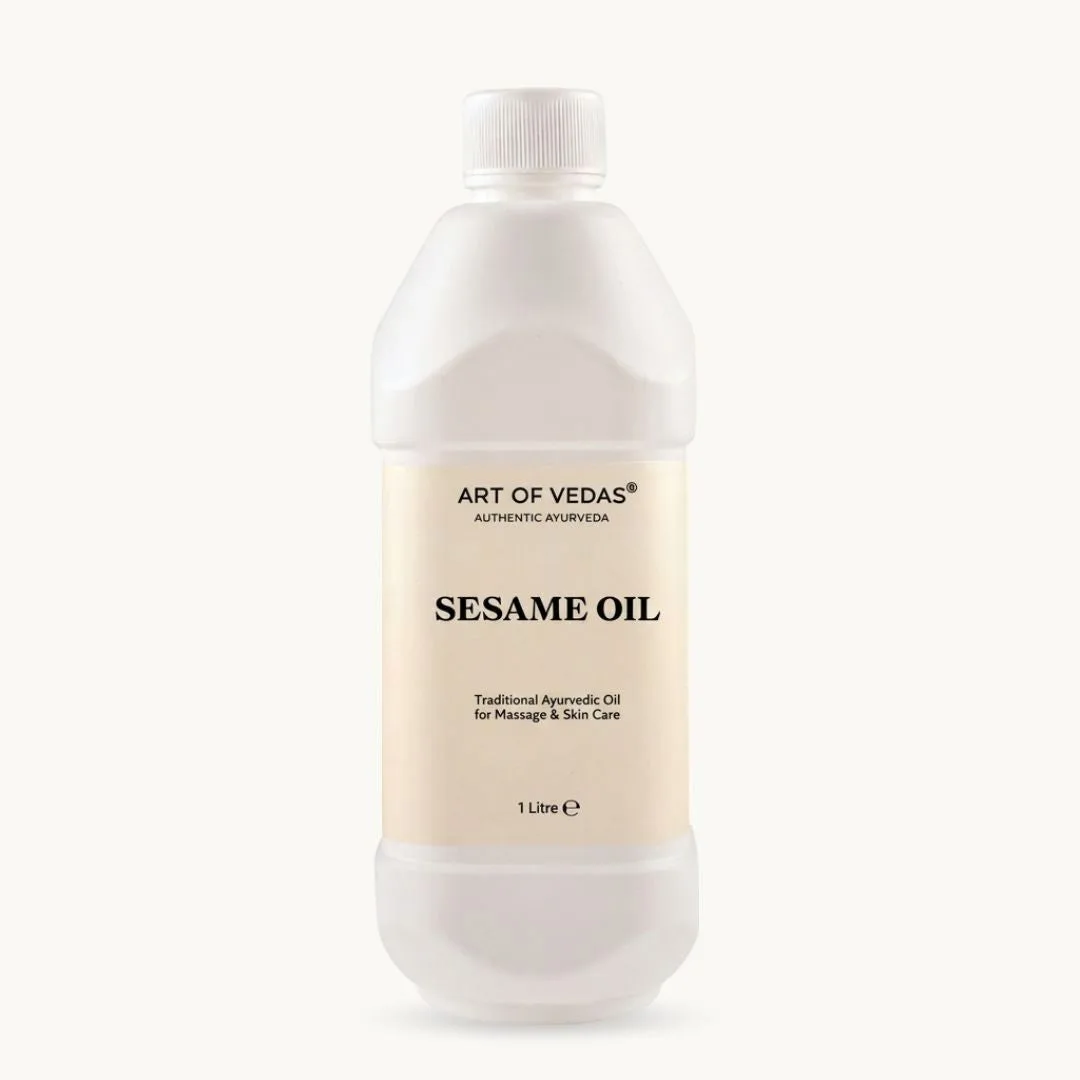
In the modern wellness world, sesame oil is frequently described as a carrier oil - a neutral base that dilutes essential oils before application. This framing fundamentally misunderstands the classical Ayurvedic position. In the Charaka Samhita, sesame oil is not a neutral carrier. It is described as the best of all oils - Tailanam Shreshtham - for Vata, attributed with specific classical properties that no other oil shares to the same degree, and identified as a therapeutic agent in its own right before any herbs are added to it.
Over seventy percent of classical Ayurvedic medicated Thailams use sesame oil as their base. This is not a historical accident or a matter of regional availability. Classical texts provide a specific rationale for sesame's primacy that reflects the coherent logic of the Ayurvedic pharmaceutical framework. Understanding that rationale transforms how sesame oil is used in daily practice.
The Classical Properties of Sesame Oil
The Charaka Samhita and Ashtanga Hridayam both provide detailed classical descriptions of sesame oil's properties (Gunas) that explain its pre-eminence in the Ayurvedic pharmacopoeia. The key properties are as follows.
Ushna (warming): Sesame oil's warming potency directly counters the cold quality of Vata dosha. The application of warm sesame oil to the body generates internal warmth that reaches the deeper tissues, reducing Vata's cold and constricting effects in the channels and joints. This warming property is described in classical texts as the primary reason sesame is preferred over other oils for Vata management.
Guru (heavy): Sesame is the heaviest of the commonly used vegetable oils in the classical framework - this heaviness directly counters Vata's light quality, providing ballast and grounding to the tissues and nervous system that no lighter oil can achieve to the same degree. The heaviness is not a practical inconvenience; it is a therapeutic property.
Sukshma (subtle and penetrating): Despite its heaviness, sesame oil is described in classical texts as having a subtle, penetrating quality that allows it to reach the deeper tissue layers (dhatus) rather than remaining superficially in the skin. This combination of heavy and penetrating is unusual - most heavy oils are also less penetrating - and is one of the primary reasons classical texts describe sesame as uniquely suitable for the nourishment of the deeper tissues.
Vyavayi (spreading quickly through the body): The classical texts describe sesame oil as spreading through the body's channels before being fully metabolised - a property described as Vyavayi - which contributes to its systemic Vata-balancing action through topical application. This is the classical basis for the claim that Abhyanga with sesame oil has systemic benefits beyond simply nourishing the skin.
Tikshna (sharp): Despite its nourishing qualities, sesame oil is also classified as Tikshna - penetrating and sharp - which means it has the capacity to move through the channels and reach blocked or constricted areas. This is relevant to the classical claim that sesame oil supports the opening of the channels that carry nourishment to the deeper tissues.
Why Sesame Is the Foundation of Classical Medicated Oils
The combination of warming, heavy, penetrating, spreading, and sharp properties creates a specific pharmaceutical profile that the classical texts describe as ideal for serving as the base for medicated Thailams. When herbs are processed into sesame oil through the classical Sneha Paka method (the prolonged heating process used to make Thailams), the oil's properties both preserve the herbs' therapeutic constituents and carry them into the body's tissues through application.
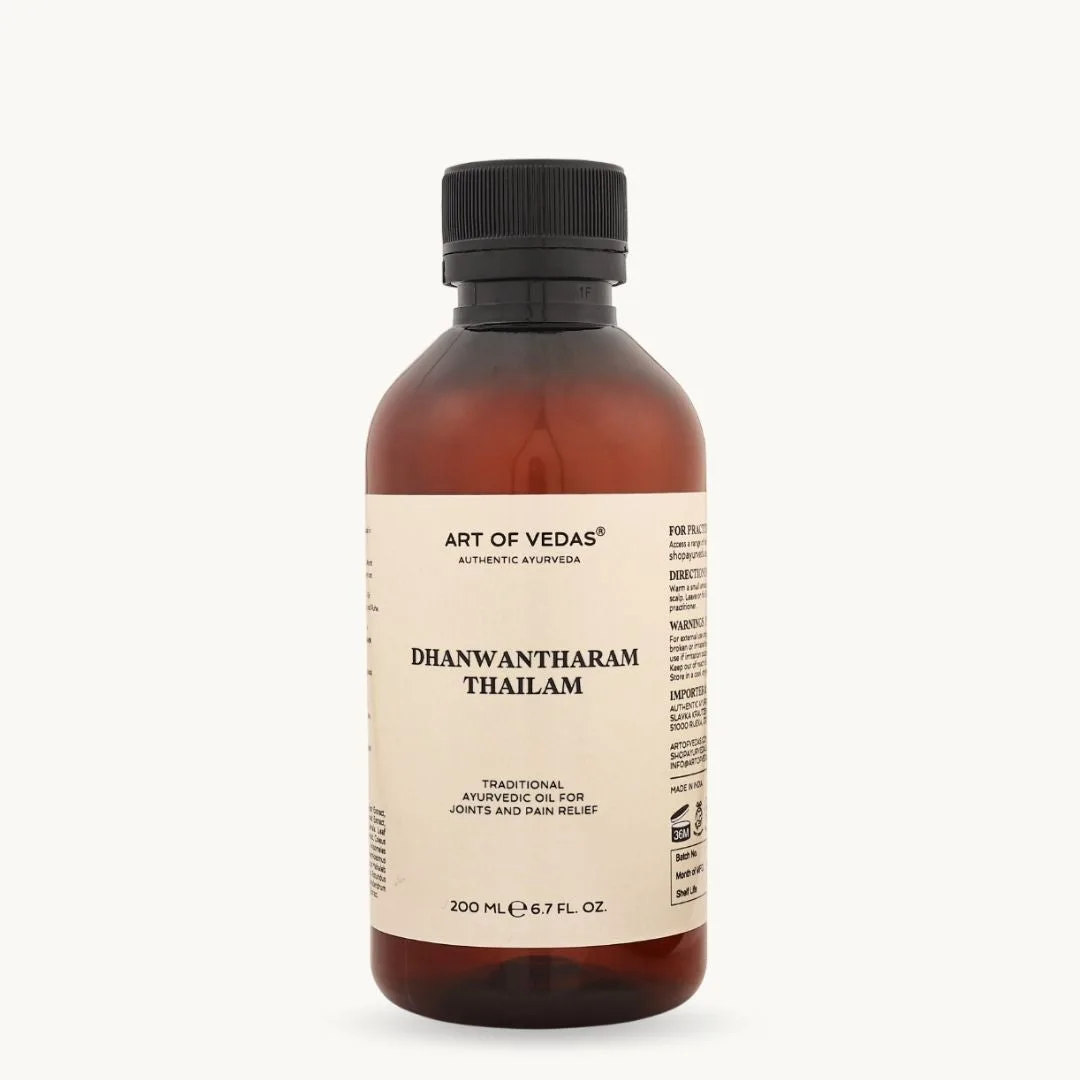
The Charaka Samhita's pharmaceutical texts explain that the base oil in a Thailam is not simply a solvent - it becomes an active component of the preparation. Sesame's specific combination of properties means that the herbs processed in it are delivered to deeper tissue layers than would be reached with lighter or less penetrating oils. This is the classical rationale for why Dhanwantharam, Mahanarayana, and most other major classical Thailams use sesame as their base.
It also explains why classical Ayurveda does not simply recommend adding herbs to whatever oil is convenient. The oil base is a therapeutic choice with its own properties, and sesame's properties are specifically suited to Vata management in a way that coconut, almond, or sunflower oil are not - though these have their own classical roles for specific conditions.
Sesame in Abhyanga: The Practical Guidance
For daily Abhyanga, the Charaka Samhita's Sutrasthana describes warming the sesame oil and applying it to the whole body before bathing. The text specifies that Abhyanga should be performed daily (Nityam) as part of Dinacharya - the daily routine - for those who wish to maintain health and slow the degenerative processes associated with Vata increase as life progresses.
The warming of the oil before application is essential - cold oil does not provide the warming Vata-balancing effect and is less easily absorbed. Classical guidance describes heating the oil to a comfortable warmth (not hot enough to cause discomfort) - a small amount held in the palm should feel pleasantly warm rather than tepid or hot.
The application sequence follows classical guidance: beginning at the scalp and moving downward. The scalp receives the oil first as it is considered the primary seat of Prana Vata, and regular scalp oiling is described as having specific benefits for the sense organs, the quality of sleep, and the nervous system. The face, neck, shoulders, arms, chest, abdomen, back, legs, and feet follow. Long, smooth strokes on the limbs and gentle circular strokes on the joints are described as the appropriate technique.
Allow the oil to absorb for fifteen to thirty minutes before bathing with warm (not hot) water. Classical guidance notes that excessive heat in the bathing water reduces the oil's therapeutic benefit by removing it before it has fully absorbed. See our complete guide to Abhyanga at home.
Plain Sesame versus Classical Medicated Thailams
Plain (unmedicated) sesame oil provides the base properties described above - Vata-balancing, warming, nourishing, and penetrating. Classical medicated Thailams provide the same base properties together with the specific therapeutic actions of the herbs processed into the oil. Both have a place in classical practice.
For daily general Abhyanga as a Vata-prevention and wellness practice, plain sesame oil is entirely appropriate and is what many classical texts describe for the general population. For more specific conditions - postnatal recovery, musculoskeletal support, specific skin conditions, or significant Vata imbalance - the relevant classical Thailam provides a more targeted action. Browse our Thailams collection for classical preparations built on sesame oil.
Frequently Asked Questions
Why does Ayurveda use sesame oil for Abhyanga?
The Charaka Samhita identifies sesame oil as the best of all oils for Vata - based on its warming (Ushna), heavy (Guru), penetrating (Sukshma), body-spreading (Vyavayi), and sharp (Tikshna) properties. This combination directly counters Vata's cold, light, mobile, and subtle qualities. No other commonly available oil has the same combination of these specific properties in the classical framework.
Is sesame oil good for all skin types in Ayurveda?
Most specifically suited to Vata constitution and dry, Vata-pattern skin. For Pitta constitution or inflammatory, hot skin, sesame's warming potency can aggravate the existing heat - cooler preparations are more appropriate. For Kapha, sesame's warmth is relevant but lighter, more stimulating Abhyanga is classically preferred over heavy nourishment. Constitution and season guide the choice.
What is the difference between plain sesame oil and medicated Thailam?
Plain sesame oil provides all the base classical properties - warming, nourishing, Vata-balancing. Medicated Thailams are prepared by processing specific herbs in sesame oil through the classical Sneha Paka method, adding the herbs' therapeutic actions to the base oil's properties. Classical texts recommend plain sesame for general daily Abhyanga; medicated Thailams for specific conditions, significant imbalance, or Panchakarma protocols.
How should sesame oil be heated for Abhyanga?
Warm to a comfortable skin-friendly warmth - pleasant on the inner wrist, not hot enough to cause discomfort. Placing the bottle in hot water for a few minutes is the practical approach. Heating directly over flame to high temperatures is not classical and risks denaturing the oil's properties. Cold oil is less absorbed and does not provide the full Vata-balancing effect.
Explore Sesame Oil and Classical Abhyanga Preparations at Art of Vedas
Browse our Thailams collection for classical sesame-based Abhyanga oils. Related reading: Abhyanga at home, dry skin and Vata, Dhanwantharam Thailam guide, and Vata type diet and routine.
For external use only. Not a substitute for professional medical advice.