This article is part of our Ayurveda Practitioner Supplies guide series.
What Is Shirodhara and Why Equipment Matters
Shirodhara is one of the most recognisable treatments in Ayurveda. A thin, continuous stream of warm oil pours onto the forehead, specifically the Ajna Marma point between the eyebrows. The treatment requires absolute precision: the right height, the right flow rate, the right temperature, and steady hands. None of this is possible without proper equipment.
In classical texts such as the Ashtanga Hridayam, the specifications for Shirodhara are detailed. The vessel must hang at a specific height. The stream must be consistent. The oil must remain warm throughout the session. When practitioners invest in professional-grade equipment, they can deliver treatments that honour these classical standards.
This guide covers every piece of equipment you need to set up a professional Shirodhara station in your clinic or treatment room.
The Dhara Patra: Choosing Your Shirodhara Pot
Brass Dhara Patra (Traditional)
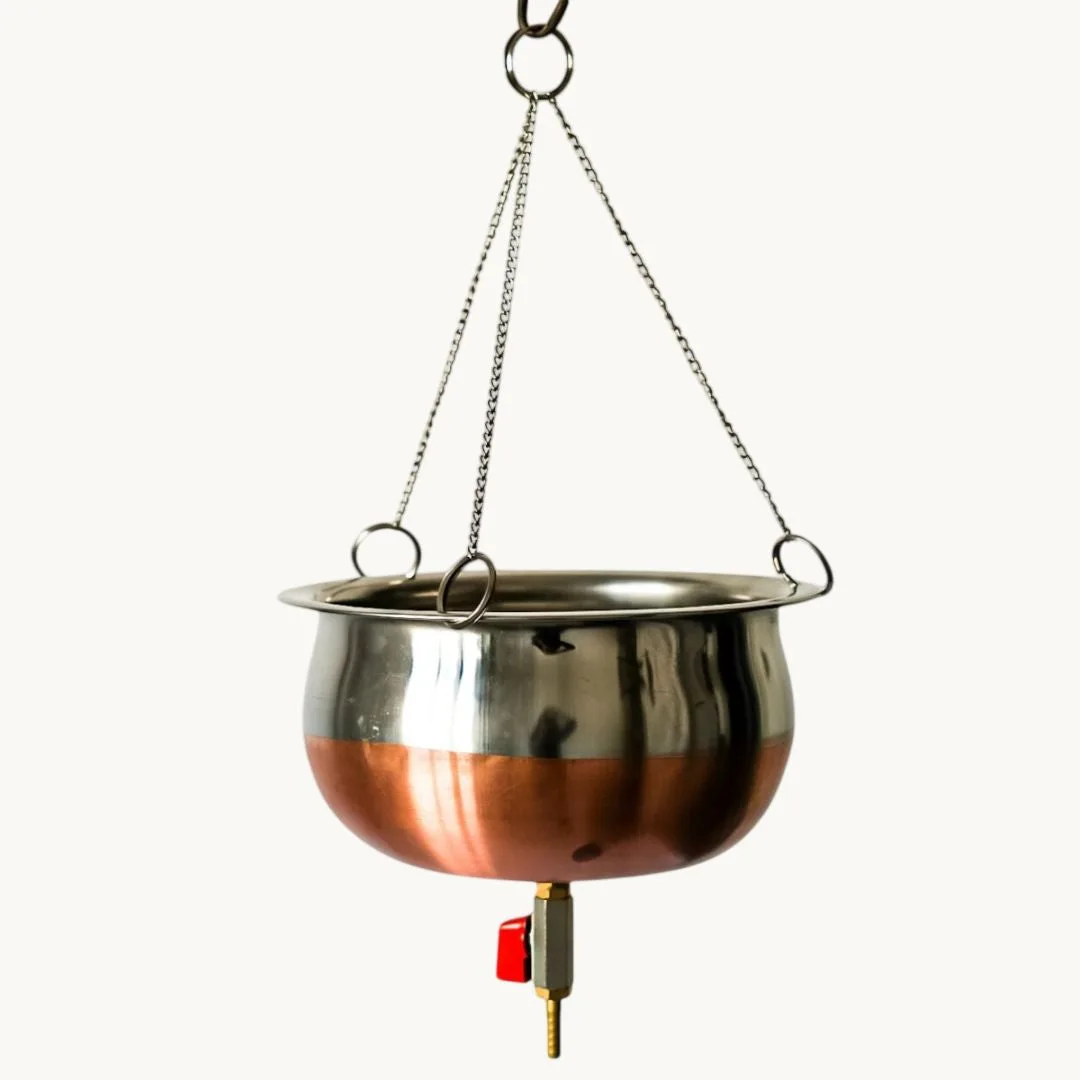
The classical Shirodhara vessel is a brass pot called a Dhara Patra. Brass has been the material of choice in Ayurvedic practice for centuries. It retains heat well, develops a natural patina that is considered beneficial, and lends authenticity to the treatment setting.
- Capacity: most professional models hold between 2 and 4 litres
- Wick system: a cotton wick threaded through the base opening controls the flow
- Flow control: the wick thickness and how tightly it is packed determine the stream width
- Maintenance: requires regular polishing with tamarind paste or lemon and salt to prevent tarnish
A quality brass Dhara Patra is the centrepiece of any Shirodhara setup. Look for vessels with a smooth interior finish and a well-machined base opening. Rough edges can fray the wick and create an uneven flow.
Stainless Steel Vessels
Some practitioners prefer stainless steel for hygiene compliance, particularly in European clinic settings where health inspectors may have specific requirements. Stainless steel is easier to sterilise, does not tarnish, and is lighter than brass.
The drawback is heat retention. Stainless steel loses warmth faster than brass, which means you may need to refill more frequently or use an oil warming system alongside.
Copper Vessels
Copper Dhara Patras exist but are less common. Copper has excellent heat conductivity but reacts with certain oils over time. If you choose copper, ensure the interior is lined or that you clean it thoroughly after each use.
Shirodhara Stand and Frame
The Dhara Patra does not simply sit on a shelf. It needs to hang at a precise height above the client's forehead, typically between 10 and 15 centimetres (a four-finger width, or approximately one "vitasti" in classical measurement).
Adjustable Tripod Stands
The most versatile option is a height-adjustable tripod stand made of stainless steel or wood. These allow you to fine-tune the distance from the vessel to the forehead, which directly affects the pressure and spread of the oil stream.
- Height range: look for stands adjustable between 150 and 200 cm total
- Base stability: a wide tripod base prevents tipping, especially important when the vessel is full
- Hook or cradle: the top should have a secure hook or cradle system that holds the Dhara Patra firmly
Wall-Mounted Systems
For dedicated treatment rooms where the Shirodhara table has a fixed position, a wall-mounted bracket system saves floor space. These are typically custom-fabricated from stainless steel and bolted to the wall.
Pendulum Swing Mechanism
Some advanced setups include a pendulum mechanism that gently swings the pot from side to side. This creates a sweeping motion across the forehead rather than a single fixed point. Classical texts describe this oscillating technique as particularly effective. Pendulum mechanisms can be added to most tripod stands.
The Shirodhara Table
A standard massage table will not suffice for Shirodhara. You need a table with specific features designed for this treatment.
Head Recess and Oil Collection
The most important feature is a carved recess or channel at the head end where oil flows away from the client's head. Without this, oil pools around the ears and neck, creating discomfort and mess.
- The recess should angle downward into a drainage channel
- The drainage channel leads to a collection vessel below the table
- The collection vessel should hold at least 3 litres to avoid overflow during a 45-minute session
Wood vs Fibreglass
Traditional Shirodhara tables are carved from a single piece of wood, often neem or teak. These are beautiful and authentic but heavy, expensive, and require oil-proofing treatment. Fibreglass tables with a wood-effect finish offer a practical alternative. They are lighter, easier to clean, and impervious to oil staining.
Table Height and Width
Standard treatment table height applies: the practitioner should be able to stand comfortably without bending. For Shirodhara specifically, a slightly narrower table (60 to 65 cm) gives the practitioner better access to the client's head from either side.
Oil Warming Systems
Shirodhara oil must be maintained at a consistent temperature throughout the session, typically between 38 and 42 degrees Celsius. Cold oil disrupts the therapeutic effect and is uncomfortable for the client.
Electric Oil Warmers
Purpose-built Ayurvedic oil warmers with thermostat control are the most reliable option. These units hold 2 to 5 litres and maintain a steady temperature. Look for models with:
- Accurate thermostat (not just low/medium/high settings)
- Food-grade stainless steel reservoir
- Spout or ladle access for easy pouring
- CE marking for European electrical compliance
Water Bath Method
The classical method uses a double-boiler principle. Place the oil container inside a larger vessel of hot water. This is gentle and prevents overheating but requires more attention during the session.
Recirculation Systems
Professional clinics that perform multiple Shirodhara sessions daily sometimes invest in recirculation systems. These pump the collected oil from the drainage vessel back up to the Dhara Patra through a warming element. This allows continuous flow without manual refilling.
Note that recirculated oil must be filtered between uses and should only be reused for the same client within a single session. Classical hygiene principles apply.
Accessories and Consumables
Cotton Wicks
The wick controls everything. Stock unbleached, organic cotton wicks in several thicknesses. Thinner wicks produce a finer stream; thicker wicks produce a broader flow. Many practitioners prepare their own wicks by rolling cotton into tight cylinders.
Forehead Band (Varti)
A rolled cotton band placed across the forehead just above the eyebrows prevents oil from running into the eyes. This is a simple but essential safety measure.
Oil Collection Bowls
Stainless steel bowls placed beneath the drainage channel catch the used oil. Have at least two: one in use, one ready to swap.
Towels and Head Wraps
Keep a supply of warm towels for wrapping the client's head after treatment. Dark-coloured towels are practical as Ayurvedic oils leave permanent stains on white fabric.
Protective Coverings
Oil-proof sheets or disposable bed covers protect the treatment table and floor. Shirodhara is inherently messy; preparation saves cleanup time.
Setting Up Your Shirodhara Station
A well-designed Shirodhara station flows logically from preparation to treatment to cleanup.
-
Oil warming area: positioned within arm's reach of the treatment table, with the warmer at a comfortable height for ladling
-
Treatment table: centred in the room with the head end accessible from both sides
-
Stand and vessel: positioned directly above the head recess, secured and tested before the client lies down
-
Collection system: bowl or vessel beneath the drainage channel, checked for capacity
-
Towel station: warm towels ready at the foot of the table
Test your setup before every session. Fill the Dhara Patra with warm water, check the flow rate, adjust the height, and confirm that drainage works properly. A dry run takes two minutes and prevents problems during the treatment.
Sourcing Equipment in Europe
Finding authentic Ayurvedic equipment in Europe has become easier as the practice grows. Art of Vedas supplies professional practitioners across the EU with treatment equipment and bulk oils. For a complete overview of available equipment and supplies, visit our practitioner supplies page.
When evaluating suppliers, consider:
- Material certifications (food-grade brass, CE-marked electrical items)
- Shipping within the EU to avoid customs delays and additional duties
- Return policies for equipment that does not meet your specifications
- Availability of replacement parts, especially wicks and drainage fittings
Investment and Budgeting
A complete professional Shirodhara setup represents a meaningful investment. Here is a rough breakdown of what to expect:
- Brass Dhara Patra (3L): EUR 80 to 200 depending on quality and origin
- Adjustable stand: EUR 100 to 300
- Shirodhara table with drainage: EUR 400 to 1,200
- Electric oil warmer: EUR 60 to 150
- Consumables (wicks, towels, bowls): EUR 50 to 100 initial stock
Total initial setup ranges from approximately EUR 700 to 2,000. The equipment lasts for years with proper care, making it a sound investment for any practice offering Shirodhara.
Maintenance and Care
Brass vessels need regular polishing and should be dried thoroughly after washing to prevent green oxidation. Oil warmers require descaling if you use hard water for the water bath method. Tables should be wiped down with a mild, oil-cutting cleaner after each session.
Replace cotton wicks after every session. Inspect the drainage channel for blockages weekly. Check the stand's height adjustment mechanism monthly for smooth operation.
Related Resources
For a deeper understanding of the treatment itself, read our complete guide to Shirodhara treatment. If you are setting up a full Ayurvedic treatment room, our practitioner supplies overview covers everything from oils to tables to consultation tools.