Snehana is the classical Ayurvedic practice of oleation, the deliberate preparation of the body with fats before the deeper stages of Panchakarma. In the traditional sequence it is the groundwork step, the phase in which tissues are made supple and receptive so that later procedures can follow in an orderly way. Understanding Snehana helps make sense of why a semi-solid Kuzhambu, a fluid Thailam, and a medicated Ghritham each have a distinct place in the classical framework.
What Snehana Means in the Classical Sequence
The Sanskrit root of Snehana carries the sense of both oiliness and affection, a reminder that oleation was understood as a nourishing, softening act. Classical Ayurveda describes two broad routes. The first is internal oleation, in which measured quantities of a medicated Ghritham or oil are taken under close supervision. The second is external oleation, applied to the surface of the body through Abhyanga and related methods. Both are preparatory. Neither is an end in itself. In a formal Panchakarma setting they precede Swedana, the warming stage, and only then the main therapeutic procedures.
Internal and External Oleation
Internal oleation is the more specialised route and belongs firmly in professional hands. The quantity, the timing and the choice of preparation are decided by a qualified practitioner according to the individual, the season and the constitution or Prakriti. A medicated Ghritham such as a Triphala Ghritham is a classical example of the kind of preparation used in this context. External oleation is gentler and more familiar. Here a warmed oil or a semi-solid Kuzhambu is worked into the skin along traditional directions, following the length of the limbs and the contours of the joints.
A Kuzhambu deserves particular mention because it behaves differently from a free-flowing oil. It is a thicker, semi-solid classical preparation that is warmed gently until it becomes workable, then applied to a targeted area rather than poured over the whole body. This makes it well suited to focused external oleation over a single region, while lighter oils suit broad, sweeping full-body work.
Traditional Benefits Described in the Texts
- Prepares and softens the tissues before the warming and cleansing stages of Panchakarma.
- Supports the classical aim of a supple, well-tended body during a course of care.
- Offers a structured rhythm of daily self-care that many people find grounding.
- Allows targeted attention to a chosen area when a semi-solid Kuzhambu is used.
- Anchors the routine within Dinacharya, the classical daily order of living.
The Materials of Snehana
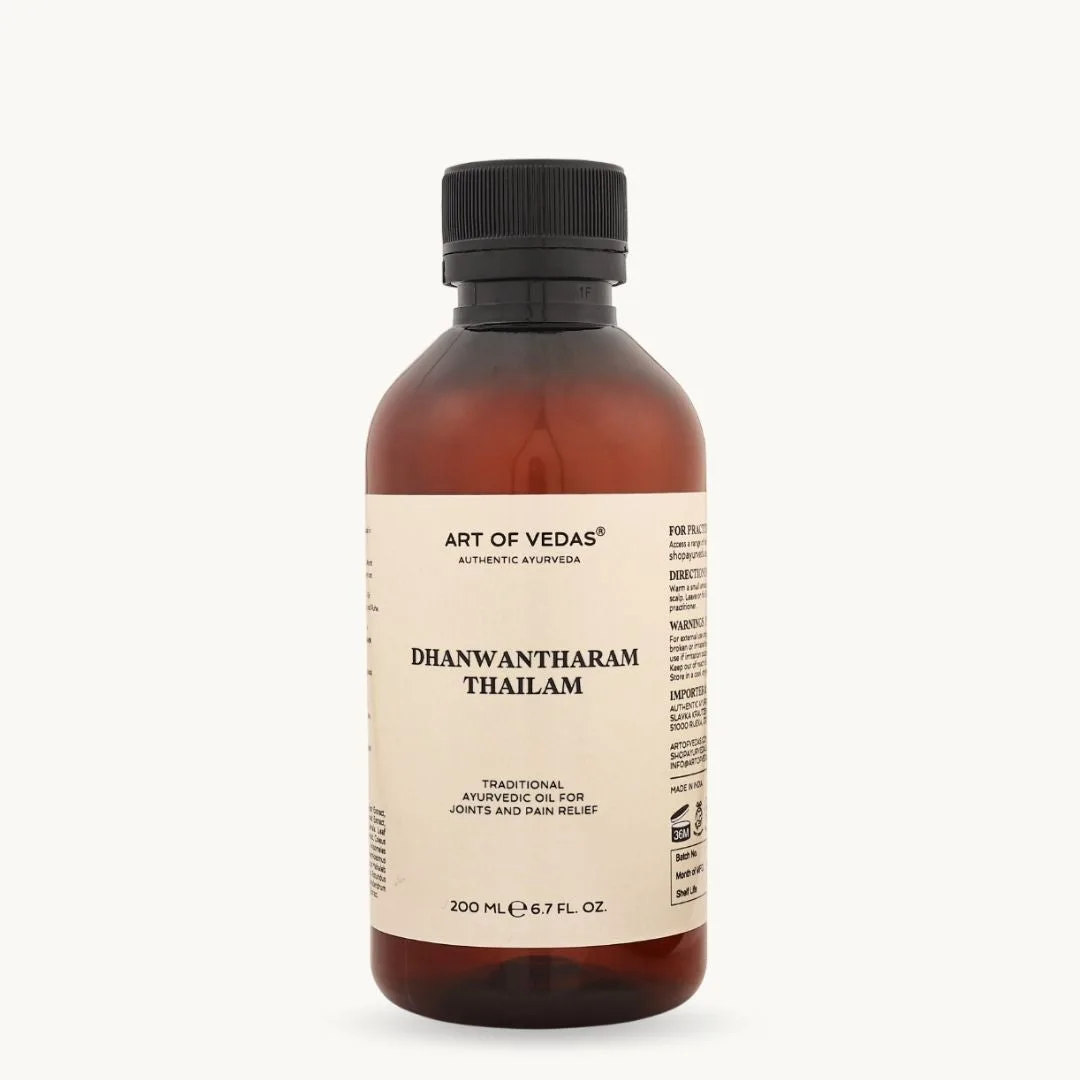
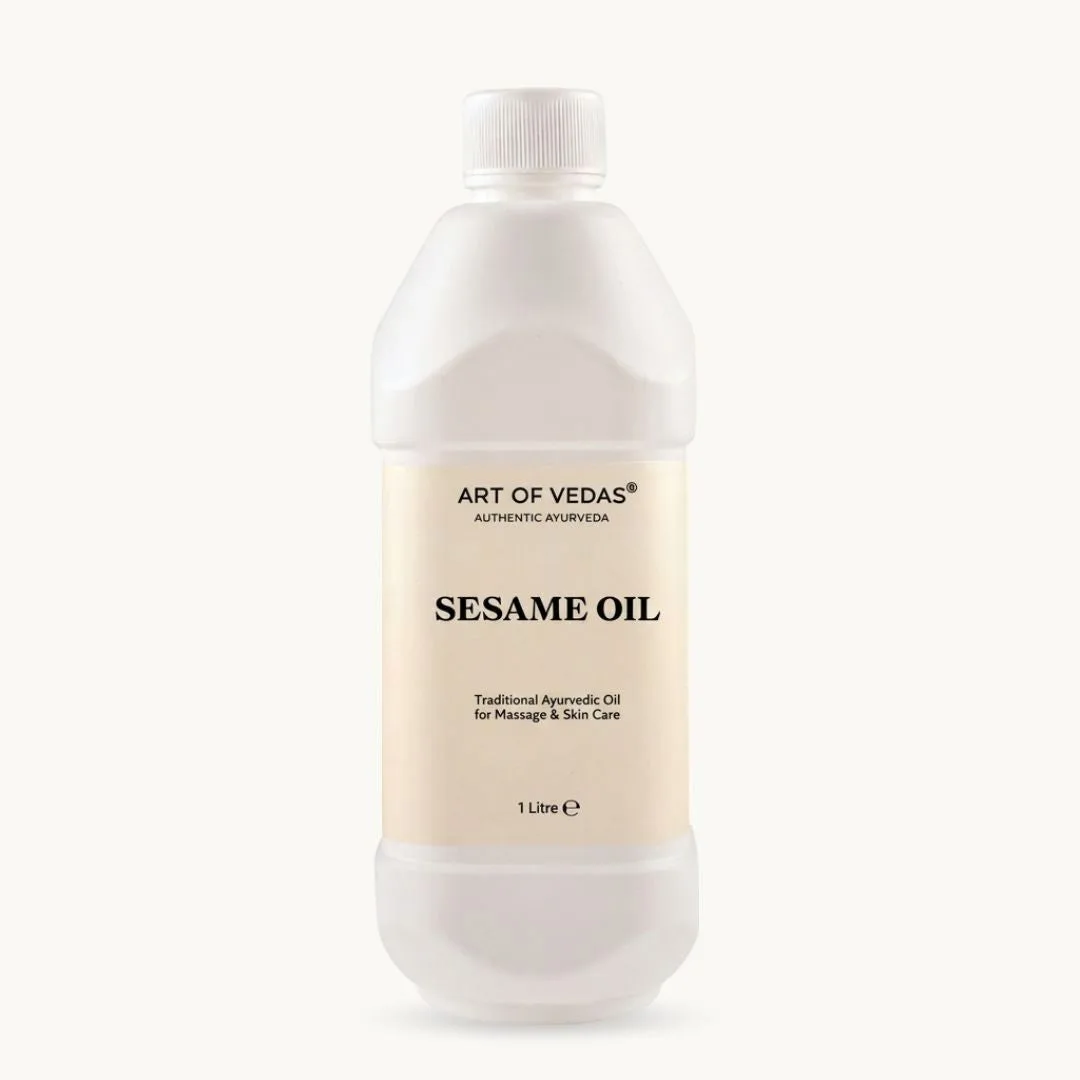
The classical materials of oleation are the fats themselves and the herbs cooked into them. A plain base such as a traditional sesame oil provides the carrier for external work and is valued for its warming quality. Medicated preparations build on such a base by processing selected botanicals into it over long, patient cooking. In a Ghritham the carrier is clarified butter rather than oil, which is why medicated ghee occupies its own category in the classical pharmacy. A Kuzhambu, by contrast, is reduced further into a semi-solid form, concentrating the preparation for local use. Art of Vedas prepares each of these in keeping with classical method, and the choice between them is guided by the intended stage of the routine.
Fitting Snehana Into a Considered Routine
For most people at home, Snehana means the external route practised calmly and consistently. A short session of warm oil or Kuzhambu application, unhurried and attentive, is the sensible everyday expression of the principle. Internal oleation and any formal Panchakarma programme belong within professional supervision and should not be improvised. To see how the whole system fits together, the Art of Vedas Kuzhambu complete guide explains the semi-solid preparations, the Panchakarma complete guide sets out the classical stages, and the Ghrithams guide covers medicated ghee. Suitable products include Dhanwantharam Kuzhambu for focused external work, Triphala Ghritham as a classical medicated ghee, and a traditional sesame oil as a plain carrier.
Frequently Asked Questions
Is Snehana the same as an ordinary oil massage?
Not quite. Abhyanga is the technique of applying oil, while Snehana is the wider classical principle of oleation, which includes both internal and external routes and sits within a larger sequence.
Can I do internal oleation at home?
Internal oleation should only be undertaken under the guidance of a qualified Ayurvedic practitioner. The quantities and timing are individual, and it is not something to attempt without supervision.
Where does a Kuzhambu fit in Snehana?
A Kuzhambu is a semi-solid preparation for external, targeted oleation. It is warmed until workable and applied to a chosen area, which distinguishes it from a lighter oil used for whole-body work.
Why is Ghritham grouped separately?
A Ghritham uses clarified butter as its carrier rather than oil, so classical Ayurveda treats medicated ghee as its own category with its own preparation and role.
How does Snehana relate to Panchakarma?
Snehana is the preparatory oleation stage. In the classical order it comes before the warming stage and the main procedures, readying the body for what follows.
This article is for educational purposes only. It reflects the traditional Ayurvedic understanding of Snehana as described in classical texts and is not medical advice. Internal oleation and any formal Panchakarma programme should only be undertaken under the guidance of a qualified Ayurvedic practitioner. If you are managing a health condition, please consult a qualified healthcare provider.