This article is part of our Dosha Assessment Guide series.
What Is Vata Dosha?
Vata is the Dosha composed of Air (Vayu) and Ether (Akasha). It governs all movement in the body and mind: the beating of the heart, the flow of breath, the movement of thoughts, the transmission of nerve impulses, and the passage of food through the digestive tract. Without Vata, nothing moves.
The qualities (Gunas) of Vata are: dry, light, cold, rough, subtle, mobile, and clear. When you understand these qualities, you understand everything about the Vata constitution, because Ayurvedic management is built on the principle that like increases like, and opposites create balance.
Physical Characteristics of Vata Types
People with a predominantly Vata constitution tend to share certain physical traits, though individual variation is always present:
-
Body frame: typically thin or slender, with a light bone structure. May be unusually tall or short. Joints may be prominent
-
Weight: tends to be low and difficult to gain. May lose weight easily under stress
-
Skin: tends toward dryness, especially in cold weather. May be cool to the touch. Thin, with visible veins
-
Hair: often dry, thin, or curly. May be prone to frizz or split ends
-
Eyes: small or narrow, sometimes with a lively, darting quality
-
Appetite: variable and irregular. May forget to eat or suddenly feel ravenously hungry
-
Digestion: tends to be irregular. May experience gas, bloating, or alternating patterns
-
Sleep: light and easily disturbed. May have difficulty falling asleep, especially when the mind is active
-
Temperature preference: dislikes cold. Gravitates toward warmth
Mental and Emotional Patterns
Vata governs the mind's activity and creativity. In balance, Vata types are:
- Quick-thinking, imaginative, and creative
- Enthusiastic and spontaneous
- Flexible and adaptable
- Fast learners (though they may also forget quickly)
- Lively conversationalists with a wide range of interests
When Vata becomes excessive, the same mental mobility can become destabilising:
- Racing thoughts and difficulty concentrating
- Worry, anxiety, or restlessness
- Difficulty making decisions or following through on plans
- Feeling scattered or overwhelmed
- Insomnia or light, interrupted sleep
The key distinction is that Vata in balance feels like inspiration and flow. Vata out of balance feels like chaos and depletion.
What Aggravates Vata
Because like increases like, anything that shares Vata's qualities will increase it:
-
Cold weather: winter and autumn are Vata seasons. Cold, dry, windy conditions increase Vata rapidly
-
Irregular routines: eating at different times each day, sleeping at irregular hours, frequent travel
-
Excess stimulation: too much screen time, noise, multitasking, or social activity
-
Cold, dry, raw foods: salads, crackers, cold drinks, and raw vegetables increase Vata
-
Fasting or skipping meals: Vata types lose stability quickly without regular nourishment
-
Excessive exercise: intense cardio, running, or high-impact activities without adequate rest
-
Stress and overwork: sustained mental effort without breaks depletes Vata
Diet for Vata Constitution
The ideal Vata diet emphasises warmth, moisture, grounding, and regularity. The tastes that balance Vata are sweet, sour, and salty.
Foods That Support Vata Balance
-
Grains: cooked rice, oats (cooked), wheat, quinoa. Warm and well-cooked
-
Vegetables: cooked root vegetables (carrots, beetroot, sweet potatoes), squash, asparagus, green beans. Always cooked, not raw
-
Fruits: sweet, ripe fruits such as bananas, mangoes, avocados, berries, and cooked apples
-
Dairy: ghee, soft cheeses, yoghurt (at room temperature)
-
Proteins: mung dal, red lentils, tofu (warm), eggs. Lightly spiced and well-cooked
-
Oils and fats: ghee, sesame oil, olive oil. Vata types need more fat in their diet than other types
-
Spices: ginger, cumin, cinnamon, cardamom, fennel, black pepper (in moderation), turmeric, asafoetida (hing)
Foods to Reduce
- Raw salads and cold foods
- Dried fruits (unless soaked), popcorn, crackers
- Caffeine in excess
- Bitter and astringent foods in large quantities (raw leafy greens, beans)
- Cold drinks, especially with ice
Eating Habits
Regularity matters more for Vata than for any other Dosha. Eat at consistent times each day. Do not skip meals. Eat in a calm environment without distractions. Warm, cooked meals are the foundation.
Lifestyle Practices for Vata Balance
Daily Routine (Dinacharya)
Structure is medicine for Vata. A consistent daily routine provides the stability that Vata's mobile nature needs:
-
Wake time: rise at a consistent hour, ideally before 7 AM
-
Morning oil massage (Abhyanga): this is the single most important practice for Vata. Warm sesame oil applied to the entire body before bathing calms the nervous system, moisturises the skin, and grounds the mind
-
Gentle exercise: yoga, walking, tai chi, or swimming. Avoid intense cardio or competitive sports
-
Meditation: even 10 to 15 minutes of seated stillness helps settle Vata's restless quality
-
Bedtime: by 10 PM. A warm cup of milk with nutmeg or Ashwagandha before bed supports sleep
Seasonal Care
Autumn and early winter are Vata season. During these months, increase warming practices: more oil massage, warmer foods, earlier bedtimes, and reduced travel. Spring and summer naturally counterbalance Vata with warmth and moisture, so these seasons are usually easier for Vata types.
Oils for Vata
External oil application is considered one of the most effective ways to balance Vata. The classical texts recommend sesame oil as the primary base for Vata.
Recommended Thailams
-
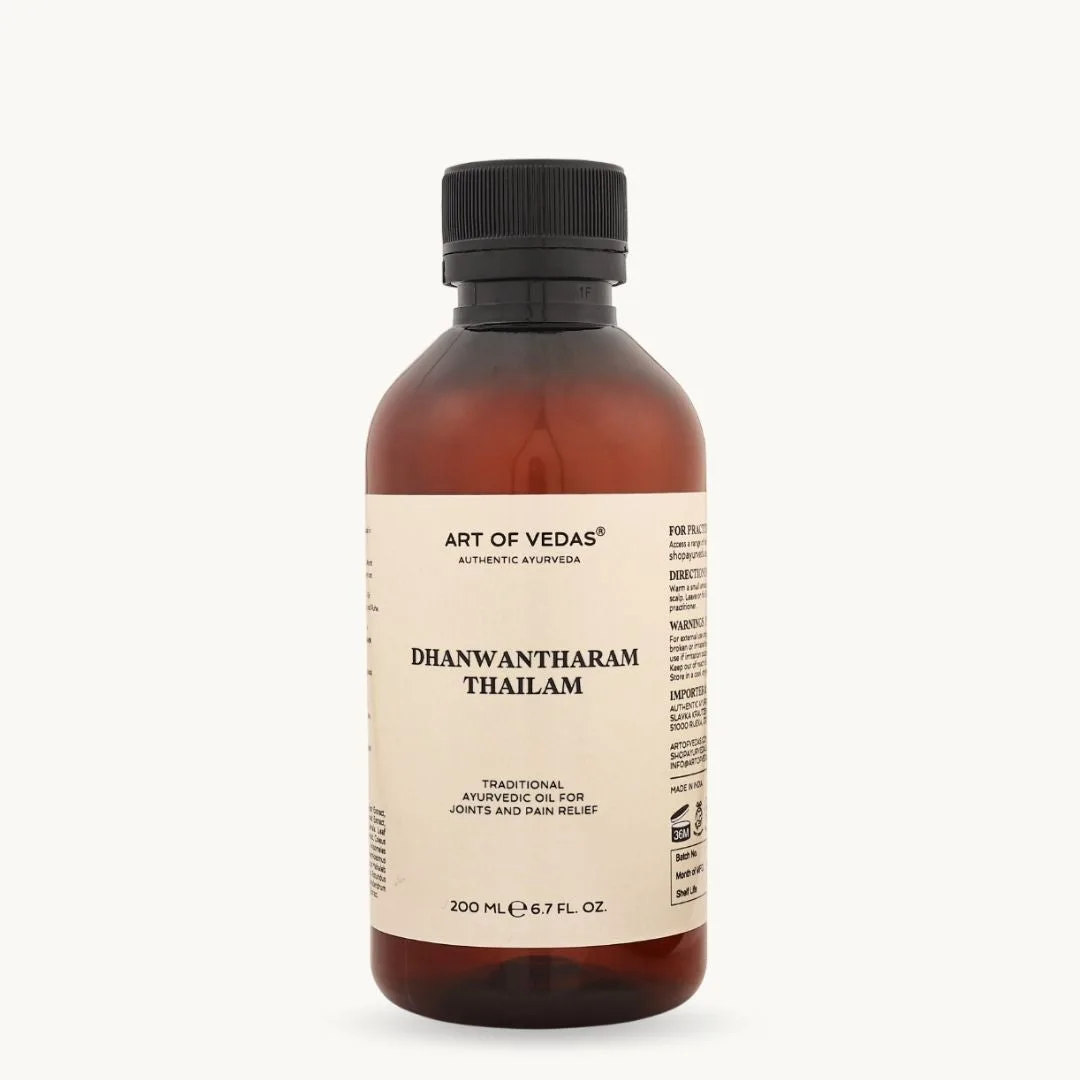
Dhanwantharam Thailam: the most widely used oil for Vata. Nourishing, warming, grounding. Suitable for full-body Abhyanga
-
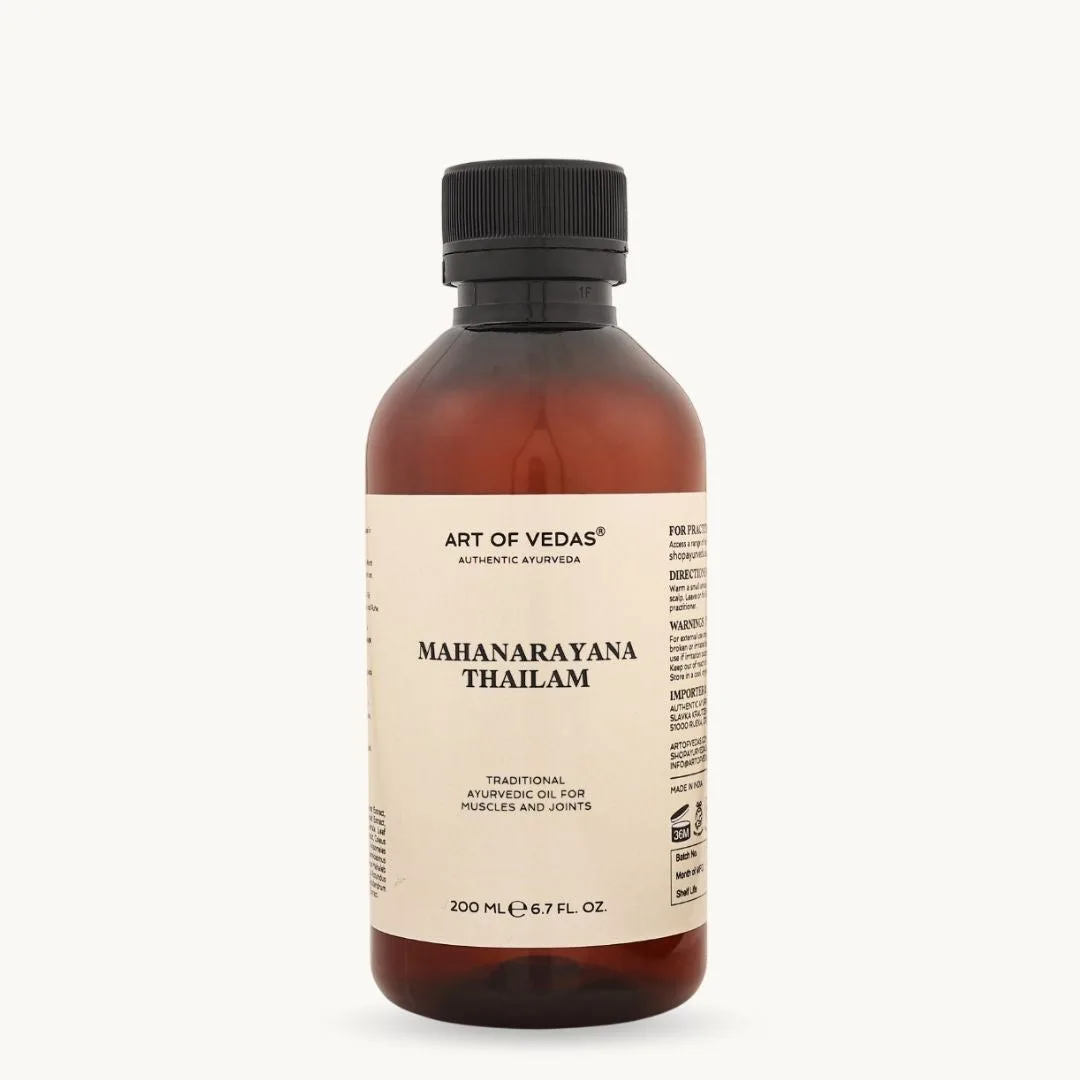
Mahanarayana Thailam: for joint stiffness and muscular tension, common Vata concerns
-
Sahacharadi Thailam: particularly for the lower extremities, where Vata tends to accumulate
-
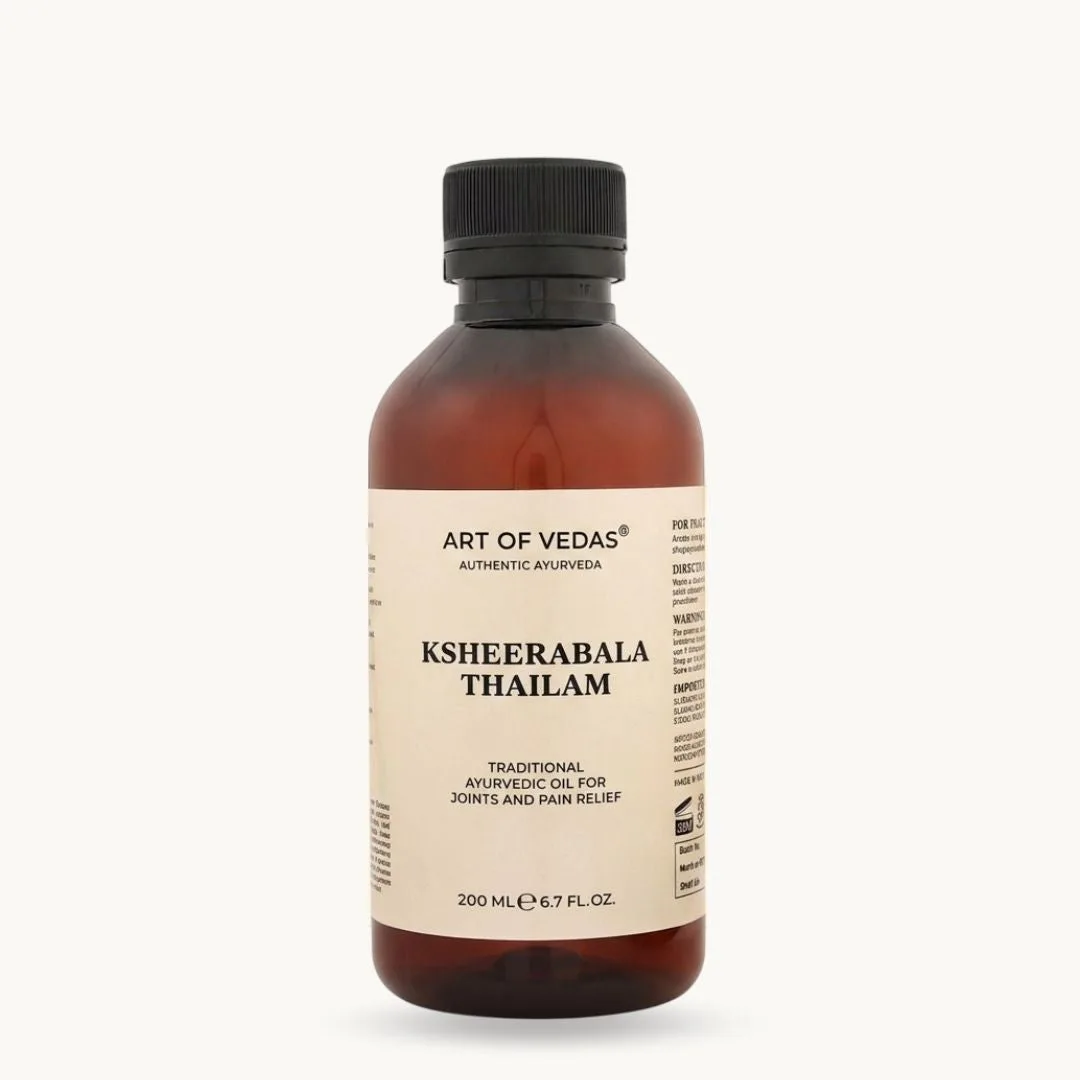
Ksheerabala Thailam: for head and scalp massage, supporting calm and restful sleep
-
Plain sesame oil: cold-pressed, organic sesame oil is an excellent everyday choice for self-massage
For a detailed comparison of oils, read our guide to Ayurvedic oils.
Herbs and Rasayanas for Vata
Classical Ayurveda recommends specific herbs to support Vata balance. These should be taken under the guidance of a qualified practitioner:
-
Ashwagandha: the premier Rasayana for Vata. Traditionally used to support strength, calm, and restful sleep
-
Bala (Sida cordifolia): nourishing and strengthening, traditionally used to support Vata in the muscles and nerves
-
Shatavari: cooling and nourishing, balancing Vata without aggravating Pitta
-
Triphala: the classical combination of three fruits, supporting regular digestion, which is often a Vata concern
When Vata Goes Out of Balance
The classical signs of Vata aggravation include dryness (skin, lips, joints), gas and bloating, constipation, restlessness, anxiety, insomnia, cracking joints, and sensitivity to cold. If you recognise these patterns, it is a signal to increase Vata-balancing practices: more warmth, more oil, more routine, more rest.
Persistent imbalance warrants consultation with a qualified Ayurvedic practitioner who can assess your specific situation and recommend a tailored programme.
Related Resources
To understand how your constitution compares across all three Doshas, visit our Dosha Assessment Guide. For the complementary fire constitution, read our guide to Pitta type. Learn more about the foundational practice of oil massage in our Abhyanga guide.