
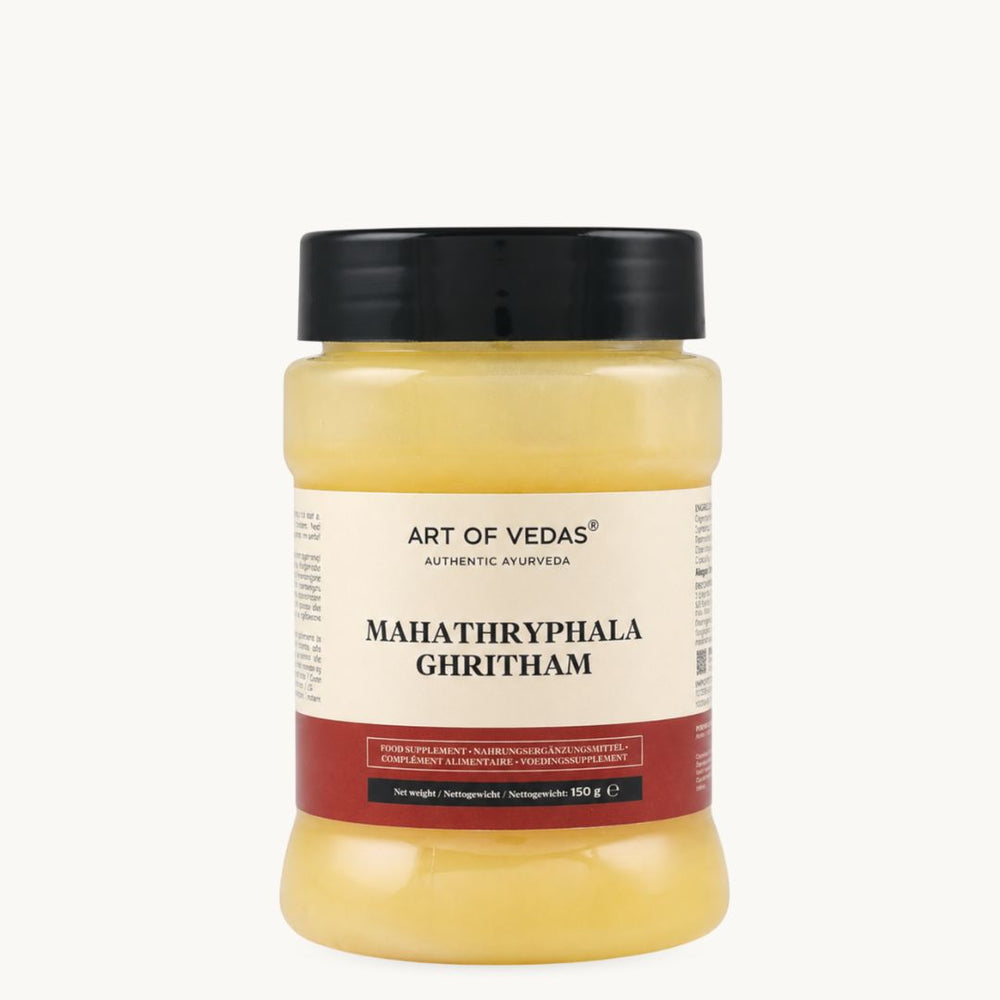
Ghritham
Maha Triphala Ghritham
Maha means great, and Maha Triphala Ghritham is the larger preparation of the two Triphala ghees. The difference in the classical texts is not more Triphala but the liquids: where the plain preparation uses a decoction and milk, the greater one is built on several liquids and on goat's milk.
Ingredients
Ghee (Clarified Butter) (MILK), Goat's Milk (MILK), Sugar, Emblica Officinalis (Amla), Terminalia Chebula (Haritaki), Terminalia Bellirica (Bibhitaki), Vitis Vinifera (Raisin), Piper Longum (Long Pepper), Asparagus Racemosus (Shatavari), Glycyrrhiza Glabra (Liquorice). Allergen: contains milk.
How to use
Take under the guidance of a qualified Ayurvedic practitioner. 2 g per day, about half a teaspoon. Do not exceed the recommended daily dose. Contains liquorice: avoid excessive intake if you have high blood pressure. Once opened, use within 6 months. A food supplement is not a substitute for a varied and balanced diet. Keep out of reach of children. Not recommended during pregnancy or while breastfeeding.
Maha Triphala Ghritham
Our preparation follows that distinction. Alongside the three fruits, Amla, Haritaki and Bibhitaki, it carries goat's milk, raisin, long pepper, Shatavari and liquorice, with a little sugar. It is richer and rounder in taste than the plain Triphala ghee.
These are classical ghee preparations. Take them under the guidance of a qualified Ayurvedic practitioner, who can advise on the dose and the length of use that suit you. Each jar holds 150 g and is batch-tested for heavy metals and microbiology. This preparation contains liquorice.
This product is a food supplement. Not intended to diagnose, treat, cure or prevent any disease.
Benefits
- The greater ghee of the three fruits
- With goat's milk, Shatavari, raisin and long pepper
- Richer and rounder in taste than the plain Triphala ghee
- Take under the guidance of a qualified Ayurvedic practitioner
- 2 g per day, about half a teaspoon
- 150 g jar, batch-tested for heavy metals and microbiology
Classical reference
Documented in the Bhaishajya Ratnavali (verses 173 to 180) under the name Maha Triphaladya Ghrita, immediately before the plain Triphala ghee, and listed in the Ayurvedic Formulary of India. The classical formula is larger than ours. Art of Vedas prepares a simple ghee in this tradition.
Related guides
- Maha Triphala Ghritham: quality and testing
- Maha Triphala Ghritham: What Maha Means in a Formula
- Goat's Milk in Classical Ayurvedic Ghee Preparations
- Maha Triphala or Triphala Ghritham: The Difference
- Triphala Ghritham: The Ghee Preparation
- Choosing a Ghritham: The Art of Vedas Range Compared
- How Ghritham Is Traditionally Taken
- Triphala Inside Jeevanthyadi Ghritham: A Group in a Formula
- Triphala: The Three Fruits of Classical Ayurveda