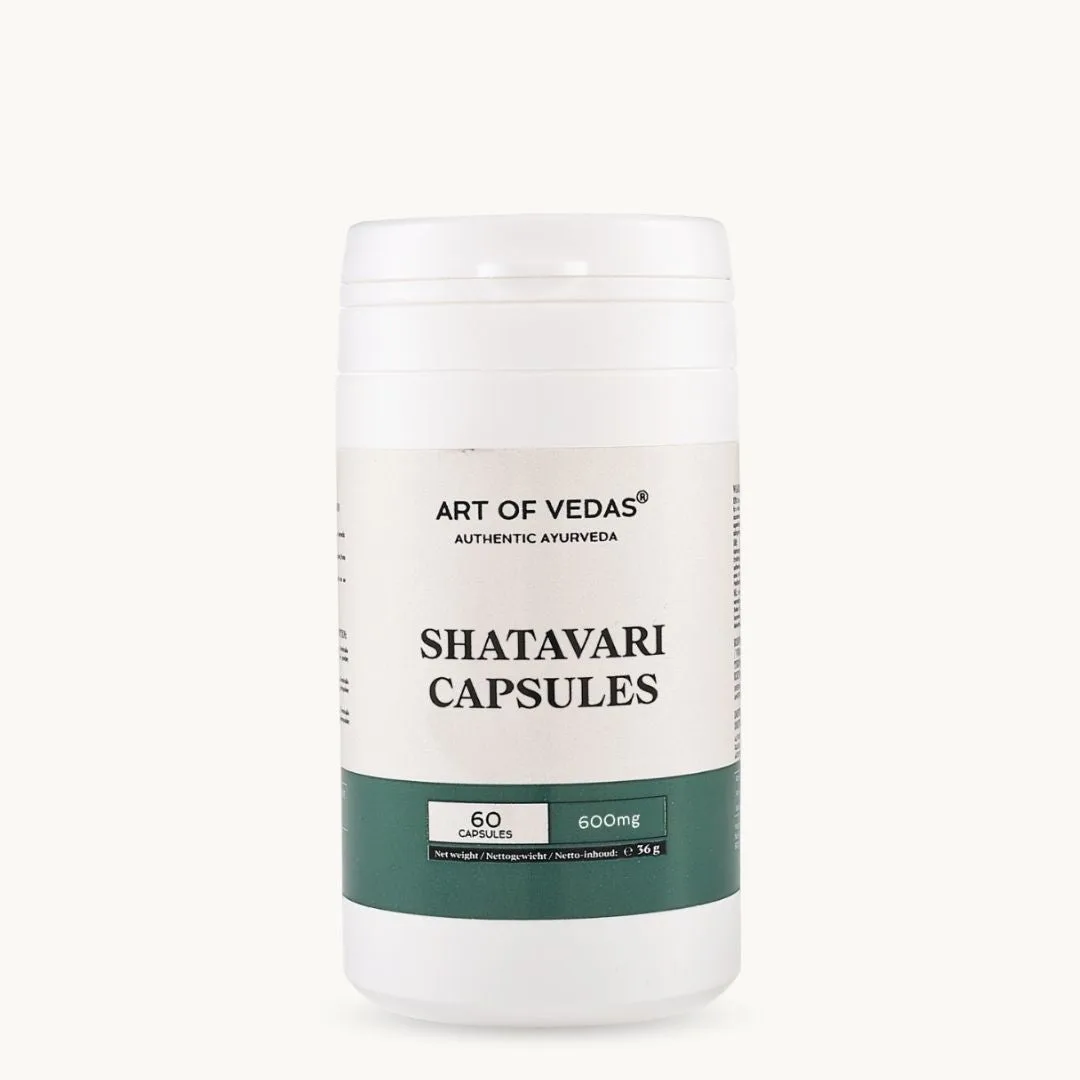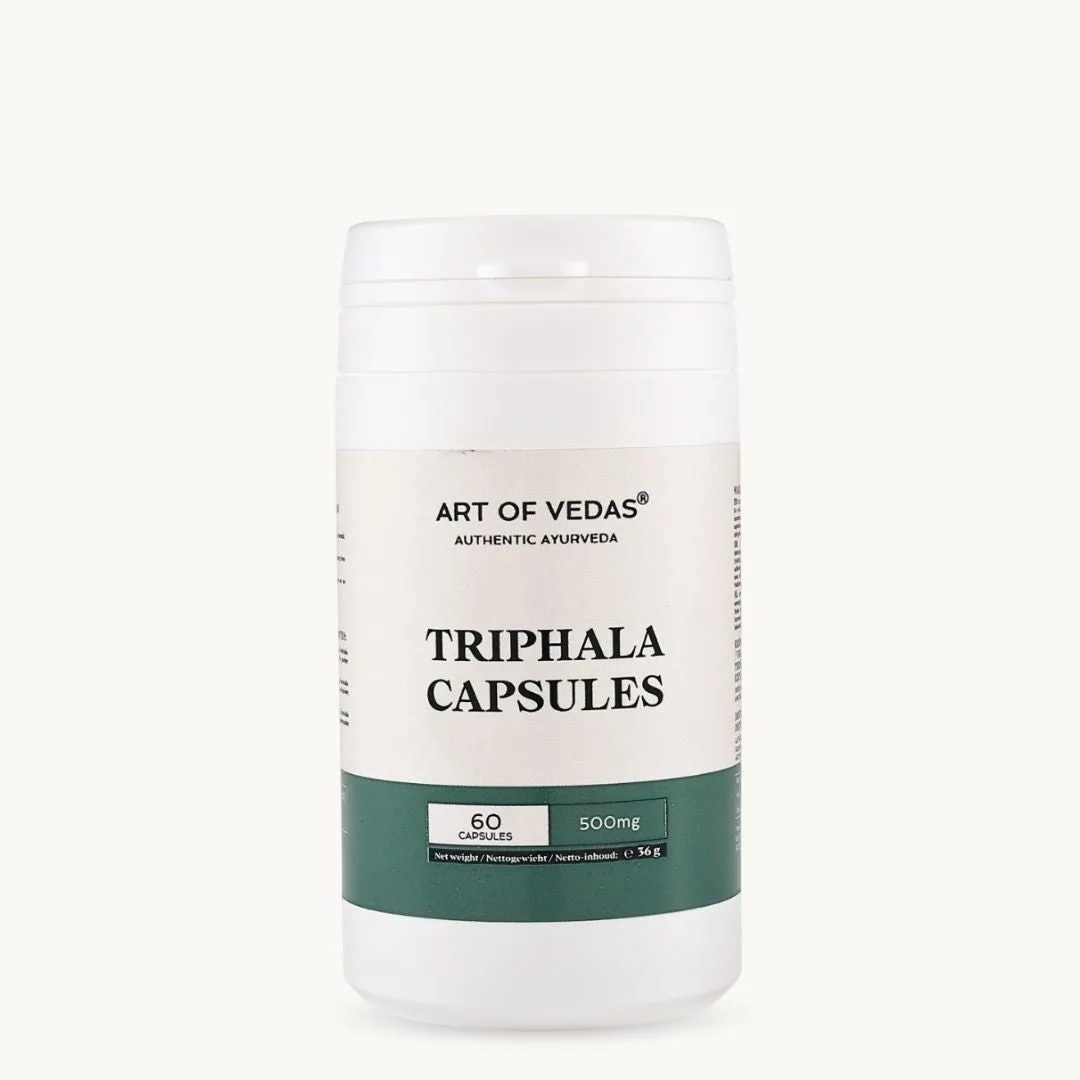
Two jars, almost the same name, the same three fruits. The question of what separates Triphala Ghritham from Maha Triphala Ghritham has a precise answer in the classical record, and it is not the one most people assume.
Not the amount of Triphala
The obvious guess is that the greater preparation carries more of the three fruits. The entries do not support it. Read side by side in the Bhaishajya Ratnavali, at 173 to 180 and 181 to 186, what changes is the liquid and the supporting substances.
What actually differs
- The liquid: the plain preparation uses a decoction with milk; the greater one is built on several liquids including goat's milk.
- The supporting substances: Shatavari, raisin and long pepper accompany the fruits in the greater formula.
- The character: the result is richer and rounder in taste, which is how our product pages describe it.
How to read the pair
They are neighbours in the text because they are a matched pair: a plain version and an extended one. Neither supersedes the other, and the classical literature keeps both. If you want the trio as plainly as possible, that is the plain preparation; if you want the extended formula, that is the greater one. The range comparison places them among the other nine Ghrithams.
What they share
Both are ghee preparations built on Haritaki, Amla and Bibhitaki, both are dairy, and both are taken under the guidance of a qualified practitioner in the customs described in how Ghritham is traditionally taken.
Frequently Asked Questions
Does Maha Triphala contain more Triphala?
No. The classical difference is the liquids and the supporting substances, not the quantity of the three fruits.
Which is the simpler preparation?
Triphala Ghritham: ghee and the three fruits, and nothing else.
Are both recorded in the same text?
Yes, in the Bhaishajya Ratnavali, as neighbouring entries, and both are listed in the Ayurvedic Formulary of India.
This article is for educational purposes and describes the classical Ayurvedic record. The products mentioned are food supplements, not a substitute for a varied, balanced diet, and are not intended to diagnose, treat, cure or prevent any disease. Take classical ghee preparations under the guidance of a qualified Ayurvedic practitioner.