AYURVEDA WELLNESS
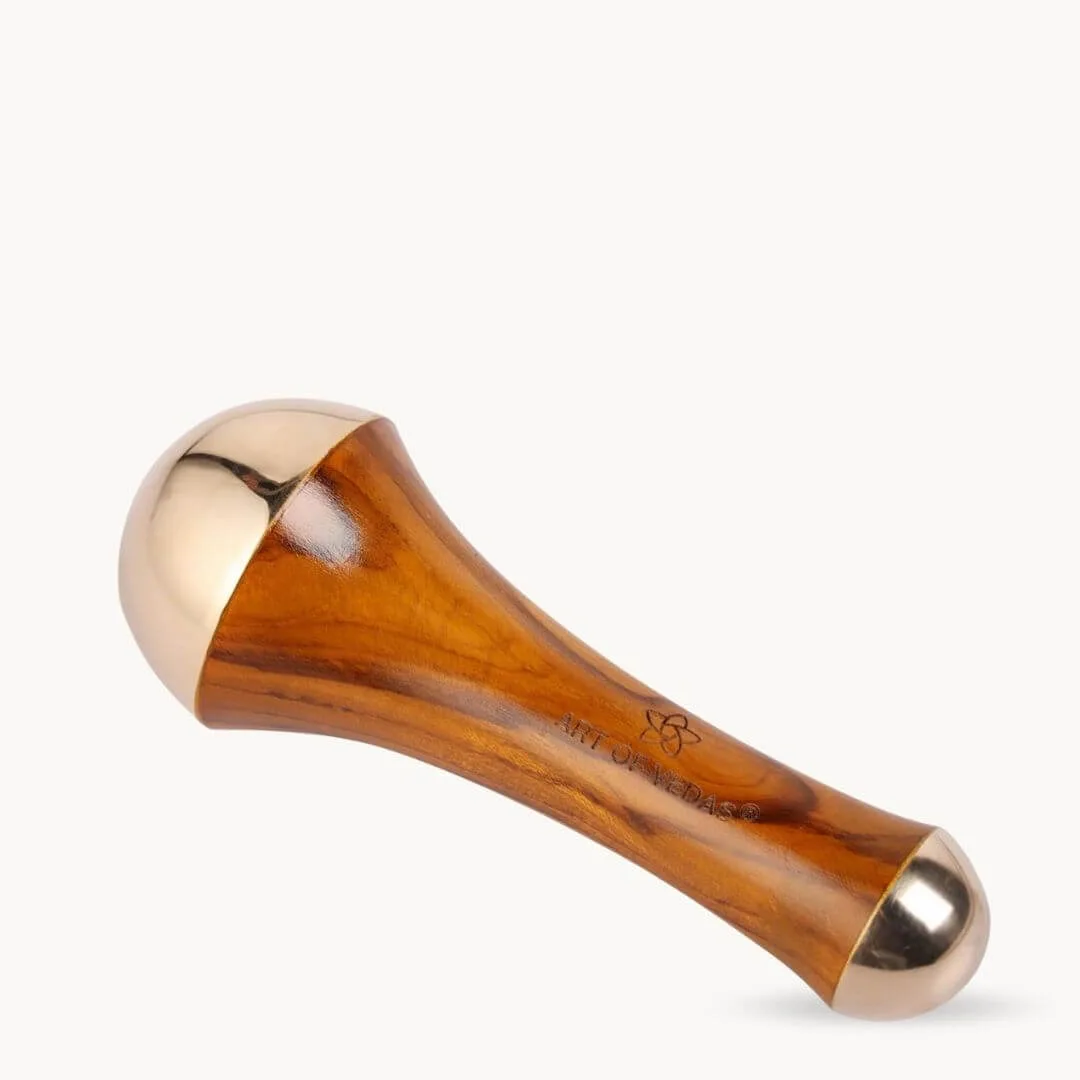
Two domes, each shaped for a different part of the face. The larger dome glides across cheeks, forehead and jawline, covering the broad, open areas in slow circular movements. The smaller dome turns for the precise work: temples, brow, under-eye, the edges of the nose.
The metal has a naturally cooling quality. In Ayurveda, this is traditionally associated with Pitta balance — a calming of warmth and reactivity in the skin. The faint grey-green tint you may notice during use is a natural reaction between the metal, the oil, and your skin's pH. It washes off easily and is not harmful.
Apply 3 to 4 drops of face oil before you begin. Work across both sides of the face, starting from the centre and moving outward. Gentle pressure is enough — the tool does the work. Five to ten minutes daily is ideal.
For external use only. Clean and dry thoroughly after each use. Store away from moisture.
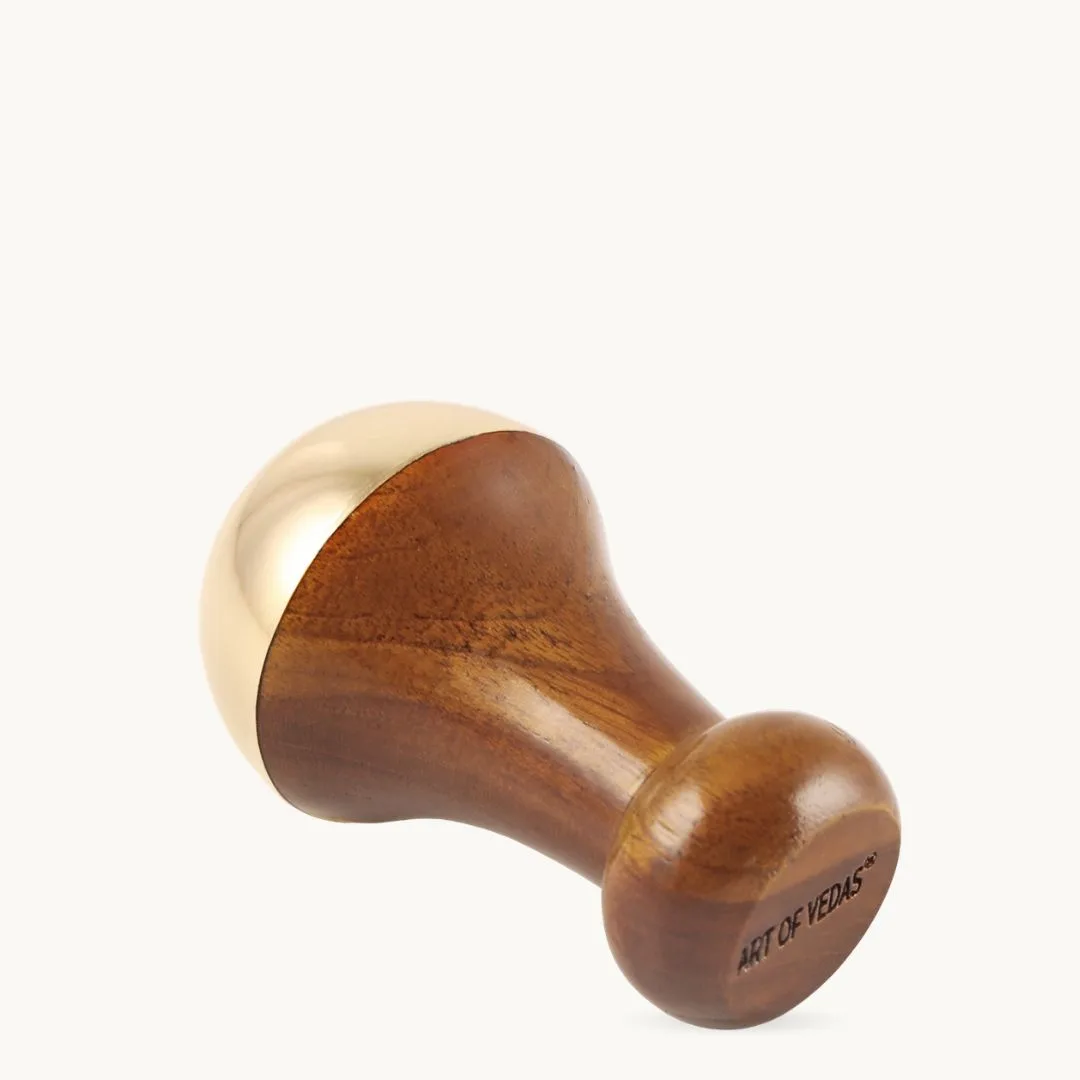
A hand-cast Kansa bronze bowl wand for Padabhyanga, the classical Ayurvedic foot massage. The bowl dome is mounted on a hardwood handle, giving full control of angle and pressure as it works across the sole. The handle distinguishes this tool from the handheld Vatki bowl, it allows sustained, directed pressure into the plantar Marma points without strain on the hand. Traditionally valued in Ayurveda for pacifying Pitta and grounding Vata through the soles of the feet.
The Mini Kansa Wand is cast from classical Kansa, a copper-tin bronze used in Ayurvedic facial practice for centuries. The dome is intentionally small sized to follow the orbital bone, reach the brow ridge, settle into the temple, and work the four marma points around the eye that a larger tool cannot address with precision.
Kansa has a naturally cooling quality. In Ayurveda, this is associated with calming Pitta, the accumulated heat that shows around the eyes as puffiness, sensitivity, and a dull, uneven complexion. Used with a face oil in slow, deliberate circles, the dome draws that heat outward and helps the oil absorb more completely than applying by hand.
This is the tool used in Netra Abhyanga, the traditional Ayurvedic eye-area ritual. At home, practiced for five minutes each morning or evening, it is one of the more quietly effective habits you can build into a daily routine.
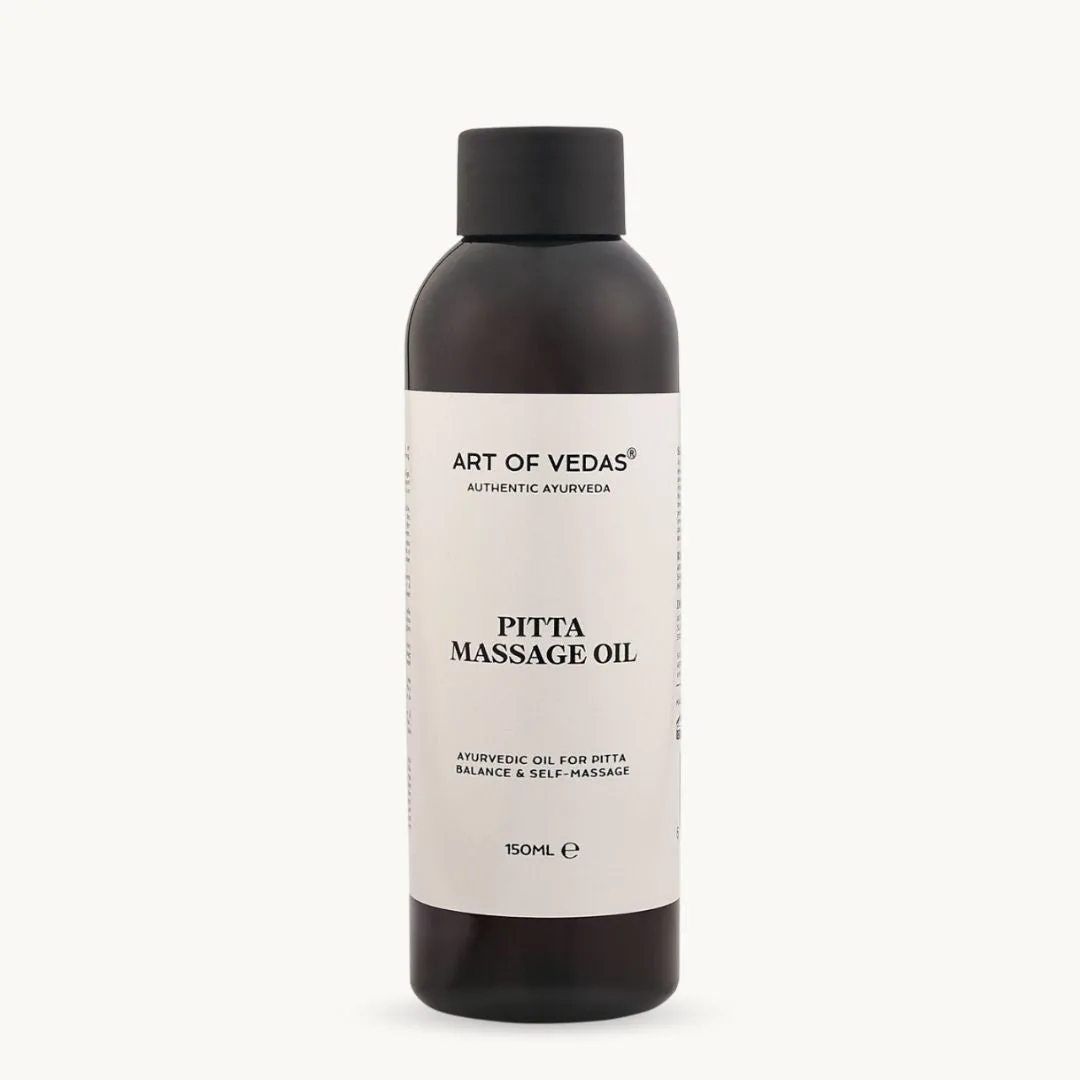
Art of Vedas Pitta Massage Oil is a cooling, soothing Abhyanga blend formulated specifically for Pitta-predominant constitutions and warm-weather self-massage rituals. Built on a base of organic sesame oil (Tila Taila), the classical foundation of all Ayurvedic body oils, this formulation is infused with a carefully selected group of Pitta-pacifying herbs including neem (Azadirachta indica), sandalwood (Chandana), turmeric (Haridra), Indian madder (Manjistha) and holy basil (Tulsi).
The herb selection follows classical Pitta-balancing principles: cooling, bitter and astringent herbs that calm heat and support a clear, comfortable complexion. Sandalwood, described in the Ashtanga Hridayam as one of the foremost Pitta-pacifying aromatic substances, provides the oil with its distinctive calming fragrance. Neem and turmeric contribute their traditional Varnya (complexion-supporting) and Raktaprasadana (blood-soothing) qualities, while fennel and clove add gentle warmth to ensure the oil does not become excessively cooling.
For external use only. Not a substitute for professional medical advice. Patch test before first use. Discontinue if irritation occurs. Store in a cool, dry place away from direct sunlight.
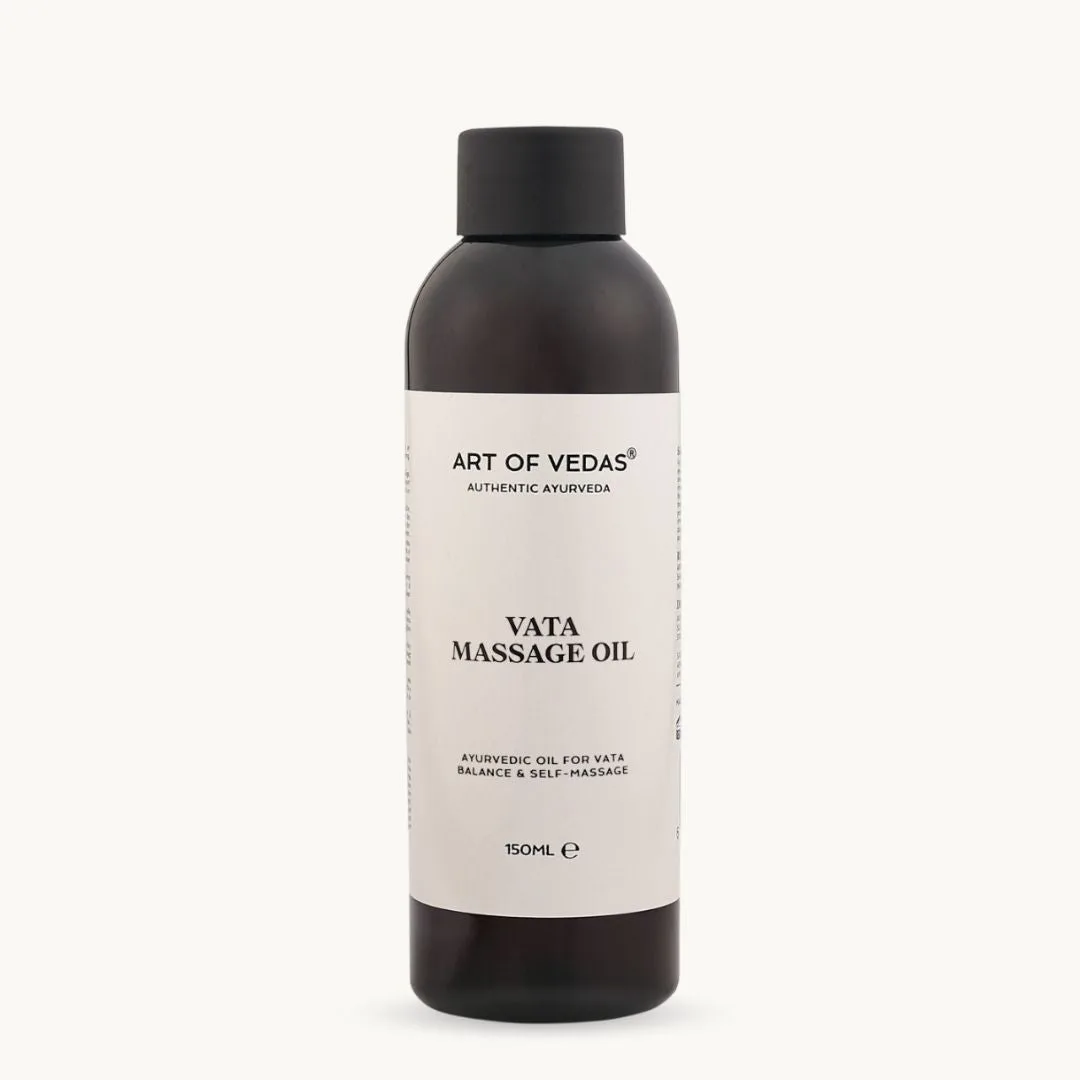
Art of Vedas Vata Massage Oil is a warming, deeply grounding Abhyanga blend formulated specifically for Vata-predominant constitutions and cold-weather self-massage rituals. Vata, governed by the elements of air and ether, is the Dosha most in need of regular oil application. The Charaka Samhita states that Abhyanga is one of the single most important practices for keeping Vata in balance, and this oil is designed to make that daily ritual as nourishing and comforting as possible.
The base combines almond oil, jojoba oil and olive oil to create a rich, slow-absorbing texture that gives the skin ample time to drink in moisture during the massage. The essential oil blend of patchouli, cedarwood, lavender and eucalyptus was selected for its warming, grounding aromatic profile. Patchouli and cedarwood bring earthy heaviness that directly counters Vata's light, mobile nature, while lavender supports a calm, settled state of mind. A touch of eucalyptus adds gentle clarity without disrupting the overall warmth.
For external use only. Not a substitute for professional medical advice. Patch test before first use. Discontinue if irritation occurs. Store in a cool, dry place away from direct sunlight.
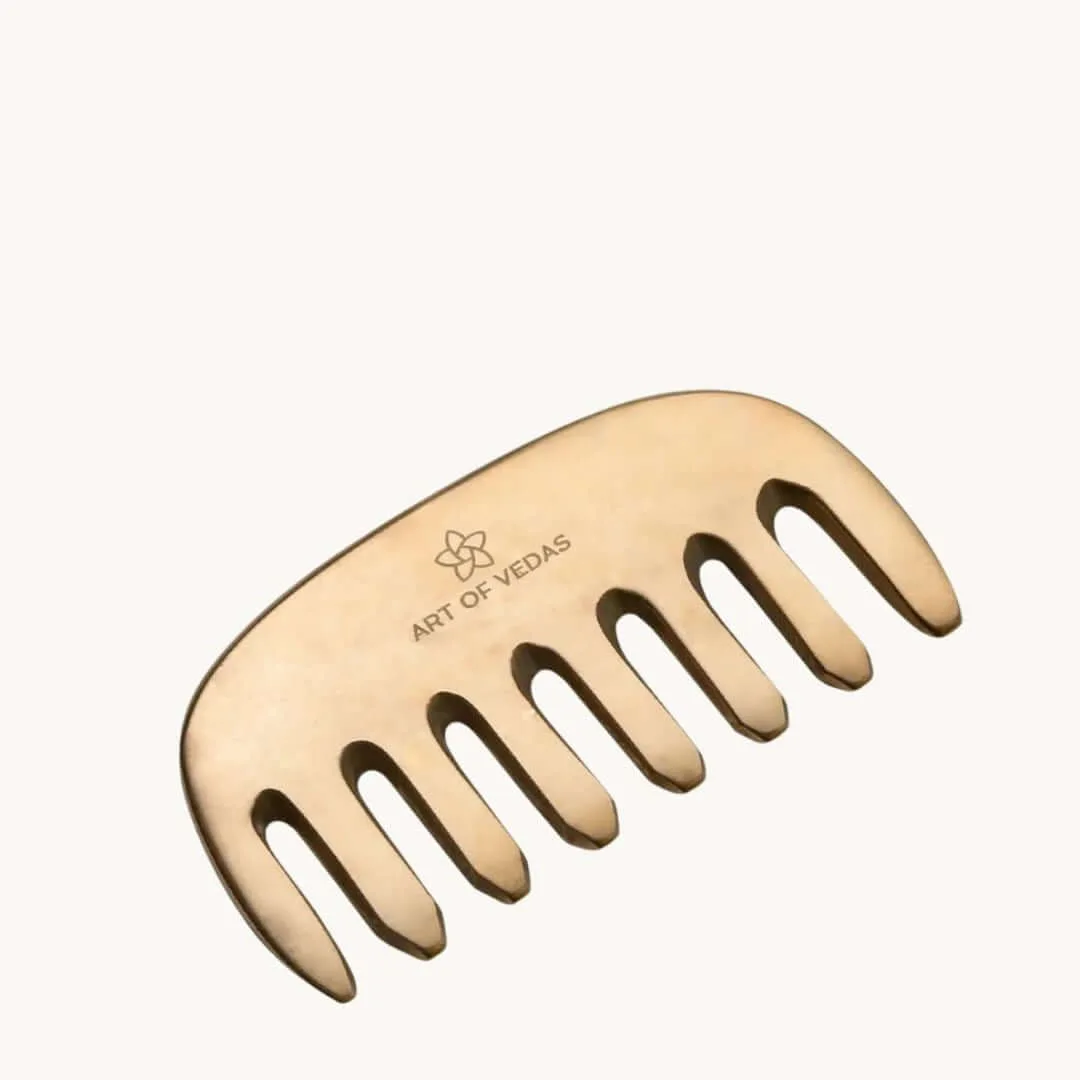
The Kansa Comb is a scalp tool cast from Kansa metal, the copper-tin bronze used in Ayurvedic ritual practice for centuries. The teeth of the comb are pointed and designed to reach the scalp through the hair, making contact with the marma points of the head as the comb moves slowly across the scalp. This is not a massage tool used with pressure. The correct technique is slow, deliberate, and gentle, the pointed teeth do the work; you simply guide the comb.
Kansa has a naturally cooling quality. In Ayurveda, this is associated with calming Pitta in the head, the accumulated heat that shows as scalp sensitivity, irritation, and a restless, overheated mind. The comb draws that heat gently outward as it moves across the scalp.
This is a tool for daily use. Two to three minutes in the evening, used dry or with a light hair oil, is sufficient. Used consistently, it becomes one of the quieter and more grounding habits in a daily Dinacharya practice of Śīrṣa Abhyanga.
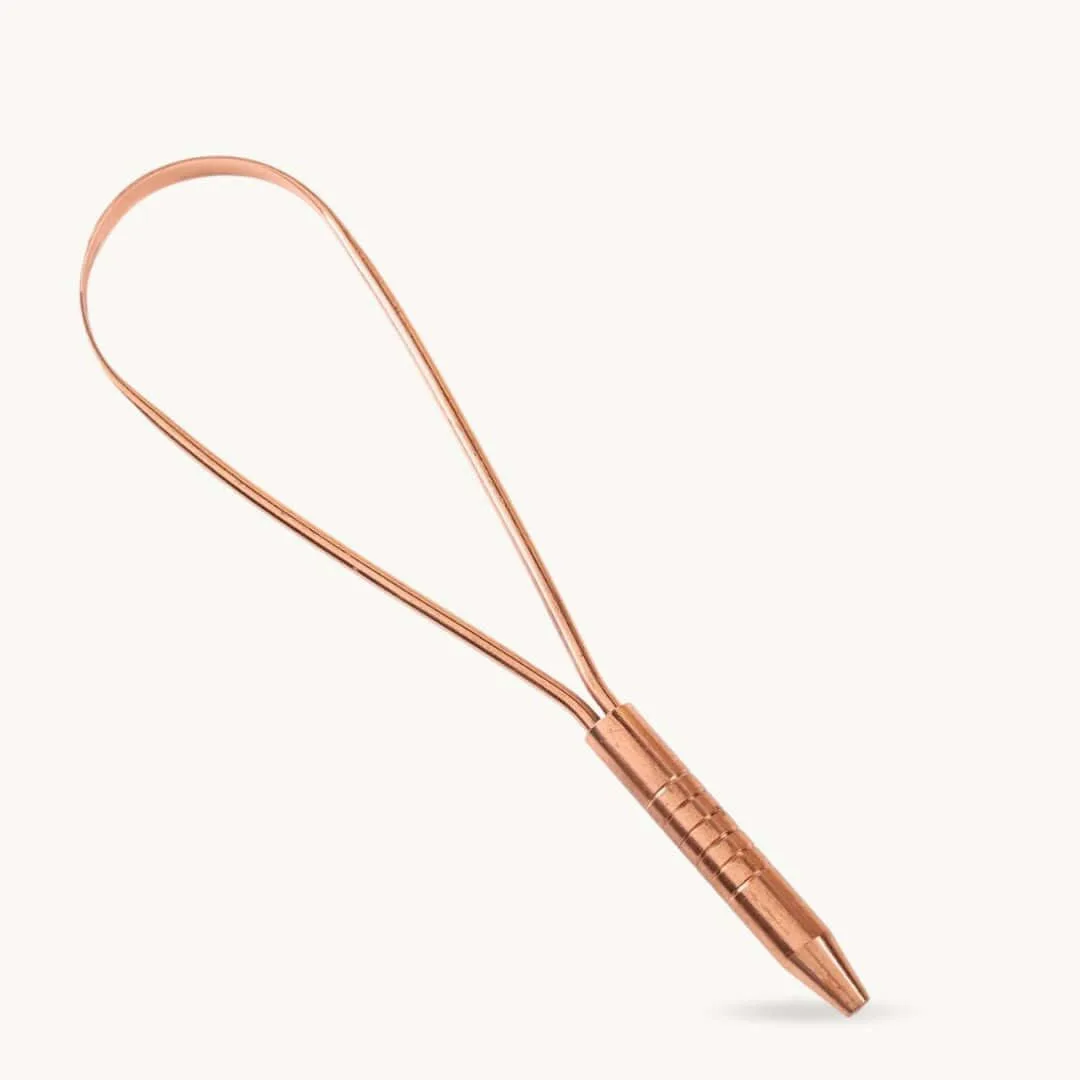
A single-handle pure copper tongue scraper, designed for Jihwa Prakshalana, the Ayurvedic practice of cleaning the tongue first thing each morning.
Art of Vedas Copper Tongue cleaner is made from solid 100% pure copper in a single-handle teardrop design. The handle gives you a firm, one-handed grip with full control over angle and pressure. The curved scraping edge is narrower and more defined than the flat U-shaped scrapers you see elsewhere, it follows the natural contour of the tongue more precisely, reaching deeper into the grooves where Ama (tongue coating) builds up overnight. The result is a cleaner, more thorough scrape in fewer strokes.
This is not a blunt edge pushed across the tongue. It is a refined, purposeful curve that lifts the coating rather than smearing it. You feel the difference from the first use, the tongue comes out visibly cleaner, the mouth feels lighter, and the breath is genuinely fresh, not masked.
Pure copper adds a second layer. Tamra (copper) is naturally antimicrobial, the surface actively inhibits bacteria from building up on the scraper between uses. Where stainless steel and plastic sit idle between mornings, copper continues working. It stays cleaner in your bathroom, requires less maintenance, and the slight flexibility of the metal allows the edge to adapt gently to the shape of your tongue without scratching or irritation.
Compact, light, and easy to store. One hand, 30 seconds, every morning.
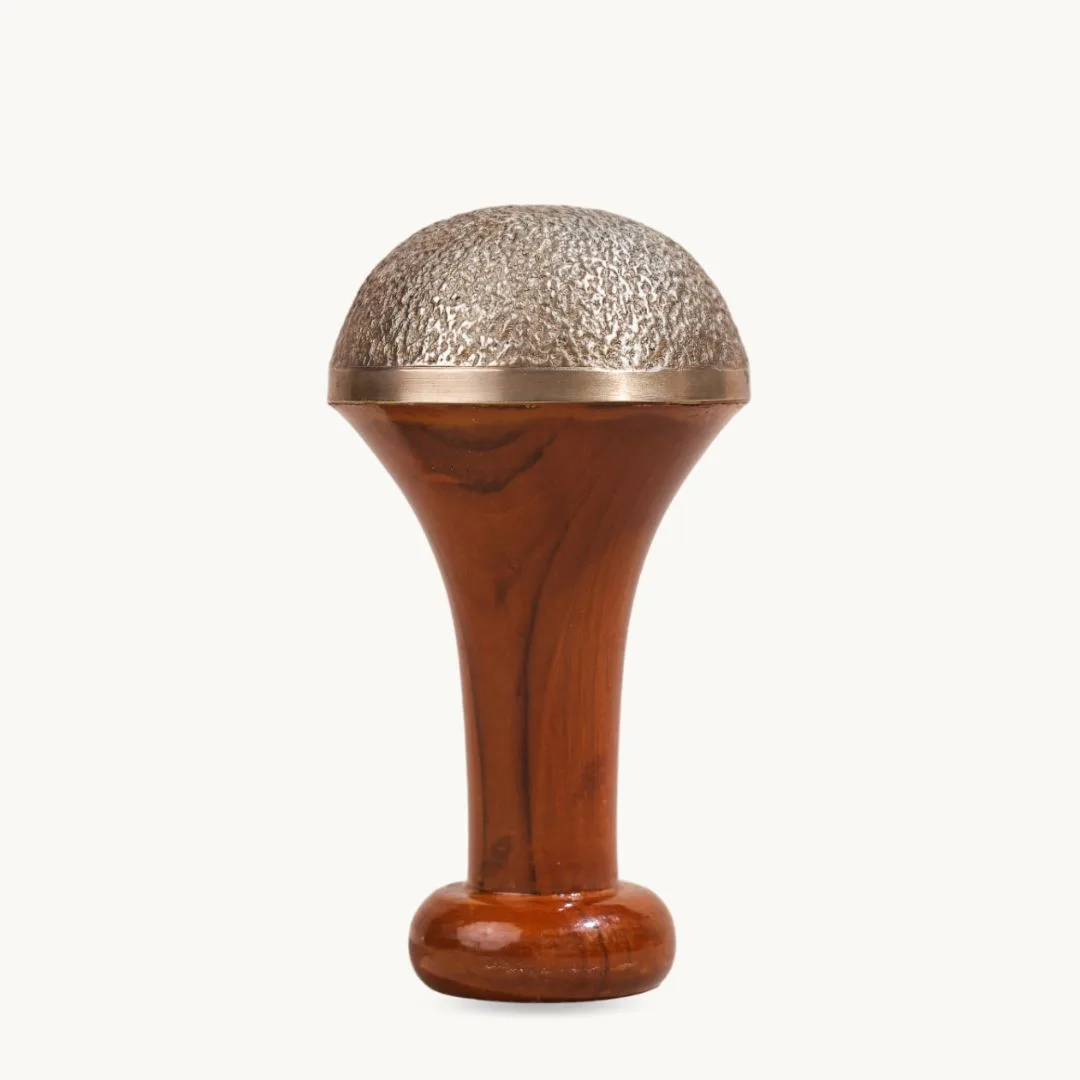
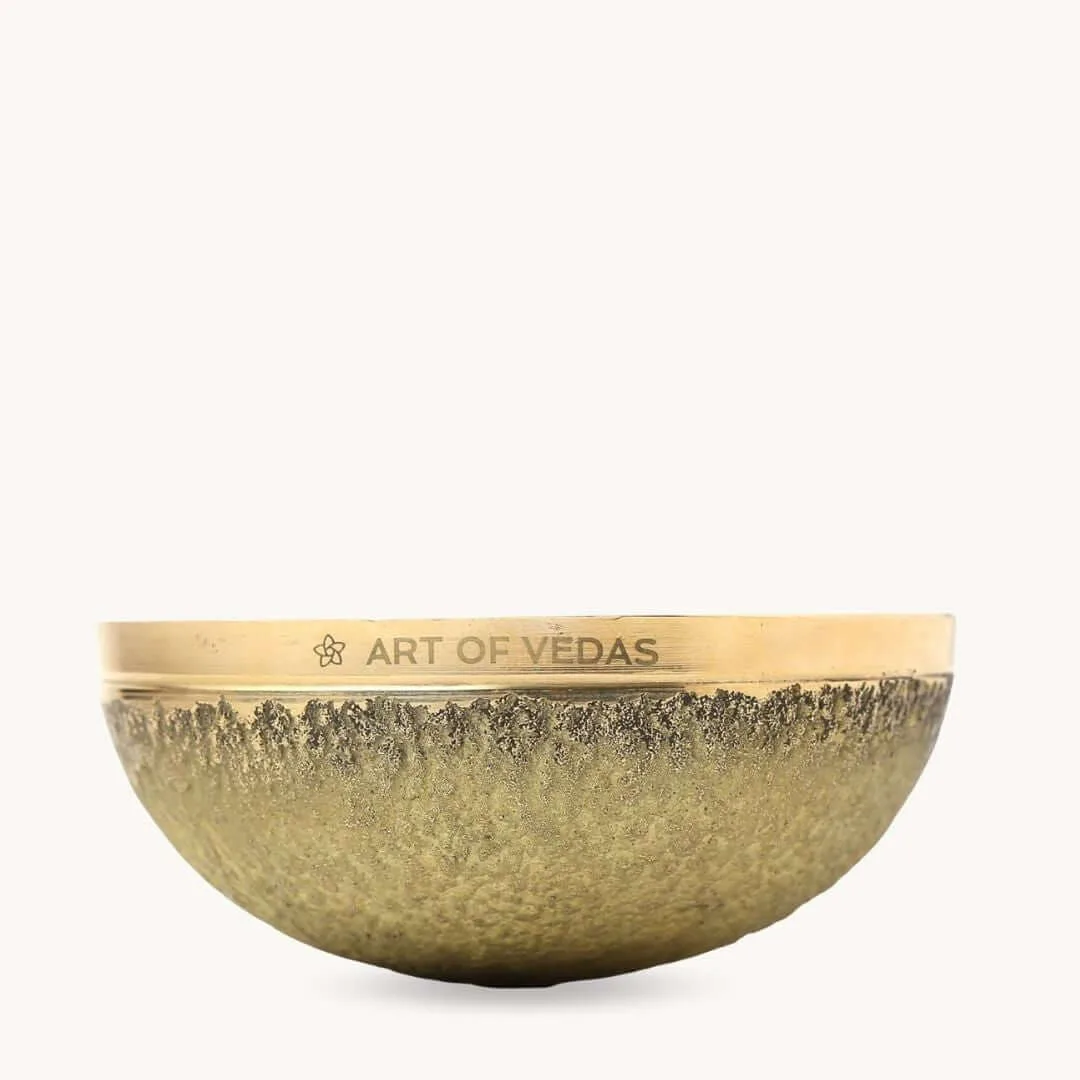
A hand-cast Kansa bronze bowl for Padabhyanga, the classical Ayurvedic foot massage. The bowl's deliberately uneven, textured surface is what sets it apart — as it moves across the sole, it reaches into the natural contours of the foot, applying varied pressure across the arch, heel and Marma points that a smooth surface cannot replicate. Traditionally valued in Ayurveda for pacifying Pitta and grounding Vata through the soles of the feet.
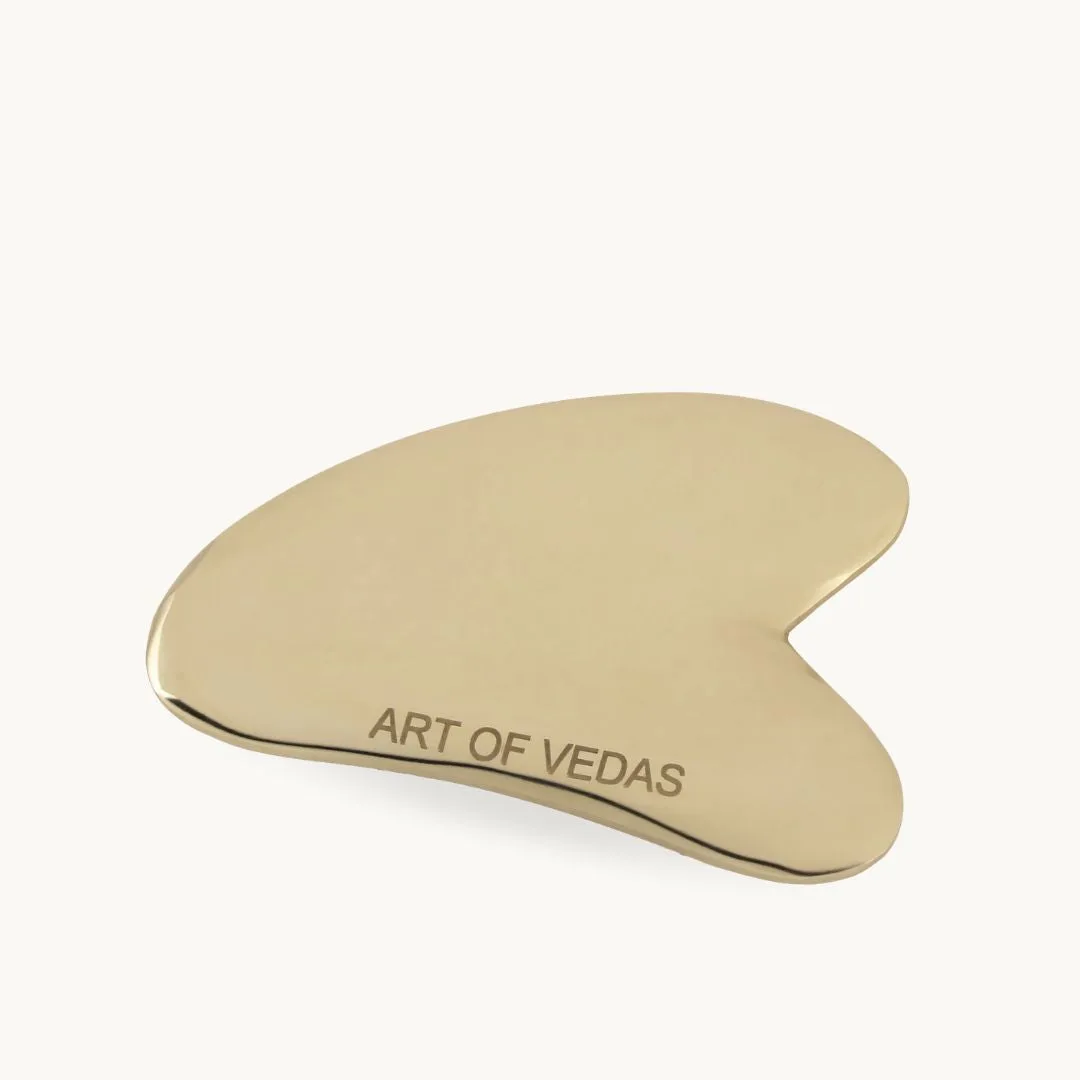
A facial massage tool hand-cast in Kansa, the traditional copper-tin bronze used in Ayurvedic practice for centuries. The Gua Sha's curved, flat form is designed for broad, deliberate strokes across the jaw, cheeks, neck and forehead, covering the full face surface in a single fluid practice.
What sets it apart from stone tools is the material. Kansa has a naturally cooling quality, traditionally associated in Ayurveda with calming Pitta, the heat and reactivity in the skin. As the tool moves across the face with a face oil, it draws warmth gently from the surface, leaving the skin looking calm, even and settled.
The grey-green tint that sometimes appears during use is a natural reaction between the Kansa bronze, the oil and the skin's pH. It is not harmful. It is the mark of real, uncoated bronze.
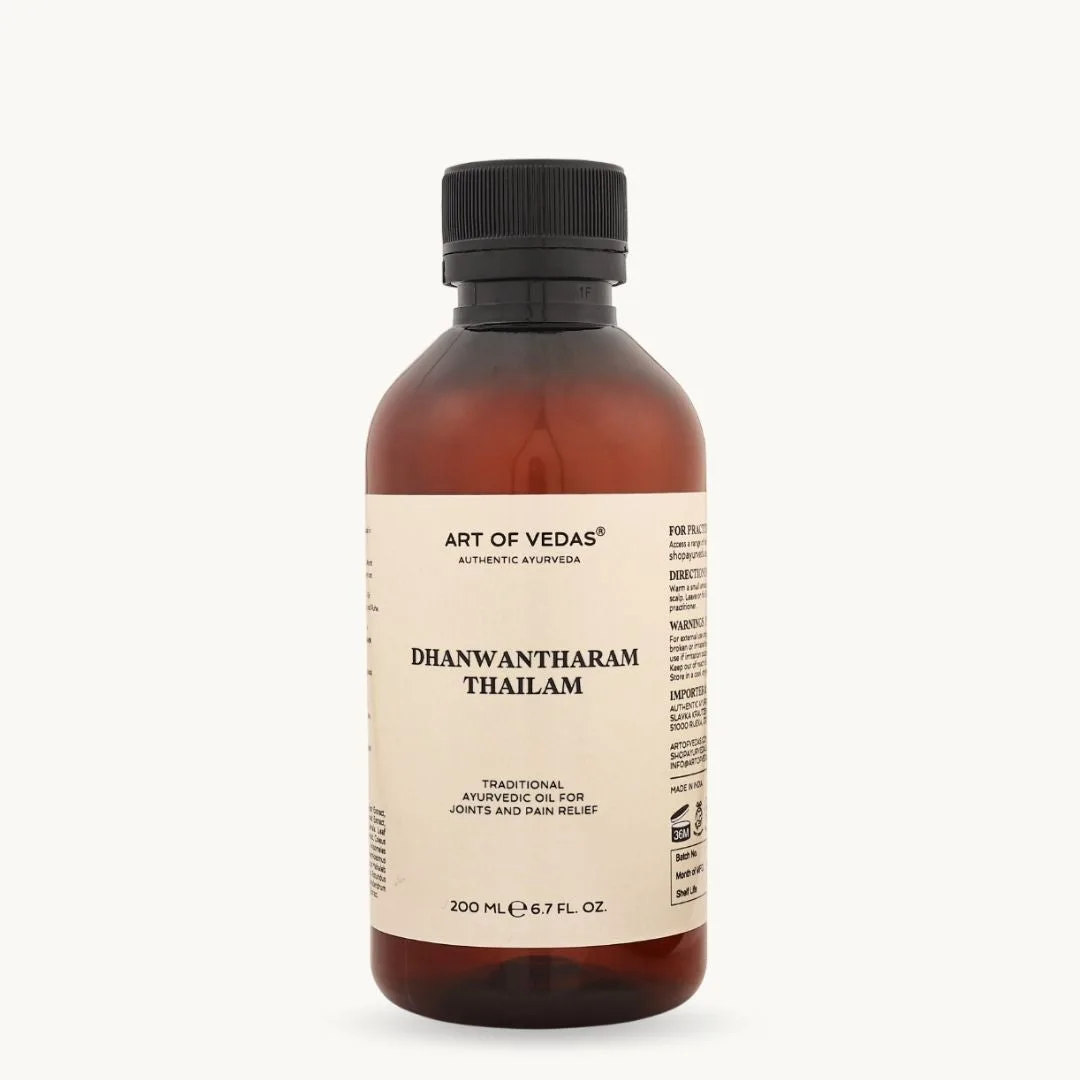
Dhanwantharam Thailam is a classical Ayurvedic formulation containing over 30 herbs, documented in Ashtanga Hridayam. Named after Lord Dhanvantari, the divine physician of Ayurveda. This nourishing, sesame-based oil is traditionally used for Garbhini Paricharya (pregnancy care), postnatal recovery, and Vata pacification. Prepared in India using authentic Sneha Paka Vidhi methods with milk processing.
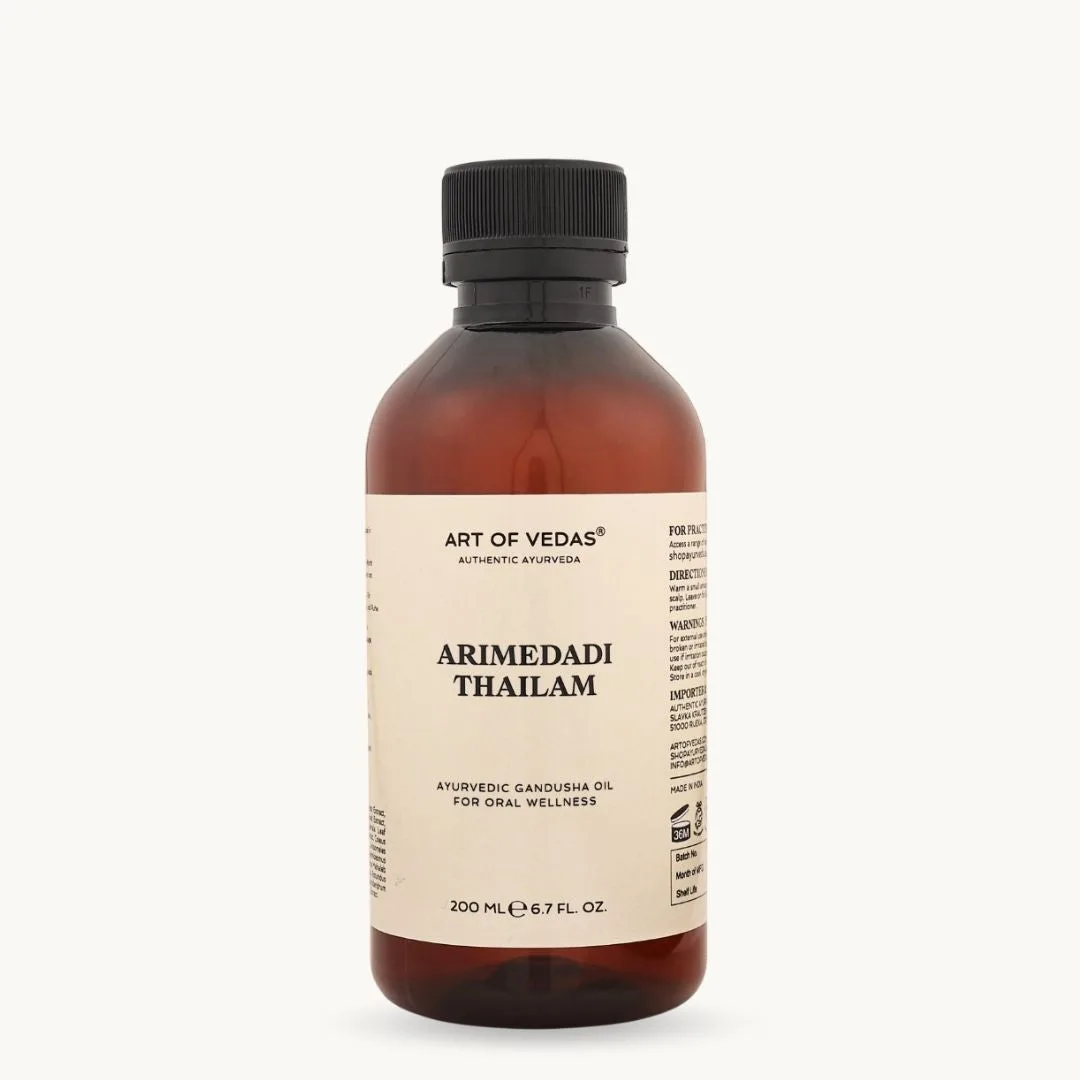
Arimedadi Thailam is a classical Ayurvedic oil formulated specifically for Gandusha (oil pulling) and oral care. Referenced in the Ashtanga Hridayam under Mukha Roga Chikitsa (oral health management), this traditional formula combines 31 potent herbs in a sesame oil base to support healthy gums, strengthen teeth, freshen breath, and promote overall oral hygiene.
The formulation is built around Arimeda (White Acacia) and Khadira (Cutch Tree), two of Ayurveda's most valued astringent herbs for oral wellness, combined with Triphala for gentle cleansing and aromatic spices like Clove, Nutmeg, and Camphor for freshness and purification. Used daily as part of Dinacharya (Ayurvedic morning routine), Arimedadi Thailam offers a natural, time-tested approach to maintaining a healthy mouth and supporting the body's first line of defence.
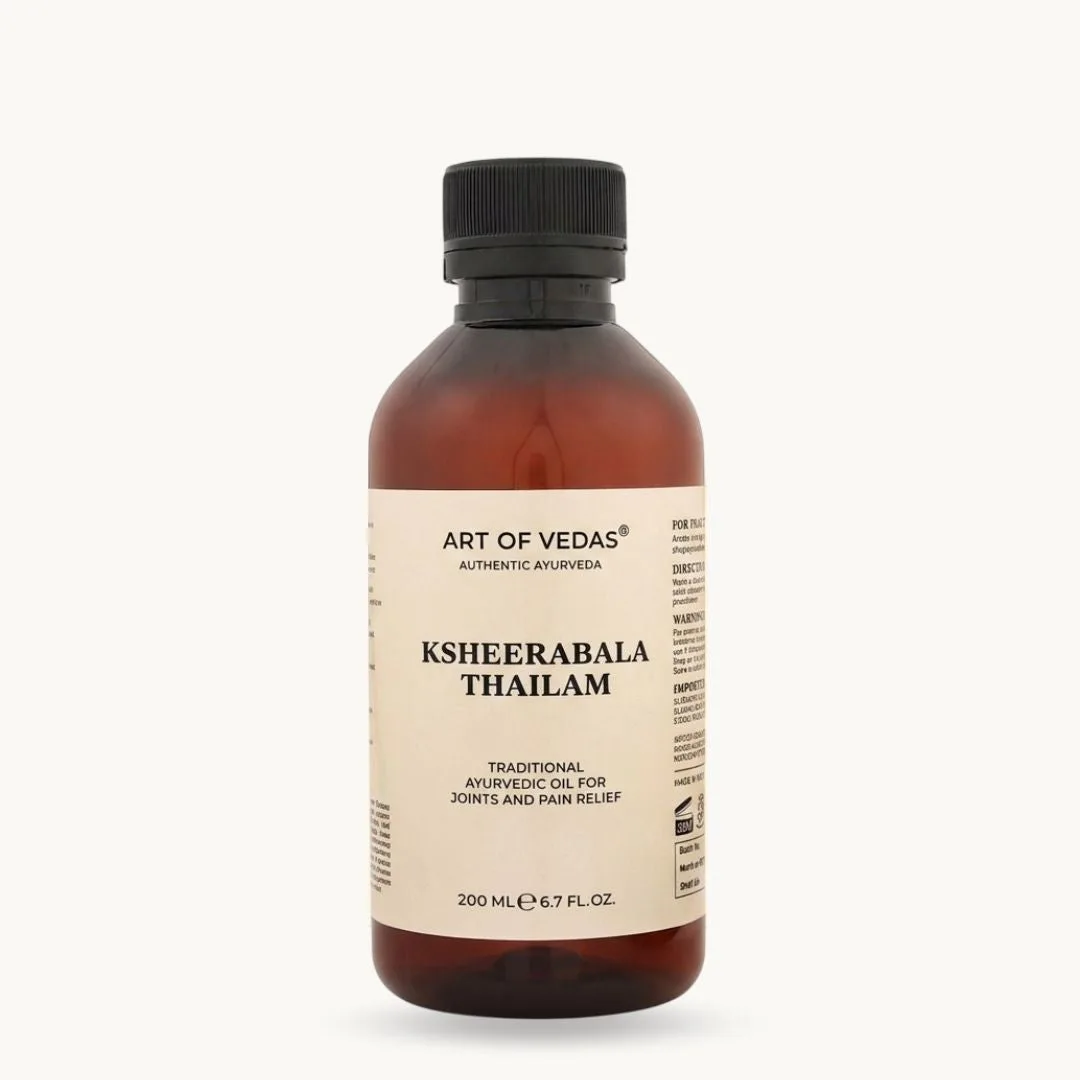
Ksheerabala Thailam is a classical Ayurvedic formulation documented in Ashtanga Hridayam and Sahasrayogam. This elegant three-ingredient oil, Bala (Sida cordifolia), cow's milk, and sesame oil is traditionally regarded as a nerve tonic in Ayurveda. Prepared using the Ksheerapaka method (milk processing), Ksheerabala offers a cooling, calming quality that distinguishes it from warming oils like Mahanarayana. Particularly valued for Padabhyanga (foot massage) as part of an evening relaxation ritual.
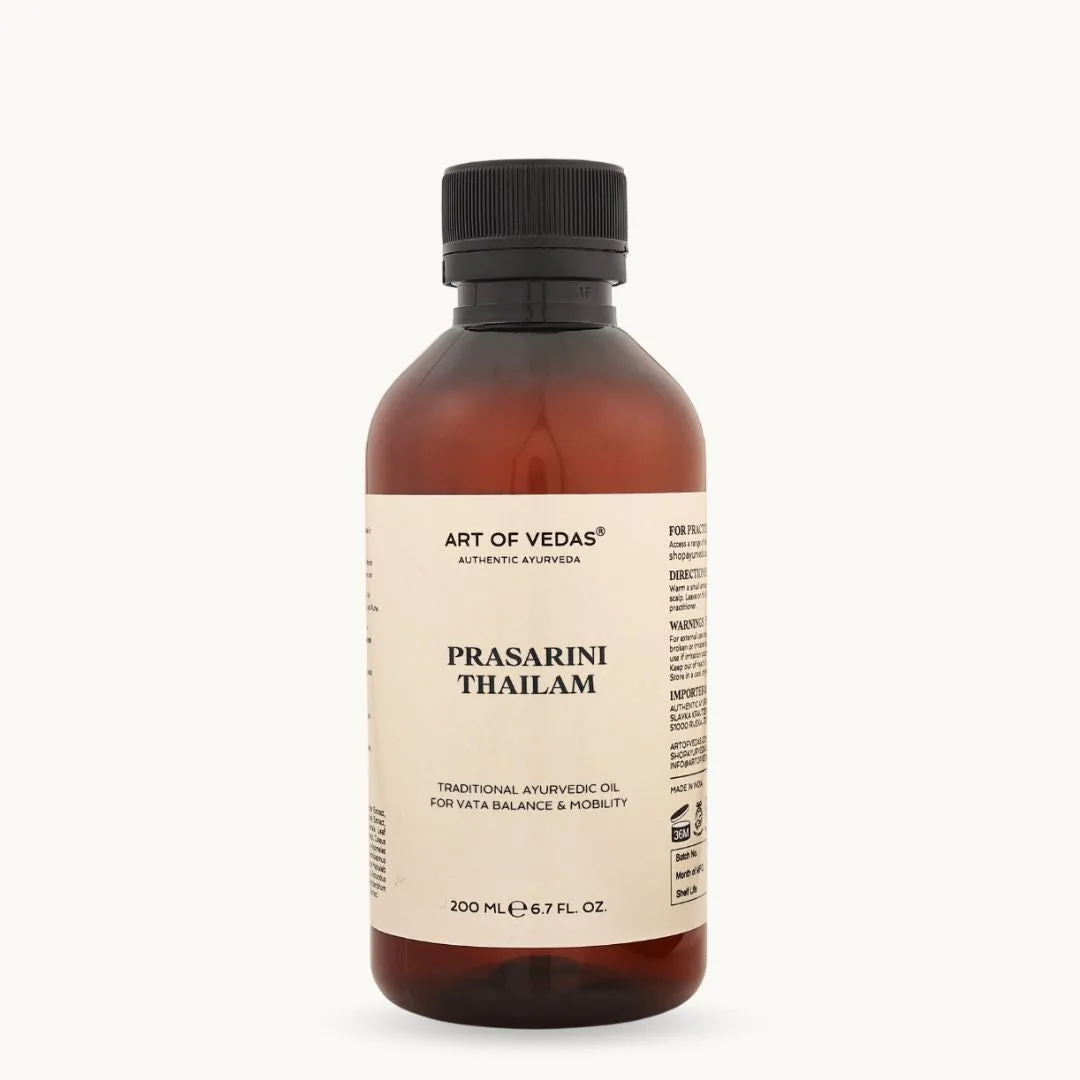
Prasarini Thailam is a classical Ayurvedic oil specifically formulated to support joint mobility, ease muscle stiffness, and promote comfort in the musculoskeletal system. Referenced in the Sharangdhara Samhita, this traditional formula combines 13 Ayurvedic herbs in a sesame oil base, processed with fermented cereal liquid (Dhanyamla) and yogurt for enhanced absorption and efficacy.
The formulation is built around Prasarini (Paederia foetida), a herb whose Sanskrit name means "that which spreads," referring to its traditional ability to penetrate deep into stiff, contracted tissues. Combined with warming herbs like Devadaru (Himalayan Cedar), Chitraka (Leadwort), and the strengthening properties of Laksha (Lac), this oil offers targeted support for those experiencing joint discomfort, muscle tension, and general body stiffness—particularly when related to Vata imbalance.
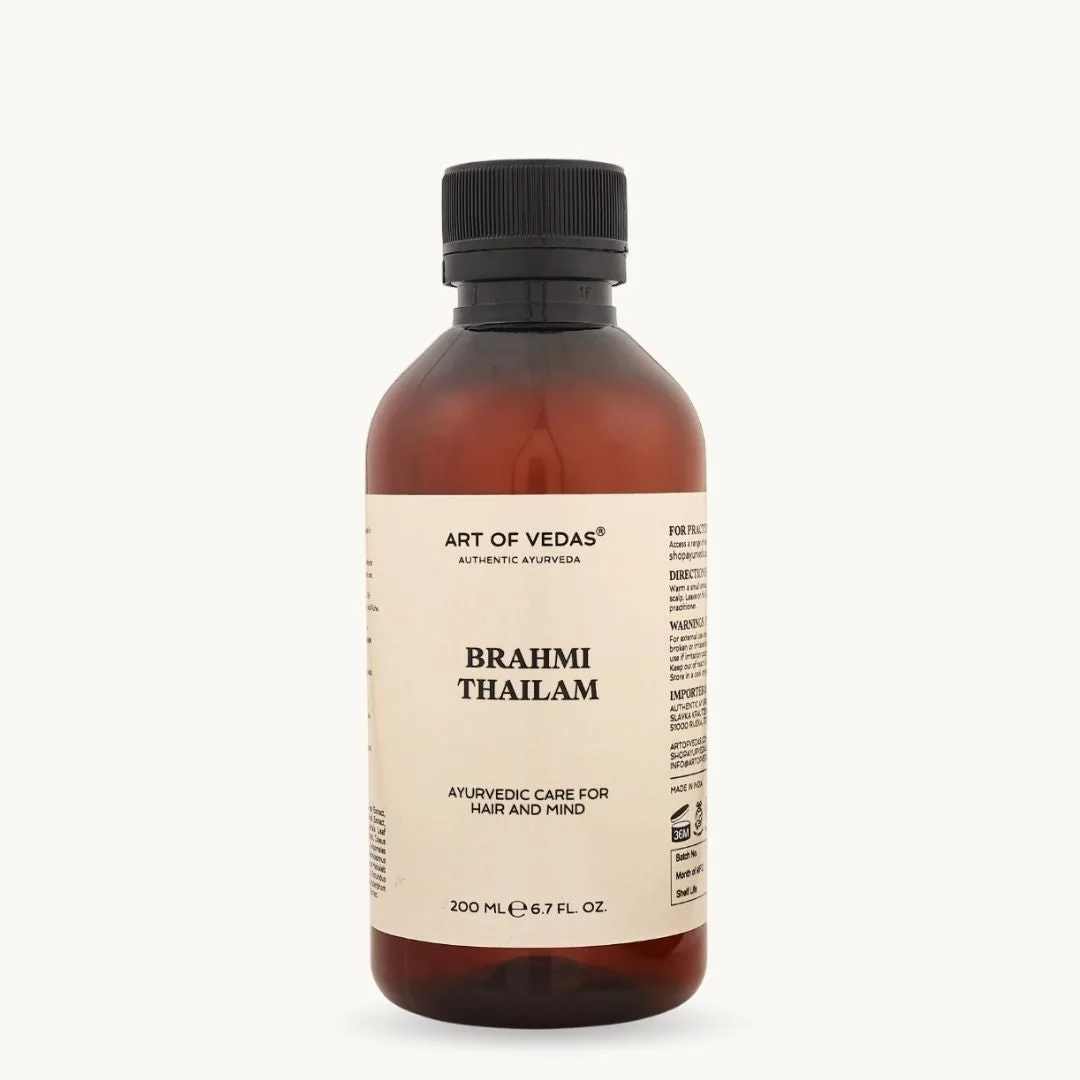
Brahmi Thailam is a classical Ayurvedic oil rooted in the ancient text Yogagrantham, traditionally valued for nourishing the mind and supporting mental clarity. This pure formulation combines Bacopa monnieri (Brahmi), one of Ayurveda's most revered Medhya Rasayanas (brain rejuvenatives), with calming Licorice, penetrating Camphor, and nourishing Sesame Oil. Together, these four ingredients create a focused formula that supports cognitive wellness, emotional balance, and restful sleep.
Unlike complex formulations with numerous herbs, Art of Vedas Brahmi Thailam follows the traditional simplicity of classical preparation. Bacopa monnieri has been treasured in Ayurveda for centuries as a support for memory, concentration, and mental performance. When applied to the scalp as part of daily self-care, this cooling oil helps calm an overactive mind, supports focus during demanding periods, and traditionally aids those seeking better sleep quality.
Beyond its mental wellness benefits, Brahmi Thailam nourishes the scalp and hair as part of holistic Ayurvedic care. The warming Sesame base carries the cooling herbs deep into the tissue, while Camphor's subtle penetrating quality creates a refreshing, clarifying sensation. Whether you're a student, professional, or anyone seeking to support your cognitive wellness naturally, this time-honored oil offers a gentle daily ritual for both mind and scalp.
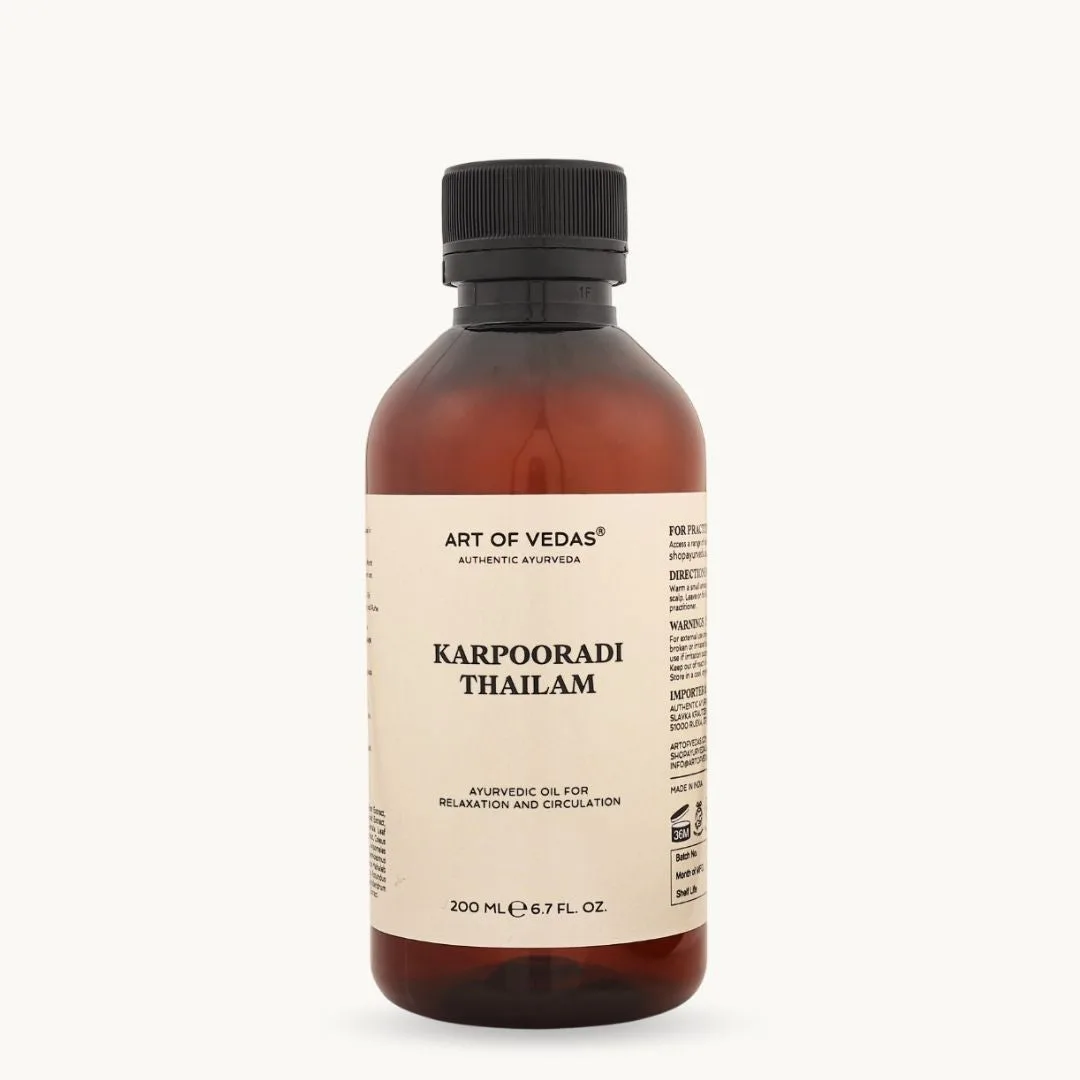
Karpooradi Thailam is a classical Ayurvedic oil from the Kerala tradition, known for its powerful warming and penetrating action. Mentioned in the Bhaishajya Ratnavali and Sahasrayogam, this traditional formula combines just two carefully chosen herbs, Camphor (Karpura) and Celery seed (Ajmoda), in a nourishing Sesame oil base.
Unlike complex multi-herb formulations, this pure, focused blend delivers targeted comfort. The sharp, penetrating quality of Camphor works in harmony with Celery seed's soothing properties to support comfortable movement and ease occasional muscle tension. Traditionally used to balance Vata and Kapha, Karpooradi Thailam brings warmth to cold, stiff joints and helps clear buildup in the chest.
Whether you are seeking support after physical activity, comfort from seasonal stiffness, or traditional respiratory wellness, this time-honoured oil offers a simple yet powerful approach to daily wellbeing.
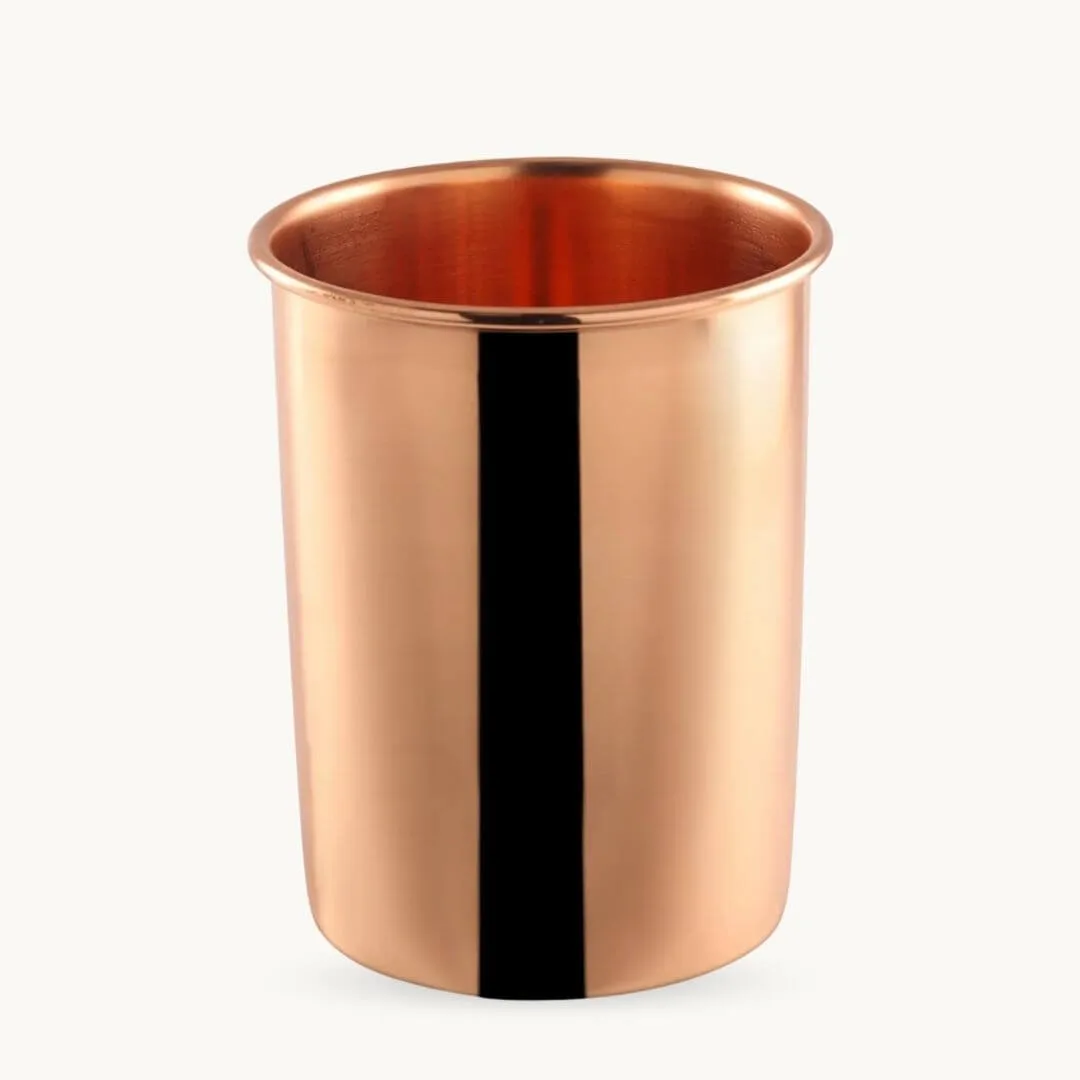
This is a pure copper drinking glass for Ushapana, the Ayurvedic practice of drinking water that has been stored overnight in a copper vessel.
In the Ayurvedic daily routine (Dinacharya), Ushapana is the final step of Dantacharya, the morning oral care sequence. You scrape your tongue, do oil pulling with Arimedadi Thailam, and then drink your first water of the day from a copper vessel. The classical texts describe this sequence as the correct way to begin every morning.
Copper has been the preferred material for water vessels in India for centuries. The Ayurvedic tradition refers to Tamra (copper) as naturally purifying, and the practice of storing water in copper overnight known as Tamra Jal, is one of the oldest and simplest Ayurvedic recommendations. It requires no preparation, no special knowledge, and no time. You fill the glass before bed. You drink from it when you wake up.
This glass is crafted from solid, food-grade pure copper. It is unlined and uncoated, so the water is in direct contact with the copper surface throughout the night. The size is practical for daily use, enough for one full serving of morning water.
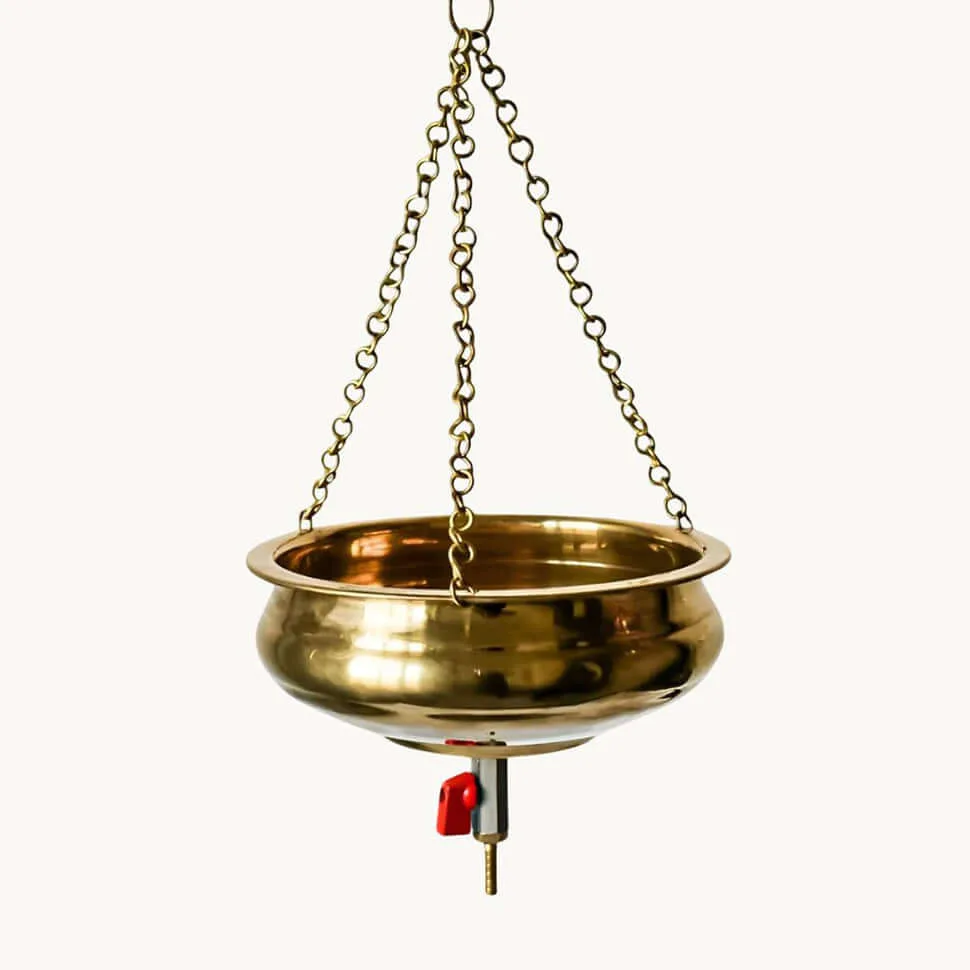
Shirodhara, an integral part of Ayurvedic practice, involves the gentle, rhythmic flow of warm oil or herbal liquids over the forehead, specifically targeting the Ajna Chakra (third eye). This practice promotes deep relaxation, mental clarity, and balance of the doshas, making it valued for rejuvenation and overall well-being.
Premium Brass Construction: Ensures longevity and maintains the purity of the oils and herbal liquids used.
Traditional Design: Supports a steady and consistent flow of oil, crucial for an effective Shirodhara session.
Adjustable Flow: Equipped with a chain mechanism for adjustable height, allowing practitioners to control the flow of oil with precision.
A must-have for Ayurvedic practitioners, Panchakarma centres, and wellness enthusiasts seeking to offer or experience the full depth of Shirodhara. This brass pot is crafted with care to honour the ancient roots of this profound Ayurvedic practice.