This article is part of our Brahmi Thailam: Classical Ayurvedic Oil for Mind and Nervous System guide series.
Brahmi (Bacopa monnieri) is among the most revered herbs in the classical Ayurvedic tradition. In the Charaka Samhita (Chikitsa Sthana, Chapter 1), it is listed as one of the four primary Medhya Rasayana herbs - a specific sub-category of classical Rasayana preparations described as supporting mental clarity, memory (Smriti), intellect (Medha), and cognitive resilience over time. It is one of the relatively few herbs for which classical Ayurvedic texts provide detailed protocols for extended systematic use. Those searching to brahmi kaufen (buy Brahmi) or brahmi kapseln kaufen in Europe will find that Brahmi products are among the most clinically studied Ayurvedic herbs in modern research as well.
Classical Ayurvedic classification of Brahmi
- Rasa (taste): Tikta (bitter) and Kashaya (astringent), with a secondary sweet note
- Virya (potency): Sheeta (cooling)
- Vipaka (post-digestive effect): Madhura (sweet, nourishing)
- Dosha relationship: Tridosha Shamaka - balancing for all three Doshas, with particular benefit for Pitta (through cooling Virya) and Vata (through Rasayana and nourishing long-term effect)
- Key classical karma: Medhya, Rasayana, Ayushya, Prajasthapana (supporting healthy progeny), Unmada Nashana (described in classical texts in the context of mental stability)
The Ashtanga Hridayam specifically names Brahmi as the foremost Medhya herb - placing it at the head of the classical cognitive support category. The Charaka Samhita describes Brahmi among the Jeevaniya group (life-supporting herbs) as well as under Medhya Rasayana.
Brahmi Wirkung: traditional sphere of action
Classical Ayurvedic texts describe Brahmi's primary actions in the following areas:
- Medhya: The central classical action. Brahmi is described as supporting Dhi (acquisition of knowledge), Dhriti (retention), and Smriti (recall) - the three classical components of memory and cognitive function described in the Charaka Samhita.
- Rasayana: Extended Brahmi use is described in classical Rasayana protocols as supporting overall vitality and longevity. The Charaka Samhita describes specific Brahmi Rasayana protocols of 30 days or more.
- Prana Vaha Srotas (nervous system channels): Brahmi is described in classical texts as having particular affinity for Majja Dhatu (nervous tissue) and the channels carrying Prana (vital energy).
- Sleep support: The calming, cooling properties of Brahmi are described in classical texts as supportive of restful sleep - it is often paired with Ashwagandha in classical formulations targeting both energy and calm simultaneously.
- Vayasthapana: Listed among classical anti-ageing preparations in the Ashtanga Hridayam alongside Shatavari and Amalaki.
Brahmi vs. Gotu Kola: the classical distinction
A common source of confusion in European markets: the name "Brahmi" is sometimes applied to two different plants - Bacopa monnieri (the classical Brahmi of Ayurvedic texts) and Centella asiatica (Gotu Kola, also called Mandukaparni in Sanskrit). Both are Medhya herbs in classical Ayurveda and both are sometimes labelled "Brahmi" in Western markets. In the classical Ayurvedic tradition of South India (particularly ), Brahmi refers specifically to Bacopa monnieri. Art of Vedas Brahmi products contain Bacopa monnieri.
Forms available
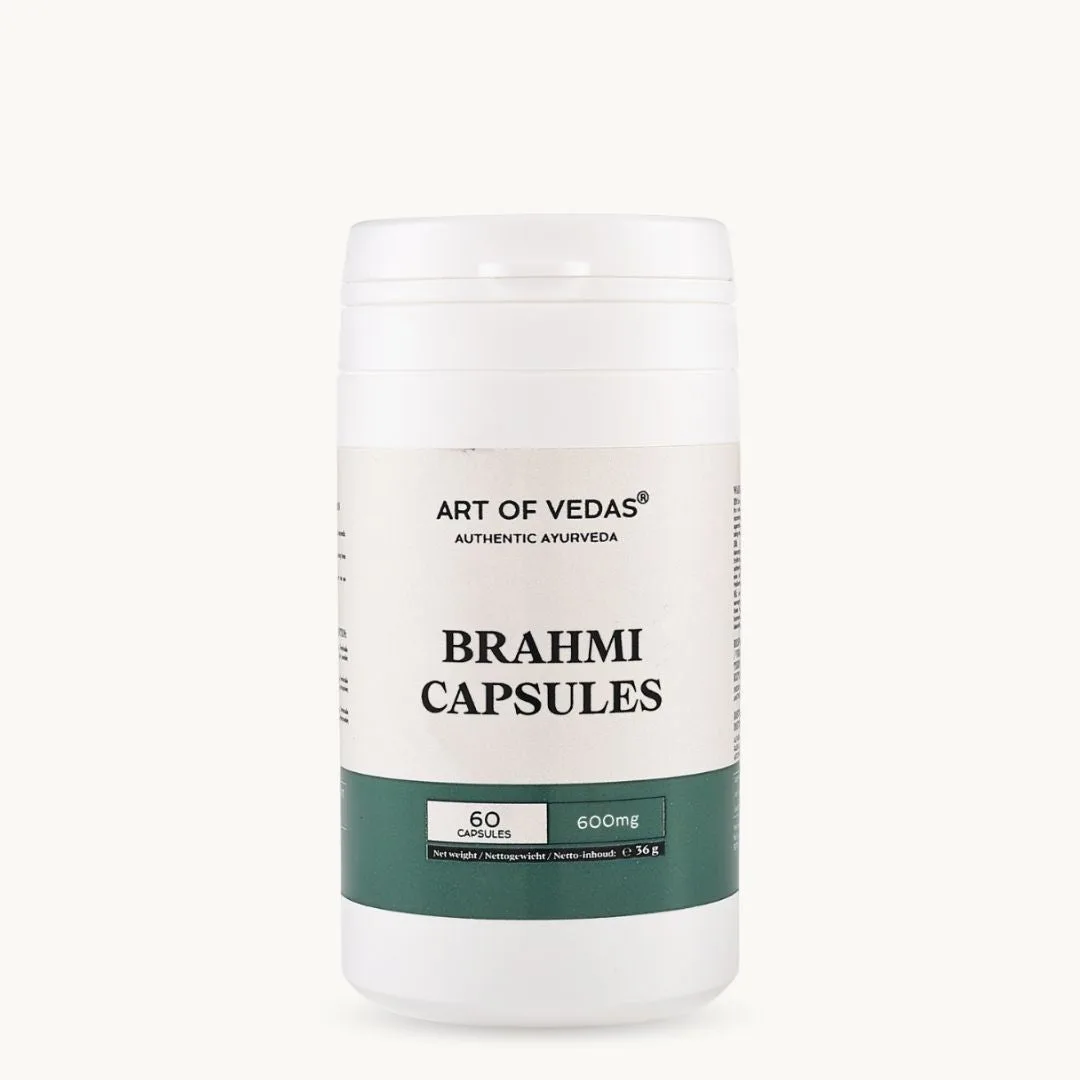
Brahmi Capsules
Our Brahmi Capsules provide classical-quality Bacopa monnieri in an easy daily format. Typical dosage: 1, 2 capsules twice daily, as per product label. warm water or warm water as Anupana.
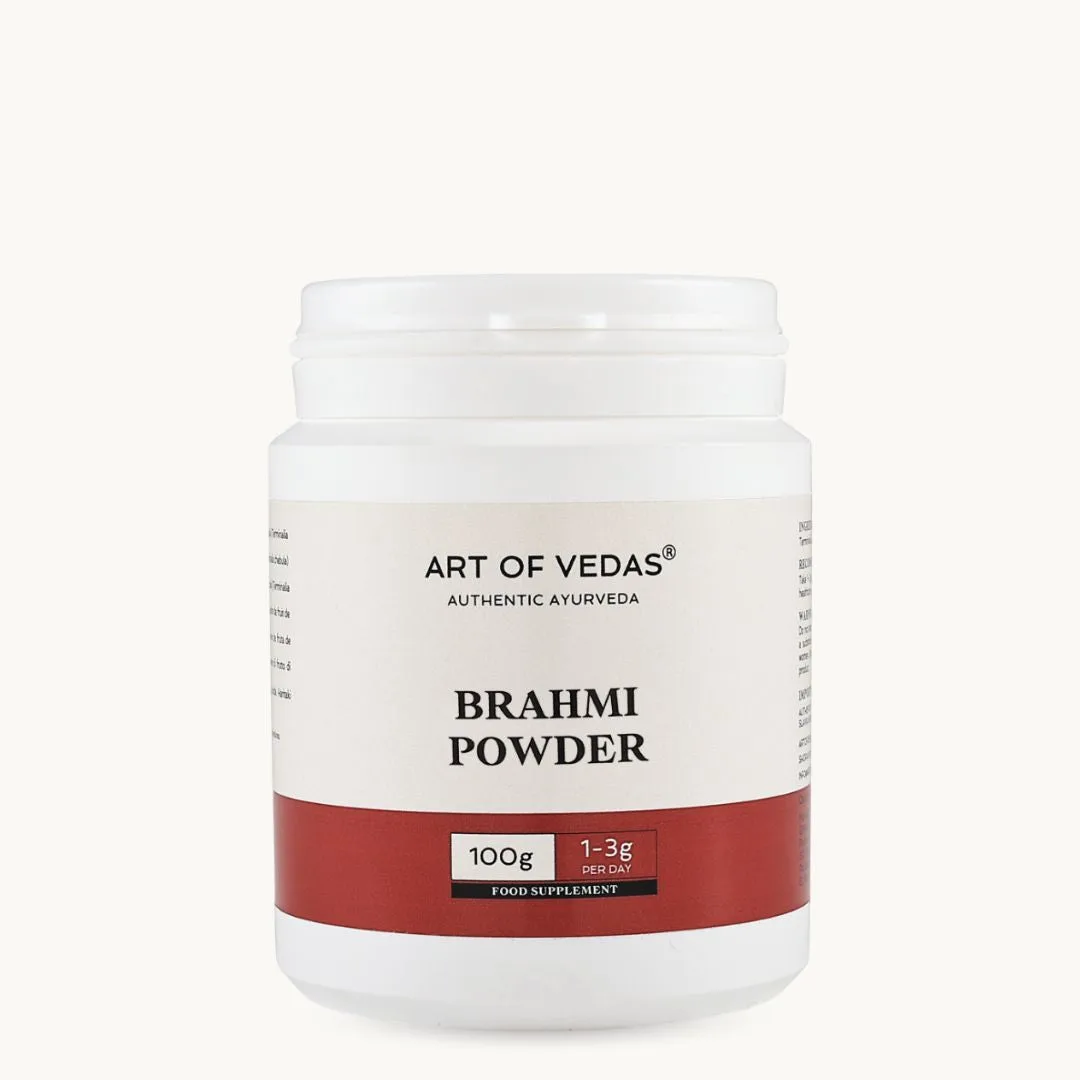
Brahmi Pulver (Brahmi Powder)
The traditional Churnam form. Our Brahmi Powder can be mixed with warm water and honey. Classical Brahmi Rasayana protocols in the Charaka Samhita describe taking Brahmi Churnam in milk over extended periods.
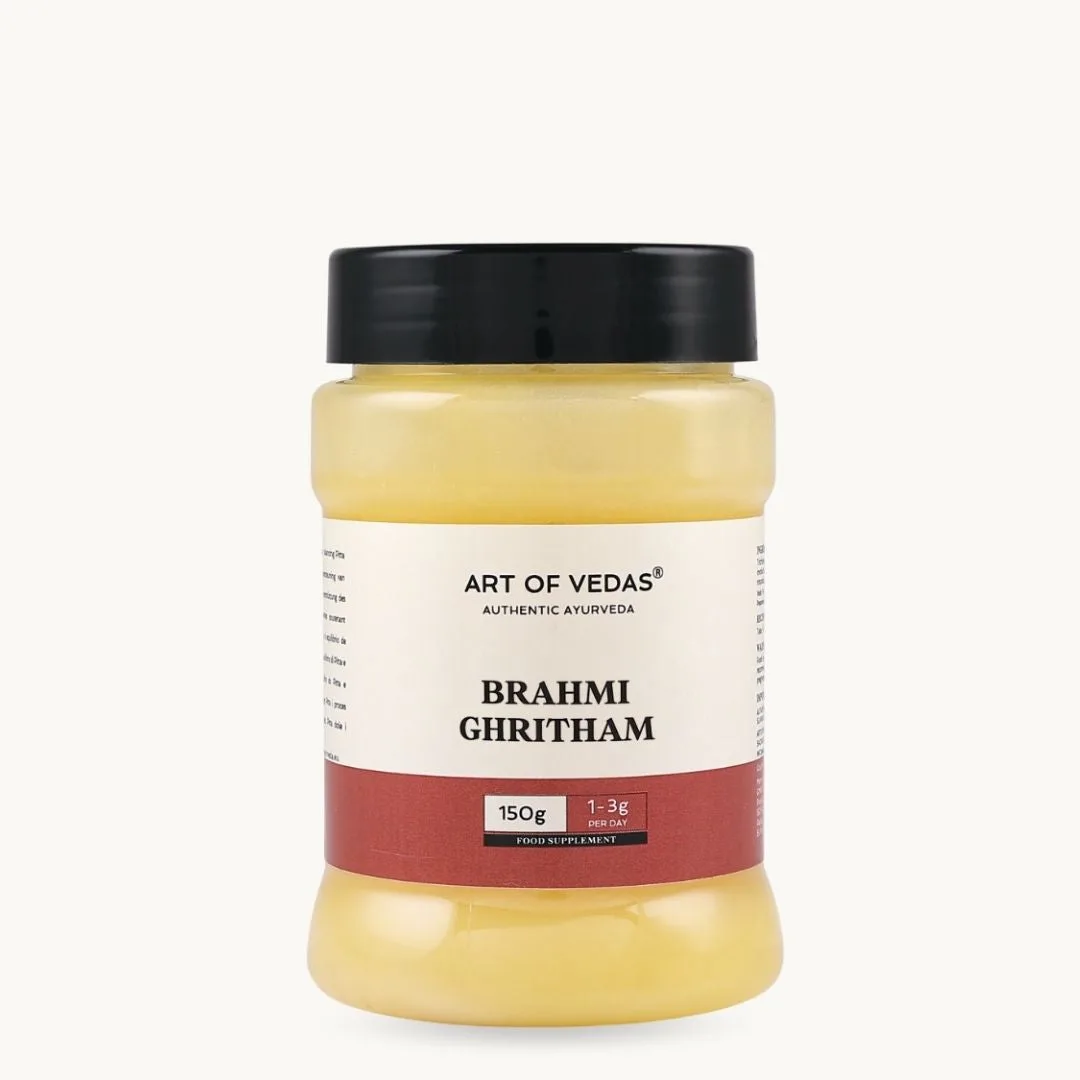
Brahmi Ghritham - classical medicated ghee
One of the most classical preparations of Brahmi is Brahmi Ghritham - medicated ghee prepared with Brahmi and other Medhya herbs. This is the form described in the most detailed classical Rasayana protocols for cognitive support. Our Brahmi Ghritham follows the classical formula. See our Brahmi Ghritham guide for full usage details.
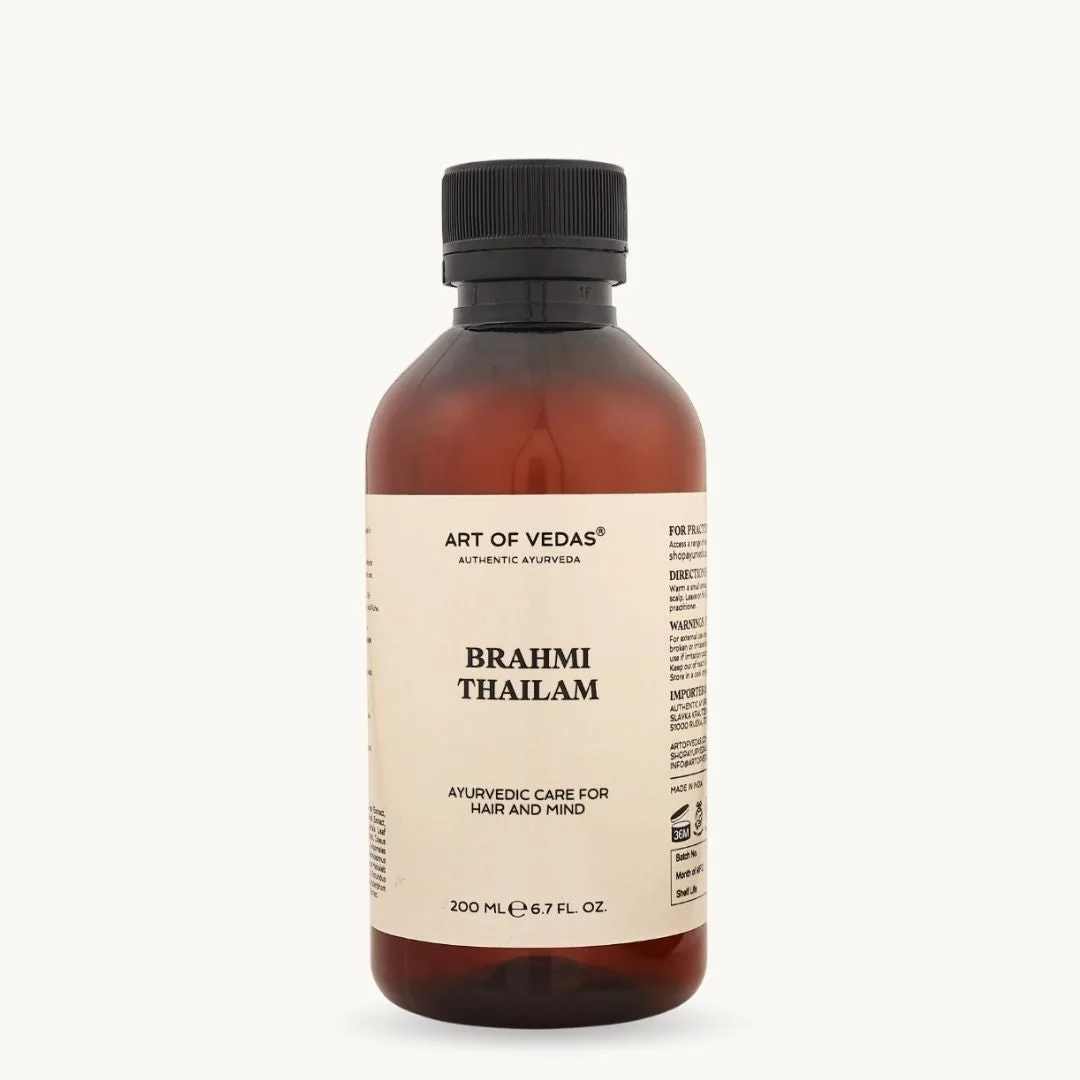
Brahmi Thailam - classical oil
For external use - head massage (Shiro Abhyanga) and Shirodhara. Brahmi Thailam is the classical medicated oil preparation for head and scalp application, described in classical texts as supporting calm, clarity, and restful sleep when applied to the scalp.
Brahmi dosage: classical guidance
- Brahmi Churnam: 3, 6 grams per day, in morning and evening
- Brahmi Capsules: As per product label - typically 500mg twice daily
- Brahmi Ghritham: Classical Rasayana dosage starts small (1 tsp) and increases gradually - see product label and Brahmi Ghritham guide
- Duration: Classical texts describe Brahmi Rasayana as most effective over sustained periods - consistency over weeks and months is emphasised over short-term high doses
Brahmi in the classical Rasayana ecosystem
Brahmi is frequently combined with other classical Medhya and Rasayana herbs in classical formulations. Common classical pairings include Brahmi with Ashwagandha (calming vitality support), Brahmi with Shatavari (cooling Rasayana combination), and Brahmi with Amalaki (broad-spectrum Rasayana with Vitamin C). For a complete overview of classical Ayurvedic herbs and their categories, see our Ayurvedic herbs guide. For Dosha-specific supplement recommendations, start with our Dosha test.
The full Brahmi product range - capsules, powder, Ghritham and Thailam - is available in our Supplements collection.
Brahmi products from Art of Vedas are food supplements, not medicines. They do not replace consultation with a physician or qualified Ayurvedic practitioner. Do not exceed the recommended daily intake stated on the product label.