In brief: Eranda is the Sanskrit name of the castor plant, Ricinus communis, and Eranda Taila (also written Eranda Thailam, Eranda Thailam, Eranda Tel or simply castor oil) is the thick, warming oil pressed from its seed. The classical texts, the Charaka Samhita among them, count it among the Vata oils, and the tradition uses it externally: for Abhyanga of one region, for the hair and scalp, and as the third classical Kuzhambu fat beside sesame and coconut. Eranda Moola, the castor root, is a different material. This guide covers what Eranda is, seed oil against root, the classical character of the oil, and how it is used.
Foundations
Castor Oil in Ayurveda: Eranda Guide
Reviewed by Dr. Anu Joy, MD (Ayurveda), Ayurvedic doctor of Art of Vedas

Botanical identity and the seed and root distinction
Eranda is Ricinus communis, a fast-growing plant of warm climates recognisable by its broad, star-shaped leaves. Two quite separate materials come from it. The seed, when pressed, gives castor oil, a heavy and unctuous fixed oil. The root, by contrast, is used as Eranda Moola, the castor root, which is prepared as a Kwath or decoction and appears in powdered Choornam form. Confusing the two is a common error, so it helps to hold them apart from the start: the oil is a pressed fat, the root a decoction herb.
Classical character of the oil
Classical descriptions give castor oil a Madhura and Kashaya note within a predominantly Ushna, warming character, and they emphasise its Snigdha, unctuous and penetrating quality. Within the Ayurvedic framework the oil is traditionally grouped with the Vata-steadying substances and valued for the way it is said to reach and soften. As with all classical descriptions, these speak to the substance's traditional qualities and role rather than to any medical effect.
The third Kuzhambu fat
A Kuzhambu is a classical medicated oil built on a base of more than one fat, and castor oil is the third of the three classical bases alongside sesame and coconut. Where sesame is warming and coconut cooling, castor contributes a heavy, deeply penetrating quality that the tradition prizes for a particular kind of grounding, unctuous preparation. Its inclusion is one reason a Kuzhambu differs in feel and character from a single-oil Thailam.
- Traditionally valued as a heavy, penetrating base fat within classical Kuzhambu preparations.
- Classically grouped among the Vata-steadying, Snigdha substances.
- Used externally in the abhyanga and warm-application traditions of classical practice.
- Distinct from Eranda Moola, the castor root, which is a decoction herb rather than a fat.
How Eranda appears in Art of Vedas formulations
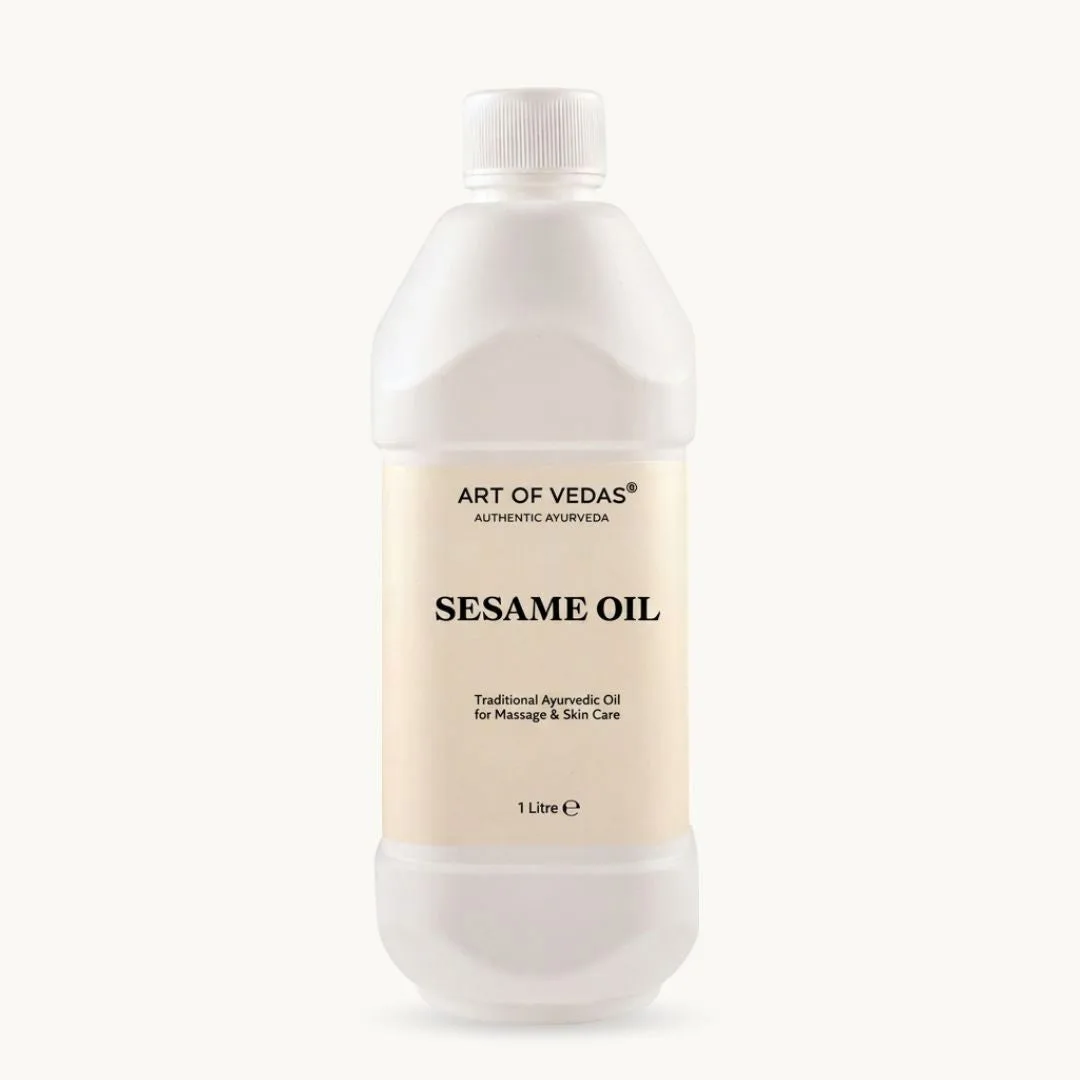
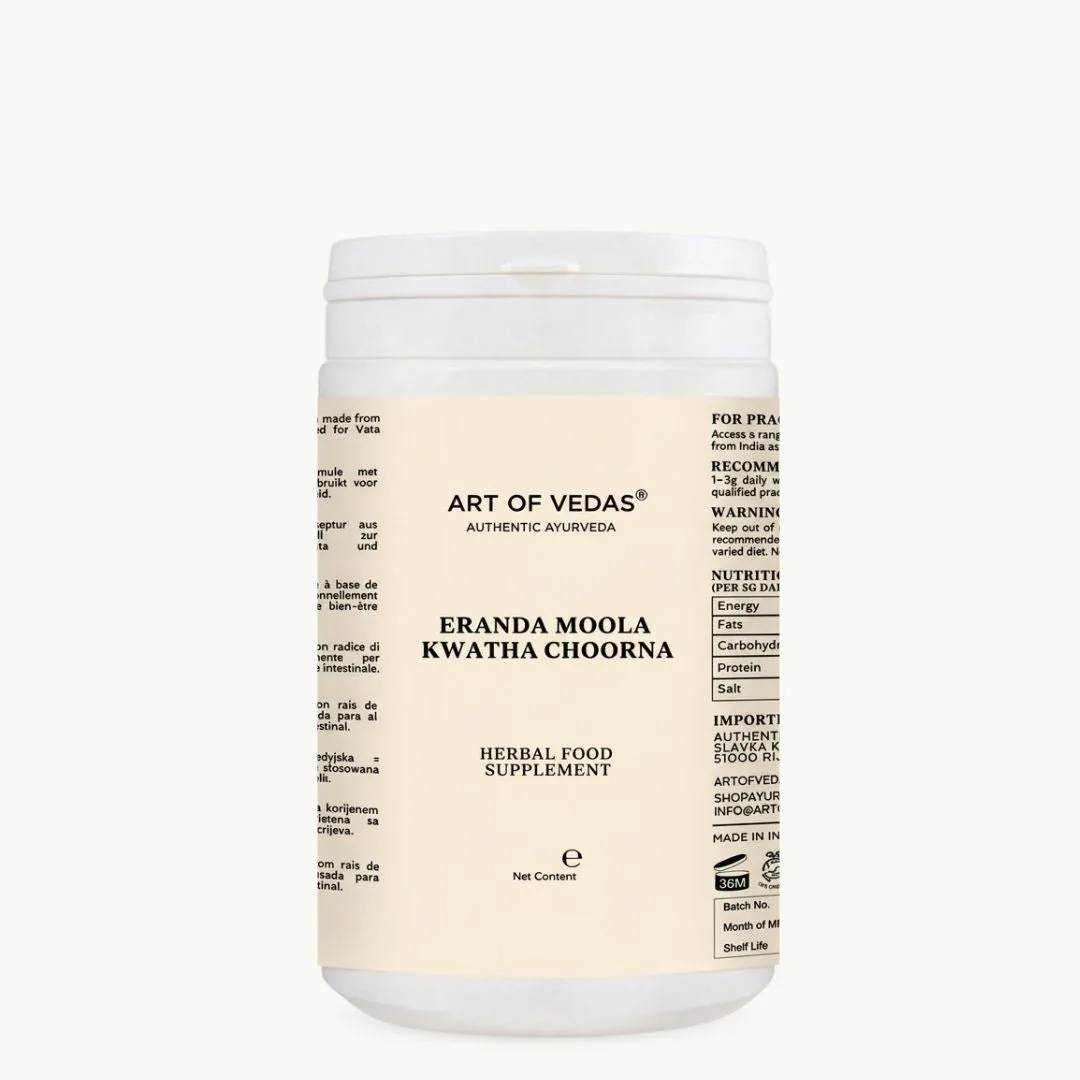
In prose, the castor plant reaches the Art of Vedas range in both of its classical guises. The pressed seed oil is offered as a straightforward castor oil for external use and as one of the three fats behind the classical Kuzhambu tradition, while the root appears as the Erandamoola Kwath Choornam, the powdered decoction herb. Holding the two apart clarifies the shelf: one is a fat, the other a Choornam. You can view castor oil and the Erandamoola Kwath Choornam. For the wider background, see the guide to the classical Kashayam decoctions in which the root is prepared, the sesame base-oil guide that describes the companion Kuzhambu fat, and the Churnam powder formulation guide.
Respectful cultural context
Eranda has been a fixture of Indian household and classical practice for a very long time, valued for its dependability in external care. Art of Vedas presents it in that spirit, as a traditional substance with a documented classical role, to be used thoughtfully and, where appropriate, with the guidance of a qualified practitioner.
Frequently asked questions about Eranda and castor oil
What is Eranda? Eranda is the Sanskrit name of the castor plant, Ricinus communis, so the English name of Eranda is simply castor. The plant gives two materials that the classical texts keep apart: the seed, which is pressed into castor oil (Eranda Taila), and the root, Eranda Moola, which is prepared as a decoction. Art of Vedas offers the seed oil as castor oil for external use.
Is Eranda oil the same as castor oil? Yes. Eranda Taila, Eranda Thailam, Eranda Thailam, Eranda Tel and oil of Eranda are all names for castor oil, the fixed oil pressed from the seed of Ricinus communis. In Sanskrit castor oil is Eranda Taila. The Art of Vedas castor oil is this plain seed oil, with nothing cooked into it, in 150 ml, 500 ml and 1 litre sizes.
What is Eranda Taila used for in Ayurveda? In the classical tradition castor oil is an external oil. It is used for Abhyanga of one region of the body, for the scalp and hair, for the feet in Padabhyanga, and as one of the three base fats of a classical Kuzhambu, beside sesame and coconut oil. Art of Vedas sells it for external use only; it is not offered for any internal use.
How do you use castor oil for Abhyanga? Warm a small amount by standing the closed bottle in a bowl of warm water, then work it slowly into one region with the palm until the skin is evenly coated. Because castor oil is thick, many people blend one part with two or three parts warmed sesame oil for a fuller massage. Leave it on for 15 to 20 minutes, then wash with warm water and a mild cleanser.
Is castor oil hot or cold in nature? The classical texts describe Eranda Taila as Ushna, warming, with a sweet note and a heavy, unctuous, penetrating quality, and they place it with Vata. That is a description of the character of the oil in Ayurvedic terms, not a statement about body temperature. Being warming, it is usually paired with cooling oils such as coconut in the warmer months.
What is the difference between Eranda oil and Eranda Moola? Eranda oil is the fat pressed from the castor seed and is used on the skin. Eranda Moola, also written Erandamoola or Erandamula, is the root of the same plant; it is dried, powdered and simmered into a Kwatha decoction, and Art of Vedas offers it as Erandamoola Kwath Choornam. One is an oil, the other a decoction herb; they are not interchangeable.
Is Eranda Thailam the same as Nimbamruthadi Eranda Thailam? No. Plain Eranda Thailam is castor oil on its own. Nimbamruthadi Eranda Thailam, Sindhuvara Eranda Thailam and similar names are classical formulations in which a set of herbs is cooked into a castor oil base, each with its own recipe and its own place in the texts. Art of Vedas does not offer these formulations; it offers the plain castor oil for external use.
Can castor oil be used in pregnancy or for children? Ask your doctor or a qualified Ayurvedic practitioner first. Art of Vedas castor oil is for external use only. Do a small skin test on the inner forearm before the first full application, keep it away from the eyes and broken skin, and store the bottle closed, away from heat and light.