This article is educational and describes traditional Ayurvedic concepts and self-care practices. It is not medical advice and is not intended to diagnose, treat, cure or prevent disease. If you are pregnant, taking medication, managing a health condition, or unsure whether a practice is appropriate for you, speak with a qualified healthcare professional or Ayurvedic practitioner.
In brief: Ayurveda Day 2026 falls on Wednesday 23 September. The Government of India fixed this calendar date in 2025, replacing the older Dhanteras observance, which moved every year. The 2026 theme is “Ayurveda for a Healthier Tomorrow”. This guide explains the date, the theme, the classical ideas behind the observance and how to mark the day at home without spending anything.
What Ayurveda Day is, and what it is not
Ayurveda Day 2026 is an annual occasion for learning about Ayurveda, the classical Indian system of living well that organises daily life around rhythm, food, sleep, movement and the turning of the seasons. Schools, universities, professional associations and community groups across Europe and India use the date to run open lectures, demonstrations and public talks.
It helps to be clear about what the day is not. It is not a religious festival. It is not a sales holiday, although some retailers use it as one. And it is not a substitute for individual care from a qualified practitioner or doctor.
The most useful way to mark it is with understanding rather than purchasing. If Ayurveda is new to you, our beginner’s guide to Ayurveda covers the vocabulary and the basic model before any product enters the picture.
Why Ayurveda Day 2026 is observed on 23 September
Until 2025, Ayurveda Day was tied to Dhanteras, a date in the Indian lunar calendar. Because lunar dates shift against the Gregorian calendar, the observance landed on a different day each year, usually somewhere in October or early November.
The Ministry of Ayush then selected 23 September as a fixed annual date, so that educators, institutions and organisations anywhere in the world can plan a year ahead.
Read the official Ministry of Ayush notice about the fixed date.
What the fixed date changed in practice
A moving date is difficult to build a programme around. A university that wants to schedule a public seminar, or a practitioner association planning a conference, needs the date months in advance. Fixing it to 23 September removed that obstacle, and participation outside India grew as a result.
The link to the autumn equinox
The date sits within a day or two of the autumnal equinox in the northern hemisphere, when daylight and darkness are close to equal. Classical Ayurveda has no doctrine about the equinox itself, but the coincidence is a fitting one. Proportion, rhythm and attention to change are exactly what the system asks of a person, and late September is the point in the European year when many people notice the weather turning.
The 2026 theme: Ayurveda for a Healthier Tomorrow
“Ayurveda for a Healthier Tomorrow” is deliberately broad. It invites a practical conversation about how a body of traditional knowledge can inform ordinary daily habits, responsible use of plant resources and honest public education.
Read charitably, the theme covers several quite different things at once:
- Everyday habits: a settled morning routine, regular meals and a consistent bedtime.
- Self-knowledge: understanding your own constitution rather than copying someone else’s regimen.
- Seasonal adjustment: changing food, clothing and oil practice as the weather changes.
- Responsible sourcing and manufacture of the plants and minerals the tradition uses.
- Clear, non-exaggerated education, including about what Ayurveda does not claim to do.
The last point deserves emphasis. A great deal of poor information circulates under the name of Ayurveda, much of it making claims the classical texts never made. A healthier tomorrow depends as much on accurate description as on any practice.
The classical ideas behind the observance
Ayurveda Day is easier to appreciate with a few core terms in hand. These are the concepts most European readers meet first, and each is explained here for a general audience rather than a clinical one.
Dosha, and the three functional principles
Ayurveda describes physiology through three Dosha (functional principles that govern movement, transformation and structure in the body). They are Vata (the principle of movement and air), Pitta (the principle of transformation and heat) and Kapha (the principle of cohesion and structure). Everyone carries all three in some proportion. Our guide to Vata, Pitta and Kapha sets out the classical descriptions in plain language.
Prakriti and Vikriti
Prakriti (your constitution, the proportion of the three principles you were born with) is considered stable across life. Vikriti (your current state, which may differ from that baseline) shifts with season, age, diet, sleep and circumstance. Confusing the two is the single most common beginner error, and it leads people to follow a regimen that does not suit their present situation. The Prakriti and Vikriti guide explains how the tradition distinguishes them.
Agni and Ojas
Agni (digestive and metabolic capacity, described in the texts as a fire) is regarded in classical Ayurveda as central to how well a person does with food. Much of the classical daily routine is arranged around it: eating at regular hours, taking the largest meal when Agni is considered strongest, and leaving space between meals. Our guide to Agni goes further into the classical account. Ojas (the subtle end product of good digestion, associated in the texts with vitality and resilience) is the quality the tradition regards as the outcome of steady habits over time.
Where these ideas are written down
The concepts above are set out in the classical compendia: the Charaka Samhita, the Sushruta Samhita and the Ashtanga Hridayam. The Ashtanga Hridayam in particular devotes early chapters to daily and seasonal conduct, which is why those two subjects sit at the centre of most modern introductions. Formulation texts such as the Sahasrayogam and the Bhaishajya Ratnavali record the classical preparations themselves.
Dinacharya: the daily routine at the heart of the day
Dinacharya (the classical daily routine) is the most practical thing Ayurveda offers a newcomer, and the least dependent on buying anything. The texts describe a sequence of ordinary acts arranged in a consistent order: waking before the day gets busy, attending to the mouth and the senses, moving the body, eating at settled hours and going to bed at a regular time.
The value lies in repetition rather than elaboration. A routine of four steps performed daily is worth more than a routine of fifteen steps performed twice. For the full sequence, see our Dinacharya guide.
Abhyanga, the oil practice
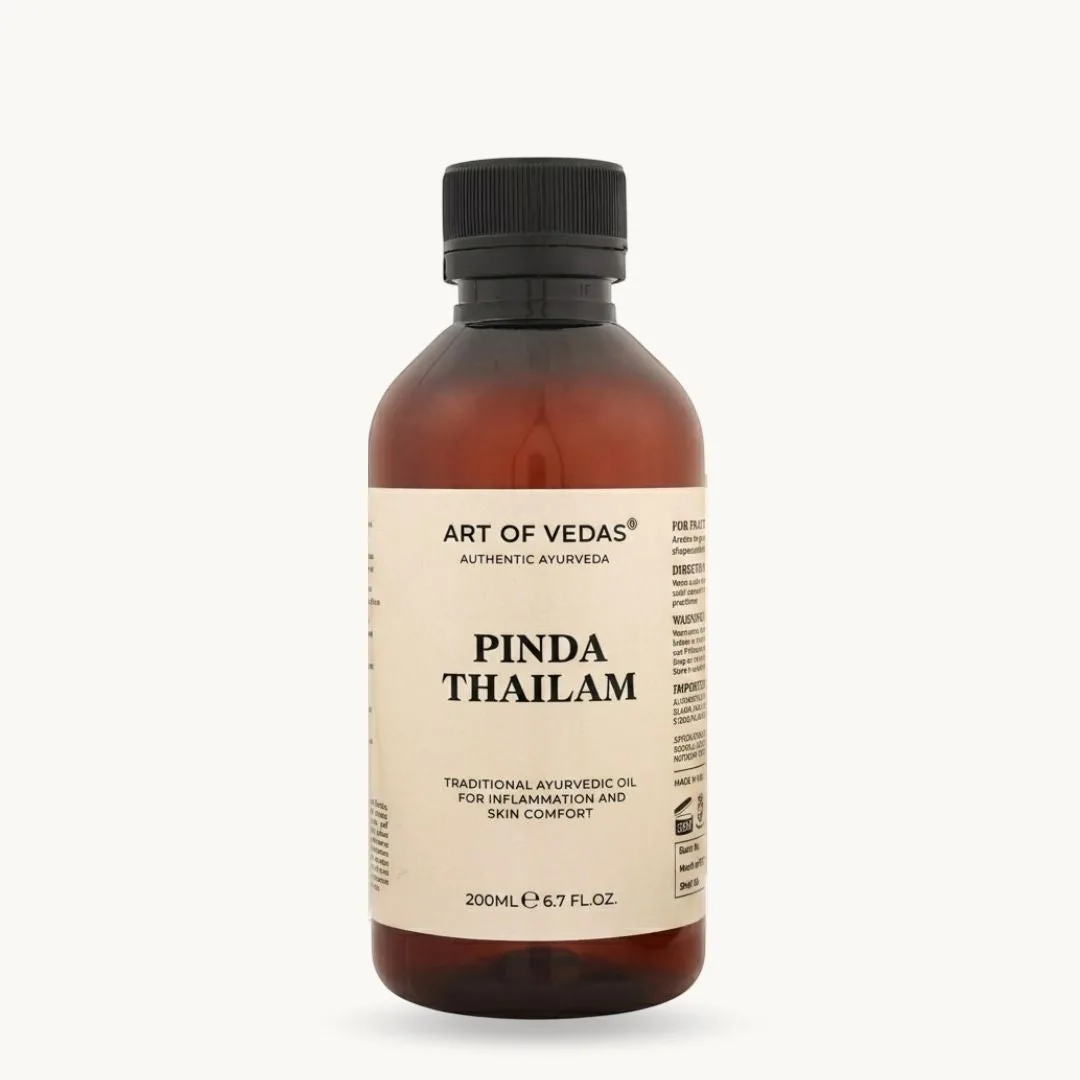
Abhyanga (self-massage with warm oil) is the part of Dinacharya most people try first. A classical Thailam (a medicated oil prepared by simmering herbs into a base oil) is warmed gently, applied to the body, left for a short period and then washed off. It is a calming, unhurried practice, and it suits late September in Europe, when the air turns dry and cool.
Our Abhyanga at home guide covers timing, quantity and technique. If you are deciding between preparations, our guide to selecting an Abhyanga oil sets out the classical options by type. Test any new oil on a small patch of skin first, and stop using anything that causes irritation.
Ritucharya: why late September is a sensible moment
Ritucharya (the classical seasonal routine) asks a person to adjust food, clothing, activity and oil practice as the year turns, rather than keeping one regimen through all conditions. The texts regard the transition points between seasons as the moments requiring the most care, because that is when habits formed in one set of conditions meet another.
In much of Europe, 23 September falls squarely in such a transition. Mornings cool, the air loses humidity and daylight shortens noticeably week by week. The classical response to cool, dry, mobile conditions is warmth, moisture and regularity: warm cooked food rather than cold, oil applied to the skin, earlier nights and a steadier schedule.
Our Ritucharya guide sets out the seasonal adjustments in order.
How to mark Ayurveda Day at home
A meaningful observance costs nothing. The following sequence takes one evening and gives you something that survives past 23 September.
- Choose one small routine you can genuinely repeat, such as a calm breakfast at the same hour or a few minutes of warm-oil self-massage before a shower.
- Learn the difference between Prakriti (your underlying constitution) and Vikriti (a current pattern that may change). Write down which you think you are observing.
- Read the label of any product you already use, including the botanical name of each ingredient, the directions and the warnings.
- Attend or watch one public lecture. Many institutions publish open sessions around the date.
- Keep a simple note of what feels comfortable over the following fortnight, and stop anything that causes irritation.
- Prepare one question to ask a qualified practitioner, rather than searching for an answer online.
Two of those steps are deliberately about observation rather than action. Ayurveda is a descriptive system before it is a prescriptive one, and the habit of noticing is the part that carries over into everything else.
Reading labels and choosing responsibly
If you do decide to buy something, the theme of the day argues for doing it carefully. A well-labelled preparation tells you what is in it and how it was intended to be used.
- Look for the botanical name of each ingredient, not only a Sanskrit or common name.
- Check whether the preparation is intended for external use or for internal use, and follow that.
- Read the directions and the warnings before the marketing copy.
- Be sceptical of any product that names a disease or promises an outcome. Classical preparations are described by their qualities and their traditional use, never by a promised outcome.
- Keep a note of the batch number, so that you can refer to it if you ever need to.
The Art of Vedas guide on how to read an Ayurvedic product label works through a real label field by field.
Common misunderstandings about Ayurveda Day
Three confusions come up every year, and clearing them up makes the observance more useful.
The first is that Ayurveda Day is a festival with rituals attached. It is not. It is a modern public observance, established to support education, and it carries no prescribed ceremony.
The second is that the day is an occasion to start an intensive programme. Panchakarma (a classical set of procedures carried out under professional supervision over a period of days) is not something to begin because a date has arrived. It requires assessment, preparation and a practitioner.
The third is that Ayurveda and conventional medicine are alternatives between which a person must choose. The classical texts are not in a position to comment on modern medicine, and nothing in this article should be read as a reason to change or stop any medication you have been prescribed. Speak to your doctor first.
Frequently asked questions
When is Ayurveda Day 2026?
Ayurveda Day 2026 falls on Wednesday 23 September. The date is now fixed and does not move from year to year, so Ayurveda Day 2027 will again be 23 September. This is a change from the arrangement in place before 2025, when the observance followed the lunar calendar.
Is Ayurveda Day an Indian or an international observance?
It began as an Indian national observance and is now shared internationally through universities, professional bodies and community programmes, including a growing number across Europe. The fixed date has made cross-border participation considerably easier, because institutions in different countries can now schedule around the same day without checking a lunar calendar each year.
Why was the date moved away from Dhanteras?
Dhanteras follows the Indian lunar calendar, so its position in the Gregorian year changes annually. That made planning difficult for schools, associations and public institutions, particularly outside India. Fixing the observance to 23 September gave everyone a stable date, while leaving Dhanteras itself untouched as the separate occasion it has always been.
What is the theme for 2026?
The theme is “Ayurveda for a Healthier Tomorrow”. It is framed broadly, covering everyday habits, self-knowledge, seasonal adjustment, responsible sourcing and accurate public education. There is no single prescribed activity attached to it, which is intentional: the theme is meant to be interpreted by each participating institution and individual.
What should a complete beginner do on the day?
Start with learning rather than buying. Read a reliable introduction, pick one routine small enough that you will still be doing it in a month, and write down one question to put to a qualified practitioner. Herbs and intensive practices are better approached after a conversation with someone who can assess your situation, not on the strength of an article.
Do I need to buy anything to observe Ayurveda Day?
No. Nothing described in this guide requires a purchase. Dinacharya, the observation of your own patterns and attending a public lecture all cost nothing. If you later choose to try a classical oil, do so after reading about it properly and, where relevant, after speaking with a practitioner.