This article is part of our Basti in Ayurveda: Classical Enema Therapy and Local Basti Procedures guide series.
Greeva Basti brings the classical warm oil retention principle of the Basti therapies to the cervical spine - the neck region that is, in the contemporary context, perhaps the single most commonly affected site of Vata accumulation in the adult body. The combination of desk work, screen use, reduced physical movement, and the inherently Vata-prone nature of the cervical region makes Greeva Basti one of the most clinically relevant classical therapies for the modern European context.
Greeva (neck, cervical spine) and Basti (retention) together describe a procedure in which warm medicated oil is pooled and held within a dough dam over the back of the neck and cervical vertebrae - delivering the same sustained, deep oleation to the cervical structures that Kati Basti delivers to the lumbar spine.
The Neck in Classical Ayurvedic Anatomy
The cervical spine (Greeva) is described in classical texts as a critical junction between the head and the body - the passage through which Prana Vata, the sense organ nerves, and the structural connection between the skull and the thorax all converge. The Krikatika Marma - the two Marma points at the junction of the skull base and the upper cervical vertebrae - are described in the Sushruta Samhita as significant vital points governing the flow of Prana between the head and the body below.
The upper cervical spine (particularly C1-C3) is understood in the classical framework as a primary site of Prana Vata - and therefore as an area that is inherently susceptible to Vata accumulation and its consequences: the tension, stiffness, limited range of movement, and the radiation of discomfort that characterises cervical Vata excess.
The Greeva Basti Procedure
Positioning
The recipient lies prone (face down) with the forehead supported on a pillow or headrest, the neck in a neutral, slightly flexed position. The dough dam is constructed across the back of the neck and upper thoracic junction, covering the cervical vertebrae from C1 to T1-T2 depending on the specific area of Vata accumulation.
The Dough Dam
Black gram or wheat flour dough is formed into an oval ring across the cervical spine, sealed firmly to the skin. The cervical region presents some technical challenges for dam construction - the neck's curved anatomy and the tendency of the neck to move during the session require careful dam construction and positioning. The dam should be of sufficient height (five to six centimetres) to hold adequate oil volume over the cervical structures.
Oil Selection
-
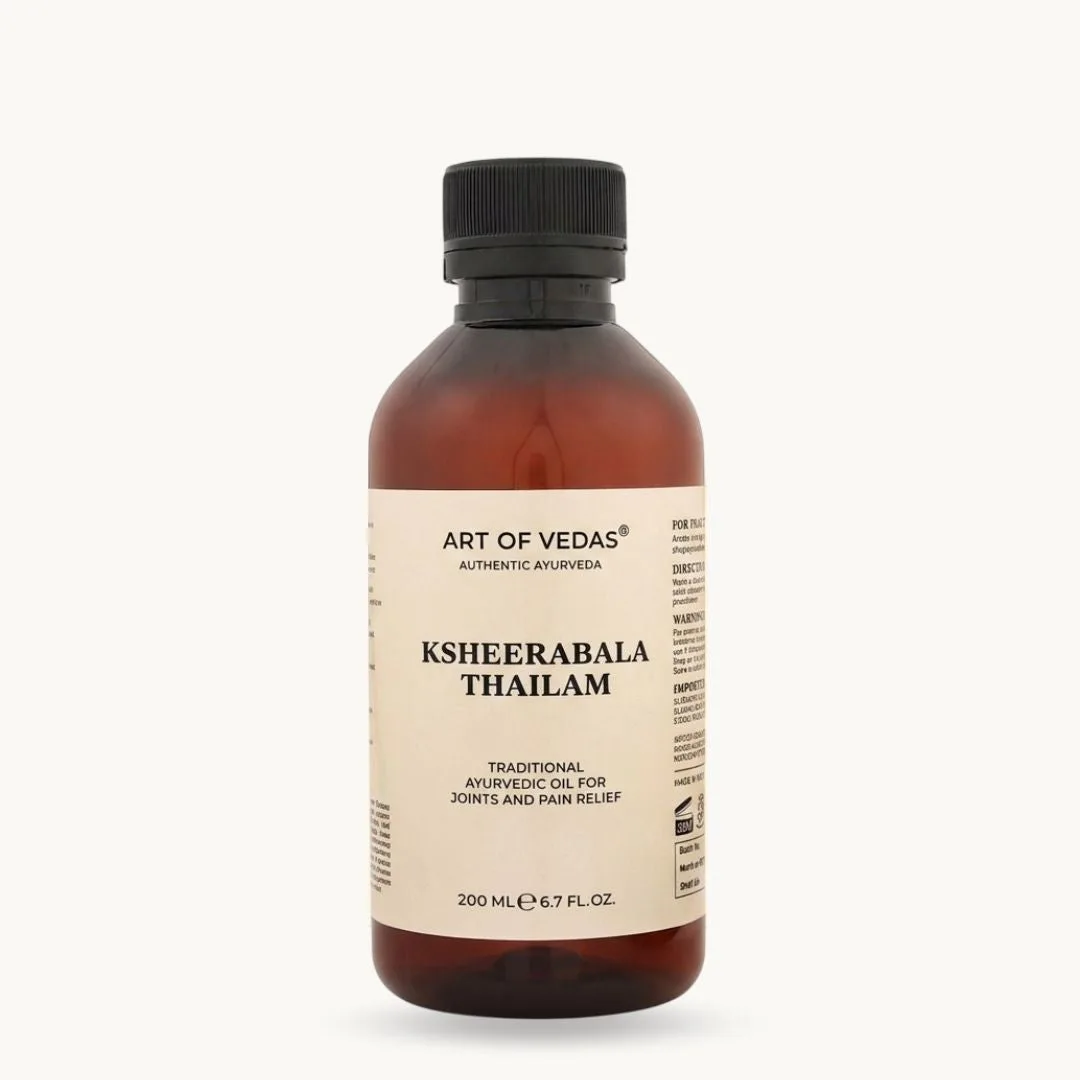
Ksheerabala Thailam: The most widely used classical Greeva Basti oil - its milk-based processing and deep nervous tissue nourishing properties make it particularly appropriate for the cervical region where Prana Vata and the spinal nerve roots are concentrated. See our Ksheerabala guide.
-
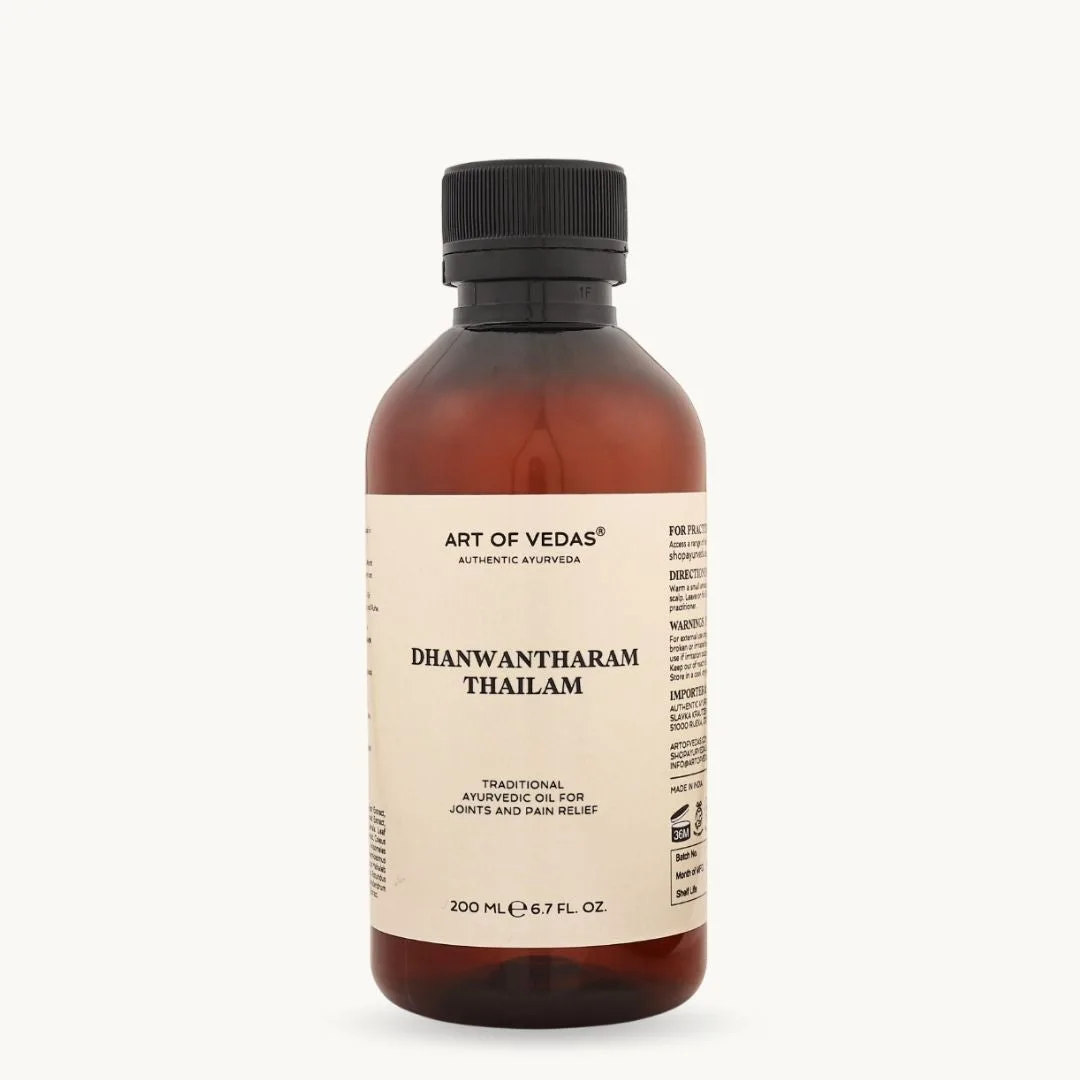
Dhanwantharam Thailam: For musculoskeletal cervical Vata with broader structural involvement. See our Dhanwantharam guide.
-
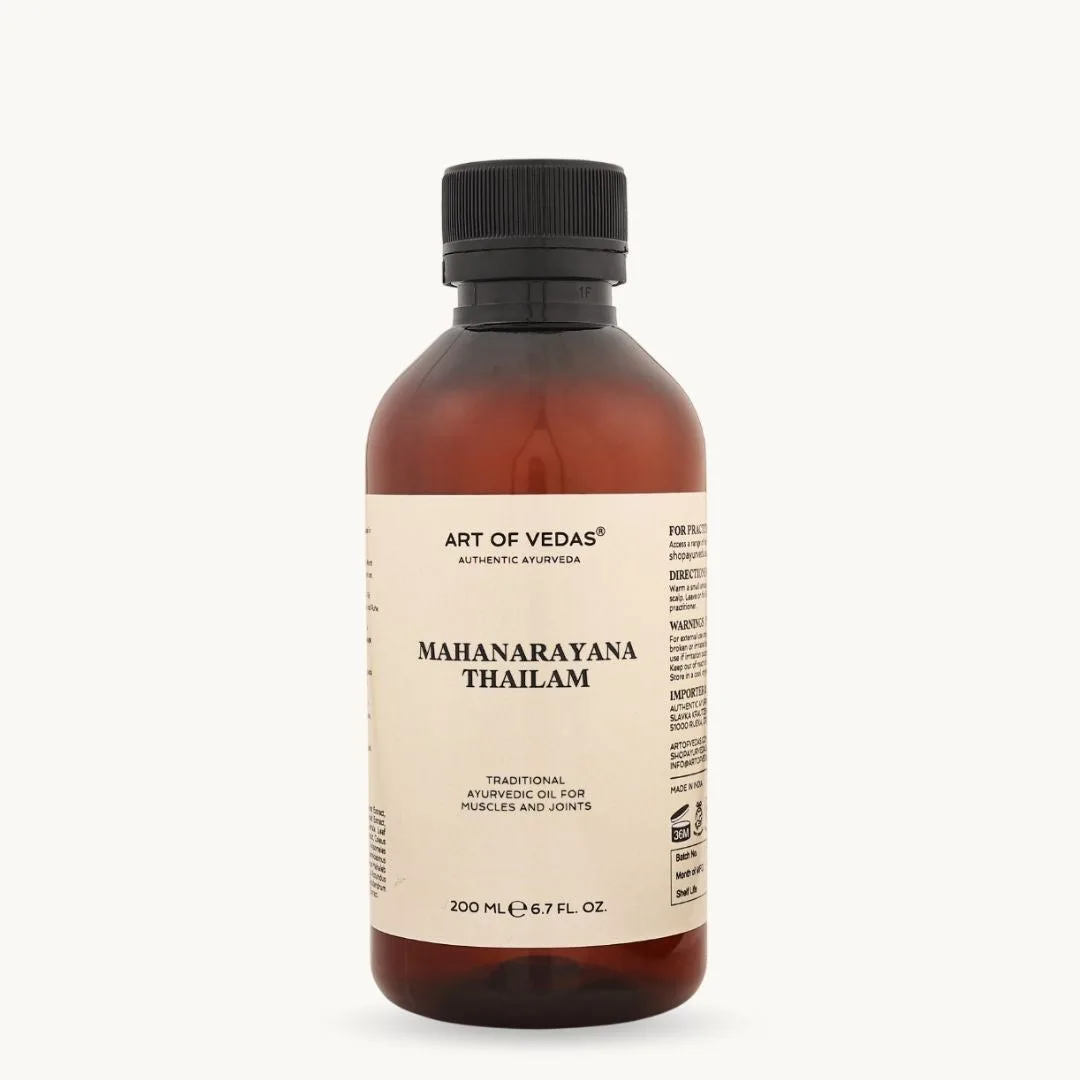
Mahanarayana Thailam: For comprehensive cervical involvement as part of broader musculoskeletal Vata. See our Narayana guide.
-
Brahmi Thailam: When the primary intention extends to the head and nervous system above - combining cervical Vata-addressing with Medhya and Majja Dhatu support. See our Brahmi Thailam guide.
Greeva Basti and the Modern Context
The classical indications for Greeva Basti - cervical Vata accumulation, tension and stiffness in the neck and upper back, radiating discomfort, reduced range of cervical movement - map directly onto the most common patterns of modern-day occupational and lifestyle-related neck complaints. The sustained screen exposure, forward head posture, and physical stillness of contemporary work and leisure life create precisely the conditions of Vata accumulation in the Greeva that the classical therapy addresses.
This direct relevance is one reason Greeva Basti has become one of the most frequently requested therapies in European Ayurvedic clinics - it addresses a pattern of Vata accumulation that is both extremely common and highly amenable to the classical oil retention approach.
The Greeva-Shiro Connection
The cervical region is the bridge between the body's structural oil therapies (Kati Basti, Janu Basti for the lower body) and the head oil therapies (Shirodhara, Shirobasti, Shiro Abhyanga). A complete classical protocol for Vata accumulation affecting the head and nervous system often combines Greeva Basti for the cervical junction with Shirodhara for the head - addressing both the structural cervical component and the subtle Prana Vata and Sadhaka Pitta component at the forehead level.
For the related head therapy, see our Shirodhara guide.
Frequently Asked Questions
What is Greeva Basti?
Greeva Basti is a classical Ayurvedic therapy in which warm medicated oil is pooled and retained over the cervical spine and neck within a dough dam. It is the primary classical therapy for Vata accumulation in the neck and upper back - addressing tension, stiffness, and reduced range of cervical movement through the sustained warmth and deep oleation of the cervical structures.
How does Greeva Basti differ from Kati Basti?
Both apply the same classical Basti principle - warm oil retention in a dough dam - to different spinal regions. Kati Basti targets the lumbar spine and Apana Vata in the lower back. Greeva Basti targets the cervical spine and Prana Vata in the neck and head junction. The technique and oils are similar; the anatomical focus and some specific oil selections differ.
Which oil is best for Greeva Basti?
Ksheerabala Thailam is the most classically appropriate Greeva Basti oil for most cervical Vata conditions - its milk-processed, deeply nourishing character is particularly suited to the nervous-tissue-rich cervical region. Dhanwantharam Thailam or Mahanarayana Thailam are appropriate for stronger musculoskeletal involvement.
How many sessions are needed?
A classical course of Greeva Basti runs seven to fourteen consecutive daily sessions for significant cervical Vata conditions. Maintenance sessions - one to two per week - are appropriate for ongoing management of chronic cervical Vata accumulation in the context of modern work patterns.
Related Therapies and Oils
See our Kati Basti guide and Janu Basti guide for the lower body equivalents. For the head therapy complement, see our Shirodhara guide. Browse our Ayurvedic Thailam collection for classical Vata-addressing oils.
This article is for informational and educational purposes only. Greeva Basti is a classical Ayurvedic therapy that in a therapeutic context should be administered by a qualified Ayurvedic practitioner. The information provided here does not constitute medical advice and is not a substitute for professional guidance.