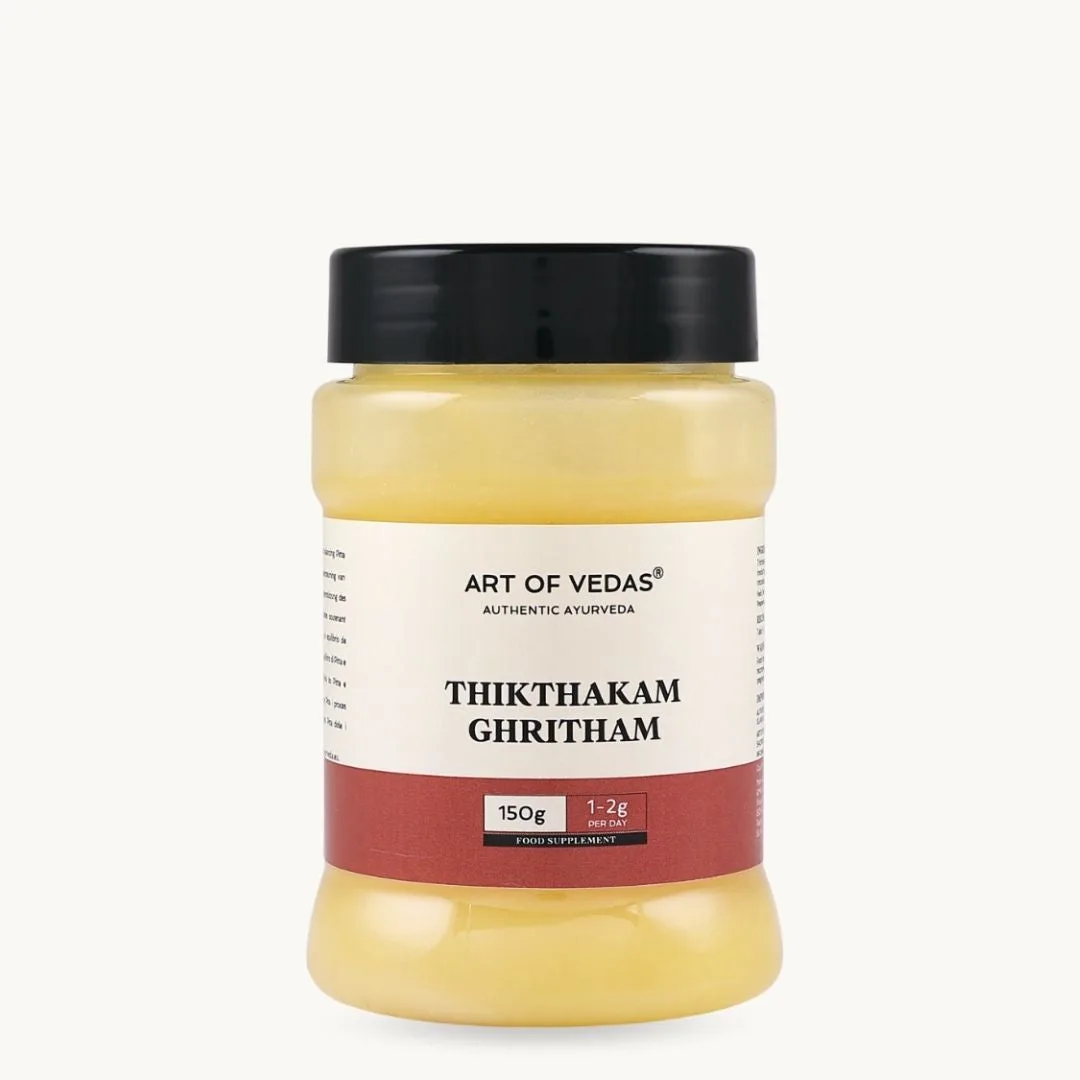
Gulgulu Thikthakam Ghritham carries two classical terms in its name, and both are classifications. Guggulu is the resin of Commiphora mukul. Tikta is the bitter taste. The formula is recorded in the Ashtanga Hridayam, Chikitsa Sthana, chapter 21, and listed in the Ayurvedic Formulary of India at Part I, 6:27, where it also appears under the name Panchatikta Guggulu Ghrita.
Panchatikta: the five bitters
Pancha is five, Tikta is bitter. The classical Panchatikta group is a set of bitter plants that recur together across the formulation literature, and a preparation carrying the name is built on them. When Guggulu is added to that group and the whole is cooked into ghee, the result is the formula recorded at 6:27.
Guggulu in the classical pharmacy
Guggulu is an oleo-gum resin, and the texts treat it as a substance requiring preparation in its own right before it enters a formula. It appears across the dosage forms: in tablets as a Gulika or Vati, and in ghees such as this one. Its presence is what separates this preparation from the plain bitter ghees.
What the Art of Vedas jar contains
Gulgulu Thikthakam Ghritham is a simple ghee in this tradition: Guggulu with turmeric, ginger, black pepper, cumin, dill, celery and galangal in a pure ghee base. The classical formula is larger, and the label is the authoritative ingredient list. It is the savoury preparation of the range, closer to a spiced ghee than a sweet one, and it carries celery as a declared allergen.
Where it sits
- Ashtanga Hridayam, Chikitsa Sthana, chapter 21.
- Ayurvedic Formulary of India, Part I, 6:27, as Panchatikta Guggulu Ghrita.
- Classified with the bitter ghees, opposite the sweet Sukumaram Ghritham.
The range comparison sets the family side by side.
Frequently Asked Questions
Why does the formula have two names?
Classical formulas often carry both a regional name and a descriptive one. Gulgulu Thikthakam and Panchatikta Guggulu Ghrita refer to the same entry in the Formulary.
What does Panchatikta mean?
Five bitters: a classical group of bitter plants that recur together in the formulation literature.
Is Guggulu the same as the resin used in tablets?
It is the same substance, Commiphora mukul, prepared before use. The classical pharmacy uses it across dosage forms, including tablets and ghees.
This article is for educational purposes and describes the classical Ayurvedic record. The products mentioned are food supplements, not a substitute for a varied, balanced diet, and are not intended to diagnose, treat, cure or prevent any disease. Take classical ghee preparations under the guidance of a qualified Ayurvedic practitioner.