Tila Taila, the classical sesame oil of Ayurveda, is where nearly every Thailam begins. Pressed from the seed of Sesamum indicum, it holds a standing in the classical literature that no other oil approaches: the Sanskrit word taila, oil itself, derives from tila, the sesame seed. This guide from Art of Vedas explains the qualities tradition ascribes to sesame oil, why it became the mother base of the classical preparations, and how to use it well.
Tila and Taila: The Oil That Named All Oils
In the classical texts, sesame oil is not one option among many; it is the reference point against which other fats are described. Tradition characterises Tila Taila as warming, substantial and finely penetrating, an oil that carries its qualities deep rather than resting on the surface. It is the oil most closely associated with Vata, the principle of movement, cold and dryness, and therefore the classical first choice for daily Abhyanga through the greater part of the year. Its single ingredient is the sesame seed itself: cold-pressed from the whole seed, unrefined and untoasted, the oil keeps the quiet, nutty character of the plant without the dark roast of the culinary bottles.
The Mother Base of the Thailams
Almost every classical Thailam stands on sesame oil. There are two reasons. First, the oil withstands the long, repeated processing that classical preparation demands, hour upon hour of gentle heat with herbal decoctions and pastes. Second, tradition regards it as an ideal carrier, taking up the character of the botanicals cooked into it and delivering them to the skin. What a Thailam is, and how it differs from a plain oil, is explained in our guide to what Thailam means; the short answer is that Tila Taila is the canvas, and the formula is the painting.
Sesame, Coconut and Castor Compared
The three great base fats of the southern tradition divide the work between them. Sesame is warming and substantial, the default for Vata and for the cold months. Coconut is cooling and light, 's answer to heat and to Pitta-leaning routines. Castor is dense, slow and deeply penetrating in the traditional description, rarely used alone and prized as a supporting fat. In the semi-solid Kuzhambu preparations, all three are combined; our guide to the Kuzhambu base oils describes what each contributes to that three-fat composition.
Using Plain Sesame Oil for Abhyanga
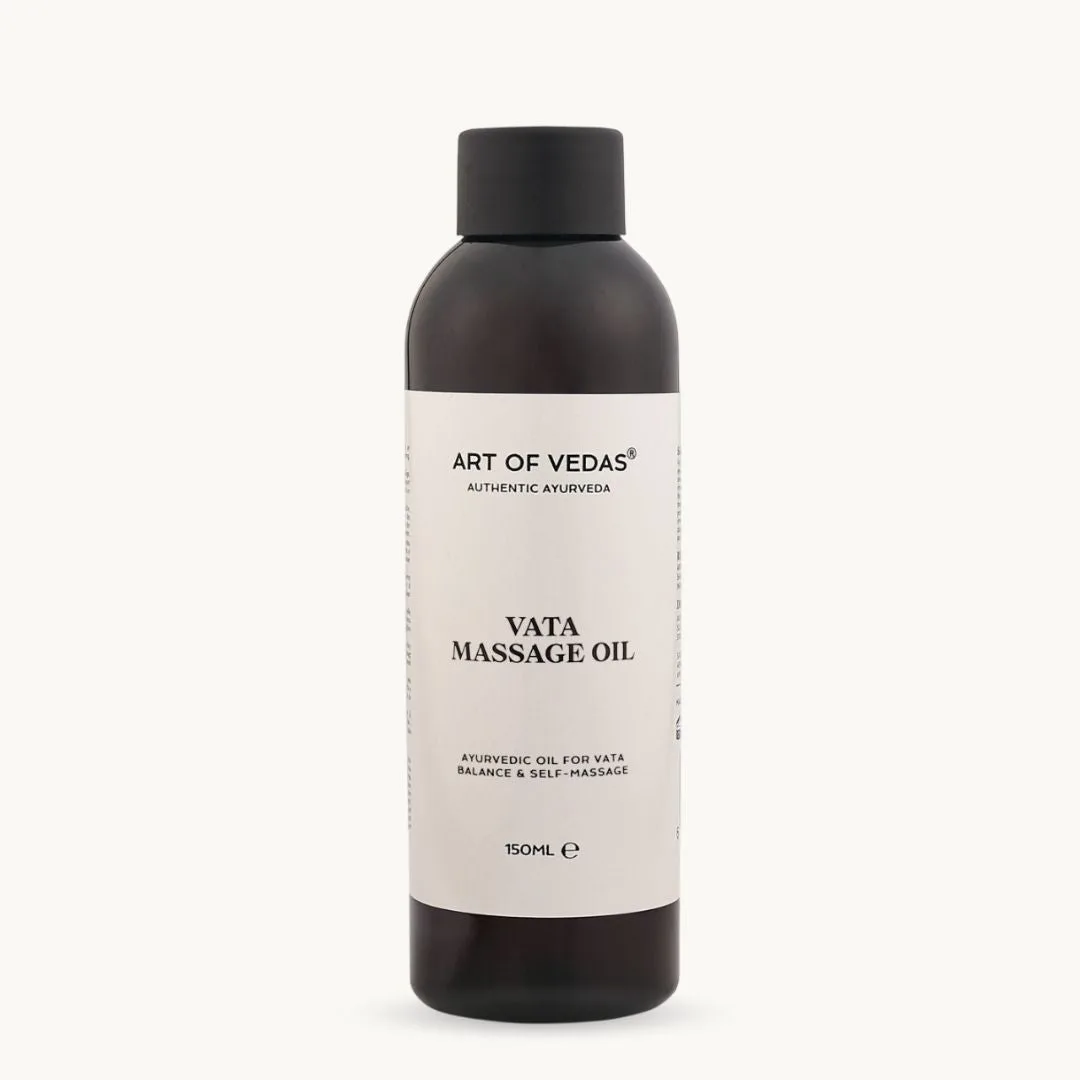
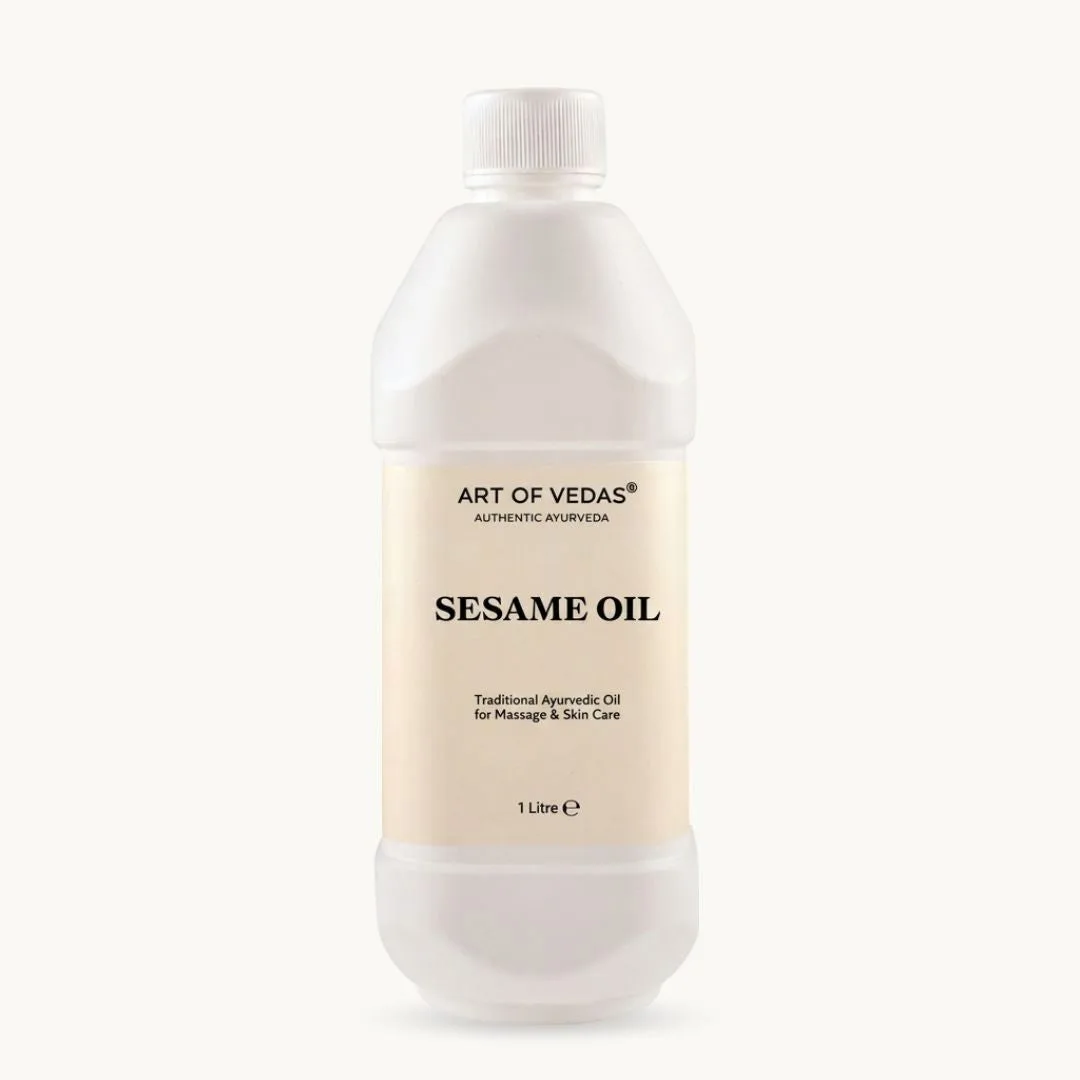
A plain, cold-pressed sesame oil is the classical starting point for anyone new to self-massage. Warm it in a water bath, apply it with long strokes over the body, allow it a quarter of an hour of quiet, and finish with a warm shower. Our sesame oil in the 500 ml practitioner size serves daily Abhyanga generously, and the smaller sesame oil bottle suits travel and first acquaintance. Those who prefer a ready herbal composition for the Vata season may reach for the Vata massage oil, and our Abhyanga oil selection guide walks through the full choice step by step.
- Warming character traditionally suited to Vata routines and cold seasons
- Smooth, substantial glide for full-body Abhyanga
- Absorbs well without leaving a heavy film
- The classical carrier base for herbal Thailams
- A single-ingredient oil with a long recorded tradition
Frequently Asked Questions
Is Tila Taila the same as kitchen sesame oil?
No. Culinary sesame oil is usually toasted, which gives it a dark colour and a strong roasted flavour. Tila Taila for Abhyanga is cold-pressed and untoasted, pale golden and mild.
Which Dosha does sesame oil suit?
Tradition associates it first with Vata. Pitta constitutions often prefer cooling coconut-based preparations, while Kapha routines favour lighter oils and more vigorous technique.
Does sesame oil need to be warmed?
Warming is traditional and pleasant. A few minutes in a water bath brings the oil to a comfortable temperature; it should never be heated directly or made hot.
Can sesame oil be used on the face?
It can, though many find it substantial for facial skin. Perform a patch test first; for dedicated facial routines, lighter classical compositions are usually preferred.
What is the difference between Tila Taila and a Thailam?
Tila Taila is the plain base oil. A Thailam is that base slowly processed with herbal decoctions and pastes according to a classical formula, so it carries the character of its botanicals as well as the oil.
This article describes traditional Ayurvedic practices for external use and is intended for general information only. It does not constitute medical advice. Please consult a qualified Ayurvedic practitioner or your medical professional before beginning a new routine, and perform a patch test before first use.