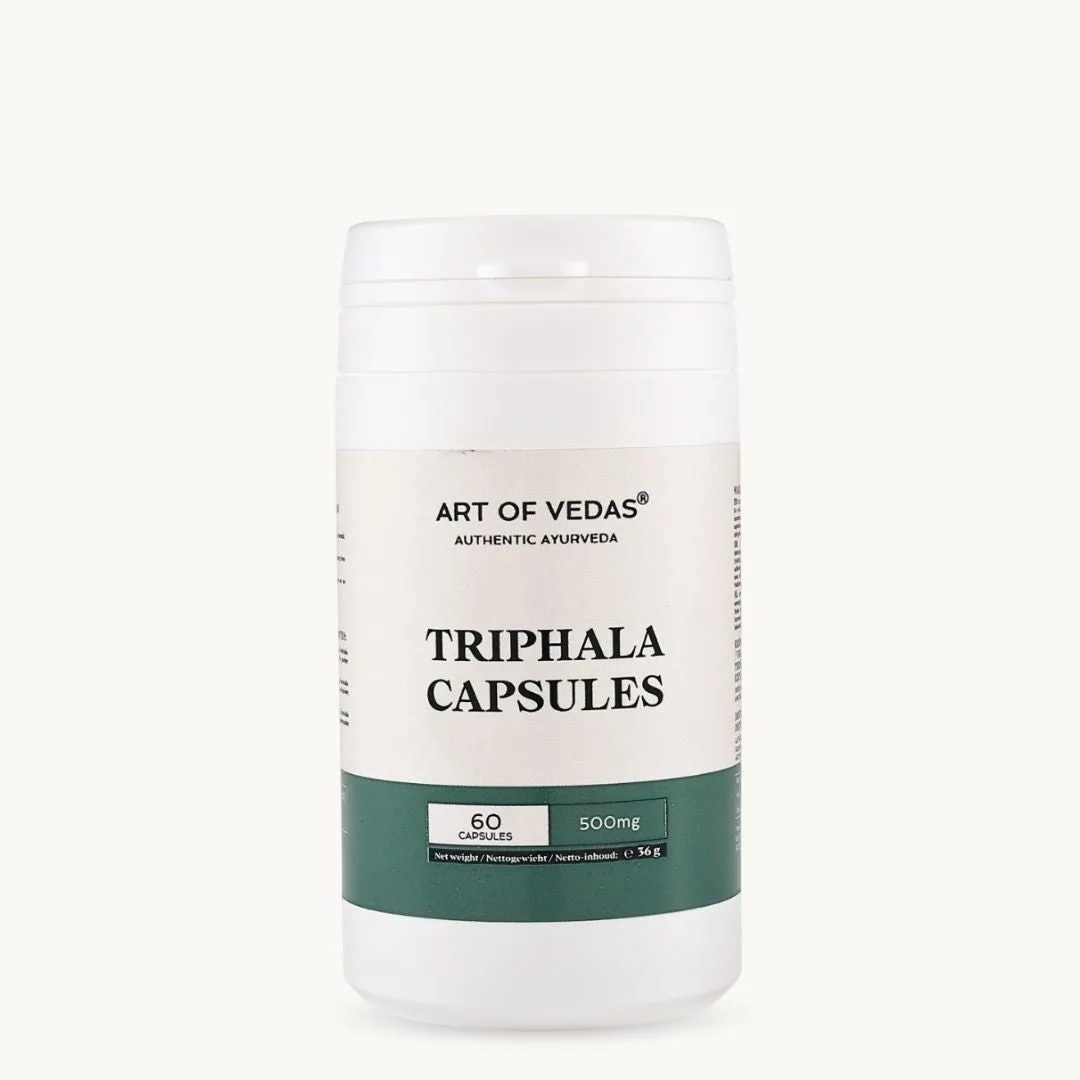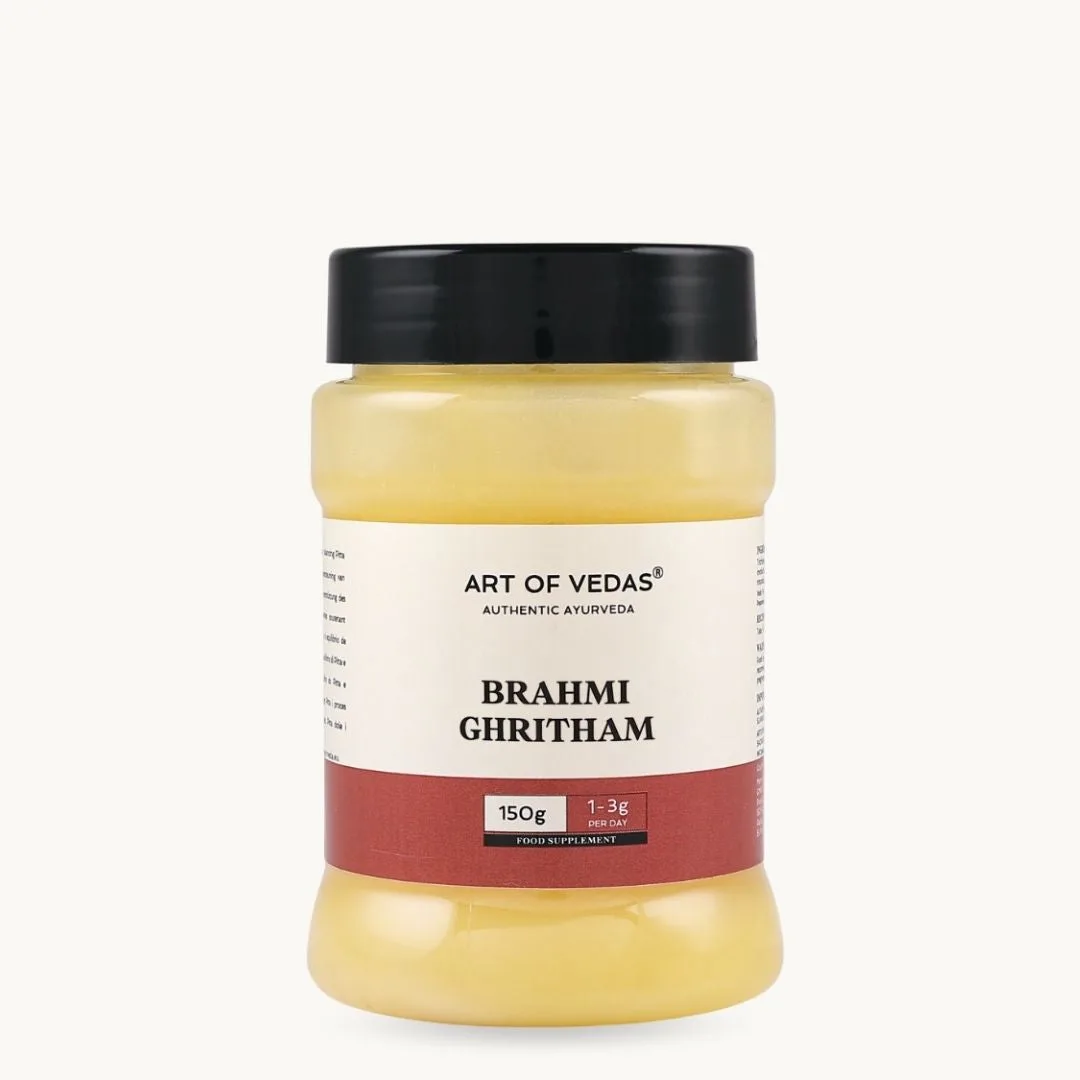
The classical Triphala ghee is cooked with two liquids: a decoction of the fruits and milk. This article follows that method, which is what separates a Ghritham from fruit powder stirred into fat.
First the decoction
Kashaya, the decoction, is made by simmering the coarsely broken fruits in water until the volume is reduced by the proportion the texts specify. The liquid carries what water can extract from the three fruits; the residue is not what goes forward.
Then the paste
Kalka, the paste, is ground fresh from the same fruits. Its purpose is different from the decoction's: it puts solid material in direct contact with the fat during cooking, and the classical proportion of paste to fat is stated rather than estimated.
Then the milk
Milk joins the decoction as a second liquid. Because milk scorches easily, the cook is slower and lower than a water-only preparation allows, and the texts treat the resulting preparation as a distinct family from the plain water-decoction ghees.
Knowing when to stop
The completion tests are the classical ones: the paste rolls into a wick that burns cleanly, the froth settles, and the sound of water leaving the pan stops. A ghee intended to be taken by mouth is generally taken to Madhyama Paka, the middle degree.
The result
Triphala Ghritham is exactly this: ghee and the three fruits, and nothing else. Maha Triphala Ghritham follows the classical distinction of several liquids and goat's milk. The general method is in the Ghritham overview.
Frequently Asked Questions
Why both a decoction and a paste?
They do different things: the decoction carries what water extracts, the paste puts solid material in contact with the fat during cooking.
Why is milk used here?
Because the classical formula specifies it. Milk-based ghees are treated in the texts as a distinct family from water-decoction ghees.
How is the cooking judged finished?
By the classical signs: the wick test, the froth settling, and the end of the sound of escaping water.
This article is for educational purposes and describes the classical Ayurvedic record. The products mentioned are food supplements, not a substitute for a varied, balanced diet, and are not intended to diagnose, treat, cure or prevent any disease. Take classical ghee preparations under the guidance of a qualified Ayurvedic practitioner.